Technical Insight & Engineering Manual Core Working Principles of a Stator Paper Folding and Inserting Machine
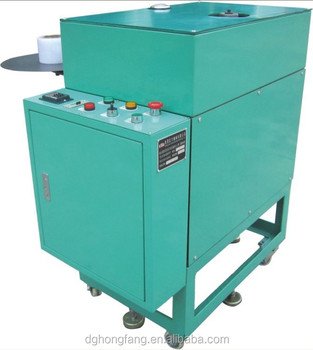
A stator paper folding and inserting machine (also commonly called a motor stator slot insulation inserting machine or slot cell inserter) performs one of the most critical dielectric defense tasks in electric machine fabrication. Prior to winding enamelled magnet wire into the stator slots, the conductive raw edges of the laminated electrical steel stack must be isolated completely. Any microscopic tear, mechanical fraying, or positional offset in the insulation paper results in high-voltage phase-to-ground flashover, catastrophic motor burnout, or irreversible failure in surge testing.
The operational sequence of a high-performance folding and inserting system executes through four synchronized electromechanical stages:
- Continuous Uncoiling and Tension Control: The insulation film (such as DMD, Nomex, or polyester film) is unwound from bulk reels. A precision friction braking or closed-loop dancer arm stabilizes paper tension, suppressing wrinkles and preventing erratic feeding caused by reel inertia.
- Edge Hemming (Cuffing / Folding): The flat strip passes through heated or chilled precision forming rollers that fold both lateral edges inward by 2.5 mm to 5.0 mm. These folded edges—termed cuffs—impart axial mechanical stiffness and provide extended creepage distance at the outer stator stack faces, preventing the magnet wire from dragging against sharp core teeth during coil insertion.
- Precise Metering and Shearing: Driven by an optical rotary encoder or high-resolution servo drive, the cuffed paper is indexed forward to an exact cut length matched to the stator stack height plus cuff overhang allowance. A hardened tool steel shearing blade makes a clean, burr-free orthogonal cut.
- Forming and Push Insertion: The cut paper strip is drawn into a pre-forming die that shapes it into a U-shape, B-shape, or closed O-shape matching the precise cross-section of the stator slot. A mechanical push-rod driven by a cam or ball screw drives the formed paper cell axially into the stator slot while the stator indexing plate aligns the target tooth gap with micrometer accuracy.
Why Cuff Quality Dictates Electric Motor Reliability In high-speed automatic coil insertion, copper wires enter stator slots under high linear tension. If the cuff folding angle is inaccurate or if the paper edge cracks during hemming, the inserted wire bundle will push the insulation liner forward, causing it to slip out of the rear stack face. This leaves exposed lamination iron that strips wire enamel, causing instant inter-turn or ground shorts.
Future Procurement Trends: What Global Motor Makers Must Prepare For
The global transition toward high-efficiency motors (IEC IE4/IE5 standards) and high-voltage e-mobility drivetrains (800V silicon-carbide inverter architectures) is reshaping procurement requirements for stator paper folding and inserting machines. Sourcing managers and manufacturing engineers must anticipate several decisive purchasing shifts:
1. Transition to Thinner, Higher Thermal-Class Insulation Materials
Conventional appliance motors relied on 0.25 mm to 0.35 mm thick standard polyester or fishpaper. Modern high-efficiency motors demand thinner slot liners (0.15 mm to 0.20 mm) made from aramid-polyimide composites (DuPont Nomex, Kapton laminates, or inorganic mica-reinforced polymers) to maximize copper slot fill factors. Buyers must verify that machine feeding rollers and forming fingers do not score or cause delamination in ultra-thin composite materials.
2. Demand for Rapid Tooling Changeover & High-Mix Low-Volume (HMLV) Agility
Where legacy production lines manufactured a single stator model for months, modern smart factories demand frequent changeovers across different stack heights and slot numbers. Future machine procurement heavily favors systems with tool-less stack height adjustments, quick-release indexing chucks, and servo-programmable stroke settings that reduce downtime from two hours down to under 20 minutes.
3. Traceability, Integrated Vision, and Industry 4.0 Telemetry
Automotive tier-1 suppliers and premium compressor builders now mandate 100% inline quality verification. Procurement specifications increasingly require high-speed machine vision cameras positioned immediately above the indexing table. These cameras verify whether every slot contains a properly seated paper cell, measure cuff protrusion heights at both core ends, and instantly flag missing or collapsed liners before the stator transfers to the expensive winding station.
Technological Development Trends in Stator Slot Insulation Automation
Over the past decade, stator insulation technology has evolved rapidly from rigid mechanical Geneva-drive mechanisms to fully digitized, multi-axis servo platforms. Key technical innovations include:
| Technology Generation | Kinematic Architecture | Indexing & Feeding | Changeover Capability | Quality Verification |
| 1st Generation (Legacy) | Pure mechanical cams & linkages | Geneva mechanism, ratchet feed | Manual gear replacement (2–4 hours) | Post-process manual inspection |
| 2nd Generation (Hybrid) | Pneumatic cylinders + gear drive | Stepper motor indexing, micro-switches | Semi-manual spacer adjustment (45–60 mins) | Fiber optic slot presence sensor |
| 3rd Generation (Modern Servo) | Multi-axis synchronized AC servo | Direct-drive servo spindle indexing | Touchscreen stack height recipe (15–25 mins) | Multi-angle laser/optical height profiling |
| Next-Gen (Smart Cyber-Physical) | Direct linear motor + torque actuators | Absolute servo with torque-feedback sensing | Autonomous tooling recognition (<10 mins) | AI vision defect classification & cloud logging |
The latest generation of stator paper folding and inserting machinery also accommodates complex skewed slots commonly found in high-efficiency water pump and elevator motors. When stator slots feature a helical twist along the axial length, standard straight pushers risk crushing the paper cell. Modern equipment integrates rotational pusher trajectories that twist smoothly as the blade advances, matching the lamination skew angle without crimping the paper liner.
Engineering Specification Comparison for Machine Sourcing
Before issuing an RFQ (Request for Quotation), engineering teams should benchmark their stator lamination parameters against standard industrial machine classes:
| Machine Category | Applicable Stator O.D. | Stack Length Range | Insertion Rate | Target Motor Applications |
| Fractional / Fan Inserter | Ø30 mm – Ø120 mm | 8 mm – 60 mm | 0.30 – 0.45s / slot | Ceiling fans, table fans, exhaust blowers, shaded pole |
| Standard Industrial Inserter | Ø50 mm – Ø180 mm | 15 mm – 150 mm | 0.40 – 0.60s / slot | Washing machines, AC compressors, pumps, power tools |
| Heavy-Duty Servo Inserter | Ø100 mm – Ø280 mm | 30 mm – 260 mm | 0.50 – 0.85s / slot | Industrial three-phase motors, servo drives, generators |
| EV Traction Stator Inserter | Ø120 mm – Ø350 mm | 50 mm – 320 mm | Custom trajectory | Automotive hairpin stators, e-axle traction drives |