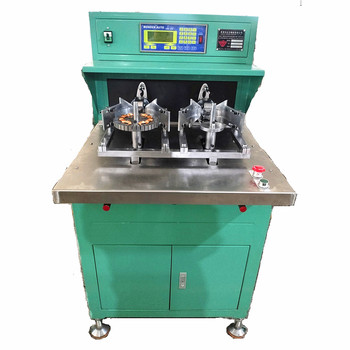


Synchronous Dual Needle Array
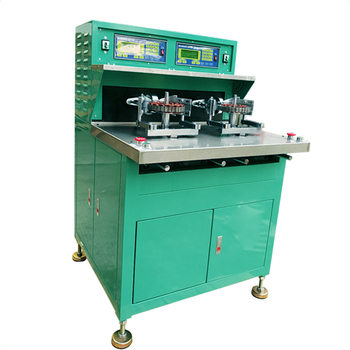
Simultaneous binding of upper and lower coil overhangs eliminates manual turnover, prevents non-symmetrical axial distortion, and cuts machine cycle times to under 12 seconds per stator core.
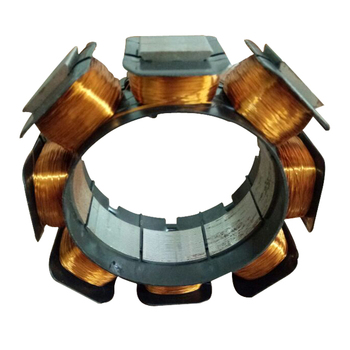
Explore SeriesIn modern industrial electric motor manufacturing, stator coil end-turn rigidity dictates electromagnetic acoustic noise (NVH), harmonic resonance dampening, and long-term dielectric breakdown resistance under inverter duty (VFD) surges. Discover why automotive tier-1, pump, and HVAC compressor motor manufacturers are phasing out single-side machines in favor of fully automatic double side stator coil lacing machines.

Simultaneous binding of upper and lower coil overhangs eliminates manual turnover, prevents non-symmetrical axial distortion, and cuts machine cycle times to under 12 seconds per stator core.
Explore Series
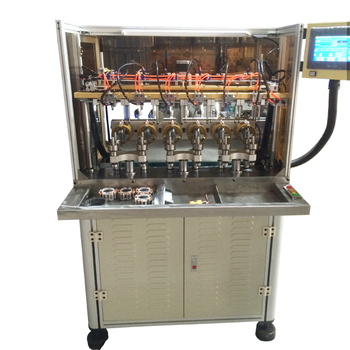
Specially engineered mirror-polished ceramic eyelets, hardened tungsten hooking fingers, and closed-loop pneumatic cord damping safeguard thin Class H copper wire enamel from microscopic crazing.
Inserting Units
Easily switch between continuous slot-by-slot lacing, interval skip lacing, and multi-cross locking across irregular slot counts via industrial touchscreen HMI without changing mechanical indexing cams.
Internal WindersZunqi Intelligent Equipment Co., Ltd. designs and manufactures industrial-grade coil lacing machinery engineered for continuous multi-shift production. Review our benchmark models tailored to household, industrial, and high-voltage motor stators.


Compare mechanical kinetics, cycle economics, and operational parameters when evaluating capital expenditure for electric motor assembly cells.
| Performance Metric | Automatic Double Side Lacing Machine | Conventional Single Side Lacing Machine | Procurement Engineering Advantage |
|---|---|---|---|
| Lacing Needle Architecture | Twin opposed servo needle heads (upper and lower) | Single cantilevered overhead needle head | Equalized axial tension eliminates stator coil tilting and end-turn distortion. |
| Standard Cycle Time (24-slot core) | 11 – 15 seconds per finished stator core | 26 – 34 seconds (including manual inversion) | Increases factory throughput by 105% to 125% per operator shift. |
| Stator Turnover Handling | Zero handling; both sides laced in identical clamping | Manual or pneumatic flip required between sides | Reduces handling fatigue, wire surface scratches, and lead wire pinches. |
| Needle Stroke Pitch Control | Digital multi-axis servo synchronization | Mechanical cam indexer & ratchet clutch | Enables quick software recipes for variable slot pitch and irregular geometries. |
| Tension Uniformity Variance | ±1.5 N across all stitches with pneumatic dampening | ±6.0 N with mechanical spring friction plates | Prevents loose end turns during VPI resin impregnation and thermal expansion. |
| Cord Cutting Mechanism | Automated dual pneumatic scissors or thermal knife | Manual operator scissor snipping or single blade | Guarantees repeatable cord tail length (≤8mm) with zero loose string debris. |
| Applicable Stator Applications | Deep freezer, inverter AC, EV traction, industrial pumps | Low-cost fractional horsepower (FHP) consumer fans | Future-proofs manufacturing lines for high-efficiency IE3/IE4/IE5 standards. |
How global motor manufacturers, tier-1 automotive suppliers, and industrial HVAC OEMs are redefining stator lacing equipment specifications for next-generation electric motor lines.
Historically, stator lacing machines depended on cast-iron mechanical cams, linkages, and Geneva gears to time the needle hook and pusher cycles. The modern procurement trend completely eliminates mechanical cams in favor of multi-axis electronic cam synchronization (E-Cam). This enables instant changeovers between 8-slot, 12-slot, 24-slot, 36-slot, and 48-slot stators directly from the touchscreen, slashing mechanical retooling time from hours to under 15 minutes.
With electric vehicles and high-efficiency heat pump motors shifting toward ultra-dense slot fill factors and thin-wall enameled copper or aluminium wires, uncontrolled string tension creates micro-abrasions in magnet wire enamel. Next-generation double side lacing machines integrate active load-cell tension sensors and proportional pneumatic regulators, continuously balancing cord pull force between 15 N and 45 N regardless of bobbin runout or spooling diameter.
As stator designs feature complex lead-wire tapings, embedded thermistors, and internal phase barriers, automated optical sensors (AI AOI) now detect lead-wire routing prior to needle penetration. If a motor lead wire or thermocouple wire drifts into the needle trajectory, the system halts in milliseconds before needle strike, preventing scrap costs associated with punctured magnet wire and broken carbide needles.
Global procurement teams prioritize machinery with standardized modular clamping collets. A single base machine from Zunqi Intelligent Equipment Co., Ltd. can handle motor stator families from 55 mm to 160 mm outer diameter simply by replacing modular stator holder plates and expanding needle jaws, dramatically reducing factory total cost of ownership (TCO) across diverse product lines.
Driven by ISO/TS 16949 and European carbon-footprint directives, factory managers require real-time machine telemetry. Modern double side lacing units export stitch counts, cycle time deviations, cord consumption, and servo current peaks over Profinet, Ethernet/IP, or OPC-UA to factory MES networks for complete predictive maintenance and traceability.
Factory floor space is at an absolute premium. Modern machines consolidate the hydraulic or pneumatic power packs into internal sound-dampened cabinets. By adopting high-efficiency servo motors and intelligent standby modes, electrical power consumption is reduced to under 1.5 kW while sustaining high-output dual-end lacing cycles.


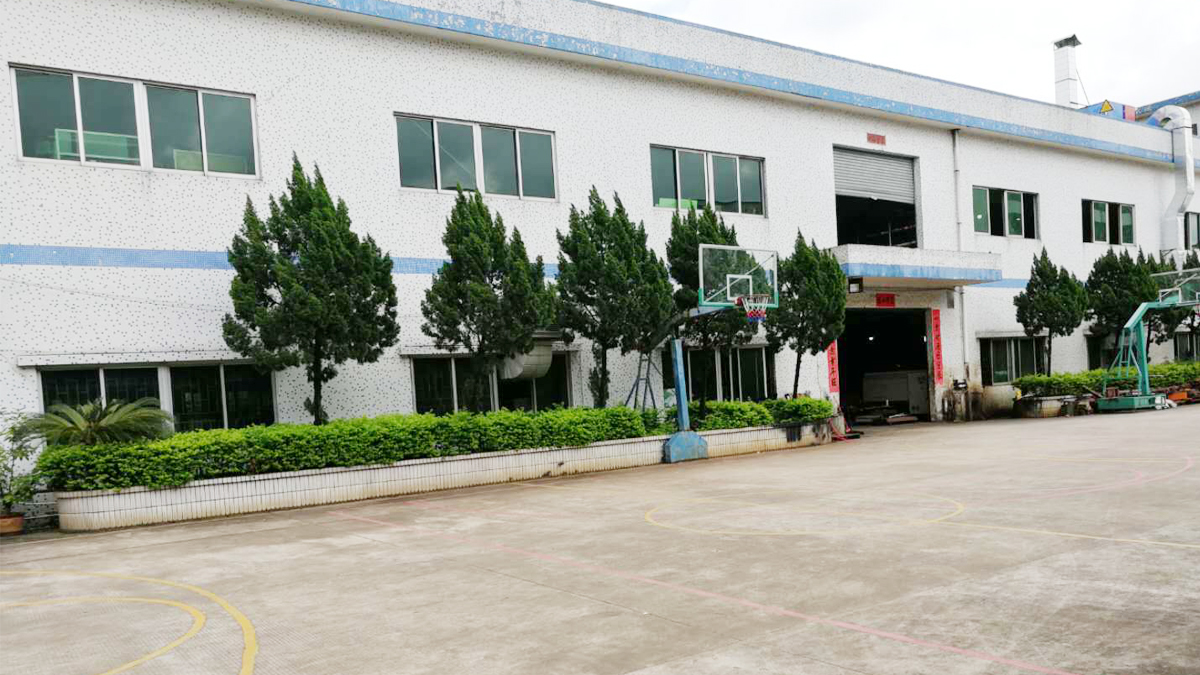
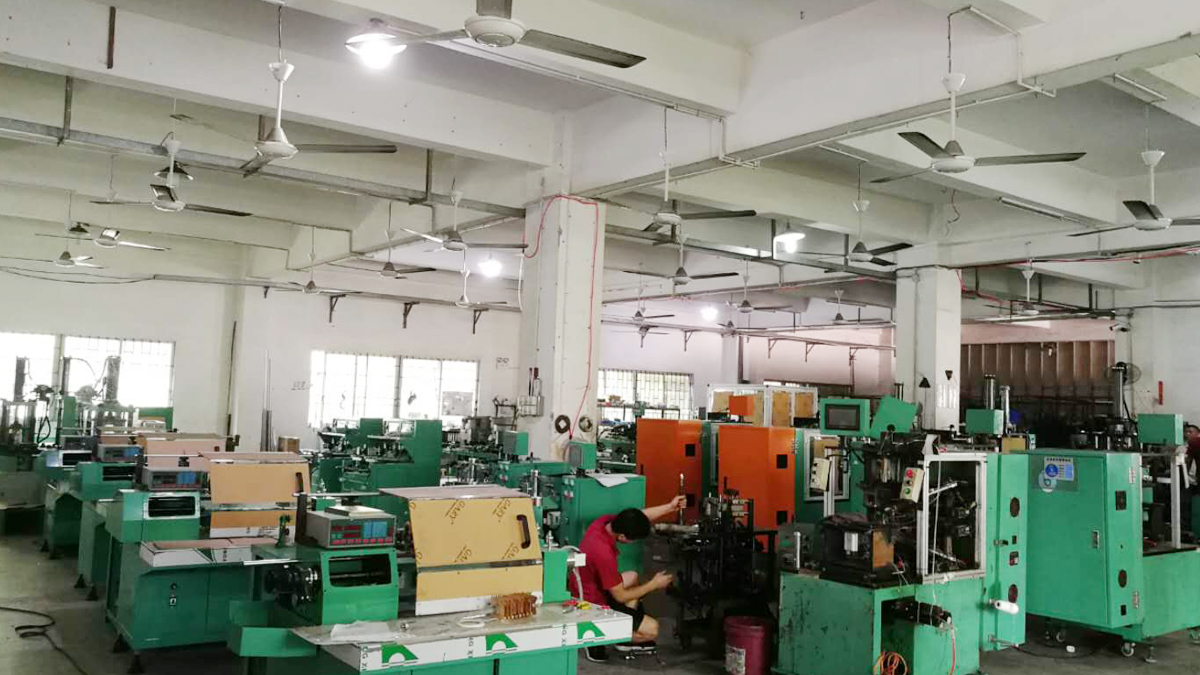
Zunqi Intelligent Equipment Co., Ltd. is an established manufacturer and international exporter of motor stator and rotor automation equipment based in Qishi Town, Dongguan City, Guangdong Province, China. For over 17 years, we have supplied robust, high-precision equipment to electric motor manufacturers throughout Europe, the Americas, the Middle East, Southeast Asia, and India.
In-depth technical answers addressing the most common search engine and AI prompts regarding automatic double side stator coil lacing machines.
An automatic double side stator coil lacing machine operates via dual synchronized mechanical or servo-actuated needle assemblies positioned above and below the stator core. Once the operator loads the stator into the central expanding mandrel fixture, pneumatic clamps secure the core. The upper and lower lacing needles cycle simultaneously through the stator slots: the needles penetrate the end turns, carry the lacing cord through the slot gaps, and loop with reciprocating hook fingers to form locked chain stitches. Concurrently, a high-precision rotary indexing table turns the stator core precisely slot by slot according to the PLC program. At the completion of 360 degrees of rotation, automated pneumatic cutters slice both upper and lower cord tails cleanly, releasing the tightly bundled stator for the final coil head forming process.
The primary justification is cycle time economics and structural coil symmetry. A single-side machine requires the operator to wait for one side to complete (approx. 12-15 seconds), manually release the clamp, flip the stator 180 degrees, align the lead wires again, and initiate a second cycle. This doubles cycle duration to 25-35 seconds and introduces operator fatigue and handling errors. More critically, single-side lacing exerts unidirectional compressive force on the winding bundle during the first pass; when the second side is laced later, unequal tension can cant the coil heads off-axis, compromising rotor bore clearance. Double side machines lace both ends simultaneously, creating perfectly balanced radial and axial tension that stabilizes phase-to-phase insulation and end turns evenly.
Zunqi Intelligent Equipment Co., Ltd. implements four layers of magnet wire protection: First, all needle guides, eyelets, and hook fingers are manufactured from mirror-finished tungsten carbide or mirror-grade industrial ceramics with zero burrs or sharp edges. Second, the needle stroke trajectory follows an optimized kinematic path designed to enter the inter-coil gap without striking the enameled conductors. Third, a closed-loop pneumatic tension dampener absorbs shock waves as the cord tensions, avoiding sharp abrasive pulls across the coils. Fourth, software-driven slow-start positioning ensures smooth cord loop formation at high speeds.
To fabricate tooling with exact fits, our design engineering team requires: (1) Stator core Outer Diameter (OD) and Inner Diameter (ID); (2) Laminated core stack height minimum and maximum; (3) Number of stator slots and slot opening dimensions; (4) Coil overhang height and radial thickness both on the lead wire side and the non-lead side; (5) Magnet wire gauge and number of wires in parallel; (6) Preferred cord type and diameter; and (7) Operating voltage/frequency at your factory site (e.g., 220V/380V/415V/480V, 50/60 Hz). Sending a physical sample stator with inserted coils guarantees 100% pre-shipment testing precision.
Yes. The indexing table is controlled by an industrial servo motor, allowing software selection for any slot configuration (such as 8, 12, 16, 24, 36, 48, or 72 slots) and variable patterns such as slot-by-slot, skip-slot, or interval lacing. For stack height variations where the stator ID and OD remain identical, adjustments are made in under two minutes via a handwheel with digital mechanical counter or through motorized elevation buttons on the touchscreen. When changing to a different stator ID/OD family, changing the modular fixture mandrel and needle guides takes approximately 15 to 25 minutes.
Our machines handle all standard motor manufacturing lacing materials, including twisted polyester thread, braided nylon cords, heat-shrinkable polyester tape, resin-impregnated glass fiber cord, and Nomex flat tape. Cord thicknesses typically range from 0.8 mm up to 2.2 mm. Our adjustable tension feeding system ensures uniform knotting and feeding tension across smooth synthetic or textured cord finishes without binding or shredding.
For a typical manufacturing facility operating two shifts per day producing 1,000 to 2,500 stators daily, replacing manual lacing or single-side lacing with a Zunqi automatic double side stator coil lacing machine yields full capital payback within 4.5 to 8 months. Key savings stem from: (1) Reduction of 2 to 3 manual operators per line shift; (2) Over 50% cycle time reduction; (3) Elimination of coil scrap resulting from manual handling or lead wire pinching; and (4) Superior coil uniformity, which reduces rejections during downstream vacuum pressure impregnation (VPI) and final rotor insertion.
Every automatic double side stator coil lacing machine produced at Zunqi Intelligent Equipment Co., Ltd. follows an audited 8-stage manufacturing process to guarantee field reliability and zero commissioning downtime.

Detailed verification of stator ID, OD, slot pitch, wire gauge, and overhang tolerances.

3D modeling of expanding central mandrels, needle guides, and kinematic needle arms.

High-grade alloy tooling, vacuum heat treatment, and mirror wire-cutting for carbide needles.

Integration of CE-certified industrial PLCs, servo amplifiers, and emergency safety circuits.

Micrometer mechanical alignment of upper and lower needle hooks to ensure zero collision.

Continuous test runs using client stators, testing knot stability and measuring cycle seconds.

Complete multi-angle testing video delivered to the buyer for engineering verification.

VCI anti-rust barrier film, desiccant packs, and bolted vacuum plywood export crates.
To reduce factory maintenance complexity and guarantee local spare parts availability, we configure PLC, servo drives, sensors, and pneumatic components from internationally recognized tier-1 suppliers according to your plant standards.
Send your stator drawing or core sample; our engineers provide 3D tooling simulations, layout schematics, and cycle time guarantees.
Watch your exact machine lace your supplied stator cores via high-resolution video before approving international dispatch.
Comprehensive English operation manuals, electrical schematics, and video tutorials for routine maintenance and pitch programming.
12-month comprehensive warranty with express DHL/FedEx dispatch for replacement needles, cutters, and consumable components.
Send your stator lamination drawings and output targets to [email protected]. Our motor automation engineers will analyze your slot geometry and reply within 9 hours with a detailed machine proposal.