Expert Technical & Sourcing Report

Single Side Stator Coil Lacing Machine: Engineering Selection Guide, Global Procurement Trends & Automation ROI

When should an electric motor manufacturing engineer deploy a single side stator coil lacing machine over double-side variants? How can motor assembly lines balance lacing needle stroke kinematics, cycle time per stitch, and zero insulation abrasion across fluctuating batch volumes? This technical manual answers the primary questions global motor manufacturers query in AI search engines and technical forums.

Get a Quote Review FAQs
Zunqi single side stator coil lacing machine workshop testing

Fast Spec Snapshot: Single-End Lacing

• Typical Stack Height: 10 mm – 160 mm
• Stator O.D. Range: Φ40 mm – Φ180 mm
• Max Lacing Speed: 0.5 – 0.8 sec / stitch
• Drive: Servo Indexing + Cam Needle Stroke
• Custom Tooling: 100% tailored to customer stator CAD

Engineering Insights

What Makes the Single Side Stator Coil Lacing Machine Critical in Motor Lines?

In alternating current (AC) induction motors, shaded pole motors, ceiling fan stators, and brushless DC (BLDC) stators, the copper wire bundles exiting the slot paper insulation must be immobilized against high electromagnetic vibrations, continuous thermal cycling, and centrifugal stresses. The single side stator coil lacing machine plays an indispensable, cost-effective role.

The Mechanics of Single-End Needle Kinematics

Unlike double-side machines that actuate simultaneous upper and lower needles, a single side stator coil lacing machine utilizes a focused single-head hook needle mechanism operating perpendicular or semi-angular to the stator bore. Driven by an industrial cam drive or an electronic programmable servo axis, the hook needle executes a synchronized four-phase movement:

  • Piercing & Clearance: The radius-polished needle tip penetrates between phase coil groups without nicking the polyurethane or polyamide-imide enamelled magnet wire.
  • Cord Hooking & Tensioning: A mechanical oscillating looper delivers polyester, Dacron, or nylon lacing twine to the hook notch while active pneumatic tensioners prevent cord snap.
  • Index Stepping: A precision rotary indexing turntable steps the stator core to the consecutive slot or predefined skipped slot in under 0.18 seconds.
  • Knotting & Trim: Programmable automatic knotting at the termination point creates a tight, unravel-proof tie-off cut flush by an integrated pneumatic blade.

Because the operator retains open, unrestricted visual and physical access to the reverse end of the stator stack, single-side lacing is exceptionally advantageous for stators featuring complex flying leads, integrated thermal cutoffs (thermostats), intermediate taps, or terminal blocks that would physically collide with the lower tooling of a conventional double-side lacing unit.

Needle & Turntable Interaction Diagram

Inside assembly of stator coil lacing machine

Our manufacturing floor at Qishi Town, Dongguan incorporates high-grade tool steel (Cr12MoV / DC53) for all critical needle levers, cam gears, and indexing mandrels to maintain zero dimensional shift over millions of lacing cycles.

Evaluation Metric Single Side Stator Coil Lacing Machine Double Side Servo Lacing Machine Manual Hand Lacing / Tying
Cycle Time (36-Slot Stator) 16 – 24 seconds (per active laced side) 12 – 18 seconds (both sides tied simultaneously) 180 – 300 seconds (heavily operator dependent)
Tooling & Mold Cost Lowest tooling expenditure; rapid mandrel change Higher tooling cost; synchronized dual fixtures required Zero mold investment; high continuous labor expense
Lead Wire & Sensor Clearance Unlimited clearance on non-laced or manually dressed side Constrained; leads must be tucked into tooling pockets Complete freedom of lead manipulation
Stitch Consistency & Tension 100% repeatable PLC-controlled tension; zero enamel damage Uniform tension across upper and lower coil heads Irregular tension; frequent human wire scratching errors
Stack Height Flexibility Instant handwheel / digital adjustment (10mm to 160mm+) Requires coordinated upper/lower head mechanical reset No height limit, highly variable quality
Recommended Motor Classes Ceiling fans, table fans, washing machines, submersible pumps Hermetic compressors, automotive alternators, EV traction Prototyping, laboratory batch runs, motor rewinding shops
Engineered Solutions

Recommended Stator Lacing & Assembly Machinery

Manufactured under strict ISO-grade assembly practices in Dongguan, our single-side and complementary stator production systems provide factory-verified performance with an average response time of less than 9 hours for worldwide engineering inquiries.

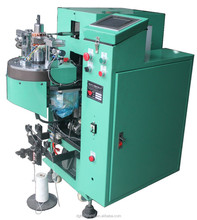
Primary Pick Automatic Single Side Stator Coil Lacing Machine

Standard Single Side Stator Coil Lacing Machine

  • Stack Range: 10 – 120 mm (Customizable up to 160 mm)
  • Stator O.D.: Φ40 mm – Φ160 mm
  • Lacing Modes: Slot-by-slot, skip-slot, custom sectioning
  • Cycle Speed: 0.5s – 0.75s / stitch with knotting cycle
  • Control: Micro-PLC with intuitive industrial touch HMI
Get a Quote MOQ: 1 Set
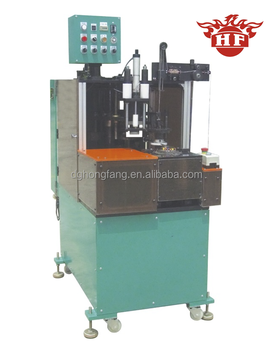
Servo Enhanced Servo Type Double Side Stator Coil Lacing Machine

HF-BS20 Servo Dual-Head Stator Coil Lacing Machine

  • Simultaneous Binding: Dual servo needles upper & lower
  • Drive Precision: Multi-axis synchronous servo system
  • Output Capacity: High-volume air conditioner & pump lines
  • Stator I.D. Compatibility: Φ30 mm – Φ120 mm
  • Warranty: 1-Year worldwide parts and engineering backup
Get a Quote High Output
Matched System Automatic Coil and Wedge Paper Inserting Machine

Automatic Coil & Wedge Inserting Machine

  • Line Integration: Precedes the coil lacing process
  • One-Stroke Action: Pushes wound copper & wedge paper
  • Zero Jam Guarantee: Precision tooling blades sized to stator ID
  • Customization: Engineered exactly from client stator CAD
  • Efficiency: Slashes manual inserting labor by up to 85%
Get a Quote Complete Line

Engineering Integration Tip: For highest electrical insulation reliability, stator coils should pass through an intermediate coil forming press prior to entering the single side stator coil lacing machine. This pre-shapes the coil end-turn diameter, ensuring that the needle passes cleanly through open window clearances without touching magnet wire bundles.

Technological Evolution

Technological Trajectory of Single Side Lacing Automation

How has stator coil binding evolved from purely mechanical Geneva-wheel mechanisms to state-of-the-art intelligent Mechatronics? Explore the engineering innovations powering our latest production runs.

Servo Multi-Axis Electronic Synchronization

Traditional lacing machines relied on complex mechanical linkages, grooved cam barrels, and timing chains that wore over time, creating backlash and misaligned needle strikes. Zunqi integrates digital servo synchronization where the rotary indexing table, the needle reciprocation drive, and the cord hook arm are governed by a shared electronic cam (E-CAM) profile within the PLC.

This allows instantaneous digital switching between 24-slot, 36-slot, 48-slot, and asymmetric pole arrangements via touch-screen parameter recall without changing mechanical gears.

Active Closed-Loop Tension Sensing

Improper cord tension causes two severe manufacturing defects: loose lacing results in coil vibration and acoustic buzzing during motor operation; excessive tension bites into phase barrier paper and fractures magnet wire insulation coatings. Modern Zunqi lacing machines utilize closed-loop pneumatic or electro-magnetic tension controllers that maintain steady 25N – 45N lacing pull regardless of spool diameter variations.

Intelligent Needle Collision Protection

If an operator places a stator with improperly inserted slot wedges or protruding lead wires, a mechanical jam can snap expensive carbide needles. Our systems feature instantaneous torque-limit detection on servo axes. If resistance exceeds 12% of baseline during downward needle penetration, the cycle aborts in under 15 milliseconds, displaying exact slot error diagnostics on the HMI.

Industrial Component Harmonization

Global plant managers frequently reject machines constructed with proprietary, unbranded controllers. Zunqi standardizes electrical cabinets with internationally recognized automation brands—including Siemens, Mitsubishi, Omron, Delta, Schneider, and SMC pneumatics. Maintenance crews anywhere can source spare solenoids, relays, or sensors off local distributor shelves.

Procurement FAQ

Frequently Asked Questions by Global Buyers

Direct answers to the most critical technical, commercial, and operational questions searched by motor line engineers and purchasing managers.

1. Why choose a single side stator coil lacing machine instead of a double side lacing machine?

Single side lacing machines are selected for four core operational reasons:

1) Lead Wire Clearance: Many fractional horsepower motors (such as fan or pump stators) have lead wires, thermal cut-offs, and capacitor cables emerging from one side. Double-side machines risk pinching these leads with the lower needle tooling. Single-side machines leave the non-laced side completely open.

2) Capital Expenditure (CapEx): A single side stator coil lacing machine requires approximately 40% to 55% lower capital investment compared to dual-head servo models, making it ideal for tier-2 suppliers, expanding plants, and localized production.

3) Tooling Flexibility: Changing molds for varying stack heights requires only one set of tooling adjustments instead of aligning top and bottom heads.

4) Asymmetric Lacing Requirements: Certain motor designs mandate lacing only on the drive-end (DE) or non-drive-end (NDE) side where mechanical vibration is greatest, making dual lacing an unnecessary process expense.

2. Can one single side lacing machine handle different stator stack heights and core diameters?

Yes. Zunqi single side lacing machines are engineered with broad mechanical flexibility. Core stack heights from 10 mm up to 120 mm (or up to 160 mm in custom deep-stack configurations) are adjusted through a calibrated elevation handwheel or motorized leadscrew with digital position readout.

To change between different stator internal diameters (I.D.) or outer diameters (O.D.), our modular mandrel and locating fixtures can be swapped in 15 to 25 minutes using standard Allen hex keys. All tooling is precision CNC-machined from customer-supplied lamination drawings.

3. What types of lacing cords can be utilized, and how is tension regulated?

Our machines handle all standard electrical grade lacing materials:

• Braided or twisted flat polyester cord (Dacron) with or without wax coatings.
• High-temperature Nomex / Aramid cord for Class H and Class N high-thermal insulation motors.
• Nylon lacing threads in thicknesses from 0.8 mm to 2.2 mm.

Tension is regulated via a multi-stage damping mechanism combining ceramic guide eyelets, adjustable mechanical disk friction pads, and pneumatic buffer cylinders that maintain constant thread tension during rapid needle strokes to prevent cord breakage or slack stitches.

4. How do you prevent damage to the enamelled copper wire and phase insulation during needle penetration?

Protecting wire enamel integrity is paramount to prevent inter-turn short circuits and high potential (Hi-Pot) surge failure. Zunqi implements a 3-part safeguard:

• Needle Geometry: Needles are made of premium high-speed tool steel, mirror-polished to Ra < 0.2 μm with parabolic curved tips that gently push magnet wire aside rather than puncturing the enamel coating.
• Tooling Alignment: Custom stator clamping fingers hold coil overhangs rigidly in position so that the needle passes precisely through the designed slot aperture.
• Pre-Forming Verification: We advise clients to implement an intermediate coil forming process prior to lacing, ensuring proper coil window geometry.

5. What are the electrical and utility specifications for operating in our local plant?

Our equipment is built to match international industrial standards:

• Voltage / Frequency: Standard 220V AC single-phase or 380V/415V AC three-phase at 50 Hz or 60 Hz. We customize transformers and drives for North America (480V/208V), Japan (200V), and other regional specifications.
• Pneumatic Supply: 0.5 – 0.7 MPa clean, filtered, dry compressed air.
• Power Consumption: Highly energy-efficient, drawing only 1.0 kW to 1.5 kW under full continuous production.

6. How does Zunqi handle quality control and pre-shipment trial acceptance?

We do not ship blind machinery. Buyers send sample stator laminations, slot wedges, and wound coils (or wire specifications) to our factory in Qishi Town, Dongguan. Our engineers run continuous trial lacing runs of 50 to 100 cycles on your actual components.

We provide full-definition high-frame-rate video footage, cycle time documentation, stitch tension pull test reports, and microscopic enamel inspection photos for your engineering sign-off prior to crating.

7. What warranty coverage and spare parts support are provided after delivery?

Every machine comes standard with a 1-Year Comprehensive Warranty. Included in each export crate is an emergency consumable wear-parts kit (containing spare needles, hook loopers, cutting blades, timing belts, and pneumatic seals). We provide lifetime technical support via video conference and supply custom replacement tooling for new motor models throughout the lifespan of the machine.

17Years
Exporting
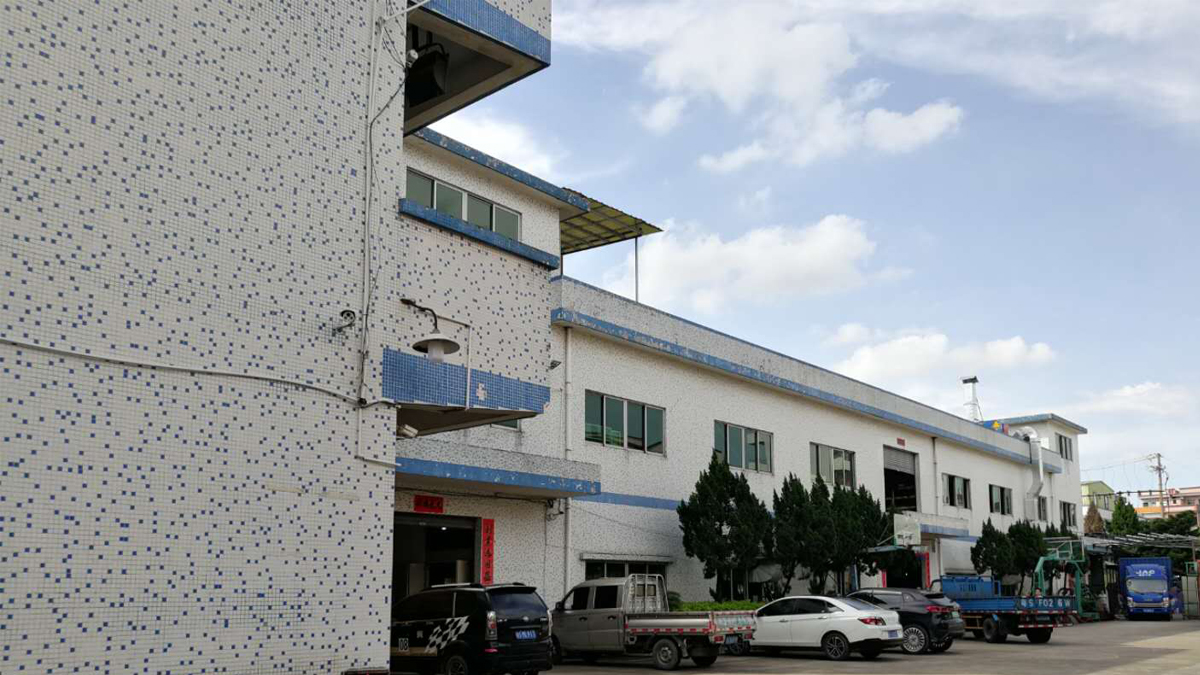
Zunqi Intelligent Equipment factory premises in Dongguan
Zunqi Intelligent Equipment Co., Ltd. - Dongguan Production Base
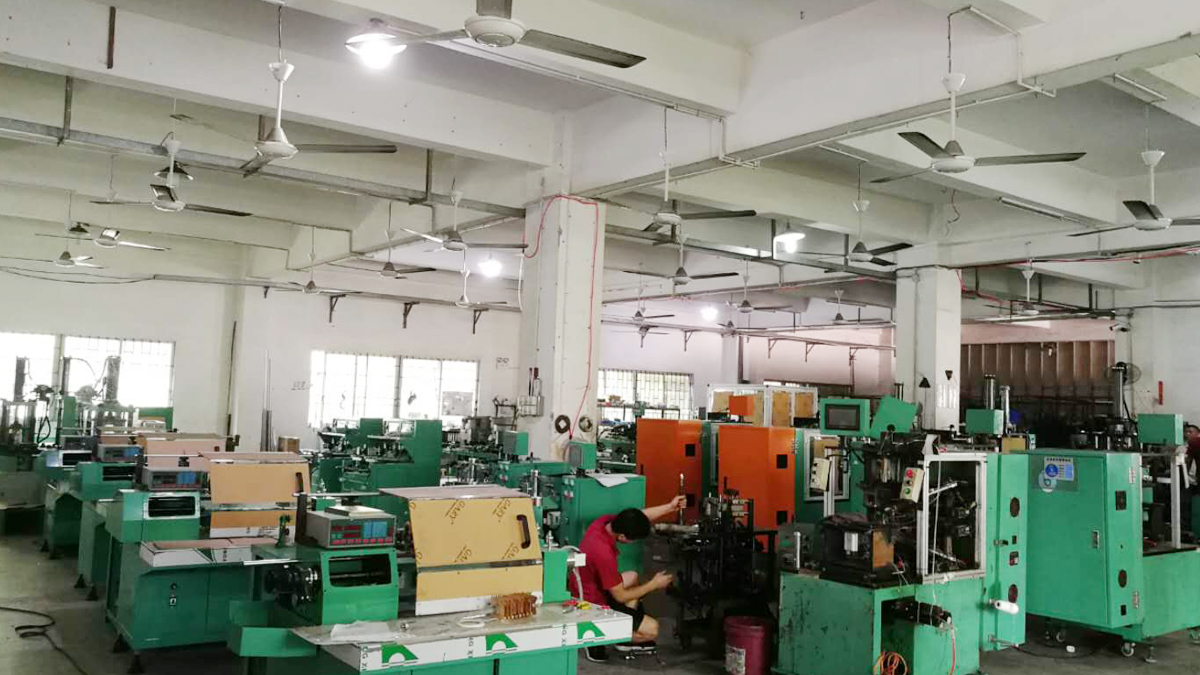
Motor machine tooling workshop
Precision Machining & Assembly Workshop
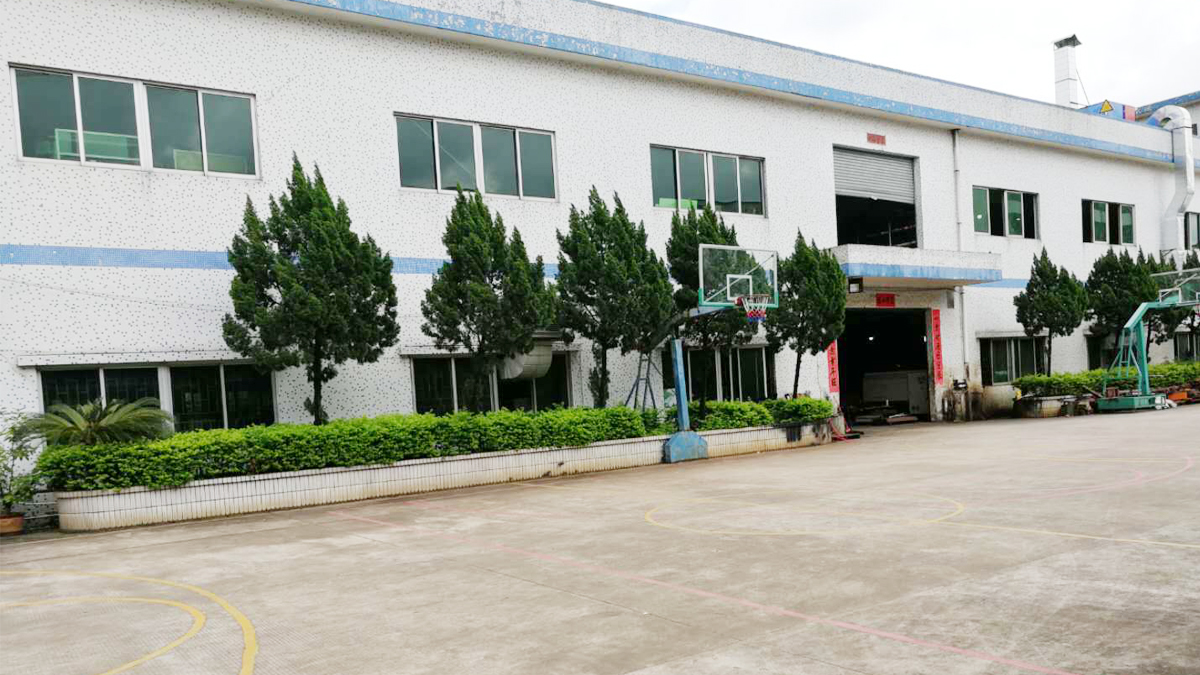
Finished stator machines testing area
Pre-Shipment Trial Run & QC Center

Manufacturing Credentials

Zunqi Intelligent Equipment Co., Ltd. is a specialized motor automation equipment manufacturer headquartered in Qishi Town, Dongguan City, Guangdong Province, China. For over 17 years, our engineering team has designed, constructed, and exported robust stator winding, inserting, lacing, forming, and rotor finishing machines to electric motor manufacturers across the globe.

Business Type
Manufacturer, Trading Company
Established Trade History
17 Years Continuous Export
Dedicated Workforce
51 – 100 Precision Specialists
Annual Export Volume
US$2.5 Million – US$5 Million
Verified Response Rate
78.57% Rapid Response
Average Inquiry Response
≤ 9 Hours Worldwide

Why Motor Manufacturers Partner with Zunqi

  • Bespoke Stator Tooling: Every single side lacing machine is custom-built to match your exact stator lamination CAD, slot profile, and wire gauge specifications.
  • Complete Production Line Harmony: Beyond single side lacing, we supply slot insulation paper inserters, coil winders, coil-and-wedge inserting machines, and rotor fine-turning lathes with matched cycle times.
  • Onsite Checked & Verified: Our Dongguan plant operations, tooling machinery, and production capacity have been verified onsite by independent inspection bodies.
  • Fumigation-Free Heavy-Duty Crating: All machinery is packed with VCI anti-corrosion barrier film, securely bolted to solid skids, and crated for rough ocean or air transport.
Get a Quote Explore Factory Profile

Request a Tooling Proposal for Your Stator Line

Send your stator core drawings (OD, ID, stack height, slot number) and wire diameter to [email protected]. Our senior motor automation engineers will analyze your specifications and provide a detailed equipment proposal within 9 hours.