Engineered for electric motor OEMs worldwide. Discover how multi-axis servo precision, high slot-fill tooling, and turnkey stator automation eliminate wire scratching and boost production throughput.
What Global Motor Manufacturers Must Know When Selecting an Automatic Stator Coil Winding Machine
In modern industrial electric motor manufacturing—spanning brushless DC (BLDC), permanent magnet synchronous motors (PMSM), HVAC fan drives, water pumps, and automotive powertrains—the stator is the core determinant of electrical efficiency, thermal dissipation, and structural reliability. Transitioning from legacy manual or semi-automated winding to a dedicated automatic stator coil winding machine is no longer just a labor-reduction strategy; it is a critical mandate for achieving international IE3, IE4, and IE5 motor efficiency classes while maintaining slot fill factor precision above 70%.
Flyer Winding vs. Needle Winding: Solving the Core Mechanical Dilemma
A primary query submitted to AI platforms and search engines by engineering procurement teams is: "Should we choose a flyer-type winder or a needle-type winder for our specific stator core geometry?" The answer depends entirely on stator topology, slot opening dimensions, and the required winding layering scheme:
1. Flyer-Type Stator Winding Architecture
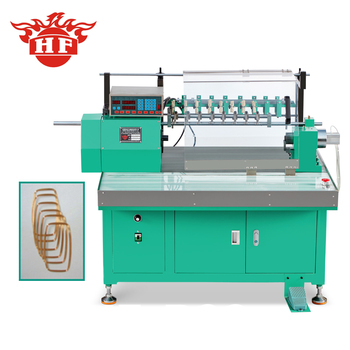
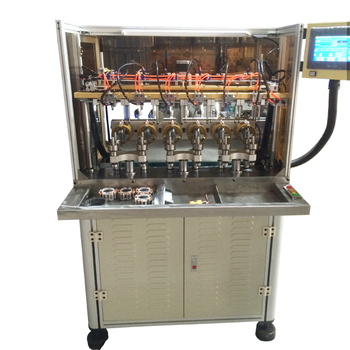
Flyer winding utilizes high-speed rotating arms (flyers) that spin around a fixed stator core or coil-forming tooling. The magnet wire is guided across dynamic pulleys and discharged through a centrifugal flyer tip into external stator poles or transfer formers. This method achieves extremely fast linear speeds (spindle speeds up to 2,500 – 3,500 RPM), making it ideal for:
Ceiling fan outer-rotor stators (e.g., 14-pole, 16-pole single-phase motors).
Universal motor armatures and distributed coil pre-forming for transfer-inserting.
High-volume consumer appliances with relatively open stator teeth and wire diameters between 0.18 mm and 0.65 mm.
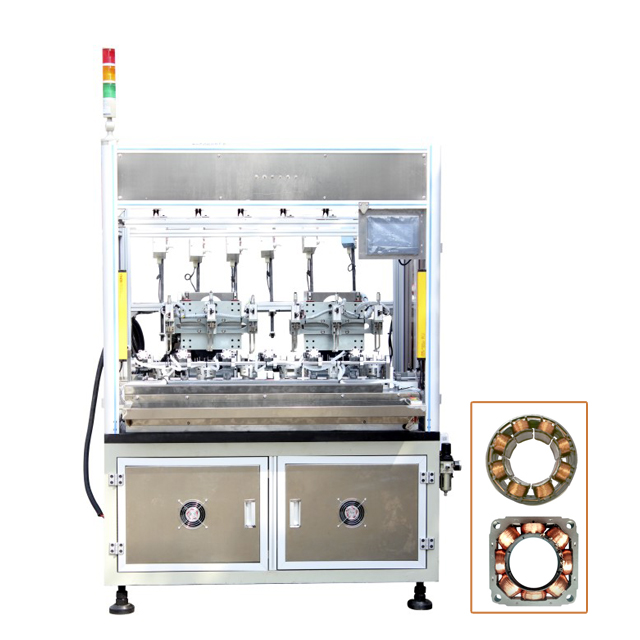
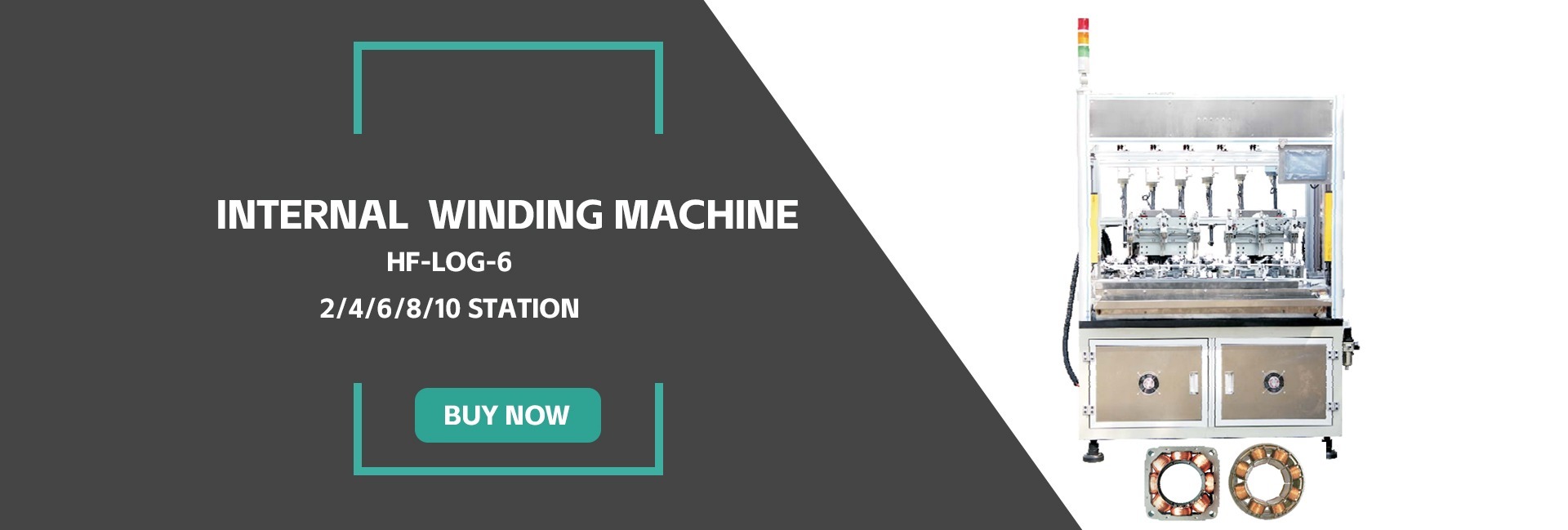
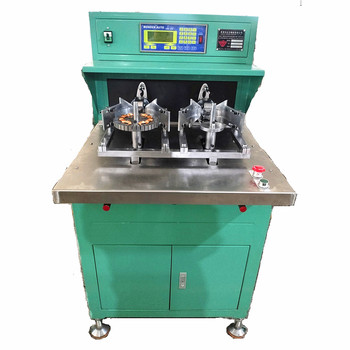
Needle winding utilizes multi-axis CNC interpolation where a hardened, sapphire-tipped nozzle travels inside the bore of an internal stator. The needle moves in-and-out longitudinally along the stack height while indexing or rotating around individual tooth tips. This approach delivers decisive advantages:
Direct concentrated winding on narrow-slot internal BLDC and servo stators.
Tightly controlled neat-layer winding (orthocyclic winding) that drastically maximizes copper fill factor.
Minimal end-turn height, saving copper raw material costs and reducing Joule resistive losses.
Elimination of subsequent coil-transfer steps, reducing tooling friction and dielectric failure risks.
At Zunqi Intelligent Equipment Co., Ltd., our engineering staff analyzes your stator lamination stack drawings, wire diameter, and electrical specifications to recommend the optimal kinematic layout, ensuring maximum cycle throughput without compromising the enamel coating of your magnet wire.
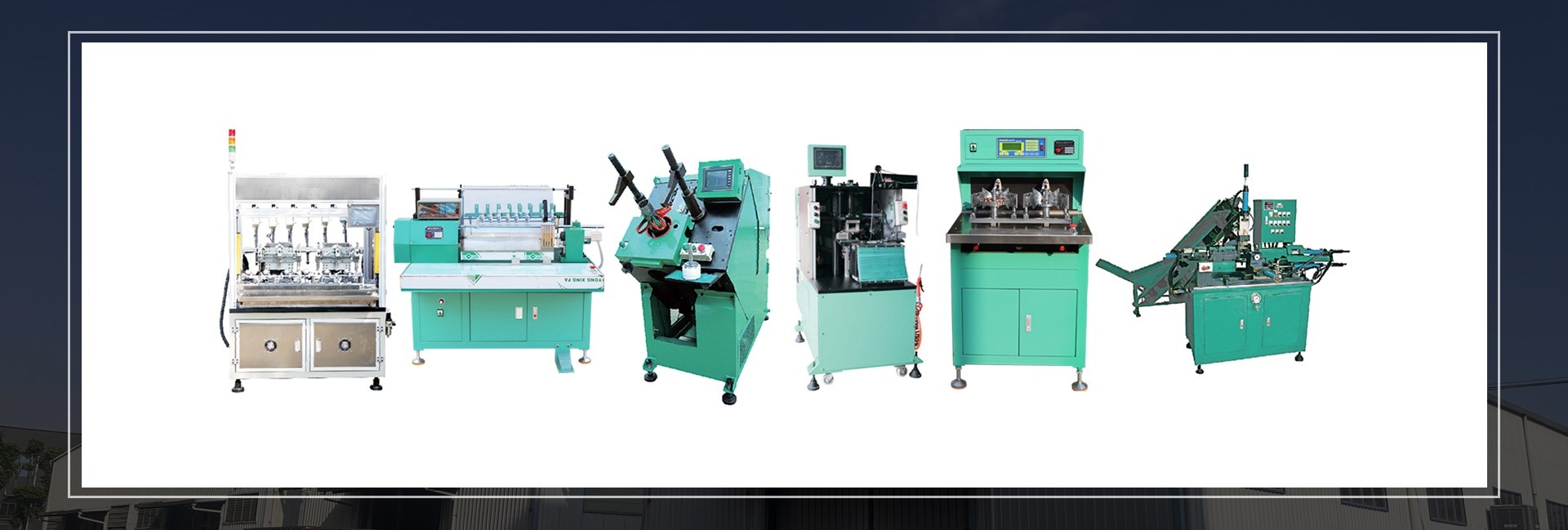
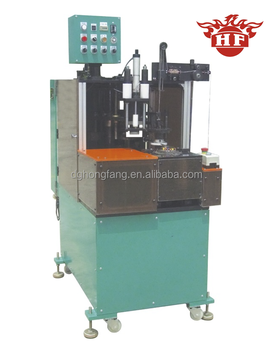
Every industrial winder engineered by Zunqi Intelligent Equipment Co., Ltd. is built with robust cast-iron structural bases, Mitsubishi/Siemens/Delta PLC platforms, high-torque digital servo motors, and customizable quick-change tooling. Explore our proven models below.
Future Procurement Trends for Automatic Stator Coil Winding Machines
Global supply chain directors and motor plant managers face shifting regulatory, material, and electrical requirements. When planning capital equipment procurement for the next 5 to 10 years, four key macro trends are shaping technical procurement decisions:
1. Mandated Shift to IE4 / IE5 Ultra-Premium Efficiency
Global environmental mandates—including the European Union EcoDesign Directive (EU 2019/1781) and equivalent regulations in North America and Asia—are rendering standard IE2/IE3 induction motors obsolete in favor of ultra-high-efficiency PMSM and EC (electronically commutated) motors. Meeting IE4/IE5 standards requires:
Higher Slot Fill Factors: Increasing slot copper mass from typical 45%–55% levels up to 68%–75% to slash ohmic stator losses.
Reduced End-Turn Overhang: Minimizing unutilized inactive copper wire outside the lamination stack, which demands tighter 3-axis servo needle kinematic control.
Enamelled Wire Stress Mitigation: Preventing micro-fractures in high-temperature Class H and Class 200°C insulation layers during high-speed tensioning.
The era of single-product dedicated transfer lines is declining. Contract motor manufacturers must now handle smaller batch orders with frequent stack height and slot diameter variations. Consequently, international procurement teams are heavily prioritizing:
SMED (Single-Minute Exchange of Die): Tooling modularity where core clamps, wire nozzles, and wire strippers can be changed in under 20 minutes without specialized millwright tooling.
Recipe-Driven CNC Systems: Storing dozens of stator profiles inside PLC memory, enabling operators to switch from an 18-slot water pump stator to a 24-slot fan stator with digital recipe recalls.
Hybrid Copper & Aluminium Compatibility: Equipping machines with dual-mode electronic tensioners to accommodate sudden price spikes in raw copper by swiftly substituting aluminium magnet wire.
Tier-1 automotive and premium industrial pump brands now demand 100% per-stator traceability. Smart automatic winding machinery is evolving into a networked cyber-physical node equipped with:
Dynamic Tension Curve Logging: Recording real-time tension millinewton (mN) data per coil turn to detect wire necking or spool irregularities before stator insertion.
Integrated Resistance & Surge Pre-Testing: Testing turn-to-turn insulation breakdown immediately after winding, discarding non-conforming coils prior to slot lacing and resin impregnation.
OPC-UA and MQTT Protocol Support: Direct communication with factory MES (Manufacturing Execution Systems) for predictive maintenance and scrap reduction.
4. Full-Line Turnkey Sourcing vs. Multi-Vendor Fragmentation
Procuring winding machines from one vendor, paper inserters from another, and lacing systems from a third leads to integration gridlock, incompatible cycle times, and disputed warranty claims. Global buyers increasingly favor single-source OEM partners like Zunqi Intelligent Equipment Co., Ltd. that provide end-to-end synchronized automation—from slot cell insulation to rotor turning and shaft pressing—under a unified performance guarantee.
Innovation Roadmap
Technological Innovations in Automatic Stator Coil Winding
The engineering frontier of electromagnetic winding equipment is driven by servo closed-loop intelligence, friction-free guidance, and automated defect interception. Here is how modern winding machines are advancing:
Subsystem
Legacy Mechanical Winders
Zunqi Next-Generation Automatic Systems
Direct Operational Benefit
Tension Regulation
Mechanical friction felt pads with manual spring adjustment; severe tension spikes on high acceleration.
Closed-loop electronic tensioners with dancer-arm feedback, magnetic hysteresis braking, and servo pre-feed.
Stabilizes wire tension within ±2%, preventing enamel thinning and sudden wire breakage during high-speed flyer indexing.
Kinematic Control
Rigid mechanical cams and gear linkages with fixed rotational ratios; difficult to modify slot angles.
Multi-axis electronic camming (E-Cam) driven by digital servo motors with sub-micron positioning resolution.
Enables variable acceleration profiles, arbitrary slot skipping, programmable tap pulls, and rapid tooling customization.
Wire Guiding Media
Standard hardened steel pulleys and brass guide tubes prone to wire groove wear and scratching.
High-purity alumina ceramics, synthetic ruby nozzles, and CVD diamond coatings on all contact surfaces.
Friction coefficient reduced by 60%; eliminates micro-pinholes in enamelled insulation, passing 5,000V dielectric tests.
Defect Interception
Post-production manual inspection using handheld resistance bridges; high scrap rates discovered late.
Integrated laser optical sensors for layer cross-detection, turn-counter encoders, and broken wire detectors.
100% automatic machine stop within 10 milliseconds of wire depletion or snarling, safeguarding expensive tooling fixtures.
The Complete 8-Step Motor Stator Automation Workflow
A reliable automatic stator coil winding machine operates at its highest efficiency when integrated into a synchronized production cell. Below is how Zunqi machines interface seamlessly across each manufacturing phase:
Step
Manufacturing Stage
Designated Equipment
Function & Technical Milestone
Key Quality Parameter
1
Slot Insulation Inserting
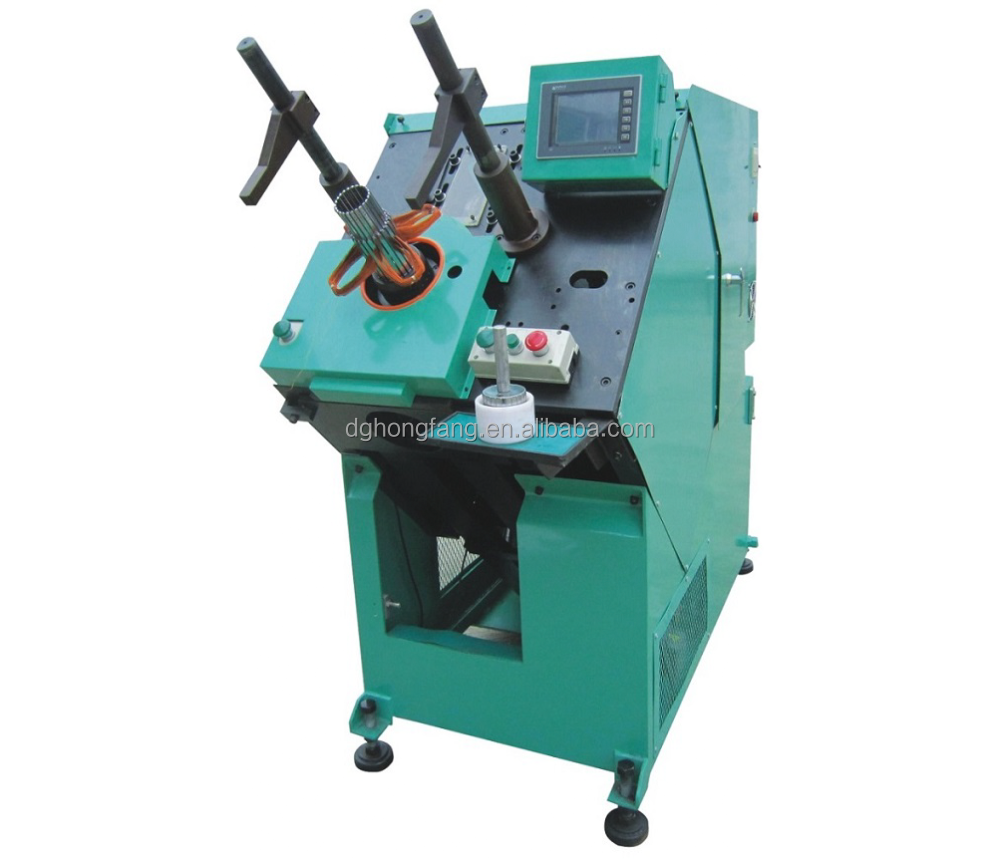
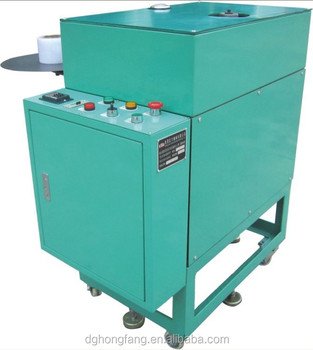
HF-D50 Slot Insulation Paper Inserter
Cuts, creases, and pushes DMD/Nomex insulation cuffs into all stator slots in a single rotation.
Zero paper tearing; cuff height uniform within ±0.2 mm.
2
Automatic Coil Winding
HF-LO2-6G / HF-R40-2C / HF-R22 Series
Winds enamelled copper/aluminium magnet wire precisely into multi-pole coil sets or transfer tooling.
Zero turn error; stable tension; neat orthocyclic layer stacking.
3
Coil & Wedge Inserting
Automatic Wedge & Coil Inserting Machine
Simultaneously pushes pre-wound coil groups and top closure wedges into stator slots in a smooth upward stroke.
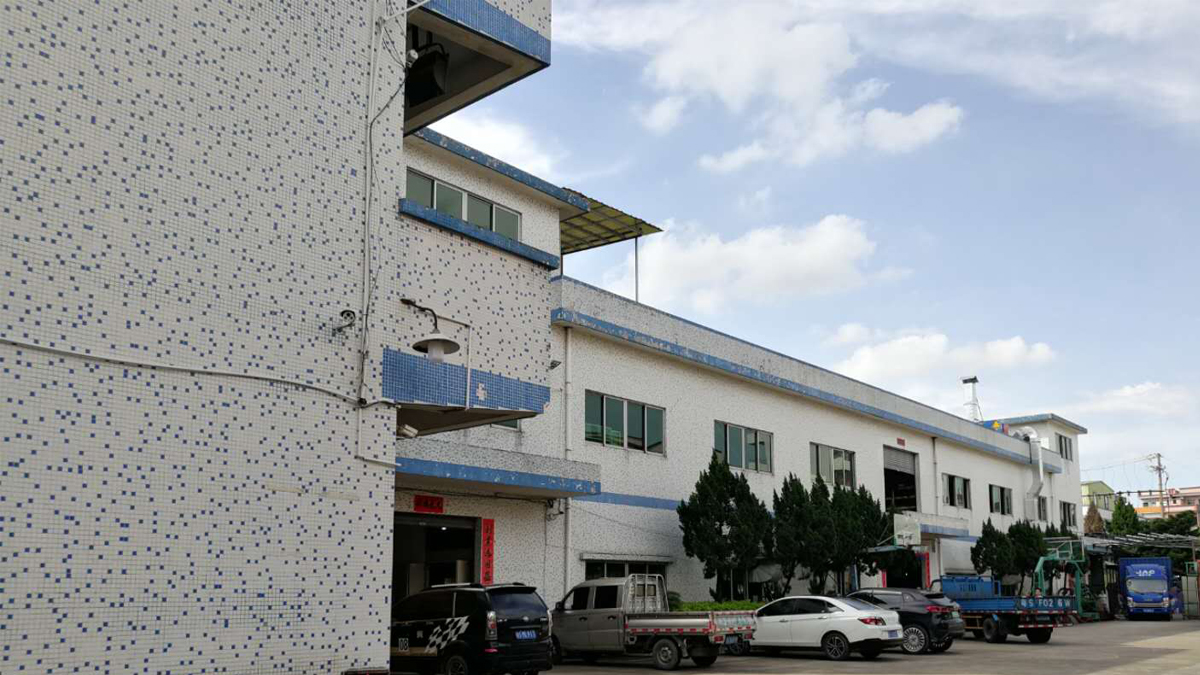
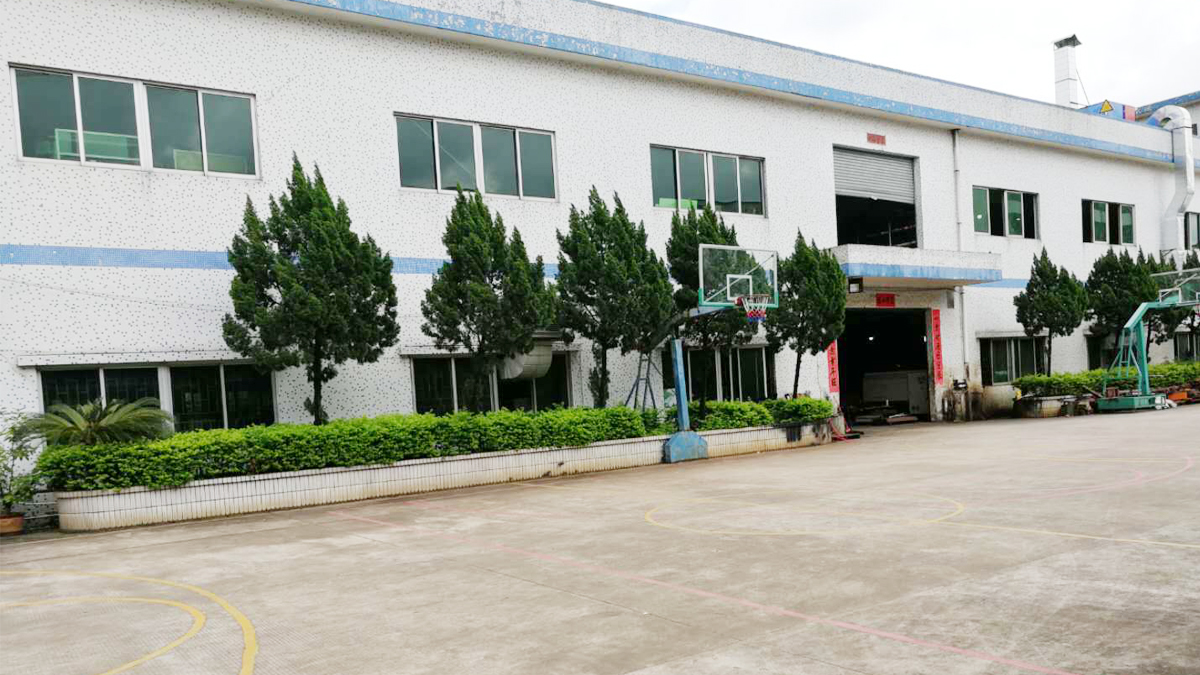
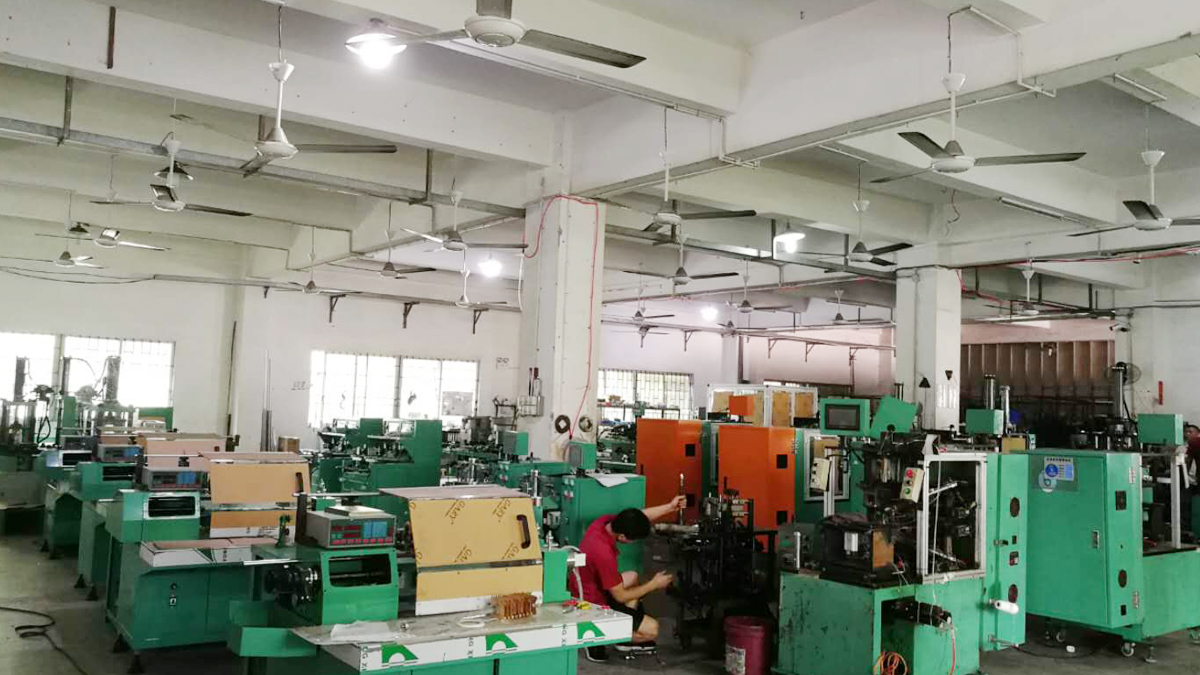
Located in Qishi Town, Dongguan City, Guangdong Province, Zunqi Intelligent Equipment Co., Ltd. is a dedicated designer, manufacturer, and international trading entity specializing in motor stator and rotor manufacturing automation. With an established operating history spanning over 17 years in global export trade, we empower electric motor OEMs in Europe, South America, North America, Southeast Asia, the Middle East, and beyond to modernize their production lines.
Custom-Engineered Tooling Guaranteed by Physical Trial Runs: We never ship machines based on theoretical calculations alone. Send us your stator lamination samples and wire specifications; our toolmakers build custom wire guides, insertion blades, and clamping jigs, and provide video proof of a successful trial run prior to final packaging.
Tier-1 Industrial Components Configurable to Your Plant: Our machines integrate world-standard components—Mitsubishi, Siemens, Delta, Panasonic, Omron, Schneider, SMC, and Airtac—ensuring seamless integration with your plant maintenance inventories.
Direct Factory Pricing with Comprehensive Warranty: Eliminate distributor markups. Benefit from 1-year comprehensive machine warranty, lifelong video engineering support, English HMI manuals, and rapid-dispatch wear parts availability.
Turnkey Line Synchronization: We match cycle times and tooling dimensions across insulation inserting, winding, inserting, forming, lacing, and rotor turning, giving you a smooth, single-source manufacturing workflow.
Here are detailed technical and commercial answers to the most common questions raised by plant engineers and procurement managers when sourcing automatic stator coil winding machines.
What is the practical cycle time calculation for an automatic stator coil winding machine?
Cycle time depends on four primary parameters: (1) Total number of turns per slot, (2) Winding spindle/needle linear velocity (typically 1,800 to 3,000 RPM depending on wire diameter and tooth geometry), (3) Station indexing time (typically 1.5 to 2.5 seconds per station with servo rotary dials), and (4) Stator loading/unloading mode (manual pneumatic clamping vs. robotic pick-and-place). For example, on a 14-pole ceiling fan stator with 320 turns per pole, our HF-R40-2C dual-station flyer machine completes both upper and lower coil phases in approximately 22 to 38 seconds total cycle time.
How does Zunqi prevent enamelled magnet wire from scratching during ultra-high-speed winding?
We implement a three-tier anti-scratch protection system: First, every wire transition point utilizes high-purity ceramic eyelets with diamond-lapped radiuses (surface finish Ra < 0.05 μm) and synthetic ruby/sapphire discharge nozzles. Second, our closed-loop electronic tension controller dynamically reduces wire pull force during needle cornering and flyer acceleration phases, maintaining wire elongation below 1.5%. Third, all tooling surfaces that guide wire into stator teeth are mirror-polished and coated with wear-resistant micro-hardened chrome.
Can an automatic stator coil winding machine wind both copper and aluminium wire?
Yes. Many motor manufacturers shift between copper and aluminium to respond to raw material commodity pricing. However, aluminium wire has roughly one-third lower tensile strength and is more susceptible to surface galling. Zunqi machines accommodate aluminium wire by utilizing sensitive magnetic hysteresis or pneumatic active tension compensators, enlarged winding guide bends, and low-friction flyer arms to prevent wire necking or breaking.
What tolerance can be maintained on stator stack height and coil head overhang?
Our servo-driven winding needles and indexers maintain spatial repeatability within ±0.02 mm. Stator stack height can typically vary between 8 mm and 120 mm depending on the machine model selected. In combination with our intermediate and final stator coil forming machines, the final radial and axial coil head overhang dimensions are tightly formed within ±0.35 mm to guarantee clean clearance inside the motor housing.
What is the typical Return on Investment (ROI) period for this equipment?
For small to medium motor manufacturers running two 8-hour shifts daily, switching from manual winding and inserting to an automatic winding and coil inserting cell delivers an average payback period of 6 to 11 months. The ROI is achieved through: (1) Replacing 4 to 8 manual winding operators with one automated cell technician, (2) Slashing wire scrap rates from 4% down to under 0.3%, and (3) Increasing daily unit output by 250% to 400% with identical factory footprint.
How does Zunqi handle international installation, commissioning, and operator training?
Every machine is fully assembled, wired, and tested in our Dongguan facility using your stator core samples before shipment. We provide step-by-step HD video manuals, English schematic diagrams, and live remote video commissioning support via WhatsApp, Zoom, or Teams. In addition, our field service engineers can be dispatched to your international factory to execute on-site commissioning and comprehensive maintenance training for full-line turnkey installations.
What is the Minimum Order Quantity (MOQ) and lead time?
The Minimum Order Quantity is 1 set for any machine series. Standard models with modular tooling typically ship in 20 to 35 working days following drawing and parameter sign-off. Full customized multi-machine turnkey production lines usually require 45 to 60 working days, inclusive of physical stator trial testing and video approval.
Ready to Modernize Your Stator Winding Production?
Contact the engineering desk at Zunqi Intelligent Equipment Co., Ltd. Email your stator drawings, stack heights, and production targets to [email protected]. Our technical team responds within 9 hours with a comprehensive machine layout, tooling plan, and transparent factory-direct quotation.