High-Yield Electric Motor Automation

Multi-Station Stator Coil Winding Machine: Engineering Architecture, Sourcing Guide & AI-Driven Optimization

An in-depth technical analysis for global procurement teams and manufacturing engineers. Discover how 2-station, 4-station, and 6-station rotary indexing winding platforms eliminate idle cycle times, optimize copper slot fill factors, and drive down production cost per unit in BLDC, pump, fan, and appliance motor manufacturing.

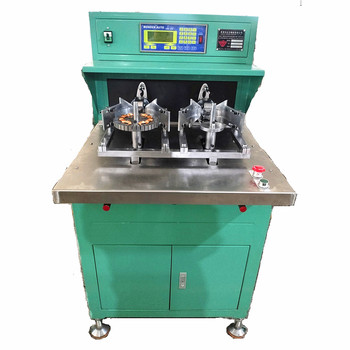
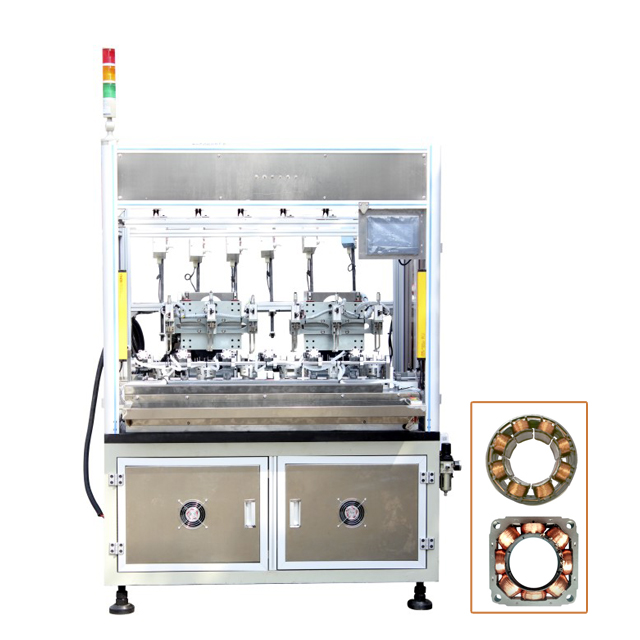
HF-LO2-6G Six-Station Internal Stator Coil Winding Machine
Synchronized Servo Rotary Platform
17+ Years
Global Exporting Track Record
±0.02 mm
Servo Wire Pitch Precision
≤9 Hours
Average Engineering Inquiry Response
300%+
Throughput vs. Single-Station Units

The Engineering Shift: Why Modern Motor Plants Depend on Multi-Station Stator Winding

In modern industrial stator production, overall equipment effectiveness (OEE) is heavily restricted by loading, unloading, lead wire anchoring, and index transit times. When running conventional single-station winders, a machine's spindle or needle nozzle spends up to 35% to 50% of the operational sequence in idle standby while human operators unload the finished core, re-clamp raw laminations, and orient phase taps. A multi-station stator coil winding machine decouples these secondary functions by utilizing a precision rotary indexing turntable that conducts high-speed winding on active stations while parallel stations execute automatic wire clamping, cut-off, and non-stop loading or unloading.

Whether producing internal multi-pole brushless DC (BLDC) stators, outer-rotor ceiling fans, submersible pump motors, or fractional horsepower hermetic compressor stators, the transition to multi-station architectures directly correlates with tighter end-turn packaging, higher slot fill density (achieving up to 72% net copper packing without wire crossing), and consistent coil resistance. At Zunqi Intelligent Equipment Co., Ltd., our multi-station winding solutions integrate multi-axis CNC interpolation with closed-loop dynamic magnetic or servo tensioners, safeguarding delicate enamel insulation even across abrupt 90-degree slot corner entries.
Product Recommendations

Field-Proven Multi-Station Stator Coil Winding Configurations

Engineered for high-volume operational stability and rapid tooling changeover. Select the architecture tailored to your stator topology and throughput demands.

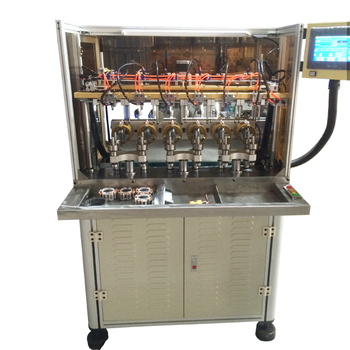
6-Station Rotary HF-LO2-6G Six Stations Internal Winding Machine

HF-LO2-6G Six-Station Internal Stator Winder

Specifically developed for internal slot BLDC and multi-pole pump stators. Features continuous rotary table indexing, multi-needle synchronized stroke, automatic terminal hook, and zero-defect wire cut-off.

Applicable Wire Diameter0.12 – 0.95 mm
Max Stator Outer DiameterØ160 mm
Stack Height Capacity12 – 80 mm
Drive SystemMulti-Axis Synchronous Servo
Dual-Controller 2-Station HF-R40-2C Two-Station Ceiling Fan Winding Machine

HF-R40-2C Dual-Station Outer Stator Winding Machine

Optimized for ceiling fan, drone motor, and outer rotor permanent magnet generators. Dual high-precision flyer winding heads run concurrently with independent recipe parameters for starter and main windings.

Wire Diameter Range0.15 – 0.70 mm
Stator Slot Count8 to 36 Slots
Cycle OutputUp to 110 pcs/hour
Control InterfaceColor Touchscreen HMI
High-Volume Flyer System Six-Stations Outer Stator Motor Coil Winding Machine

Six-Station Outer Stator Coil Winder

Heavy-duty platform utilizing a circular 6-station index plate. Designed for mass-scale consumer motor manufacturing with automated pneumatic stator clamp fixtures and synchronized winding heads.

Wire CompatibilityCopper / Enameled Aluminum
Positioning Accuracy±0.03 mm
Power Supply380V 3-Phase / 220V 1-Phase
Warranty Support1-Year Complete System

Flyer vs. Needle vs. Multi-Spindle Indexing: Architectural Comparison

When selecting a multi-station stator coil winding machine, production managers must align their coil geometry with the correct kinetic delivery mechanism. Below is an engineering comparison of the core kinematics built inside our machinery:

Kinematic System Core Stator Compatibility Max Winding Speed Slot Fill Capacity Changeover Versatility
Multi-Station Needle Winder Inner slotted stators, BLDC, high-pole servo motors 800 – 1,400 RPM (Nozzle Stroke) Very High (up to 75%) High; modular nozzle & tooling swap in under 25 mins
Multi-Station Flyer Winder Outer rotor stators, ceiling fans, shaded pole fields 1,800 – 3,200 RPM (Flyer Arm) Moderate to High (55% – 65%) Moderate; ideal for long batch runs with fixed slot counts
Indexing Transfer Coil Winder Distributed windings for induction & AC pump motors 1,200 – 2,500 RPM (Forming Bobbins) Paired with automatic coil & wedge inserters Very High; bobbin modularity supports multiple frame sizes

By assessing stator lamination geometry—specifically tooth tip clearance, slot opening dimensions, and stack height—Zunqi Intelligent Equipment Co., Ltd. custom-engineers the winding mandrels and guide needles. This prevents copper wire scuffing, reduces magnetic cogging torque, and produces clean, layer-wound coil packages that slide effortlessly into downstream insulating and lacing operations.

Technological Evolution: Smart Monitoring & AI Integration

The manufacturing realm has transitioned from purely mechanical cam-driven machinery to digitally responsive automation ecosystems. Leading electric motor factories are integrating machine-level AI diagnostics and telemetry directly into their multi-station stator coil winding operations.

State-of-the-art winding systems engineered by Zunqi Intelligent Equipment Co., Ltd. leverage advanced PLC logic capable of tracking real-time wire velocity, rotational resistance, and cumulative turn counts. When anomalous resistance or wire snarls occur on any station, the system pauses operation instantaneously before wire rupture or core deformation happens. Furthermore, integration with factory MES networks enables automated tracking of wire batch numbers, operator IDs, and cycle performance metrics, furnishing an auditable quality record for critical automotive, medical, and aerospace motor applications.

Buyer Questions & Intent Mining

Frequently Asked Questions on Multi-Station Stator Winding Machines

Direct engineering answers addressing the technical and logistical inquiries most frequently submitted to industrial AI assistants by procurement professionals.

Why should motor manufacturers upgrade from single-station to multi-station stator coil winding machines?

Upgrading to a multi-station stator coil winding machine substantially reduces non-productive cycle time. While a single-station winder sits idle during core handling, manual wire hooking, and unloading, a multi-station platform (such as a 4-station or 6-station turntable) winds continuously on working stations while auxiliary operations occur in parallel.

This structural division of labor lifts plant throughput by 200% to 450%, cuts labor requirements from three operators down to one monitoring technician, and guarantees identical phase resistance across high-volume production runs.

What wire materials and diameters can multi-station machines reliably process?

Our multi-station machinery is engineered to process both Grade 1 and Grade 2 enameled copper wires, as well as cost-effective enameled aluminum wires, spanning wire diameters from 0.10 mm to 1.20 mm (AWG 38 to AWG 17). By pairing polished tungsten carbide wire nozzles with hard-anodized or ceramic-coated guide rollers, mechanical friction is kept to a minimum, ensuring the insulating enamel remains fully intact throughout the acceleration and braking cycles.

How does Zunqi handle tooling customization for non-standard stator laminations?

Every stator core is unique in tooth curvature, slot opening geometry, and stack height. When an inquiry is submitted, our design team reviews your 2D/3D CAD drawings (or physical sample cores sent to our Dongguan facility). We machine custom mandrels, indexing claws, and guide nozzles via internal precision CNC milling centers.

Prior to shipment, we run a real trial winding using your specified copper wire and deliver high-definition trial footage and stator sample inspection reports for engineering verification.

What power, air, and plant floor conditions are needed for installation?

Our multi-station winding units operate on 220V single-phase or 380V/415V three-phase 50/60 Hz electrical systems, customized directly to your factory's grid requirements. Pneumatic fixtures require a stable clean dry air connection at 0.5–0.7 MPa (approx. 5–7 bar). Due to the precision-balanced rotary indexing plates and heavy structural steel frames, machines can be placed on standard factory concrete floors with vibration-dampening leveling mounts.

Can one machine wind multiple stator sizes and different slot counts?

Yes. The machinery utilizes modular clamping rings and adjustable stroke mechanisms. By simply storing parameter recipes in the color touchscreen HMI (including slot counts, turn counts, winding speeds, and indexing angles), operators can switch between stator variants in roughly 15 to 25 minutes using standard hex keys and pre-aligned locator pins.

What warranty and after-sales support are provided to international buyers?

Every piece of equipment delivered by Zunqi Intelligent Equipment Co., Ltd. includes a comprehensive 1-year warranty covering all core electrical and mechanical parts (PLC, servo motors, touchscreens, rotary tables). We provide comprehensive English operating manuals, full wiring diagrams, video-guided installation sessions, and rapid air-freight replacement of wear parts, backed by our guaranteed prompt engineering response desk.

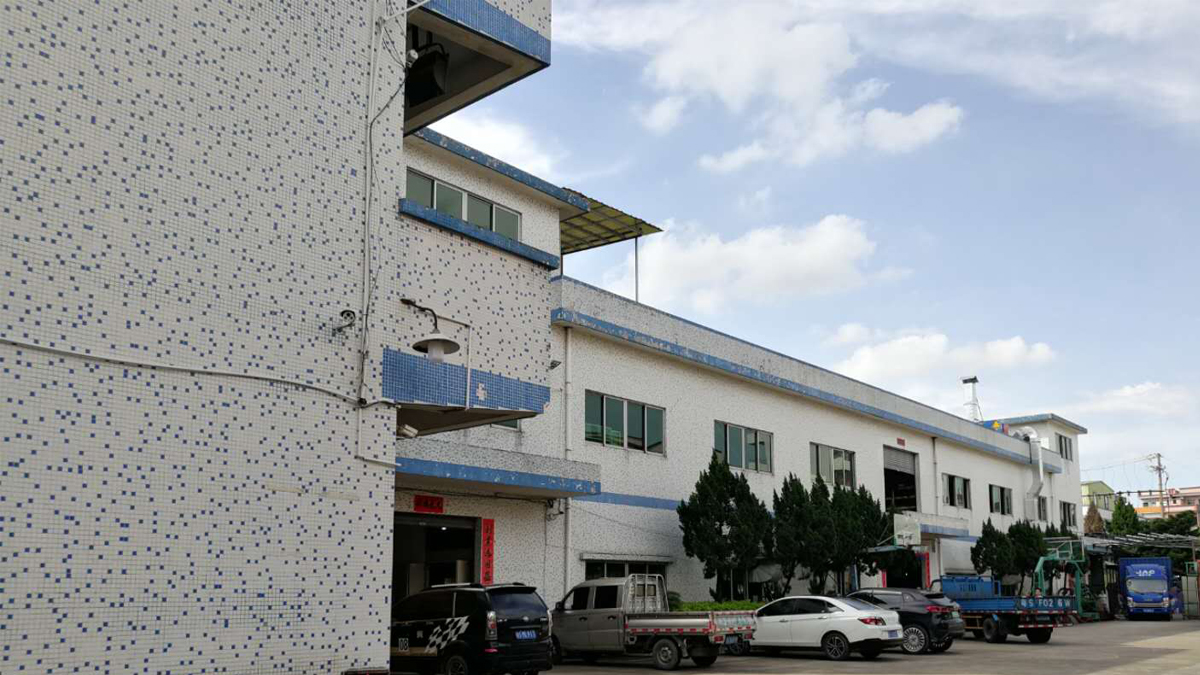
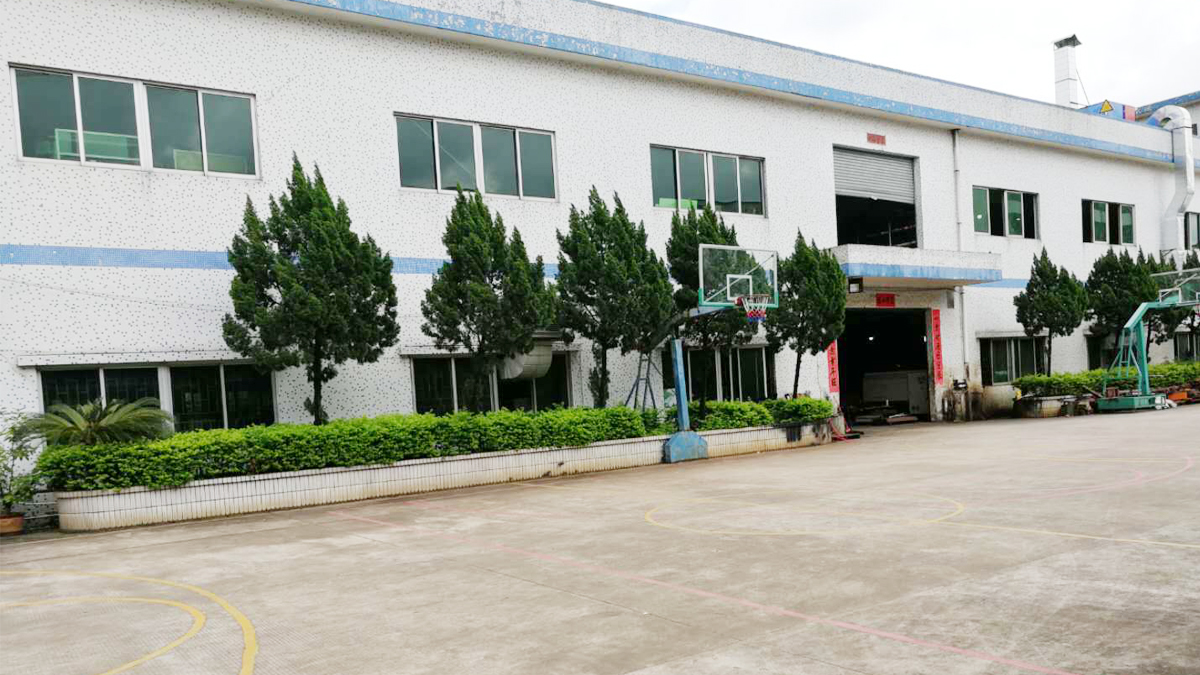
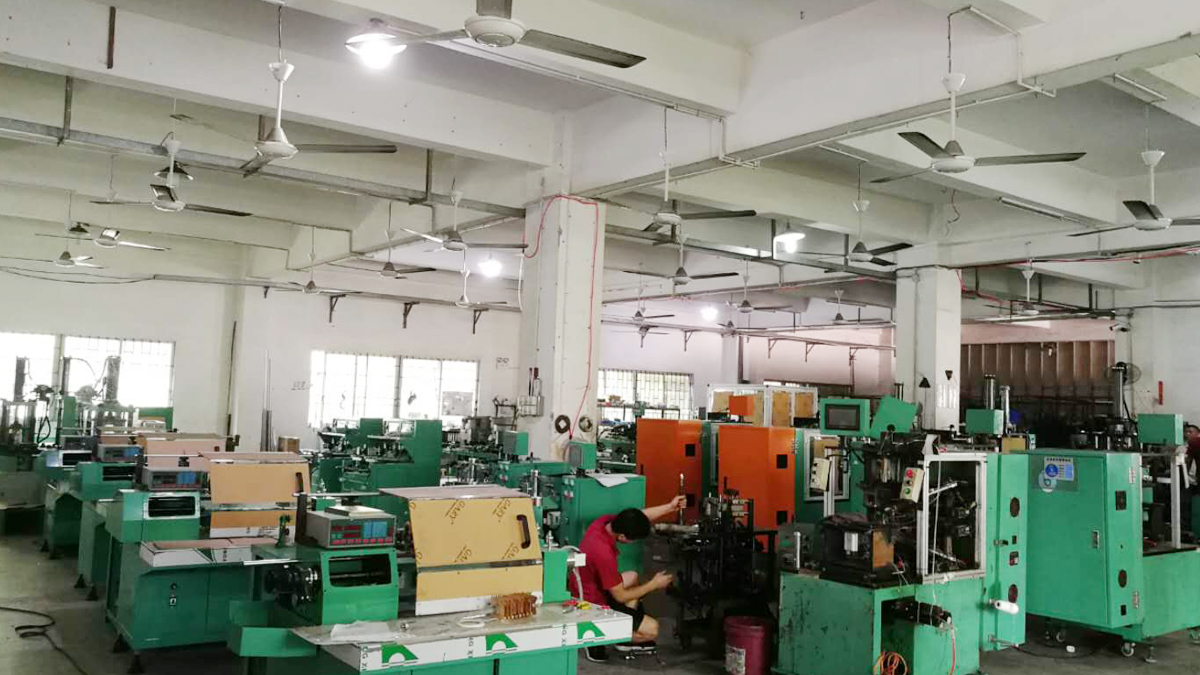
Zunqi Intelligent Equipment Co., Ltd. Dongguan Manufacturing Facility
Motor Stator Machine Assembly Line
Winding Machine Inspection and Testing Area

Why Global Motor Makers Partner with Zunqi

Zunqi Intelligent Equipment Co., Ltd. is a specialized manufacturer and exporter of electric motor stator and rotor manufacturing automation, situated in Qishi Town, Dongguan City, Guangdong Province, China. Positioned at the heart of the Greater Bay Area's high-precision manufacturing belt, we leverage over 17 years of dedicated production and export expertise to equip motor plants worldwide.

Established Presence
17+ Years Exporting
Operational Scale
51 – 100 Dedicated Staff
Annual Volume
US$2.5M – US$5.0M
Inquiry Turnaround
≤9 Hours Response Time

Our competitive advantage lies in custom engineering and comprehensive production line integration. From initial slot insulation paper inserting through multi-station coil winding, coil & wedge inserting, end-turn forming, and automated lacing, to final rotor fine turning and shaft pressing—we build matched, high-reliability machinery that delivers European-grade tolerances at factory-direct commercial terms.

Inquire Now

Accelerate Your Stator Line Efficiency Today

Send your stator core drawings, wire gauge parameters, and hourly production targets directly to our technical desk at [email protected]. Our engineering specialists will draft a comprehensive machine proposal within 9 hours.