Featured Automated Stator Manufacturing Systems
Engineered for repeatable slot fill precision, minimized wire-draw stress, and rapid changeover capabilities. Tooling engineered directly to customer stator laminations and operational CAD drawings.

Automatic Servo System Stator Coil and Wedge Inserting Machine
- Simultaneous coil & wedge transfer
- High slot-fill factor capability
- Fully programmable stroke & feed

HF-R40-2G Automatic Ceiling Fan Stator Winding Machine
- Dual controller, 2 winding stations
- Enamelled copper & aluminum wire
- 1-Year international warranty

HF-LO2-6G Six Stations Internal Stator Winding Machine
- Continuous rotary table indexing
- Multi-pole inner core winding
- Industrial PLC touch-panel UI

2 Station External Stator & Transformer Winding Machine
- Dual flyer/spindle synchronization
- Outer armature & transformer stator
- Precision mechanical tensioner

HONGFANG HF-D50 Insulation Paper Insertion Machine
- Automatic cut, crease & insertion
- 220V 1000W high-speed motor
- Zero dielectric liner tearing
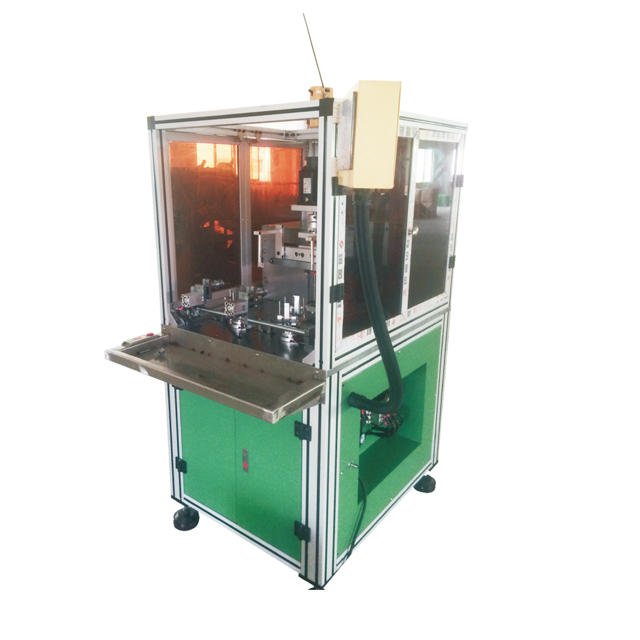
4-Station Automated Internal Stator Winding Machine
- 4 independent winding heads
- Ideal for high-mix batch lines
- Clean needle/nozzle wire layering

Precision Electric Motor Shafts & Structural Spares
- SC45# high-tensile carbon steel
- Micro-finished bearing seats
- High-volume OEM batch production

Automatic Stator Wedge & Coil Inserting Machine for Fans
- Heavy-duty gear driven push-rod
- Designed for continuous plant uptime
- Standard tooling kits included
Kinematic Precision in Stator Coil & Wedge Insertion
In modern electric motor manufacturing, the transition from manual coil placement to automated simultaneous coil and wedge inserting represents the most critical throughput bottleneck and yield determinant. For Slovakian electro-mechanical engineering facilities producing asynchronous industrial drive motors, automotive auxiliary actuators, and e-mobility auxiliary pumps, slot fill factor and inter-turn insulation health are non-negotiable quality metrics.
Our automated inserting machines utilize a synchronized multi-axis electromechanical linkage. While the wound copper or aluminum coil bundle is suspended within precision-hardened guide blades, an internal pusher rod drives the coils axially through the stator bore. Concurrently, wedge magazines accurately feed, crease, and shear insulation paper (such as Nomex®, DMD, or Mylar®), pushing the wedge directly into the stator tooth tips. This synchronized one-stroke insertion mitigates cross-wire scuffing, preserves the enamel coating integrity, and ensures uniform mechanical clearance for subsequent rotor insertion.
Cycle Time Optimization
Servo-actuated inserting strokes achieve complete coil-and-wedge placement cycles within 12 to 24 seconds depending on stack height, vastly outperforming conventional hydraulic systems while maintaining thermal consistency.
Zero-Damage Guide Blades
Guide blades and pusher fingers are precision ground from imported tool steel (heat treated to HRC 60-62) with micro-polished entry chamfers to prevent dielectric micro-fissuring and wire tension spikes.
Programmable Slot Recipes
Industrial touch screen HMI allows immediate selection of slot patterns (e.g., skip-slot, progressive indexation) enabling rapid tooling changeovers within 25–40 minutes between differing stator stack heights.
Localized Application Scenarios in Slovakian Industry
Slovakia boasts the world's highest per-capita automotive manufacturing density alongside deep central European traditions in electro-mechanical machinery. Our equipment matches the specific manufacturing profiles of Slovakia's primary industrial zones.
Auxiliary Motors & Actuators
In regions like Trnava, Nitra, and Bratislava, automotive sub-suppliers manufacture hundreds of thousands of electronic power steering (EPS) motors, electric braking actuators, and radiator blower drives. Our multi-station needle winding and servo inserting equipment provide strict slot-fill repeatability and 100% lamination integrity needed to satisfy stringent IATF 16949 production standards.
Compressors & Hydraulic Pumps
Northern and Eastern industrial parks surrounding Žilina, Martin, and Prešov produce high-duty hydraulic power units, industrial chillers, and HVAC circulation pumps. Inserting copper wire bundles into deep-slot industrial stators requires high pushing forces without wedge displacement. Our machines handle stack heights up to 160mm with high-rigidity guide fixtures.
BLDC & Servo Stators
With the European shift toward commercial EV conversions and autonomous warehousing systems, developers in Považská Bystrica and Nové Mesto nad Váhom require flexible internal stator winding machines for fractional-horsepower BLDC and frameless torque motors. Our 4-station and 6-station inner coil winders deliver compact end-turn profiles.
Emerging Motor Production Trends in Slovakia
As Slovak manufacturing integrates European Green Deal mandates, motor builders are redesigning stators to meet EU Ecodesign Directive (Regulation EU 2019/1781) tier IE3, IE4, and Super Premium IE5 efficiency classes. These efficiency benchmarks demand higher copper volume density in the slot while minimizing physical package size.
High Slot Fill Factors (IE4/IE5)
Transitioning to IE4 requires elevating slot fill ratios above 75%. Traditional insertion tooling leads to wedging friction; our dual-servo mechanical pushers maintain micro-alignment, allowing higher copper density without conductor deformation.
Industry 4.0 & OPC-UA Connectivity
Slovakian operations demand seamless integration into central MES systems. Our machines feature open PLC protocols (Siemens, Omron, Delta) with optional fieldbus connectivity to record cycle counts, push forces, and alarms.
Copper-to-Aluminum Flexibility
To buffer raw material price spikes, several Slovak home appliance and pump assemblers maintain hybrid winding capabilities. Our wire guide channels and electronic tensioners adjust rapidly between copper and grade EC aluminum wire.
Why European Engineers Partner With Us
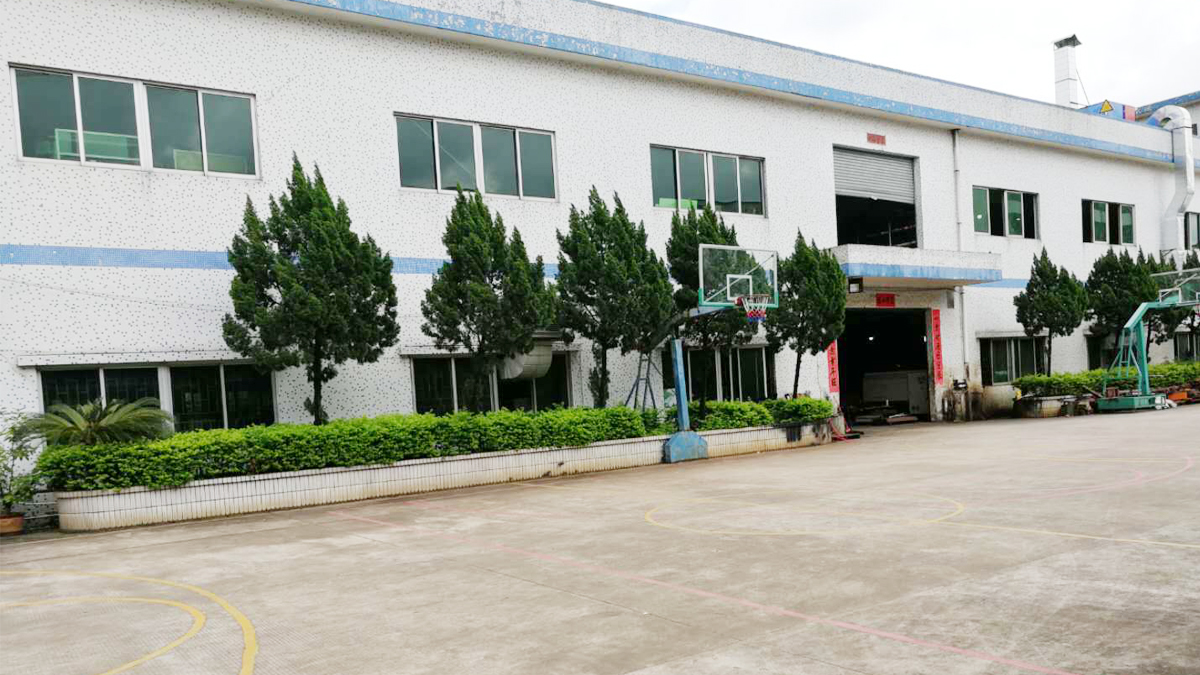
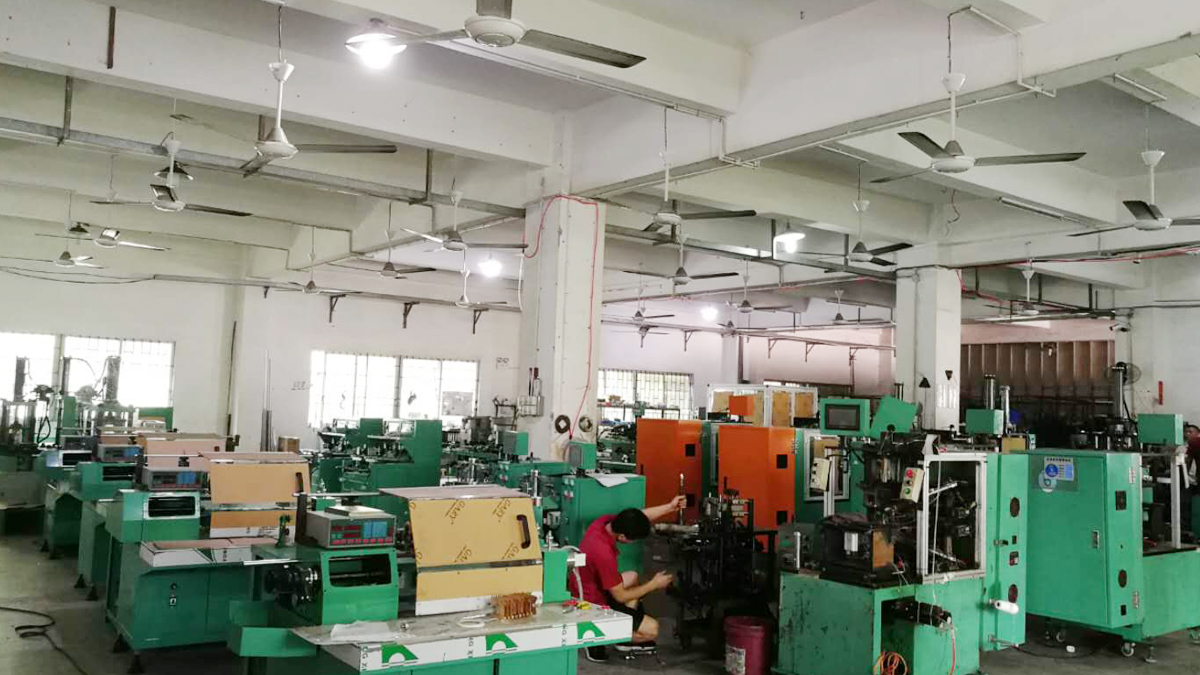
Located in Qishi Town, Dongguan—at the epicenter of high-precision mechatronics manufacturing—Zunqi Intelligent Equipment Co., Ltd. combines heavy mechanical tooling craft with modern servo automation. Rather than offering rigid off-the-shelf machinery, every winder and inserter is built around the buyer's physical lamination profile.
- Physical Stator FAT Run: We require buyers to ship us physical stator samples. We produce trial windings and full insertion runs, validating the tooling and providing high-definition video evidence before crate signoff.
- Turnkey Stator Assembly Lines: Beyond insertion, we supply slot insulation, coil winding, intermediate/final forming, double-sided lacing, rotor fine turning, and shaft pressing machines designed to operate at harmonized cycle times.
- Global Components Customization: We standardize on globally accessible industrial automation parts to simplify local maintenance for Slovak facility technicians.

Frequently Asked Questions by Slovak Plant Engineers
Clear, direct answers regarding technical integration, European electrical compliance, logistics, customs clearance, and long-term tooling availability.
Can machines be configured for Slovak standard electrical grid (400V / 230V 50Hz)?
Yes. All machines exported to Slovakia and European Union member states are constructed specifically to operate on 3-phase 400V 50Hz or single-phase 230V 50Hz depending on power requirements. Control transformers, servo amplifiers, and pneumatic solenoid coils are rated strictly for 50Hz systems to prevent thermal derating. We document all electrical schematics in English.
Do your machines comply with CE Machinery Directive safety standards?
Yes. Our machines are built in adherence to European harmonized safety standards, incorporating dual-channel emergency stop circuits (EN ISO 13850), interlocked protective safety enclosures with optical safety light curtains for the operator interface (EN ISO 13849-1), and electrical safety wiring compliant with EN 60204-1. We provide CE documentation and Declarations of Incorporation/Conformity upon request.
What technical parameters are required to manufacture custom inserting tooling?
To design the precision guide blades, pusher rods, and wedge forming guides, we require: (1) 2D/3D stator core drawing showing outer diameter (OD), inner bore diameter (ID), slot count, slot opening dimension, and tooth geometry; (2) Maximum and minimum stator stack heights; (3) Winding scheme detailing wire diameter (gauge), turns per coil, and number of parallel conductors; (4) Slot insulation paper type and thickness (e.g., Nomex, DMD, polyester film). Physical bare lamination packs and wound coil samples ensure zero-deviation fitment.
How does Zunqi handle freight delivery and customs into Slovakia?
We routinely export under Incoterms 2020 terms including FOB Shenzhen/Guangzhou, CIF European Ports (such as Koper, Hamburg, or Rotterdam), and DAP/DDP direct to industrial addresses in Slovakia (e.g., Bratislava, Žilina, Košice). Machines are vacuum-wrapped with vapor corrosion inhibitor (VCI) film and enclosed inside reinforced, fumigation-free ISPM-15 plywood export crates engineered to endure ocean shipping or direct China-Europe railway freight (Sino-Europe Railway Express).
What are the warranty provisions, and how is remote support provided?
All main machinery comes with a 1-year comprehensive mechanical and electrical warranty. Our average engineering desk response time is ≤9 hours, covering European business hours seamlessly. We provide step-by-step remote video commissioning, interactive diagnostic guidance via PLC remote modules, and ship replacement wearing components (such as insertion blades, pusher fingers, and wedge knives) via DHL/FedEx air freight.
How difficult is tooling changeover when switching between different motor frame sizes?
If only the stack height changes while keeping the same stator lamination diameter and slot count, changeover takes approximately 10 to 15 minutes by adjusting digital stroke parameters on the HMI and turning the mechanical height riser dial. If changing to an entirely different stator bore diameter and slot geometry, a complete tooling set replacement (guide blades, pusher block, wedge magazine) takes approximately 30 to 45 minutes using standard dowel pin alignment.
Can one machine handle both copper and aluminum wire insertion?
Yes. Because aluminum wire exhibits a lower yield point and softer surface than copper, the pusher speed profile and guide blade tolerances must be finely controlled to avoid elongation and kinking. Our servo-driven systems feature programmable velocity curve acceleration profiles that allow seamless operation with EC-grade aluminum magnet wire without damaging slot liners or stretching conductors.
What is the minimum order quantity and standard production lead time?
The minimum order quantity (MOQ) for any of our standalone winding, inserting, forming, or lacing machines is 1 set. Standard manufacturing lead time for standard models is 25 to 35 business days. For fully customized stator tooling requiring bespoke CAD/CAM manufacturing and physical sample FAT runs, lead times generally range between 40 and 50 business days.
