Featured Stator & Rotor Production Solutions
Engineered to integrate smoothly into automated lines for fractional horsepower (FHP) to medium-frame induction motors, meeting ABNT NBR and international IEC dimensional standards.

New Slot Paper Inserting Cutting Machine Table Fan Pump Cooler Motor Insulation Paper Gear Components 1 Year 1 kW 380V/220V
- 1 kW High-torque servo feed
- Dual voltage: 380V / 220V flexible
- 0.2s–0.4s per slot automated cycle

New HF Fan Motor Rotor Turning & Casting Machine with PLC and Pump Core Components Aluminum Surface Cutting
- PLC microprocessor automation
- Continuous coolant circulation pump
- Sub-micron aluminum skim cutting
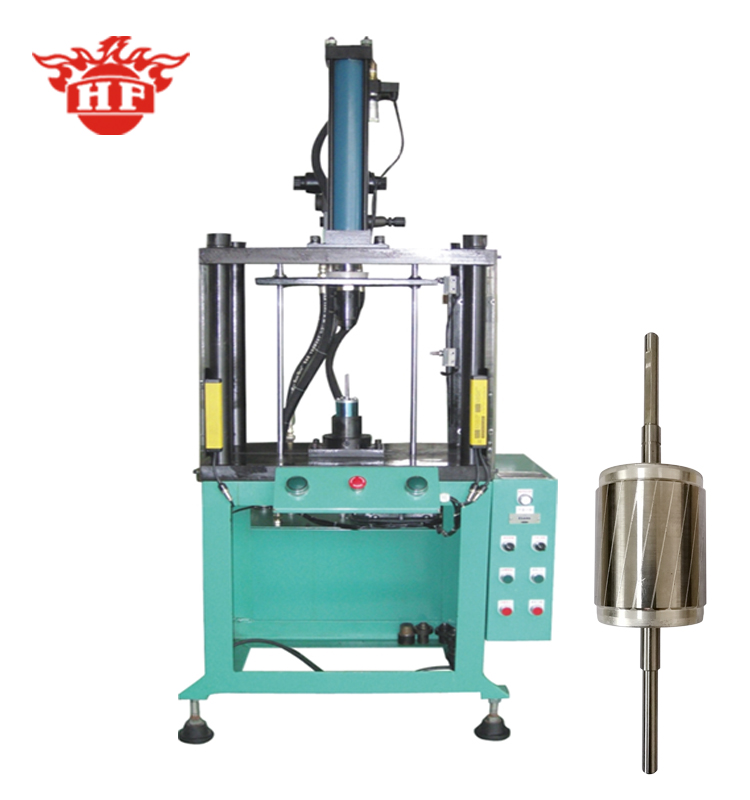
New Rotor and Shaft Inserting Hydraulic Press Machine for Manufacturing Plant 1 Year Warranty HF-W50
- HF-W50 heavy-duty hydraulic ram
- Coaxial tolerance < 0.015mm
- Precision stroke limit control

Electric Motor Spares SC45# Low Carbon Steel Iron Fan Motor Shaft Machining Components for Household Use
- SC45# induction hardened grade
- Ground knurling & snap-ring grooves
- High corrosion-resistant finish

New Hydraulic Pressure Ceiling Fan Motor Stator Shaft Inserting Press Machine Gear-Driven Operation 1 Year Manufacturing Plant
- Gear-driven dual-action clamping
- Anti-deflection core nest design
- High volume batch cycle rates

HF-R22 Coil Winding Machine Semi Automatic Coil Making Machine 8 Heads for Fan Motor Cooler Motor Pump Motor Power Tool Motor
- 8-Spindle simultaneous winding
- Copper / Aluminum wire versatile
- Digital tension control brake
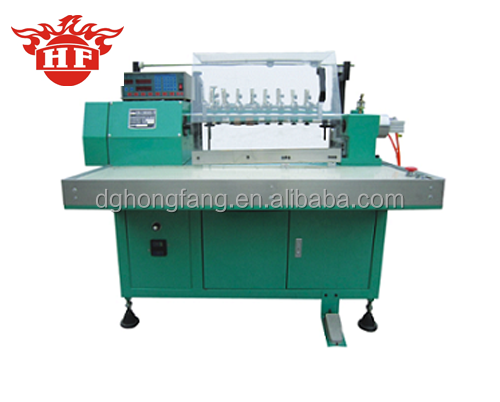
HF New CNC Auto Stator Coil Winding Machine for Table Fan Motor Semi Coil Making Electric Motor Wire Winding 8 Heads 3000 RPM
- 3000 RPM high-speed fly-winding
- Precision CNC lead pitch guide
- Automated hook, cut, and clamp

Automatic Rotor Fine Turning & Surface Cutting Machine HF-C60 with PLC Motor Pump-1 Year Warranty
- HF-C60 Diamond tool turning
- Eliminates inter-lamination burrs
- Strict radial runout < 0.008mm
Engineering Whitepaper: Dual-Needle Stator Lacing Architecture
Overcoming copper strand displacement, excessive coil end-turn height, and insulation breakdown in high-duty electric motor manufacturing through synchronized upper and lower CNC binding.
Dual-End Synchronous Kinematics
In conventional single-end lacing, asymmetrical axial compression distorts the stator overhang, shifting the magnetic center and generating electromagnetic vibration. Double-side lacing machines deploy dual servomotors actuating upper and lower needles synchronously. High-speed hooked needles penetrate slot clearances down to 1.8mm without nicking wire enamel, securing both coil overhangs in a single clamp cycle.
Closed-Loop Thread Tension Modulation
Tension variations in polyester or Nomex lacing cord can crush slot cell margins or leave loose loops that vibrate under pulse-width modulation (PWM) inverter harmonics. Our system applies an electromechanical magnetic particle brake regulated by real-time load sensors. Tension is dynamically maintained within ±0.5 N across slot-by-slot, skip-slot, and complex cross-over strapping patterns.
Rotary Table Indexing & Cam Precision
Utilizing high-precision globoidal indexing cams matched to high-response absolute servo encoders, our lacing tooling indexes stators through 8, 16, 24, 36, or 48 slots at speeds exceeding 220 stitches per minute. Mechanical linkages are nitrided and lubricated via positive-displacement centralized manifolds, preserving micrometer repeatability over millions of production cycles.
Overcoming High-Humidity Dielectric Stress: The Inter-Phase Lacing Imperative
In high-vibration and humid industrial environments, loose end-turns allow relative wire motion under peak starting torque. This abrasive friction causes turn-to-turn micro-fretting of the enamel coating, followed by phase insulation breakdown. By binding phase separators firmly against the copper bundles with uniform double-side lacing, the stator assembly achieves exceptional mechanical rigidity, lowering partial discharge risk and preventing corona breakdown when driven by Variable Frequency Drives (VFDs).
| Functional Parameter | Manual / Semi-Auto Binding | Single-End Auto Lacing | Double-Side CNC Servo Lacing |
|---|---|---|---|
| Cycle Time (24-Slot Stator) | 120 – 180 seconds | 28 – 38 seconds (two flips) | 11 – 15 seconds (simultaneous) |
| Tension Uniformity | Variable (Operator dependent) | Moderate (Spring mechanical) | Constant Closed-Loop Servo (±0.5 N) |
| End-Turn Squeeze Symmetry | Poor (Significant ovality) | Asymmetrical (One side bias) | Balanced Dual-Axial Compression |
| Wire Coating Abrasion Risk | High (Manual tool rubbing) | Low to Moderate | Zero (Sensor-guided needle alignment) |
| Tooling Changeover Duration | None (Manual labor) | 35 – 50 minutes | 12 – 18 minutes (Quick-lock modular nests) |
| VFD Inverter Grade Compliance | Unpredictable Partial Discharge | Acceptable for Standard Duty | Meets IEC 60034-18-41 Stress Standards |
Localized Application Scenarios in the Fluminense Market
Customized machine configurations meeting the rugged environmental and duty-cycle demands of Rio de Janeiro's maritime, petrochemical, infrastructure, and consumer manufacturing basins.
Macaé & Campos Basin Marine Pumps
The offshore supply chain in Macaé and Porto do Açu requires electric motors that withstand heavy vibration and highly corrosive saline fog. Submersible pump stators and auxiliary cooling fans wound and laced with our equipment undergo double-end compacting to prevent windage vibration. Tooling accommodates heavy insulation papers (Nomex/DMD) and heavy-gauge wire bundles used in IEEE 841 severe-duty motors.
- Vibration-resistant structural lace knotting
- Accommodates heavy Class H & C wire thermal grades
- Corrosion-resistant machine coatings for coastal shops
Duque de Caxias & Volta Redonda Steel Plants
Heavy processing machinery operating around REDUC refinery (Duque de Caxias) and CSN steelworks in Volta Redonda relies on continuous-duty conveyor drives, gear motors, and industrial ventilating units. Our automated lacing machines ensure rigid winding overhangs that endure frequent line starts and heavy voltage swings common to heavy industrial power lines across the Rio-Paraíba valley.
- Slot insulation and lacing for large stack heights (up to 250mm)
- Single-stroke coil inserting eliminates wire scuffing
- High reliability components: Siemens, Schneider, Omron
Metropolitan Rio Consumer Electrification
Domestic fans, split-system air conditioning compressors, and commercial refrigeration motors manufactured in industrial districts like Santa Cruz and Queimados require high volume throughput. Our 8-station coil winders and high-speed double lacing machines deliver fast 12-second cycle times, lowering unit production costs while adhering strictly to Brazilian energy efficiency labels.
- High-speed processing for table and ceiling fan stators
- Clean wire routing for automatic terminal plug inserts
- Dual 220V/380V 60Hz factory-ready power electronics
Brazilian Market Trends: ABNT, INMETRO & Energy Transition
How recent efficiency mandates and workplace safety regulations are driving modernization in Rio de Janeiro's motor assembly plants.
ABNT NBR 17094 & IR3/IR4 Mandates
Brazil’s Portaria Interministerial mandates premium efficiency levels (equivalent to IE3 and emerging IE4). Achieving these ratings requires packing higher copper slot-fill percentages (often exceeding 78%) into laminations. High slot-fill makes manual winding and lacing impractical without damaging magnet wire insulation. Automated double-side lacing compacts tight coil bundles cleanly without mechanical interference, allowing motor builders in Rio to pass INMETRO efficiency audits easily.
NR-10 & NR-12 Safety Compliance
Brazilian workplace safety standards (Norma Regulamentadora NR-12 for machinery safety and NR-10 for electrical installations) require strict protective features on imported industrial gear. Our export machinery can be specified with Category 4 safety light curtains, dual emergency stop monitoring circuits, keyed interlocks, and segregated 24VDC control cabinets, simplifying workplace safety clearance across Brazilian manufacturing facilities.
Tropicalization Against Maritime Salinity
Operating near Guanabara Bay and Sepetiba Bay means dealing with year-round relative humidity above 80% and airborne marine chlorides. We treat machine bases with heavy epoxy primer undercoats, use hard-chromed guide shafts, and house electronics in IP54-rated sealed cabinets with integrated vortex cooling tubes or anti-condensation heating elements to stop corrosion and tracking faults.
17 Years of Dedicated Motor Automation Engineering
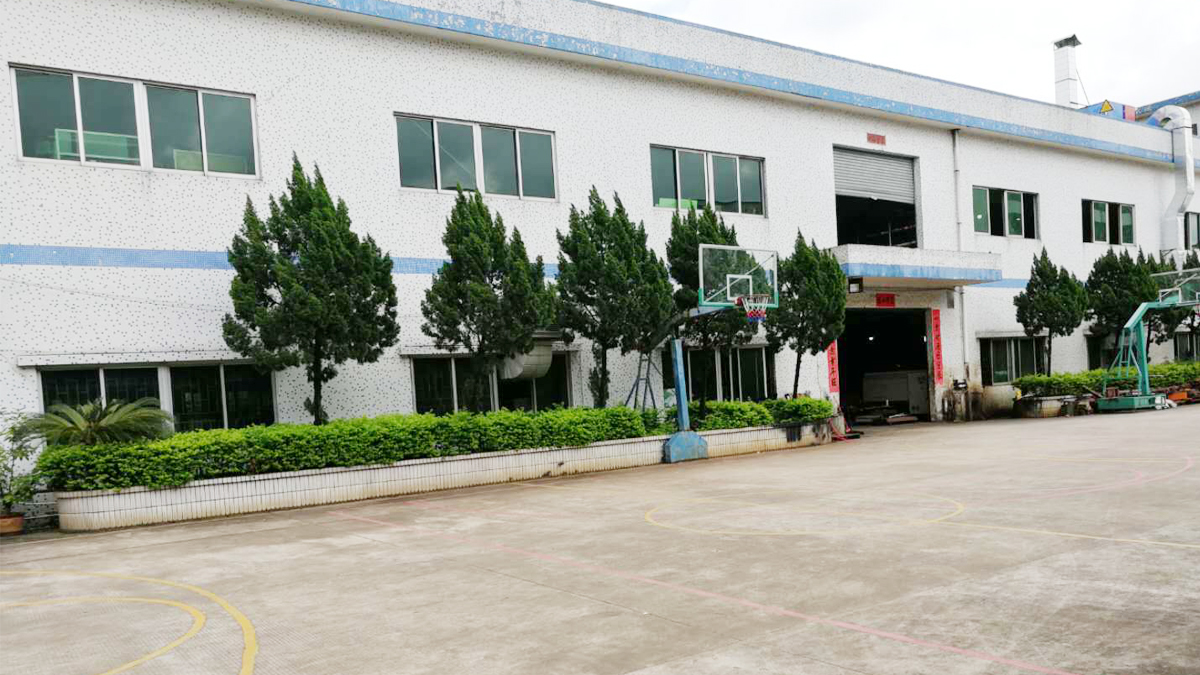
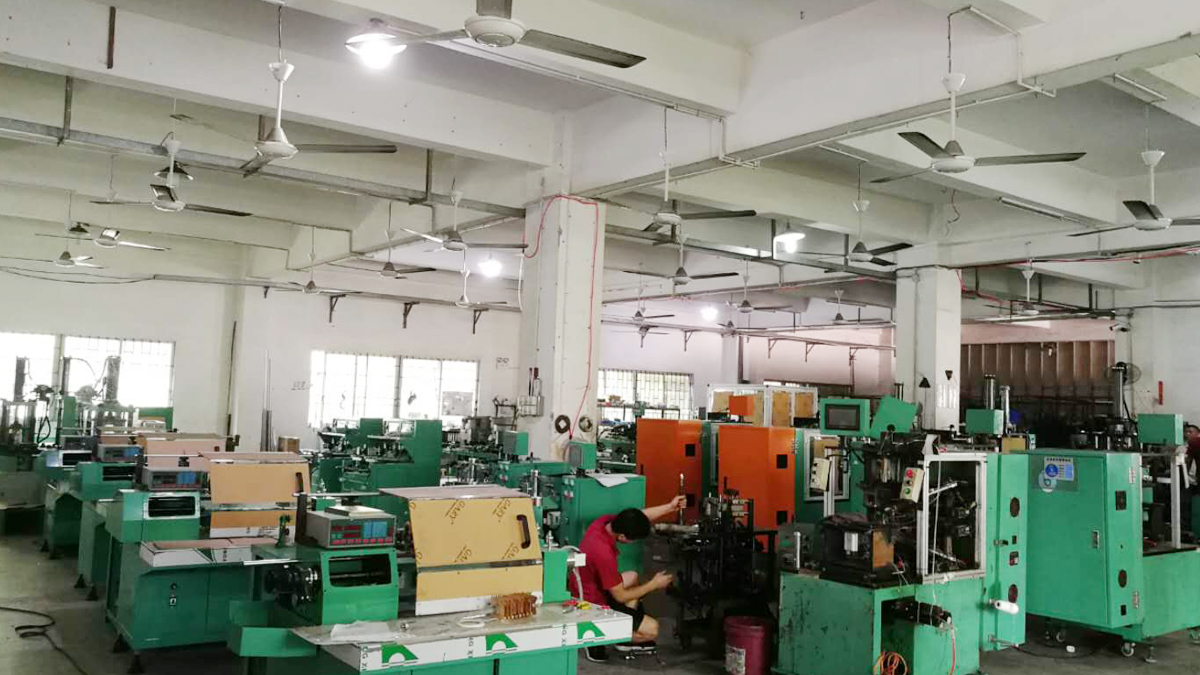
Operating from our dedicated manufacturing base in Qishi Town, Dongguan, Zunqi Intelligent Equipment Co., Ltd. combines in-house machining, software development, and electrical assembly to build rugged, factory-ready stator production systems. Rather than forcing your stator into generic off-the-shelf tooling, we custom-engineer our coil formers, inserting blades, and lacing nests directly to your core drawings.
- Custom Tooling Proofing: Physical stator test runs conducted with video validation before crating.
- Worldwide Power Compatibility: Pre-wired for 220V, 380V, 440V at 60Hz to integrate seamlessly into Brazilian regional grids.
- Tier-1 Electrical Architecture: Equipped with Siemens, Mitsubishi, Schneider, or Delta PLCs for hassle-free local maintenance.
- Direct Support: Multilingual engineering support with average inquiry response times under 9 hours.

Frequently Asked Questions for Brazilian Plant Engineers
Answers to key technical, logistical, and import questions for procurement teams and plant managers across Rio de Janeiro.
How does the machine accommodate different stator stack heights and slot numbers?
Can the machine operate on Rio de Janeiro’s regional 60Hz electrical supply without transformers?
What lacing patterns are programmable on the HMI touchscreen?
What are the common Mercosul Common Nomenclature (NCM) tariff codes and customs documentation for Brazil?
How do you verify machine operation before it ships to Brazil?
How do you manage remote commissioning, troubleshooting, and replacement parts in Brazil?
How does your export packaging protect against ocean freight corrosion during shipping to South America?
Can you supply a turnkey motor assembly line from slot insulation to rotor finishing?
Ready to Upgrade Your Stator Line in Rio de Janeiro?
Send our engineering team your stator technical drawings, core lamination stack heights, target cycle times, and wire specifications. We will review your requirements and provide a detailed proposal and machine configuration within 9 hours.
