Direct Factory Sourcing
Engineered Motor Production & Coil Lacing Equipment
Explore standard and customizable stator winding, forming, inserting, and coil-lacing architectures built with verified PLC control modules and tested for industrial endurance.
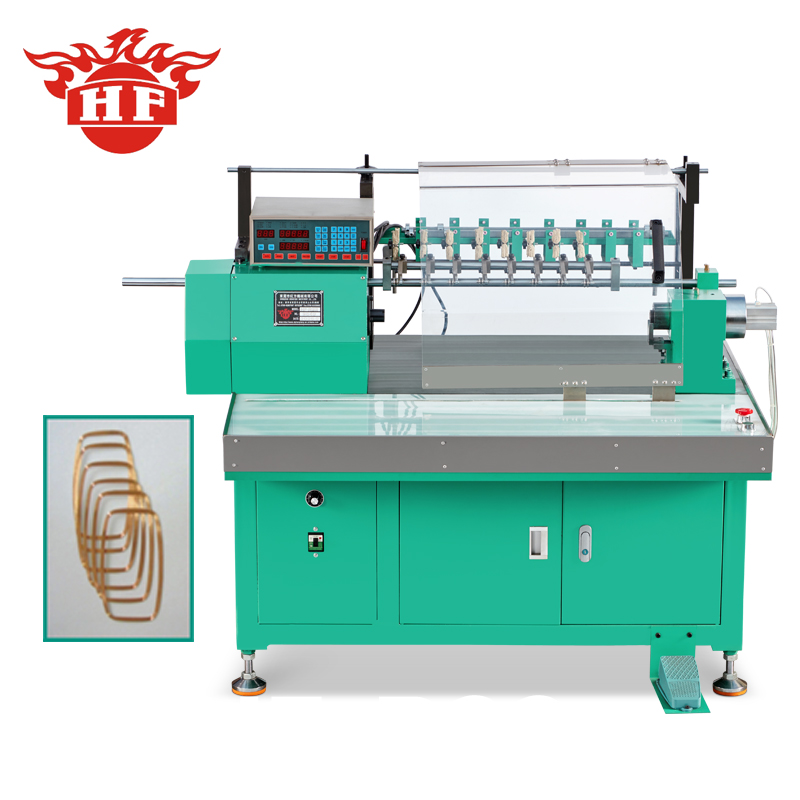
HF CNC Auto Stator Coil Winder 8 Heads 3000 RPM
View Specifications →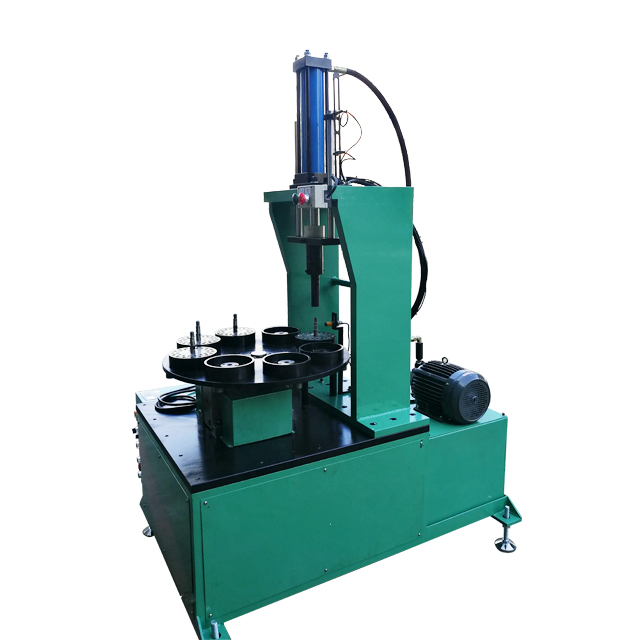
Hydraulic Ceiling Fan Motor Stator Shaft Press Machine
View Specifications →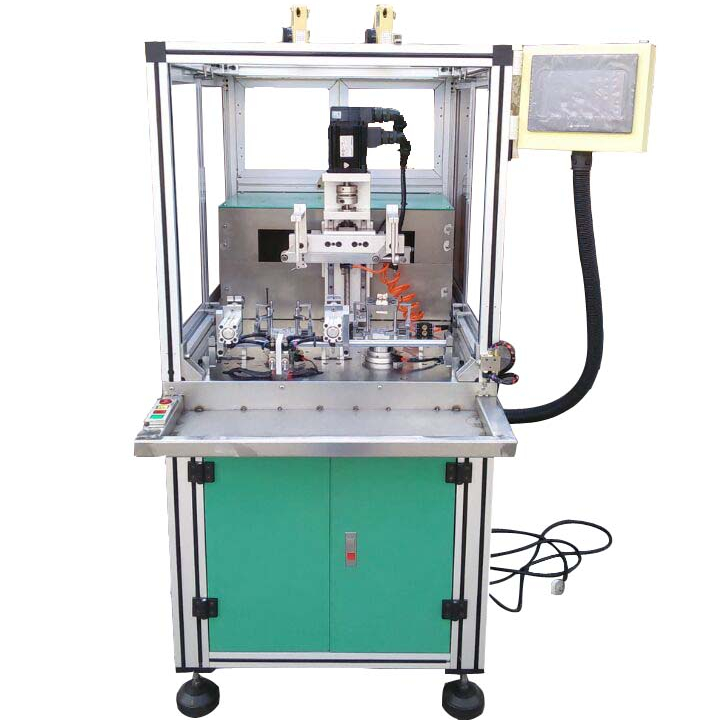
Two-Station Transformer & Motor Stator Coil Winder
View Specifications →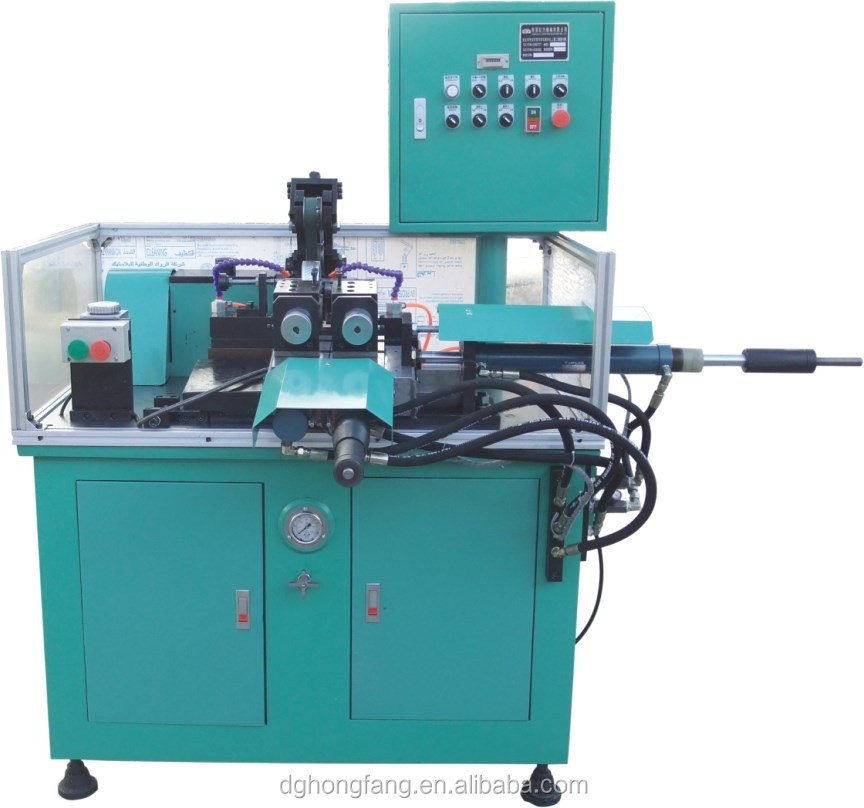
HF Fan Motor Rotor Turning & Surface Cutting Machine
View Specifications →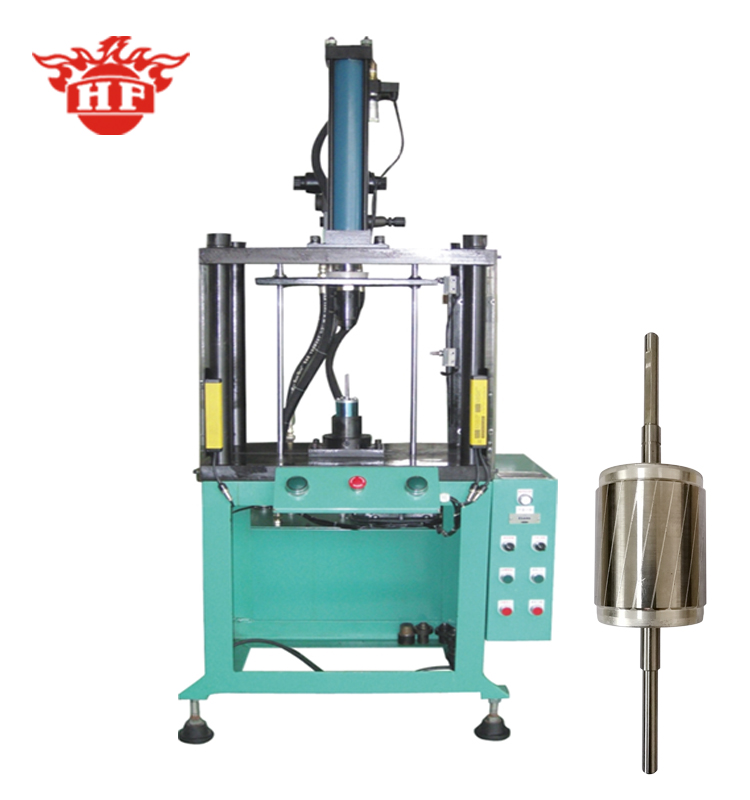
HF-W50 Precision Rotor & Shaft Hydraulic Press
View Specifications →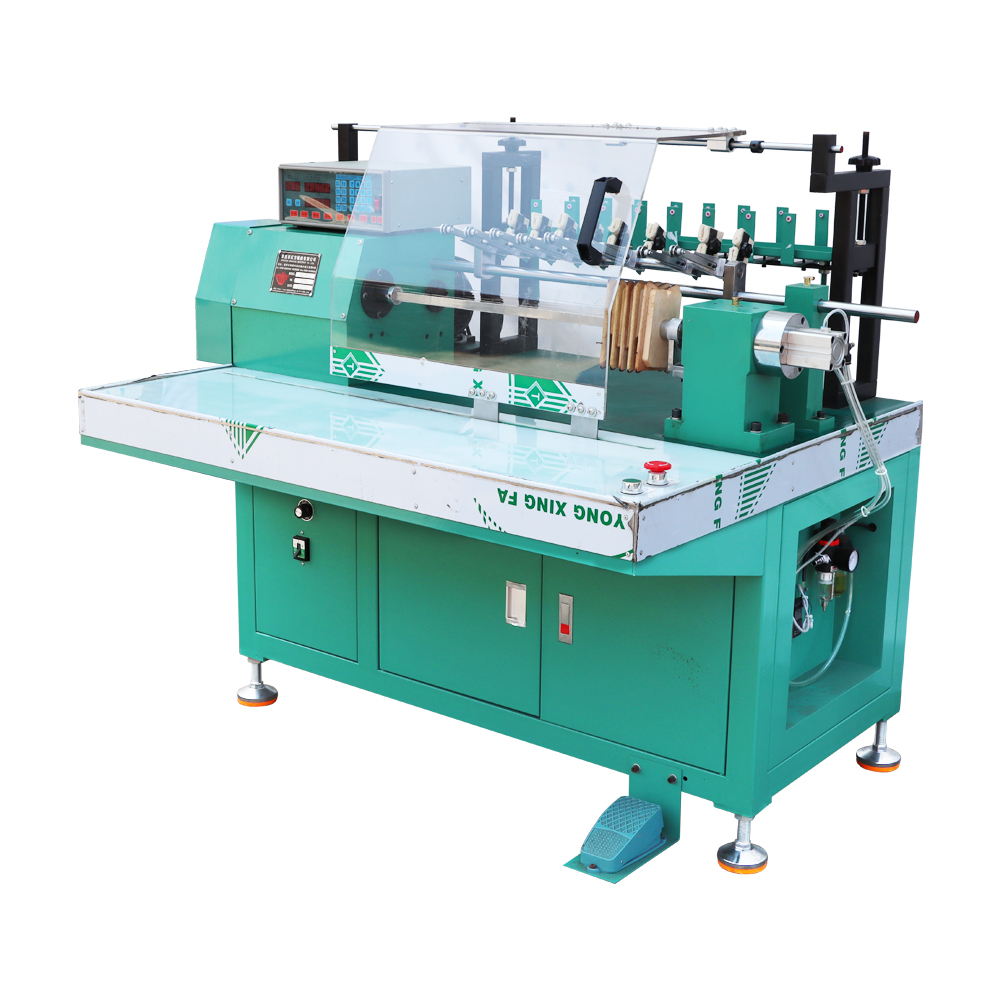
Semi-Auto Stator Coil Winder for Copper/Aluminum Wire
View Specifications →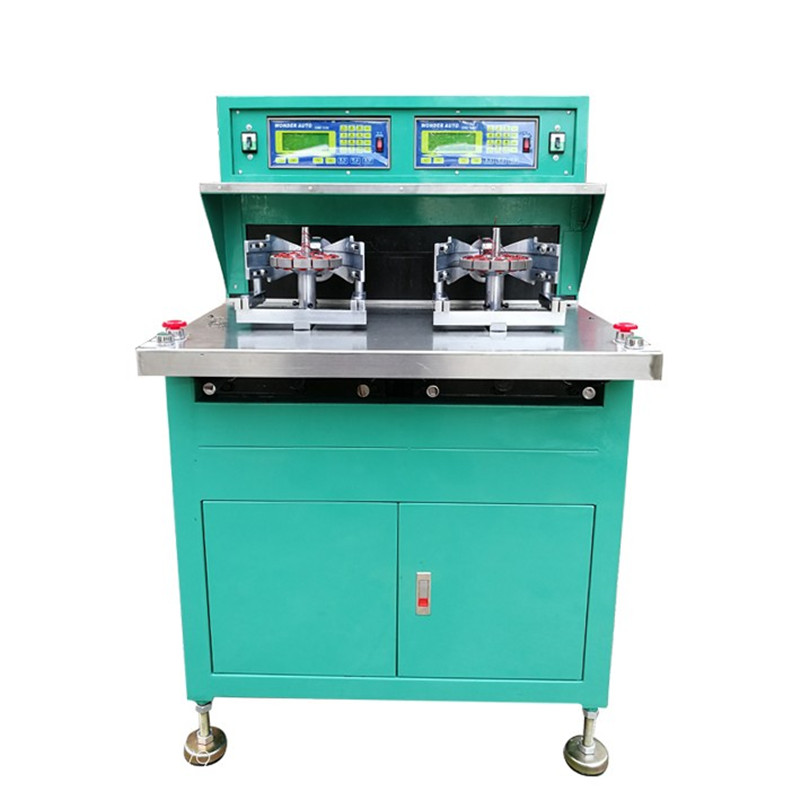
HF-R40-2G Dual-Controller Ceiling Fan Stator Winder
View Specifications →1. Technical Scope: Single Side Coil Lacing in Modern Stator Manufacturing
In electric motor assembly, single side coil lacing represents a critical post-insertion operation designed to bind the non-connection end or specific overhang winding heads securely against mechanical dislocation. Electromagnetic coils experience intense cyclic Lorentz forces during motor startup and variable frequency drive (VFD) switching. If coil end-turns retain axial or radial slack, harmonic vibrations cause micro-rubbing between magnet wire enamels, directly triggering early turn-to-turn shorts and ground faults.
A precision single side stator coil lacing machine stabilizes the coil overhang through continuous, tension-regulated cord looping. Operating through servo-driven needle stroke arms, continuous rotary indexing tables, and programmable lacing mechanisms (slot-by-slot, interval skipping, or tailored segment binding), modern lacing setups deliver consistent knotting integrity. Unlike manual knot tying, automated single-side lacing standardizes binding cord compression, maintains uniform clearances away from rotor insertion tracks, and significantly boosts insulation varnishing absorption during subsequent dip-spin processing.
Kinematics & Motion Control Architecture
Industrial lacing machines utilize high-speed multi-axis motion synchronization. The primary needle linkage drives the hook mechanism past the stator overhang while an articulated shuttle hooks the needle loop from the bottom slot corner. When processing tight inner bore stators common in fractional horsepower (FHP) compressors and air-conditioning blowers, tooling rigidity determines pitch consistency. Tool steels like SKD11 or Cr12MoV vacuum heat-treated to HRC 58-62 ensure needle tips resist deflection over hundreds of thousands of cycles.
Cord Tension Regulation
Closed-loop magnetic or friction-disc tensioning devices eliminate cord snaps while providing repeatable 15N to 40N strapping pressure on heavy wire bundles.
Variable Indexing Pitch
Programmable multi-slot step configurations allow operators to switch effortlessly between continuous seam lacing, leap-slot lacing, or end-zone double binding.
Universal Tooling Adapters
Modular expanding central mandrels allow one lacing cell to accommodate stator outer diameters from 40mm up to 160mm with rapid 15-minute modular swaps.
2. Localized Industrial Dynamics: Antigua and Barbuda Market Analysis
Positioned as an economic hub within the Eastern Caribbean, Antigua and Barbuda presents distinct operational conditions for electromagnetic machinery and motorized plant automation. Although Antigua and Barbuda is not defined by massive heavy automotive manufacturing, its manufacturing profile centers on high-duty infrastructure maintenance, water processing, luxury maritime engineering, resort HVAC remanufacturing, and renewable energy grid interfaces.
Marine Atmospheric Stress & Coil Lacing Criticality
The Caribbean environment presents acute challenges: high ambient relative humidity (frequently exceeding 80%) coupled with airborne sodium chloride aerosol. In coastal marine installations—from English Harbour to St. John's deepwater harbor—electric motors operating on commercial catamarans, desalination plants (RO high-pressure pumps), and cold storage warehouses suffer severe accelerated galvanic and electrolytic corrosion.
When motors are rewound or manufactured without automated lacing, uneven manual cord bundling leaves internal pockets inside the coil bundle. In Antigua's coastal humidity, these voids collect trapped moisture, condensate, and salt particles. Under thermal cycles, insulation breakdown occurs rapidly. Implementing an automated single side coil lacing machine in local rewinding facilities ensures compact, flat, solid winding structures. Tight compression eliminates microscopic inter-wire gaps, ensuring uniform penetration of anti-fungal, moisture-impermeable Class H dipping varnishes and epoxy resins.
Tourism, Luxury Resorts, and Commercial Cold Chains
Antigua's luxury hospitality sector relies 24/7 on uninterrupted HVAC chiller pumps, pool filtration impellers, and quiet ventilation units. Equipment failure translates immediately into guest friction and financial losses. Rebuilding stator packages locally using factory-grade lacing equipment guarantees the identical coil compactness, acoustic quietness, and magnetic symmetry delivered by original equipment manufacturers (OEMs), circumventing international freight delays for replacement motors.
Energy Transition: Solar Hybrid Pumping and Resilient Microgrids
Under Antigua and Barbuda's national climate resilience frameworks, solar photovoltaic pumping stations and high-efficiency permanent magnet brushless DC (BLDC) motors are replacing legacy split-phase motors across agricultural water distribution in rural Antigua. These brushless units demand precision outer-stator winding and clean single-side overhang binding to maintain tight physical clearances within compact enclosures. Automated lacing equipment empowers regional Caribbean electrical contractors to maintain, rebuild, and assemble these specialized energy-efficient stators locally.
3. Enterprise Manufacturing Strengths: Why Choose Our Equipment
Backing your investment with Zunqi Intelligent Equipment Co., Ltd. connects you directly with a proven Chinese manufacturing facility based in Qishi Town, Dongguan. We combine 17+ years of dedicated export engineering with world-class component options to deliver equipment that operates trouble-free in diverse industrial environments.
17+ Years Export Track
Continuous onsite verification, verified export credentials across 40+ countries, with audited assembly facilities.
Stator-Matched Tooling
Every lacing fixture and needle stroke is engineered specifically around your stator lamination drawings and stack profiles.
Global Component Standard
Configurable with Siemens, Mitsubishi, Omron, Delta, or Schneider control architectures for effortless local maintenance.
Marine Export Packaging
Multi-layer VCI anti-rust barrier wrapping, desiccant charges, and fumigated timber crates built for ocean transit.
4. Procurement FAQ: Single Side Coil Lacing in Antigua & the Caribbean
What are the electrical utility requirements for operating this machine in Antigua? +
Electricity in Antigua and Barbuda is supplied primarily at 230V / 110V at 60 Hz. Our single-side lacing machines are fully customizable at our factory prior to shipment. We configure control transformers, servo drives, and PLC power packs for 220V/230V single-phase 60 Hz or 380V/400V 3-phase 60 Hz operation, preventing frequency-induced overheating in drive motors.
Why select single-side coil lacing over double-side lacing for local workshops? +
Double-side lacing binds both ends of the stator simultaneously, which is ideal for massive volume single-model production lines. However, for regional maintenance centers and versatile workshop environments like those in Antigua, single-side lacing delivers superior flexibility. It allows operators to lace asymmetrical stators (e.g., pump motors with lead wires, internal thermal protectors, or uneven overhangs on the connection end) with lower tooling costs and simplified setup.
Can one single-side lacing machine support different stator slot configurations? +
Yes. Our machines feature programmable PLC motion recipes. Stators with 8, 12, 16, 24, 36, or 48 slots can be selected directly on the color touchscreen. Mechanical tooling fixtures (expanding mandrels and height stops) are modular, allowing tooling changeover between different stator stack heights and core diameters in approximately 15 to 20 minutes.
How does the machinery withstand Caribbean coastal humidity during transit and operation? +
For ocean shipping to the Port of St. John's, all critical sliding rails, precision needles, and cam bodies are coated with industrial anti-corrosion grease and wrapped in heavy VCI (Vapor Corrosion Inhibitor) plastic bags before being secured in fumigation-free wooden cases. During local operation, the cabinet is sealed to IP54 standards with optional internal cooling or desiccant heating packs upon request.
What lacing cords are recommended for tropical and marine applications? +
For extreme marine, commercial refrigeration, and tropical environments, we strongly advise using high-tensile braided polyester (Dacron) cord or Nomex/polyester flat lacing tape impregnated with non-corrosive wax or resin. These cords resist fungal growth, withstand continuous Class F (155°C) and Class H (180°C) temperatures, and do not relax tension under thermal expansion.
What technical support and spare parts are provided after delivery to the Caribbean? +
Each machine carries a comprehensive 1-year factory warranty. We ship a full start-up spare parts kit including replacement lacing needles, ejector pins, hook attachments, and electrical relays. Technical onboarding is conducted through step-by-step HD video instruction, wiring schematics, and live engineering video linkups.
Ready to Modernize Your Motor Stator Production?
Get in touch directly with our senior application engineers. Share your stator lamination parameters, stack height, wire diameter, and production goals for an immediate matched proposal.
Inquire Now