Core Machinery Portfolio for Advanced Stator Manufacturing Lines
Precision-engineered production modules featuring robust PLC-servo synchronization, certified structural rigidity, and tailor-made tooling optimized for Tokyo, Kanagawa, and Saitama motor production facilities.

Rotor Rough Turning & Surface Cutting Machine
Engineered with heavy-duty gear train, dual-axis feed control, and PLC logic core. Essential for maintaining uniform air-gap clearances in precision rotors.

Electric Motor Shaft Components for Household & Pumps
Micro-turned and induction-hardened rotor shafts manufactured with tight dimensional concentricity, suited for quiet operation and high-durability continuous duty.

Six-Station Outer Stator Motor Coil Winding Machine
High-efficiency multi-station flyer winder featuring synchronized rotary indexing and precise wire flyer tensioners for high-volume automated coil winding operations.

SC45# Steel Motor Shaft Spares & Machined Core Elements
Precision centerless-ground carbon steel shafts exhibiting superior tensile strength, wear resistance, and micron-level bearing journal tolerance for industrial motors.
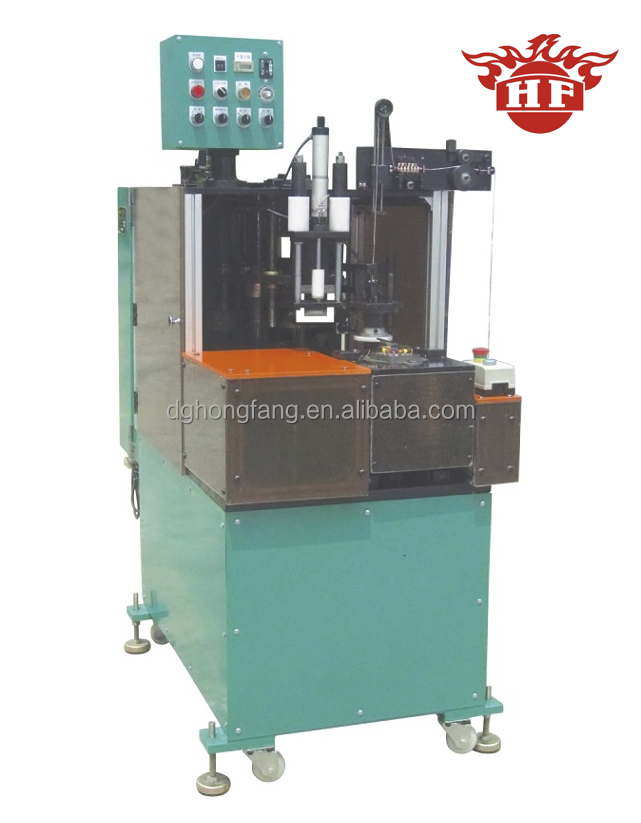
HF-BS20 Servo Automatic Coil Double Side Lacing Machine
Dual-needle CNC servo binding system simultaneously lacing top and bottom coil heads with adjustable cord tension, variable pitch lacing, and slot-skip automation.

High-Speed Armature Rotor Winding Machine
Dual-flyer balanced dynamic winding machine configured for brushed motor armatures and specialized rotating fields, featuring auto commutator hooking and indexing.

HONGFANG Motor Stator Coil Forming & Shaping Machine
Multi-directional inner expansion, outer clamping, and end-push forming station that ensures tight coil head envelope dimensions prior to vacuum varnishing.

Motor Slot Insulation Paper Inserting & Cutting Machine
Automated edge folding, roll-to-length feed, cutoff, and slot-insertion mechanism. Capable of handling Nomex, DMD, and polyester film without edge fraying.
The Kinematics and Dielectric Necessity of Double-Sided Servo Lacing in High-Dynamic Motors
In modern industrial servo drive systems—particularly AC permanent magnet synchronous motors (PMSM) and brushless DC (BLDC) architectures widely specified throughout Tokyo’s robotics and mechatronics sectors—the electromagnetic stator winding end-turns represent both an electrical vulnerability and a source of acoustic resonance. During high acceleration, emergency braking, and pulse-width modulated (PWM) inverter switching frequencies exceeding 16 kHz, stator end-turns experience substantial electromagnetic repulsion forces (Lorentz forces) alongside continuous thermal cycling.
If these end-turns are loosely bundled or bound with inconsistent manual tension, the microscopic vibrations lead to rapid dielectric breakdown of the enamelled insulation coating, resulting in inter-turn short circuits. Furthermore, loose coil turns can physically touch stator frame housings, leading to catastrophic phase-to-ground faults. The implementation of an automatic servo-driven double-side coil lacing machine guarantees simultaneous mechanical consolidation of both upper and lower end-winding baskets under calibrated cord tension.
Synchronous Dual-Needle Kinematics
By coordinating the upper and lower piercing hooks with closed-loop servo axis positioning, the machine executes knotting and looping cycles in sub-second intervals without mechanical backlash, ensuring identical cord tension on lead-out and neutral-point sides.
Programmable Pitch & Slot Skipping
Advanced HMI control software enables operators to program variable lacing patterns: continuous single-stitch, slot-skipping (for thermistor leads, RTD cabling, and lead-wire breakouts), and multi-knot locking to protect lead exits from tensile fatigue.
Elimination of Manual Handling Defects
Eliminates operator-induced scratches on enameled magnet wire (grade Class H and 200°C polyamide-imide coatings). Constant pneumatic-servo tension prevents elongation spikes that cause premature dielectric stress.
Localized Application Scenarios Across the Greater Tokyo Industrial Zone
How high-precision double-side lacing machinery powers the mission-critical manufacturing sectors of Keihin, Ota Ward, Kanagawa, and Saitama Prefectures.
Articulated Robotics & Collaborative Cobot Joints
Tokyo's specialized robotics integrators require ultra-compact frameless servo stators with minimal overhang. Our HF-BS20 double-side lacing machinery achieves high wire compression without deforming slot phase sheets, allowing compact joint enclosures in collaborative assembly arms.
High-Speed CNC Machine Tool Spindle Motors
In Kanagawa machine tool production hubs, high-RPM liquid-cooled spindle stators require uniform end-turn geometry to preserve laminar coolant flow and withstand 24,000+ RPM centrifugal harmonics. Double-side laced coil heads provide unwavering mechanical stability during violent reverse-braking cycles.
Semiconductor Wafer-Handling Vacuum Servos
Cleanroom manufacturing plants in the Greater Tokyo bay zone require particle-free manufacturing. Our machines incorporate oil-free dry pneumatic actuators, low-friction synthetic cord guides, and vacuum suction ports that suppress particulate generation to meet Class 1,000 cleanroom assembly demands.
Technological Evolution & Trends in Japan's Motor Manufacturing Landscape
The manufacturing ecosystem in Tokyo and surrounding industrial corridors is undergoing an accelerated transformation driven by three converging catalysts: The Japanese Top Runner Energy Efficiency Standards (JIS C 4034-30: IE4 and IE5 super-premium efficiency benchmarks), the acute domestic labor shortage, and the transition toward modular Industry 5.0 smart factory deployments.
To comply with stringent IE5 motor standards, electrical machine designers are forcing higher copper slot fill factors—often pushing beyond 75% to 82% net slot density. When slot fill factor reaches these physical extremes, conventional manual or mechanical cam lacing methods fail: manual operators lack the grip strength to cinch rigid copper bundles without scoring the insulation, while rigid cam lacers cause needle deflections that puncture slot cell liners.
Micro-Tension Control
Active load-cell closed-loop yarn tensioning prevents cord snapping while compressing thick multi-strand copper bundles without micro-fracturing enameled coatings.
Compact Footprint
Tokyo urban factory floors in districts like Ota Ward operate under steep real estate costs. Our compact modular frames optimize square-meter productivity.
Traceable Data I/O
Ethernet/IP, CC-Link, and Modbus TCP connectivity options allow real-time binding cycle data logging directly to Tokyo smart factory MES architectures.
Rapid Changeover
High-mix low-volume production runs (Shousan-kyuukyuu) benefit from tool-less clamp adjustments and recipe-based HMI memory supporting 100+ stator profiles.
Comparative Technical Evaluation: Manual vs. Cam vs. Servo Double-Side Lacing
Rigorous quantification of productivity, quality assurance metrics, and operational failure modes.
| Performance Metric | Traditional Manual Lacing | Conventional Mechanical Cam Lacing | Zunqi Servo Double-Side Lacing |
|---|---|---|---|
| Cycle Time (36-Slot Stator) | 180 – 300 Seconds | 35 – 55 Seconds (Single Side First) | 12 – 18 Seconds (Simultaneous Dual Side) |
| Lacing Needle Precision | Subject to Operator Fatigue | Fixed mechanical stroke (±0.25 mm) | Closed-Loop CNC Servo (±0.02 mm) |
| Cord Tension Consistency | Variable (±45% deviation) | Spring-friction disk (±20% deviation) | Active Pneumatic-Servo (±3% deviation) |
| Magnet Wire Scuff Rate | 3.5% – 7.0% | 1.8% – 3.0% | < 0.05% (Certified Non-Damaging) |
| Tokyo 200V 50Hz Compatibility | N/A (Manual) | Requires internal transformer retrofits | Native 200V 3-Phase 50Hz Factory Configured |
| Tooling Changeover Time | Instantaneous (Zero tooling) | 60 – 90 Minutes | 10 – 15 Minutes (Modular Quick-Release) |
| Phase Lead Wire Handling | Manual looping and tucking | Often snags or breaks lead wire | Automatic Programmable Slot Skipping |
Why Leading Motor Manufacturers Partner with Zunqi Intelligent Equipment
Headquartered in Qishi Town, Dongguan—the epicenter of global electro-mechanical equipment fabrication—Zunqi Intelligent Equipment Co., Ltd. combines 17 years of specialized motor manufacturing machinery expertise with flexible custom engineering.
Native Component Standardization
We architect our control systems utilizing world-class, readily serviceable industrial automation brands preferred by Japanese plant managers, including Mitsubishi Electric, Panasonic, Omron, Yaskawa, Siemens, and SMC Pneumatics.
Custom Stator Tooling Prototyping
Every lacing fixture, needle clamp, and arbor support is precision CNC milled to match your stator lamination drawings. Japanese clients can send actual core samples to our Dongguan facility for complete pre-shipment trial runs and video verification.
Complete Turnkey Line Synergy
From automatic insulation paper insertion and six-station multi-pole winding to intermediate shaping, double-side lacing, and final hydraulic coil forming, our machines operate with uniform tooling datum coordinates to guarantee zero stack distortion.
Frequently Asked Questions by Japanese & Tokyo Engineering Teams
Addressing power compliance, thread specifications, machine footprints, tooling lead times, and post-delivery technical support.
Can the HF-BS20 lacing machine be configured natively for Tokyo's 200V 50Hz regional power grid? +
What cord materials and filament thicknesses can the automatic double-side lacing mechanism process? +
How does the system ensure slot insulation paper (creased wedges) is not dislodged during the lacing stroke? +
What is the typical tooling fabrication and machine lead time for Tokyo orders? +
How does Zunqi handle Factory Acceptance Testing (FAT) and commissioning verification remotely? +
Can we request specific Japanese automation brands (e.g. Keyence sensors, Omron safety gates)? +
What maintenance protocol is required for the dual-needle lacing assembly? +
Ready to Modernize Your Stator Lacing Line for the Tokyo Market?
Send your stator core parameters, stack height, slot dimensions, and target takt times to our engineering team. We typically respond within 9 hours with a full tooling proposal, 3D footprint layout, and quotation.
