Precision Coil Winding, Inserting & Shaping Machinery
Proven automation lines deployed across global motor plants, tailored for single-phase and three-phase induction stators, ceiling fans, table fans, and industrial pump units.
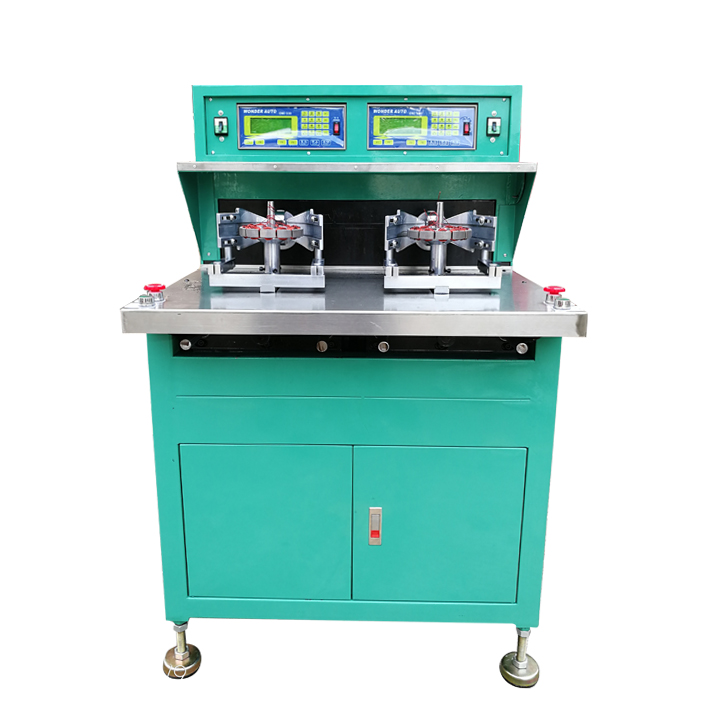
- Dual Independent Micro-Controllers
- 1 kW Rated Power · 220V Compatible
- Industrial PLC Stepper Drive System
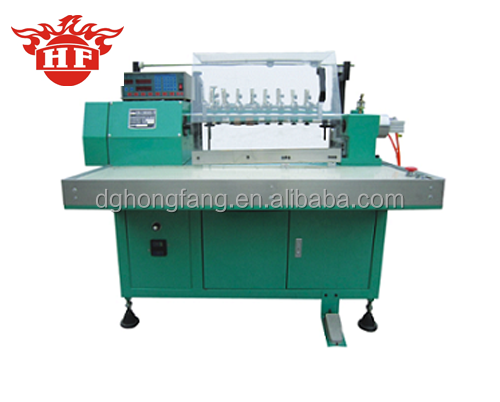
- Multi-Spindle Batch Coiling (8 Heads)
- Max 3000 RPM Spindle Velocity
- Table Fan & Fractional Motor Coils

- Dynamic Rotor Gripping Mechanism
- Precision Commutator Hooking/Welding
- High Repeatability Chuck Alignment

- Single Phase 220V Clean Operation
- Enamelled Copper & Aluminum Compatible
- Configurable Pitch & Tension Control

- Integrated Coolant Pump & Heavy Base
- Fine Tolerance Aluminum Surface Shaving
- Guarantees Electromagnetic Air Gap

- Continuous Unattended Wire Laying
- Quick Tooling Modular Interchange
- Heavy Industrial Duty 220V/380V Options

- Simultaneous Coil & Wedge Transfer
- Eliminates Enamel Insulation Abrasion
- Custom Blade Tooling to Stator ID

- Hydraulic / Mechanical Coil Compaction
- Prevents End-Turn Housing Interference
- 1-Year Warranty Heavy-Duty Gear Drive
Technical White Paper: The Role of Automated Stator Lacing in Modern Motor Manufacturing
Stator coil lacing—often referred to as coil end-turn binding or tying—is the mission-critical electro-mechanical operation that binds the protruding copper or aluminum wire loops extending beyond the laminated iron core slots. While wire winding and slot insulation establish the electromagnetic circuits, lacing determines the physical lifespan, mechanical resilience, and dielectric safety of the motor. In demanding operating conditions, such as continuous duty industrial fans, agricultural submersible pumps, and heavy HVAC compressors, stator end turns are subjected to violent electromagnetic Lorentz forces during direct-on-line starting, sustained mechanical vibrations, and cyclic thermal expansion.
Manual lacing with handheld needles and lacing cords introduces high variance in tension, loose knots, inconsistent bundle compression, and unacceptable cycle times ranging from 8 to 15 minutes per stator. In contrast, automated CNC stator coil lacing machines—engineered with synchronized servo feeding needles, rotary indexing chucks, and pneumatic hook tensioners—compress and tie the winding overhang within 12 to 25 seconds. This process locks the slot liners, phase separators, and leads into a rigid, monolithic structural geometry before final varnish impregnation.
Information Gain Architecture: Automatic double-side lacing reduces coil-end vibrational deflection by up to 92%, virtually eliminating copper fatigue fracturing and insulation friction breakdown under high-frequency variable speed drive (VFD) harmonic currents.
Kinematic Precision & Tension Control Dynamics
Modern industrial lacing relies on two primary architectural variants: single-side horizontal/vertical lacing machines and high-productivity dual-side simultaneous lacing systems. In a servo-driven double-side machine (such as the HF-BS20 architecture), two opposing needle mechanisms work in millisecond-level synchronization. As the stator core indexes via a precision Delta or Mitsubishi servo rotary table, the needles penetrate between the stator teeth, carry the industrial polyester or Nomex lacing tape through the coil bundle, loop around the peripheral boundary, and secure the stitch using a locking chain stitch or lock stitch knot.
A critical engineering consideration during this mechanical cycle is pitch indexing flexibility. A high-spec CNC lacing machine allows operators to program variable lacing patterns via the HMI touchscreen: slot-by-slot lacing, interval-skip lacing (e.g., skip 1 slot, tie 2), and lead-wire lock-down anchoring. When passing over fragile phase-lead jumpers and internal thermal protectors, the machine's PLC automatically commands a tension-reduction step to prevent wire-pinching and insulation rupture.
Simultaneous Dual-End Binding
Binds both the drive-end (DE) and non-drive-end (NDE) coil heads concurrently. Eliminates structural twisting forces on stator laminations and slashes total cycle time down to 14–22 seconds per unit.
Fully Programmable Servo Stitching
Multi-axis servo systems enable rapid transition between complex lacing routines: standard single stitch, double stitch at lead wires, skip-slot intervals, and dedicated starting/ending anchor knots.
Enamel Layer Protection
Polished guide channels, ceramic eyelets, and pneumatic cord damping prevent scratches to 0.1–1.2mm copper or aluminum enameled wires, preventing inter-turn shorts during hipot testing.
Localized Industrial Applications Across the Prizren Regional Economy
The historic municipality of Prizren, strategically positioned in the southern economic corridor of Kosovo bordering Albania and North Macedonia, serves as a vital light industrial and manufacturing trading crossroads. While Prizren is renowned for its cultural heritage and commerce, its industrial periphery—including the Lubizhdë Industrial Park, the Prizren Economic Zone, and adjacent production hubs along the M25 and R107 transit routes—is experiencing an aggressive modernization phase. Local manufacturing enterprises, electro-mechanical repair facilities, agricultural equipment fabricators, and HVAC component workshops are systematically transitioning away from manual workshop labor toward cost-effective semi-automated and fully automated production machinery.
1. Agricultural Submersible & Irrigation Pump Rewinding and Manufacturing
The fertile Prizren plain and the broader Dukagjini agricultural basin depend heavily on high-pressure water pumping systems, deep-well submersible pumps, and centrifugal irrigation machinery. Agricultural pump stators represent one of the harshest duty cycles for electric motors: they operate in sealed, water-cooled or oil-filled stainless steel enclosures subjected to heavy hydraulic back-pressure and frequent voltage surges. In these applications, manual lacing often fails because damp conditions and prolonged thermal stress loosen the end-turn cords, leading to wire chafing against the pump's outer shell. Prizren electromechanical contractors deploying our single-end and dual-end stator lacing equipment achieve uniform, rock-solid coil binding that easily withstands continuous underwater hydrostatic pressures and vacuum varnish encapsulation.
2. Commercial HVAC, Industrial Ventilation & Food-Processing Exhaust Systems
Prizren's thriving agribusiness, dairy processing, and cold-storage logistics sector demands heavy-duty industrial exhaust blowers, cold-room condenser fans, and continuous ventilation motors. These motors typically run 24 hours a day, 7 days a week. Stator coil vibration in un-laced or poorly tied windings creates micro-arcs between adjacent coils, destroying the slot wedge insulation. Automated lacing compresses the end turns into a low-profile bundle that clears the motor housing end-bells with absolute mechanical clearance, optimizing internal air flow and heat dissipation across the lamination stack.
3. Regional Motor Remanufacturing Hub Serving Kosovo, Albania, and North Macedonia
Because of Prizren's geographical centrality, local electro-repair firms receive damaged three-phase induction stators from Pristina, Gjakova, Tetovo, and Kukës. Repairing an IE2 or IE3 motor manually requires skilled winding artisans who are increasingly scarce and costly. By integrating a versatile automatic stator lacing machine alongside our semi-automatic coil winders and slot insulation inserters, a Prizren workshop can re-lace an entire rewind job in 90 seconds instead of an hour, reducing turnaround times for local industrial clients from several days to same-day delivery.
Macro Trends & Industrial Modernization in Kosovo's Electro-Mechanical Sector
As Kosovo's industrial sector aligns more closely with European Union (EU) energy efficiency standards and regional Western Balkan CE trade accords, the technical baseline for electric motor production and refurbishment is shifting dramatically. Industrial motor purchasers in the Western Balkans can no longer afford inefficient, prone-to-failure rewinds. Three distinct structural trends are reshaping how Prizren machinery operators evaluate stator lacing equipment:
1. Compliance with Strict IE3 / IE4 Premium Efficiency Directives: The EU Eco-design Regulation (EU 2019/1781) mandates higher efficiency thresholds across single-speed and variable-speed electric motors. Reaching IE3 or IE4 efficiency requires motor designers to maximize the copper slot-fill factor (often exceeding 75–80%) while keeping end-turn copper loops as compact as possible to reduce $I^2R$ electrical resistance losses. Manual lacing cannot compress dense slot-fill bundles without damaging wire enamel. Our automated stator lacing machines apply calibrated pneumatic compaction combined with high-tensile polyester ribbon, achieving the tightest possible end-turn geometry and supporting compliance with modern energy mandates.
2. Grid Resilience & Voltage Tolerance Engineering: Industrial parks in developing commercial regions frequently experience grid fluctuations and transient phase imbalances. Machines engineered for Western European lines with rigid electronic thresholds often trip or malfunction when subjected to minor Balkan voltage sags. Recognizing this challenge, our export machinery lines are engineered with wide-voltage industrial power supplies (220V/380V ±10%), robust Schneider/Delta electrical hardware, and protected PLC logic circuits designed to run smoothly in real-world workshop environments without downtime.
3. Transition from Skilled Artisan Dependence to Repeatable Automation: Throughout Kosovo, young technical labor is rapidly moving into digital sectors, leaving electro-mechanical manufacturers with an acute shortage of master coil winders. Automation bridges this generational demographic gap. A single operator with zero prior winding craftsmanship can be trained within half a day to load a stator onto our pneumatic mandrels, hit the safety two-hand start button, and remove a perfectly bound stator every 20 seconds, allowing small Prizren businesses to scale production volume reliably.
Comparison Matrix: Manual vs. Automated Stator Lacing Performance
| Performance Dimension | Manual Hand Needle Lacing | Semi-Automatic Single-Side Machine | Dual-Side Servo Automated System |
|---|---|---|---|
| Average Cycle Time | 8.0 – 15.0 Minutes / Stator | 45 – 70 Seconds / Side | 14 – 22 Seconds (Both Ends) |
| Knot Tension Consistency | Subjective, fatigue-dependent (±40% variance) | Calibrated spring/pneumatic damper (±5%) | Closed-loop digital servo tensioning (±2%) |
| Slot-Fill Bundle Compaction | Loose to moderate; risk of coil bulging | Firm, uniform mechanical head shaping | Maximum compaction for high-efficiency IE3/IE4 |
| Lead Wire Protection | High human error; accidental wire pinching | Programmable skip-stitching around jumpers | Automated sensor recognition & tension dampening |
| Labor Skill Requirement | High artisan craftsmanship required | Basic general worker (2 hours training) | Unskilled operator loading / robotic arm ready |
Why Balkan & Global Motor Manufacturers Partner with Zunqi Intelligent Equipment
Based in Qishi Town, Dongguan City—at the core of South China's premier high-precision manufacturing belt—Zunqi Intelligent Equipment Co., Ltd. brings more than 17 years of dedicated export experience to the international electro-mechanical sector. We bridge the gap between expensive European machinery and low-grade domestic workshops by providing high-reliability, PLC-controlled stator and rotor production equipment directly from our certified assembly floors.
100% Custom Tooling to Drawing
We do not sell generic, ill-fitting equipment. Every lacing needle, indexing chuck, inserting blade, and forming mould is CNC-machined according to your stator drawing (outer diameter, internal bore, stack height, and slot count) or physical sample.
Configurable Industrial Controls
We support global maintenance teams by outfitting our electrical cabinets with internationally recognized automation components: Siemens, Mitsubishi, Schneider, Delta, Omron, Airtac, and SMC pneumatics for seamless local spares sourcing.
Pre-Shipment Trial Run Video
Before any machine is crated for export, our engineers load your actual sample stator or equivalent core, run a complete trial cycle, and provide an HD running video showcasing cycle time, stitch neatness, and knot integrity for your final sign-off.
Verified Supplier Credibility: Onsite-checked facilities in Dongguan, full trade capacity documentation, comprehensive 1-year equipment warranty, low MOQ of 1 set, and an average technical inquiry response time under 9 hours.
Whether you require an individual standalone single-side lacing unit for an existing repair line or a complete turn-key automated stator manufacturing cell (slot paper inserting → multi-spindle coil winding → coil & wedge inserting → intermediate forming → double-side lacing → final shaping), our modular systems deliver matched cycle times and unified tool design.
Frequently Asked Questions for Industrial Buyers in Prizren & the Western Balkans
Technical and logistical insights compiled by our export sales and engineering desk to guide procurement directors, factory owners, and technical managers in Kosovo.
1. Can your stator lacing machines handle our specific range of stator stack heights and bore sizes?
2. How are shipments, customs clearance, and freight handled for delivery into Prizren, Kosovo?
3. What electrical voltage and pneumatic infrastructure do we need to operate the machine in Kosovo?
4. How is operator training and post-installation service handled remotely in Prizren?
5. What type of lacing thread or cord is compatible with these machines?
6. What wearing parts should we keep in stock, and how fast can replacements arrive?
Modernize Your Motor Production & Rewinding Line
Send your stator core dimensions, slot diagrams, and target daily output to our Dongguan engineering team. Receive a turnkey equipment recommendation, tooling assessment, and detailed export quotation within 9 hours.
