Industrial-Grade Motor Stator & Rotor Equipment
Direct-from-factory automation equipment customized for motor overhaulers, OEM manufacturers, and pump fabricators in Bolívar, Colombia.

Hot Sale Armature Winding Machine for Fan Motor
View Specifications
Electric Motor Spares SC45# Low Carbon Steel Iron Fan Motor Shaft
View Specifications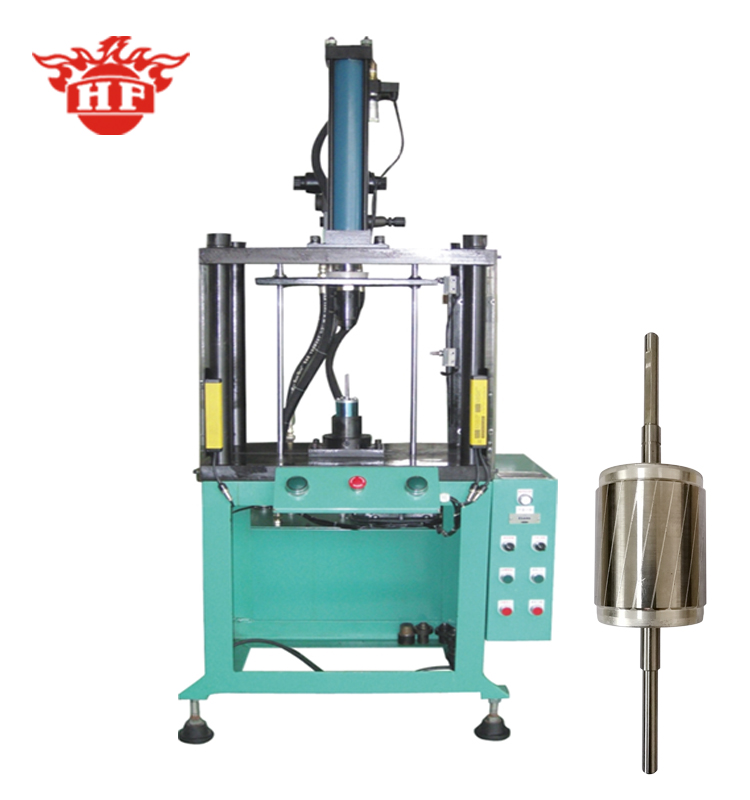
New Rotor and Shaft Inserting Hydraulic Press Machine HF-W50
View Specifications
Fan Motor Rotor Rough Turning & Surface Cutting Machine
View Specifications
HF-W120H Electric Motor Stator Coil Final Forming Machine
View Specifications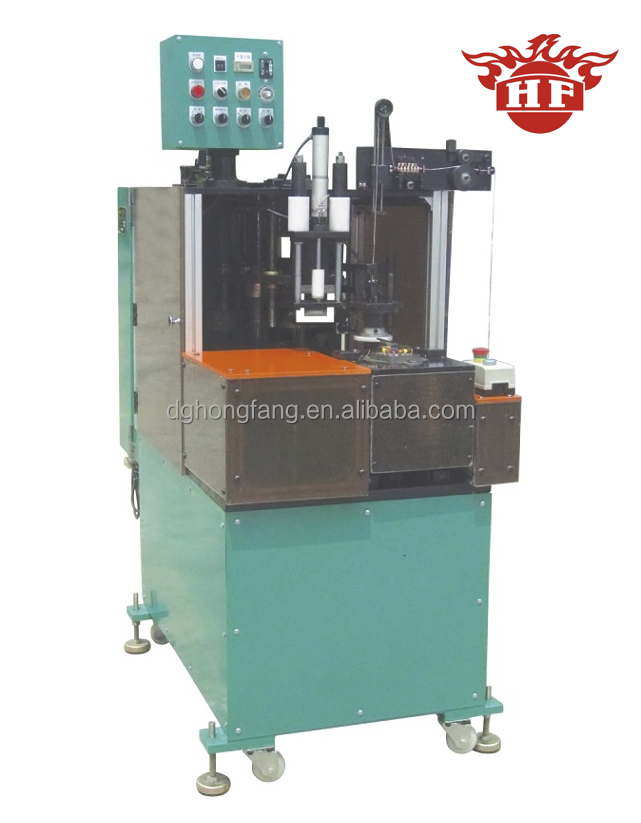
HF-BS20 Servo Automatic Coil Double Side Lacing Machine 1000W
View Specifications
Automatic Coil & Stator Slot Wedge Paper Inserting Machine
View Specifications
HF Single Side Lacing Machine for Table Fan Motor Stator
View SpecificationsWhitepaper Analysis: Kinematics of Automatic Stator Wedge & Coil Insertion
In modern electric motor manufacturing, the stator coil and wedge insertion process represents the primary quality bottleneck. Transitioning from manual slot packing to an automatic stator wedge and coil inserting machine yields measurable gains in slot fill factor, phase balance, and insulation dielectric strength. For industrial motor re-winders and OEMs operating in Cartagena, Bolívar, upgrading to servo-driven dual-action inserting technology eliminates copper wire enamel scraping and paper buckling—two major causes of early phase-to-ground dielectric breakdowns in high-humidity coastal environments.
Synchronous Dual-Action Insertion Mechanism
Unlike basic inserting equipment that pushes enamelled copper wire and insulation slot wedges in asynchronous steps, advanced inserting machinery utilizes a synchronized pusher finger push-rod assembly. Driven by high-torque AC servo motors coupled with high-precision ball screws, the system simultaneously transfers pre-wound coil groups and pre-cut slot insulation wedges into the stator slots in a single smooth axial stroke.
Core Mechanical Advantage: Wire-Enamel Protection Architecture
The inserting tooling features individual guide needles constructed from high-hardness tungsten carbide or heat-treated Cr12MoV die steel. These guide needles hold each slot coil group in exact alignment while polished slider fingers guide the copper wire past the stator teeth edges. This design maintains zero friction against the magnet wire enamel, preserving insulation resistance exceeding 500 MΩ even under harsh operating conditions.
Simultaneously, the slot wedge mechanism pulls insulation paper (DM, DMD, NMN, or PET film) from a continuous roll, creases it into a rigid "U" or "O" profile, cuts it to the exact stator core stack length, and feeds it into the wedge magazine. As the push fingers advance, the pre-shaped wedges slide directly into the slot top grooves, securely locking the copper wire coils beneath the stator teeth lips. This automated lock-in eliminates loose conductors that cause micro-vibration, turn-to-turn short circuits, and mechanical abrasion during high-torque motor start-ups.
| Parameter Dimension | Standard Industrial Range | Customized Heavy-Duty Range | Operational Impact |
|---|---|---|---|
| Stator Core Outer Diameter (OD) | 40 mm – 160 mm | Up to 300 mm+ | Supports small fan stators up to industrial pump motors |
| Stator Core Stack Height | 10 mm – 150 mm | Up to 250 mm | Determines torque output and core magnetic volume capability |
| Suitable Wire Diameter Range | 0.12 mm – 1.2 mm (Single/Stranded) | Up to 1.6 mm heavy magnet wire | Controls current capacity and copper fill coefficient |
| Slot Wedge Material Compatibility | DMD, NMN, Nomex, Vulcanized Fiber | High-temp Epoxy Glass Cloth | Matches Class B, F, and H thermal insulation standards |
| Cycle Time Per Stator | 12 sec – 25 sec (depending on slot count) | High-speed Servo Option (<10 sec) | Directly dictates daily workshop unit capacity |
Localized Application Scenarios in Cartagena's Industrial Ecosystem
Cartagena de Indias is not only a cultural capital but also Colombia's premier Caribbean maritime, petrochemical, and logistics hub. The city's intense industrial cluster—centered around the Mamonal Industrial Zone and major maritime ports—demands electric motors built to withstand elevated ambient temperatures, high tropical humidity, and airborne marine salt spray. Automated stator winding and wedge insertion equipment directly supports key local sectors:
1. Maritime Repair & Naval Engineering (Cotecmar Ecosystem)
Shipyards, dry docks, and marine engineering contractors servicing naval vessels, commercial cargo ships, and tugboats require high-reliability motor overhauls. Auxiliary bilge pumps, anchor windlasses, and ventilation blowers use stators that require compact, rigid coil head profiles. Automated insertion ensures tight end-turn dimensions, allowing secondary shaping and double-side lacing machines to create compact coil heads that clear marine motor end-bells without ground contact.
2. Industrial HVAC & Cold Storage Compressors
Cartagena’s massive seafood export, chemical processing, and hotel infrastructure rely heavily on industrial refrigeration systems running continuously. Stators used in hermetic and semi-hermetic refrigeration compressors require precise slot filling without loose wire strands that could suffer insulation fatigue under constant refrigerant gas movement. Servo-driven coil wedge insertion guarantees uniform slot density and wedge lock-in.
3. Heavy Port Logistics & Petrochemical Pumping
The Mamonal corridor hosts major oil refineries, chemical storage, and container terminal cranes (Puerto de Cartagena). Submersible drainage pumps, explosion-proof chemical agitators, and conveyor drive motors operate under continuous thermal stress. Automated insertion allows the seamless use of Class H insulation materials like NMN and Nomex, ensuring that wedge paper withstands localized thermal spikes without charring or sliding out of position.
4. Household & Commercial Fan Motor Manufacturing
Due to year-round tropical temperatures in the Bolívar Department, local assembly plants producing standing fans, ceiling fans, and commercial evaporative coolers demand high-throughput, low-cost stator assembly lines. Utilizing multi-station automatic winders combined with single-stroke wedge inserters lowers per-unit labor costs while ensuring 100% compliance with Colombian RETIE safety standards.
Cartagena & Colombian Motor Manufacturing Market Trends (2025–2030)
Colombia’s industrial sector is undergoing a transition driven by national energy efficiency policies and nearshoring trends across the Caribbean basin. Industrial plant managers and motor repair workshops in Cartagena are adapting to several key technological trends:
1. RETIE Compliance & IE3 High-Efficiency Transitions
Colombia’s Ministry of Mines and Energy enforces the Reglamento Técnico de Instalaciones Eléctricas (RETIE), which sets strict baseline efficiency guidelines for low-voltage induction motors entering commercial and industrial facilities. Achieving IE2 and IE3 energy efficiency standards requires increasing the slot fill factor—meaning more copper wire must be packed into the same lamination slot area. Manual wedge pushing is nearly impossible at high slot fill ratios without severing magnet wire enamel. Automated insertion equipment applies controlled hydraulic or servo pressure to seat thick copper wire bundles safely into tight slot geometries.
2. Adaptation to Dual-Voltage & 60Hz Power Grid Specifications
In Colombia, the industrial electrical grid operates on a 60Hz frequency with dual-voltage standards (typically 110V/220V single-phase for light commercial applications and 220V/440V 3-phase for heavy industrial machinery in Mamonal). Machinery suppliers must provide PLC-driven automation compatible with local grid fluctuations. Modern automatic insertion machines incorporate industrial voltage stabilizers, filter circuits, and programmable logic controllers calibrated for standard 60Hz power, preventing cycle timing drift caused by line frequency variations.
3. Nearshoring and Regional Technical Overhaul Capability
Global supply chain disruptions have pushed Latin American fleet operators and industrial manufacturers toward domestic overhaul capabilities. Cartagena's position along primary shipping lanes makes it an ideal regional maintenance center for South America and the Caribbean. Investing in automated stator assembly tools—such as rotor fine-turning lathes, hydraulic shaft presses, double-sided lacing units, and coil insertion machines—allows local facilities to achieve OEM-factory turnaround speeds, reducing vessel and plant downtime from weeks to days.
Frequently Asked Questions by Industrial Buyers in Cartagena
Below are authoritative answers to common technical, logistical, and operational queries raised by plant managers and procurement officers in Colombia when sourcing stator manufacturing equipment.
Why Choose Zunqi Intelligent Equipment Co., Ltd.
Located in Qishi Town, Dongguan, Guangdong—the premier global hub for precision mechanical engineering and motor manufacturing technology—Zunqi Intelligent Equipment Co., Ltd. stands as a dedicated manufacturer and exporter of full-line motor stator and rotor automation solutions.
17+ Years Export Track Record
Over a decade and a half of verified international trade, supplying high-performance winding, lacing, forming, and insertion machinery to motor manufacturers and repair facilities across Latin America, Southeast Asia, Europe, and the Middle East.
Turnkey Line Integration
From initial slot paper insulation inserting to coil winding, wedge insertion, intermediate forming, double-side servo lacing, final shaping, rotor fine turning, and hydraulic shaft pressing—we engineer matched machines with synchronized cycle times.
Rigorous Factory Acceptance Testing (FAT)
No equipment leaves our workshop without completing a 100% continuous test run using the client's original wire and stator samples. High-definition video recordings of the machine in operation are sent to the client for final verification prior to crate packing.
End-to-End Motor Stator Assembly Workflow
When upgrading your Cartagena production facility, combining individual process steps into an integrated line delivers maximum quality control and throughput:
- Phase 1: Slot Insulation — Automatic slot paper folding and inserting machines apply uniform insulation liners into raw stator laminations.
- Phase 2: Coil Winding — Multi-station internal or outer winders draw copper or aluminum wire, creating precisely counter-turned coil groups.
- Phase 3: Coil & Wedge Insertion — Our core automatic stator wedge and coil inserting machine transfers coils and top wedges into the stator slots simultaneously in under 20 seconds.
- Phase 4: Intermediate Shaping & Lacing — Pre-forming presses shape end-turns before single or double-sided lacing machines bind the coil heads tightly with lacing cord.
- Phase 5: Final Forming & Testing — Final hydraulic forming heads compress the coil heads to precise drawing dimensions, preparing the completed stator for varnish dipping and testing.
Optimize Your Motor Manufacturing & Rewinding Operations in Cartagena
Ready to upgrade your plant's efficiency, reduce stator failure rates, and achieve RETIE-compliant motor assembly? Contact our senior engineering team today for technical consultation, machine specifications, and a customized quotation.
Inquire Now