
Factory-Direct Machinery
Specialized Motor Stator Assembly & Tying Systems
Tooling engineered to physical customer stator dimensions. All equipment undergoes full mechanical pre-testing, multi-cycle trial winding, and electrical validation prior to European dispatch.





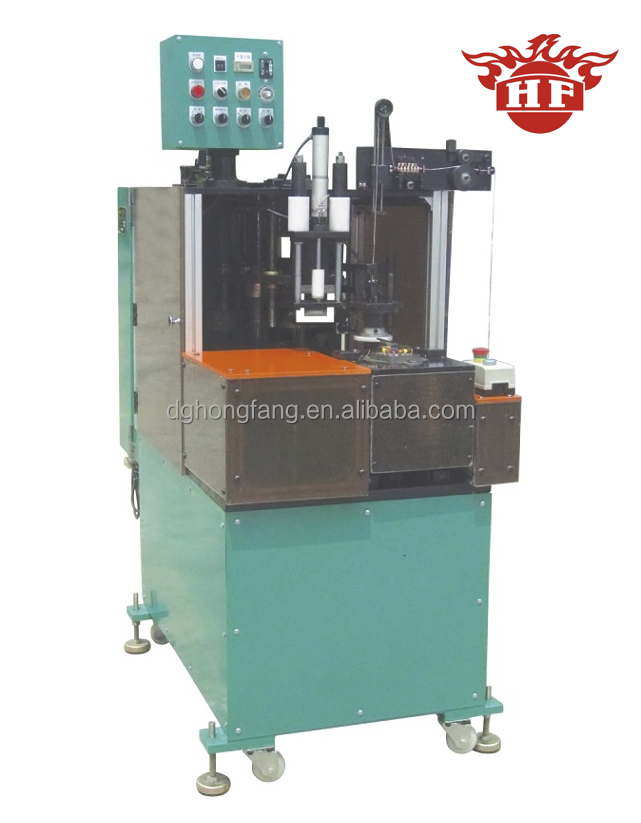

Engineering Authority: Automated Coil Tying Architecture for Linz's Advanced Manufacturing Sector
The industrial metropolitan area of Linz, extending across the broader Upper Austrian central economic zone (Linz-Wels-Steyr), represents Austria's powerhouse of heavy industry, mechanical engineering, and mechatronic drive technologies. As local equipment manufacturers transition from legacy assembly lines toward Industry 4.0 paradigms, the demand for precision automated coil tying machinery (also recognized in German technical specifications as Statorwickel- und Schnürmaschinen) has escalated dramatically. In modern electric motor construction, the coil tying and lacing phase is not merely cosmetic; it is an indispensable mechanical reinforcement procedure that governs slot fill factor stability, magnetic flux uniformity, dialectic insulation endurance, and operational acoustic profiles.
1. The Mechanical Dynamics of Coil Tying in Demanding Environments
During direct-on-line starting, transient inverter switching, or variable frequency drive (VFD) duty cycles, end windings encounter violent electromagnetic repulsive forces calculated by Lorentz force equations ($F = I \cdot L \times B$). Without uniform, highly tensioned mechanical stabilization, individual enameled conductors undergo microscopic axial oscillations. Over operational runtimes, this friction rubs away the thin polyesterimide or polyamide-imide wire enamel coating, resulting in inter-turn short circuits, thermal runaway, and catastrophic stator ground faults. Our automatic double-sided coil tying machines (such as the HF-BS20 Servo series) execute continuous needle lacing with regulated chord tensioning, compressing the active conductor overhang tightly against slot cell liners and phase barrier papers without nicking wire surfaces.
Heavy Industrial & Hydraulic Drives
Engineered for pump, compressor, and hydraulic motor stators deployed in Linz steelworks, chemical installations, and port operations requiring rigorous vibration-proof lacing cords.
High-Efficiency HVAC & Blower Systems
Tailored for high-slot-fill commercial cooler and heat-pump blowers demanding minimal end-turn heights to fit compact aerodynamic aluminum casings.
Robotics & Mechatronic Servo Units
Multi-pole fractional kilowatt servo stators demanding zero wire crossover damage, absolute phase separation integrity, and high copper-slot packing density.
2. Technical Parameter Matrix: Manual vs. Automatic Servo Lacing
For machine shop planners and manufacturing engineers in Upper Austria calculating equipment payback and cycle-time optimization, the following comparative engineering benchmarks illustrate the process advantages realized when switching from conventional manual hand-tying to PLC-controlled automated servo equipment:
| Evaluation Parameter | Manual Hand Lacing / Tying | Semi-Automatic Mechanical Lacer | Zunqi HF-BS20 Servo Double-Side System |
|---|---|---|---|
| Cycle Time per Stator | 180 – 360 seconds | 35 – 55 seconds | 12 – 22 seconds (Both Ends Combined) |
| Knot Tension Uniformity | Variable (±35% operator fatigue dependent) | Spring-loaded tension (±12% variation) | Servo closed-loop control (±2% precision) |
| Lacing Pattern Flexibility | High flexibility, zero repeatability | Rigid cam-based (Tooling restricted) | Programmable PLC (Slot-by-slot, skip-slot, custom) |
| Enameled Wire Scrape Rate | Operator dependent (Up to 2.1%) | Approx. 0.8% under high speeds | < 0.05% with guided needle geometry |
| Tooling Changeover Window | Immediate (Manual) | 45 – 90 minutes | 15 – 25 minutes (Modular clamp system) |
3. Regional Industrial Trends Across Linz & Upper Austria
The manufacturing sector in Linz is heavily influenced by energy transition mandates, stringent EU Ecodesign directives (demanding electric motors meeting IE4 Super Premium and IE5 Ultra Premium efficiency thresholds), and acute skilled-labor shortages. In response, modern production facilities require machines featuring:
- Harmonized Electrical Architectures: Seamless operational adaptability to Austrian standard power systems (400V/230V 50Hz grid setups) with pre-wired thermal circuit breakers and industrial-grade noise suppression filters.
- Open Control Configurations: Open-architecture PLC systems compatible with components commonly integrated by local maintenance teams, including Siemens S7 controllers, Omron optical sensors, and SMC pneumatics.
- Optimized Coil End Geometries: Compact coil forming post-tying to reduce copper resistance losses ($I^2R$), directly contributing to improved efficiency ratings under European motor testing standards.
Why Partner With Zunqi
Engineering Rigor, Factory-Direct Value & Global Reliability
Operating from our Dongguan manufacturing campus, Zunqi Intelligent Equipment delivers turn-key stator and rotor machinery built upon seventeen years of dedicated international export experience.
01
Custom Tooling to Stator Prints
Every winding head, lacing needle fixture, and slot insertion guide is custom CNC-machined strictly according to the client's lamination drawing, stack height, and conductor wire gauge.
02
Complete Interlocked Line Capacity
Beyond standalone lacing, we supply complete matching lines: from slot insulation paper inserting and coil winding to automatic wedge inserting, intermediate forming, double-sided tying, and final rotor turning.
03
Full Pre-Shipment Video Trials
Clients are encouraged to send physical stator samples before shipment. We record comprehensive test-run videos processing their actual laminations to verify knot integrity, cycle time, and zero-defect performance.
04
Standard Industrial Componentry
We assemble electrical and pneumatic cabinets using internationally available brands—Siemens, Mitsubishi, Panasonic, Schneider, Delta, SMC, and Airtac—simplifying ongoing maintenance and local spare sourcing.
05
VCI Protective Ocean Freight Crating
Equipment is pre-treated with rust inhibitors, vacuum sealed in heavy-duty moisture-barrier VCI foil, bolted to solid skids, and enclosed in fumigation-free solid plywood export cases.
06
Dedicated Remote Support Desk
Backed by an engineering inquiry response time of under 9 hours, we supply English documentation, full wiring schematics, video commissioning guidance, and guaranteed long-term spare tooling availability.
Buyer Inquiries
Frequently Asked Questions: Linz Machine Importers & Plant Managers
Practical commercial, regulatory, and engineering clarifications for technical procurement teams in Austria and Central Europe.
Are your machines compatible with Austrian industrial power supply standards in Linz?
Yes. While our domestic listings standardly note 220V single-phase or 380V three-phase ratings, all machines destined for Linz and the broader European market are engineered to operate seamlessly on European low-voltage specifications: single-phase 230V ±10% at 50Hz, or three-phase 400V ±10% at 50Hz. All control transformers and servo drives are specifically tuned for 50Hz electrical supply networks to prevent component overheating or synchronization drifting.
What is the Minimum Order Quantity (MOQ) and customization turnaround for special stator designs?
Our minimum order quantity for automated coil tying machines, winding units, and inserting machines is exactly 1 set. Customized tooling (including needle path fixtures, expanding formers, and stator nest plates) requires approximately 15 to 25 business days from the receipt and verification of your final engineering CAD drawings (.DWG / .STEP) or physical stator lamination samples.
How do you handle technical commissioning, training, and remote fault diagnostics in Austria?
Every machine ships with comprehensive English operation manuals, complete electrical circuit schematics, and high-definition video walkthroughs covering tooling changeovers, tension adjustments, and sensor calibrations. If technical issues arise, our engineering team hosts real-time video diagnostics via Teams or Zoom. For full-line automation turnkey projects, on-site mechanical fitters and commissioning engineers can be deployed directly to your facility in Linz upon arrangement.
Can your tying machines handle both copper and aluminum magnet wires without damaging insulation?
Absolutely. Because aluminum magnet wire possesses lower tensile yield strength and higher mechanical elongation sensitivity compared to copper, standard lacing needles can cause wire deformation or scraping if improperly tuned. Our machines incorporate adjustable servo needle acceleration, polished ceramic guide eyelets, and adjustable dynamic tension brakes that accommodate both standard enameled copper and delicate aluminum wire windings ranging from 0.1 mm to 1.2 mm diameter.
What export packaging standards are used to guarantee arrival in Linz without corrosion?
Transport to Central European destinations via ocean freight through European ports (Rotterdam, Hamburg, or Koper) followed by rail/road transit to Linz involves varying humidity cycles. We clean every polished surface with industrial anti-corrosion grease, seal the machine inside an airtight VCI (Vapor Corrosion Inhibitor) bag with desiccant packets, bolt the heavy chassis directly to a treated steel or solid wood base skid, and box the assembly inside a robust, fumigation-free export-certified plywood case.
Can you supply matched equipment to handle the entire stator manufacturing workflow?
Yes. Beyond isolated coil tying machines, Zunqi designs and manufactures matched, synchronous production cells: starting with slot insulation paper folding/inserting, progressing to multi-spindle automatic coil winding, automated coil and wedge simultaneous insertion, intermediate forming, single or double-sided automated tying, final dimensional head forming, and subsequent rotor rough/fine turning and shaft press-fitting.
Accelerate Your Stator Production Efficiency in Linz
Submit your motor stator outer diameter, stack height, slot configuration, and wire specifications today. Our senior automation engineers provide a customized machine proposal, cycle-time simulation, and direct factory pricing within 9 hours.
