Core Machinery Line for Stator & Rotor Manufacturing
Tool-engineered for heavy industrial duty, fan motor series production, and specialized rewinding facilities operating across Arima and the Caribbean basin.
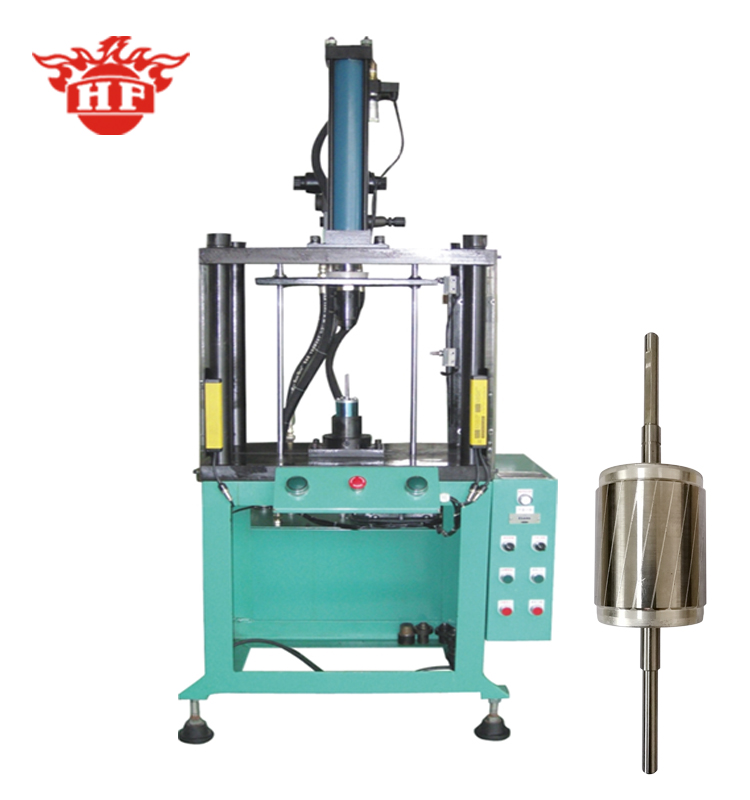
New Rotor and Shaft Inserting Hydraulic Press Machine HF-W50
- High-precision hydraulic stroke with pressure limiting
- Prevents lamination skew and rotor shaft runout
- 1 Year Warranty with heavy industrial framework

Automatic Fan Motor Stator Coil Winding Machine
- Handles copper and aluminum wire (0.1–1.2 mm)
- Microprocessor tension controller prevents enamel friction
- Standard single phase 220V operation

HF-R22 8-Head Coil Making Machine for Pumps & Tools
- Synchronized 8-head spindle system for bulk output
- Suited for submersible pump, fan, and cooler motors
- Modular winding mold adapters for quick swap

Automatic Slot Insulation Paper Inserting & Cutting Machine
- High-speed creasing, feeding, cutting, and inserting
- Eliminates slot liner insulation punctures and earthing
- 1 kW, 380V/220V configurable industrial control
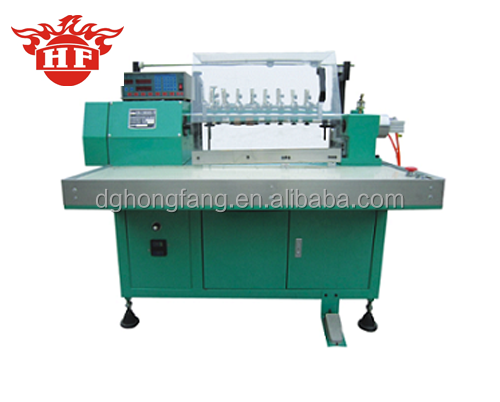
CNC Auto Stator Coil Winding Machine (8 Heads, 3000 RPM)
- Ultra-high dynamic spindle output reaching 3000 RPM
- Full CNC parameter programming with digital touchscreen
- Zero-turn deviation with electronic indexing
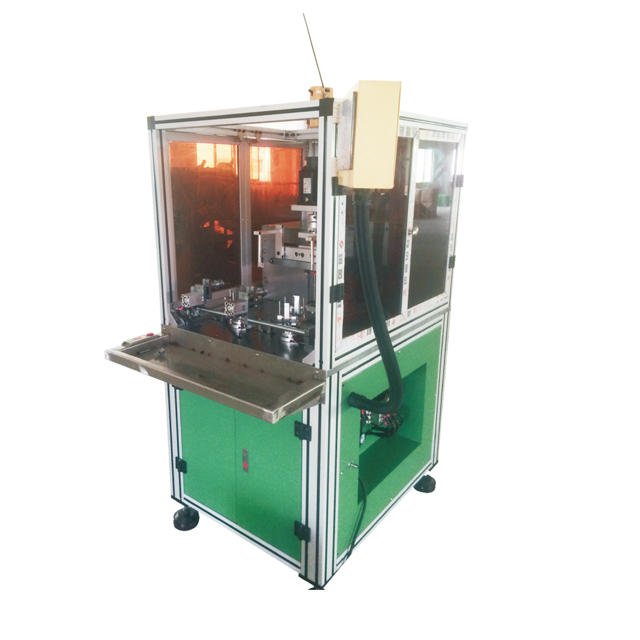
4-Station Automatic Internal Stator Needle Winding Machine
- Simultaneous 4-station winding for inner slot geometries
- Continuous wire tensioning with high fill-factor capability
- Engineered for brushless DC, ceiling fan, and blower stators

Precision Rotor Fine Turning & Surface Cutting Machine
- Guarantees precise motor air-gap balance (≤0.015 mm)
- Integrated flood coolant pump for burr-free aluminum cutting
- Integrated PLC automated surface cycle

Six-Station Outer Stator Motor Coil Winding Machine
- High-throughput automated multi-station indexing
- Heavy structural gearing with precision servo synchronization
- 1 Year Factory Warranty on PLC and core components
Technical White Paper: The Mechanics of Hydraulic Stator Coil Forming
In modern electric motor manufacturing, the coil forming stage represents the critical intersection where electrical insulation integrity meets mechanical deformation. A hydraulic coil forming machine must exert uniform, multi-directional force to reshape overhang end-turns after winding and wedge insertion without pinching the primary slot liners or thinning the conductor’s exterior enamel coat.
Traditional mechanical crank presses frequently suffer from non-linear deceleration, which creates localized stress peaks at the corners of the stator stack. Conversely, hydraulic coil forming systems from premier Chinese facilities utilize proportional pressure profiling. By controlling the oil ingress through servo-proportional valves, the machine applies an initial gentle compaction force that overcomes the copper wire's yield point, followed by sustained dwelling pressure. This dual-phase compression completely suppresses copper "springback" tendencies—a phenomenon that commonly causes end-winding interference with motor end-bells in compact motor housings.
Kinematic Analysis of Intermediate vs. Final Forming
Stator line automation relies on a two-step hydraulic forming methodology. The intermediate forming machine expands the inner diameter of the winding end-turns to clear an unobstructed travel path for automated needle lacing needles. The final forming stage acts simultaneously on both ends of the stator core, employing segmented expandable shoes, an expanding arbor inside the core bore, and outer clamping dies:
Core Bore Protection
Precision-ground hydraulic arbors match the stator inner diameter within 0.015 mm, preventing axial lamination blooming or displacement during high-tonnage end flare compression.
End-Turn Height Control
Segmented axial hydraulic pistons compress the coil crown to precise physical limits, eliminating mechanical contact with bearing brackets and terminal wiring conduits.
Inter-Phase Dielectric Integrity
Smooth, low-velocity hydraulic stroke maintains consistent spacing between main and auxiliary phases, preventing micro-fissuring in Class H/F phase-separator paper sheets.
Localized Application Scenarios in Arima & the Greater Trinidad Industrial Belt
Situated at the vital transportation junction of the Churchill-Roosevelt Highway and Eastern Main Road, the Borough of Arima serves as the manufacturing powerhouse of northeast Trinidad. Along with the adjacent O'Meara Industrial Estate—one of the largest planned industrial zones in the Caribbean—the region supports a dense ecosystem of electrical motor rewinding workshops, pump repair service centers, food-processing equipment builders, and heavy oilfield fabrication hubs.
Importing advanced hydraulic coil forming and automated stator machinery directly from Dongguan, China delivers competitive modernization to several key localized industries in Trinidad and Tobago:
| Sector / Application Hub | Local Operating Challenge | Deployed Machinery Solution | Direct Operational Benefit |
|---|---|---|---|
| Petrochemical & Refinery Pumps (Point Lisas / Gulf of Paria Pipeline) |
Heavy sulfur exposure, explosive gas atmosphere requiring IEEE 841 / explosion-proof motor stator tolerances. | Hydraulic Stator Coil Forming Machines with custom radial shoe tooling + HF-W50 Shaft Presses. | Guaranteed tight coil end-turn profiles that fit within flameproof cast-iron motor casings without ground faults. |
| Commercial & Residential Fans (O'Meara Industrial Estate Assembly) |
High local consumer demand for ceiling and ventilation fans under continuous equatorial heat and humidity. | HF-R40-2C Automatic Ceiling Fan Winders + 8-Head CNC Coil Winding Systems (3000 RPM). | Substantial cost reduction per stator, consistent copper/aluminum coil turns, and output rates exceeding 180 units/hr. |
| Marine & Submersible Drainage Pumps (Arima Municipal, Quarrying & Port Ops) |
Severe moisture penetration causing insulation degradation; aggressive thermal cycling under heavy silt loading. | Slot Insulation Paper Inserters (1 kW) + Servo Double-Side Lacing + Hydraulic Post-Forming. | Class H insulation liners installed without creasing defects; tight lacing prevents vibration-induced insulation rub-through. |
| Agro-Processing & Sugar Mills (Centeno, Caroni & Wallerfield Processing) |
Frequent motor burnout due to seasonal peak loads, power fluctuations, and acidic cane/cocoa processing dust. | HF-R22 Semi-Automatic Multi-Head Coil Winders + Precision Rotor Surface Turning Lathes. | Rapid turn-around on motor stator rebuilds; uniform air-gap machining prevents rotor-stator rub and core hotspots. |
For electrical workshops in Arima, equipment durability is deeply tested by the island's coastal environment. Atmospheric salt-laden humidity rapidly corrodes untreated cast surfaces and hydraulic circuits. Chinese hydraulic coil forming factories serving this export corridor specifically apply nickel-plated tooling mandrels, chrome-plated hydraulic ram rods, and IP55 sealed electrical enclosures configured with anti-condensation strip heaters inside the primary PLC cabinets.
Market Development Trends: The Automation Shift Across CARICOM
The industrial landscape of Trinidad and Tobago is experiencing a decisive structural pivot toward manufacturing self-reliance and energy efficiency. Under CARICOM regional trade provisions, locally assembled and manufactured goods benefit from substantial tariff exemptions across Caribbean member states, driving Arima-based industrialists to scale operations beyond domestic boundaries.
Transition to Premium Efficiency (IE3 & IE4)
Caribbean industrial facilities face steep electricity tariffs. Transitioning to IE3/IE4 motors requires increased slot fill factors (up to 78%). Only hydraulic multi-axis forming machines can cleanly manipulate these dense copper bundles without shearing slot liners.
Overcoming Skilled Winder Labor Shortages
Manual motor rewinding and hand-forming coil overhangs requires decades of artisan expertise. With regional labor shortages, automated CNC winding and hydraulic end-turn sizing empower semi-skilled operators to produce stators with factory-calibrated precision.
Replacement of Costly North American Imports
Caribbean buyers historically procured reconditioned machinery or costly US/European lines. Sourcing direct from China provides fully certified, brand-new automation backed by a 1-year warranty and modular spares at 40–60% lower capital outlay.
Comparative Analysis: Advanced China Hydraulic Automation vs. Legacy Manual Methods
For plant managers in Arima, upgrading to semi-automatic and automatic stator lines dramatically reshapes key cost drivers, quality metrics, and order turnaround cycles:
| Evaluation Parameter | Traditional Manual / Hand-Hammer Forming | Advanced China Hydraulic Coil Forming Lines |
|---|---|---|
| Cycle Time per Stator | 18 to 35 minutes per unit (depending on operator fatigue) | 12 to 25 seconds per single-stroke forming cycle |
| End-Turn Dimensional Uniformity | High variance (±3.0 mm); frequent motor shell collisions | Repeatable within ±0.05 mm via fixed hydraulic stops |
| Wire Insulation Scrap & Scratch Rate | 4.5% to 8% due to manual levers and drift mallet impact | <0.2%; polished chrome tooling & smooth hydraulic ram |
| Tooling Changeover Versatility | Requires improvisation; inconsistent stack heights | Modular shoe sets change over in under 20 minutes |
| Stator Electrical Life Expectancy | Unpredictable partial discharge risks under tropical humidity | Optimized phase clearances deliver standard 10+ year life |
Frequently Asked Questions for Machinery Buyers in Arima & Trinidad
Can your hydraulic forming machines match the 60 Hz electrical grid standard in Trinidad?
What custom parameters are needed to build forming tooling for our specific stator core?
How are sensitive hydraulic valves and CNC controllers protected during ocean transit to the Port of Spain?
Can the machine control components (PLC, Servos, Valves) be matched to local Trinidad stocks?
What after-sales commissioning and operator training are provided for Caribbean customers?
What is the Minimum Order Quantity (MOQ) and production lead time?
Enterprise Excellence: Zunqi Intelligent Equipment Co., Ltd.

Your Direct Manufacturing Partner in Dongguan, China
Operating from Qishi Town, Dongguan City—the heart of Guangdong Province’s high-precision manufacturing hub—Zunqi Intelligent Equipment Co., Ltd. has spent over 17 years designing, tooling, and exporting advanced motor production machinery. With an integrated team of 51 to 100 electromechanical specialists and modern CNC machining centers, we serve electric motor factories, appliance makers, and heavy rewinding plants across more than 40 nations.
Unlike trading intermediaries, Zunqi operates full in-house tooling fabrication, electrical cabinet wiring, and quality assurance trial-run benches. Our verified supplier credentials, published trade history, and onsite-checked production facility on Alibaba provide absolute transparency for international buyers executing high-value industrial procurements from the Caribbean.
- Onsite Audited Facility: Verified manufacturing operations with annual export revenue exceeding US$2.5M–US$5M.
- Complete Line Synergies: Matched cycle times across paper inserting, coil winding, wedge inserting, intermediate forming, lacing, and final hydraulic sizing.
- Strict 1-Year Equipment Warranty: Rapid express air-dispatch of spare tooling and wearing components.
Tooling Precision to Your Part
Forming shoes, inserting pushers, and winding molds are wire-EDM cut and polished to match your stator core geometry down to the micron.
Rapid Technical Quotations
Our engineering support team averages response times under 9 hours, reviewing motor blueprints and submitting customized proposals within 24 hours.
Proven Caribbean Logistics
Experienced coordination of ocean freight from South China to the Caribbean Sea, managing all export documentation, bill of lading, and certificate of origin standards.
