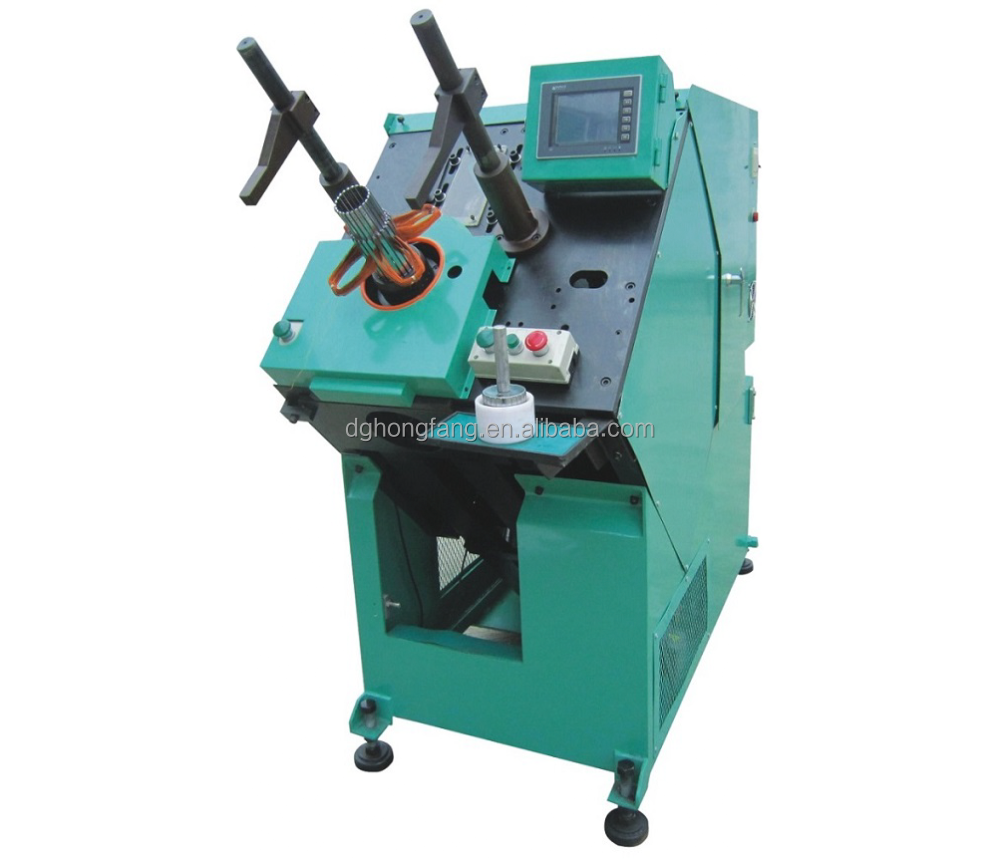
Automatic Stator Wedge Paper and Coil Inserting Machine for Fan Motor Stator
Simultaneous Insertion
Servo Wedge Feed
Scratch-Free Tooling
View Specifications
Explore our proven machinery portfolio specifically designed for high-density motor lamination stacks, dual copper/aluminum wire operations, and rigorous cycle times required by appliance manufacturers in Cuenca and the Andean Community.
Cuenca, the capital of Azuay Province, stands as Ecuador's premier manufacturing bastion for home appliances, commercial refrigeration, and electro-domestic goods. Operating motor assembly lines at an elevation of 2,560 meters presents distinct physical and electrical engineering considerations.
At 2,560 meters above sea level, Cuenca's lower barometric pressure reduces atmospheric cooling efficiency. Electric table fan motors engineered here demand an increased thermal margin. Our winding equipment accommodates precision wire layer alignment and high-slot-fill factors, allowing Cuenca plant engineers to maximize thermal conductivity through Class F and Class H insulation materials without compromising slot packing ratios.
Ecuador operates on a standard 120V/220V 60Hz power grid. Export fan motors destined for Andean Pact member states or Central America often require distinct 4-pole or 6-pole shaded-pole or permanent split capacitor (PSC) configurations. Our CNC winders feature programmable servo drivers with instant turn-per-slot calculation, ensuring rapid switching between 110V domestic and 220V export specifications.
For appliance assemblies located along Cuenca's Parque Industrial Chaullabamba and Panamericana Sur, spare parts downtime directly impacts OEE. We configure machines with universally accessible PLC systems (Mitsubishi, Siemens, Delta) and deliver crated tooling via the Contecon Guayaquil maritime terminal, accompanied by verified pre-shipment FAT running videos on physical stator cores.
Integrating automatic coil winding machinery into existing Ecuadorian appliance fabrication plants requires a balanced line takt-time. Below is our engineering roadmap for establishing an automated table fan stator cell.
| Operation Stage | Recommended Machine Unit | Technical Action & Tolerances | Material Compatibility | Takt Time (Cycle) |
|---|---|---|---|---|
| 1. Slot Lining | Automatic Insulation Paper Inserter | Pre-creases, feeds, shears, and inserts slot cell paper | DMD, NMN, Polyester film (0.15–0.35mm) | 0.5 - 0.8s / slot |
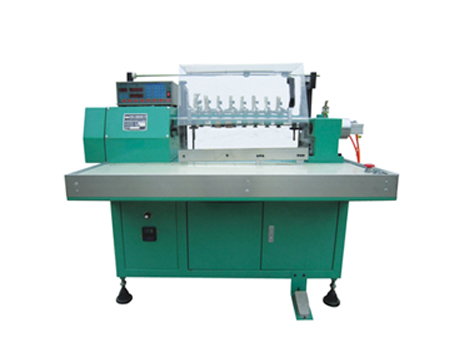
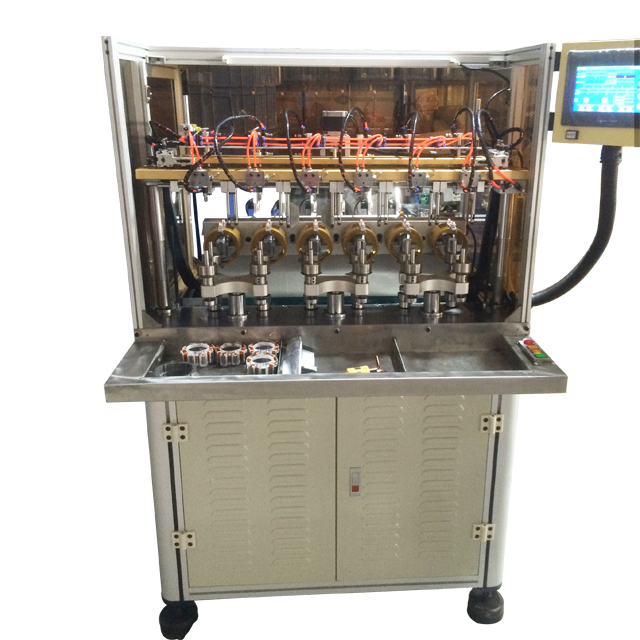
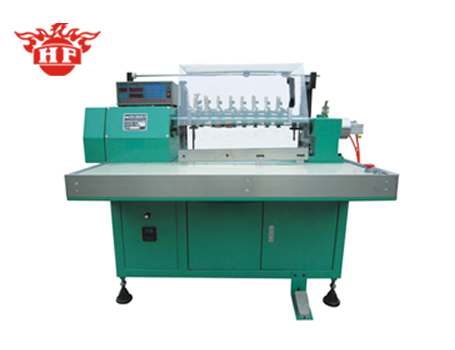
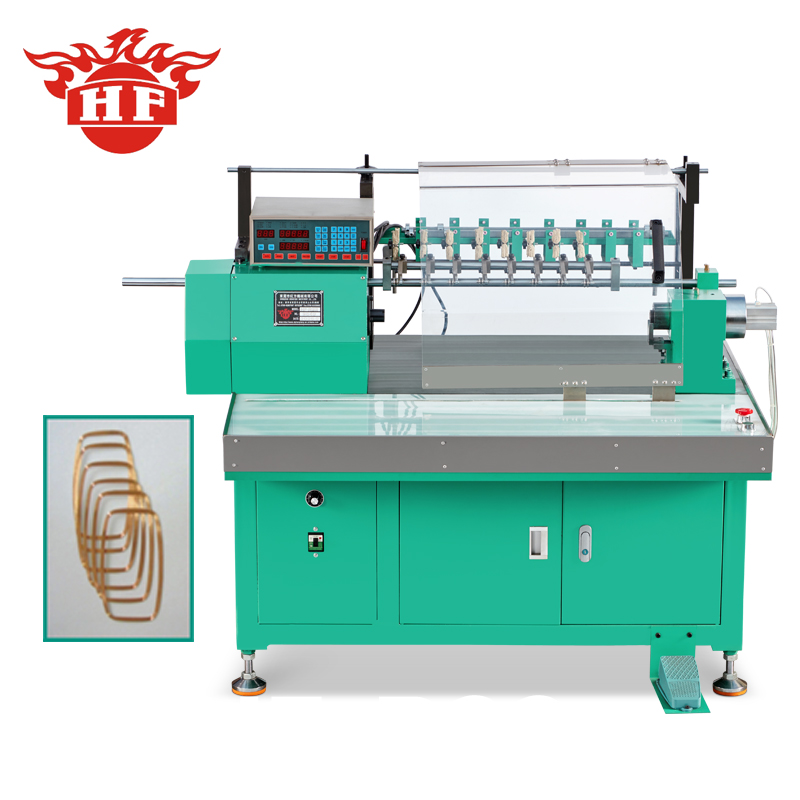
| 2. Precision Winding | CNC 8-Spindle / Multi-Head Fan Winder | Tension-controlled wire feeding onto stepped coil formers | Enameled copper & aluminum (0.1–1.2mm) | 18 - 25s / coil group |
| 3. Coil & Wedge Insert | Combined Coil & Wedge Inserting Machine | Transfers main and auxiliary coils into slots with wedges | Insulation paper, epoxy boards, plastic wedges | 12 - 16s / stator |
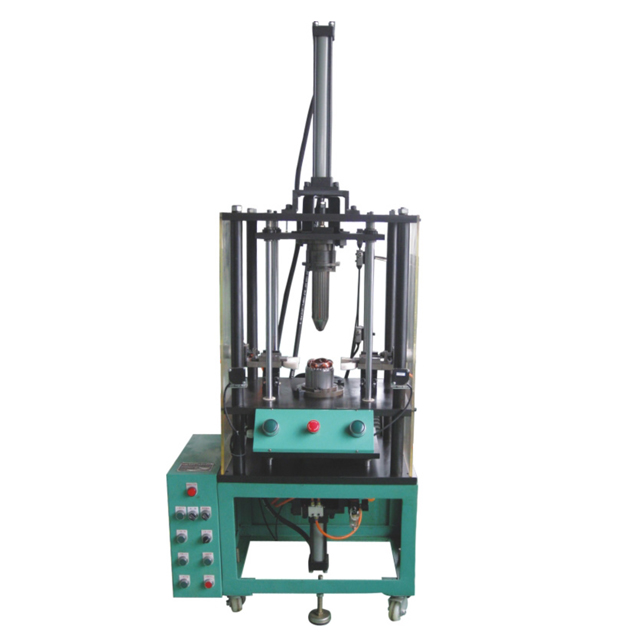
| 4. Intermediate Forming | Pneumatic/Hydraulic Coil Shaping Unit | Pushes end-turns outward to guarantee rotor bore clearance | Wound copper/aluminum wire groups | 5 - 8s / unit |
| 5. Dual-End Lacing | Servo Automatic Double-Side Lacing Machine | Diamond or continuous cross-stitch binding of coil overhang | Polyester lacing cord, braided nylon fiber | 10 - 14s / stator |
| 6. Final Calibrating | HONGFANG Motor Stator Coil Forming Machine | Final compression of end heads to exact drawing envelope | Formed and laced assembly | 6 - 9s / unit |
As Latin American efficiency regulations tighten (INEN standards in Ecuador, RETIQ in Colombia, and NOM in Mexico), motor producers in Azuay are transitioning production methods to protect regional competitiveness.
Raw material volatility has accelerated the adoption of grade-2 enamelled aluminum wire for household table fans and domestic cooler motors. Because aluminum exhibits different elongation properties and mechanical malleability than copper, winding machines must incorporate ultra-sensitive servo-driven wire tensioners to prevent necking, wire draw-down, or micro-cracking of the enamel sheath during multi-head flyer winding.
Traditional shaded-pole motors, while cost-effective, suffer from modest electrical efficiency (often under 35%). Modern consumer table fans in Ecuador are increasingly moving toward Brushless DC (BLDC) stator topologies with concentrated fractional-slot windings. Our machines support interchangeable tooling kits that accommodate outer-rotor BLDC stators and conventional single-phase induction cores on the same frame.
Manufacturers in Cuenca leverage preferential trade tariffs within the Andean Community (Ecuador, Colombia, Peru, Bolivia). To maintain export compliance, domestic value-add criteria must be met. In-house stator winding and motor shaft lathing enable Ecuadorian OEMs to achieve favorable rules-of-origin certification, eliminating heavy tariff penalties on fully assembled imported electric motors.
Headquartered in Qishi Town, Dongguan, Zunqi Intelligent Equipment Co., Ltd. combines 17 years of direct international machinery export experience with comprehensive mechanical and electrical engineering competence.
Our complete production facility, machinery assembly bays, and QA test labs have undergone verified onsite evaluation by independent inspection bodies on Alibaba.com.
Every winding and inserting unit is backed by an inclusive 12-month mechanical and electrical warranty, alongside assured long-term supply of custom replacement tooling.
We do not ship on theoretical calculations. Clients provide motor laminations and slot drawings; our engineers perform physical prototype winding trials prior to dispatch.
All control cabinets are constructed using globally recognized components (Siemens, Delta, Mitsubishi, SMC pneumatics), ensuring swift replacement parts access in Ecuador.
Direct answers to the most common logistical, technical, and commercial questions raised by production managers and procurement engineers in Ecuador.
Standard fabrication and tooling customization require 25 to 35 working days at our Dongguan factory. Ocean transit from Shenzhen/Guangzhou ports to Puerto Marítimo de Guayaquil (Contecon) typically takes 28 to 35 days. Inland transit along Route 35 into Cuenca's Parque Industrial adds 2 to 3 days following customs clearance.
Yes. All main drive servo motors, PLC power packs, pneumatic solenoids, and cooling systems are natively configured for 220V single-phase or three-phase 60Hz operation prior to export. Transformers are never used as band-aids; hardware components are matched directly to your plant's electrical distribution specifications.
Before machining any mechanical tool, our engineering department requires your stator lamination drawings (including outer diameter, internal bore diameter, stack height, and slot openings), coil layout chart, and wire gauges. We generate 3D CAD tooling schematics and perform dynamic trial wind tests on our shop floor before packing.
Yes. Our fully automatic table fan winding machines feature programmable magnetic tension controllers and ceramic/tungsten carbide guide rollers that prevent mechanical stress. Aluminum wire requires lower friction coefficients and tighter tension control to prevent elongation, both of which are managed via customizable HMI recipes.
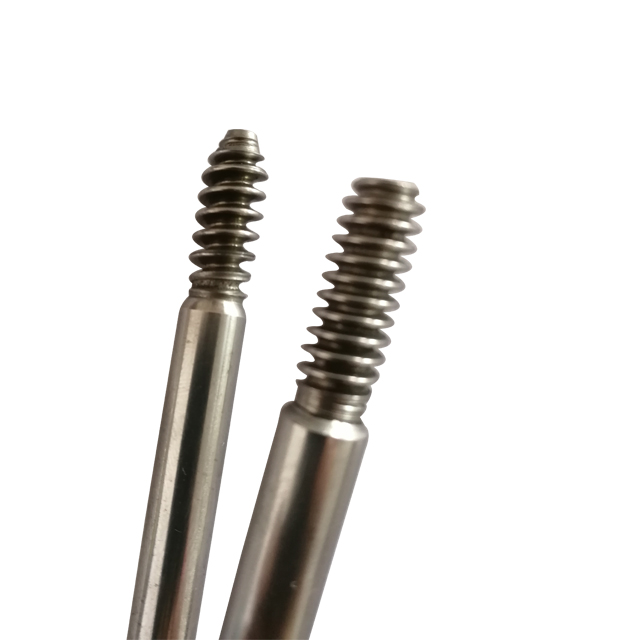
Our minimum order quantity for all automated winding, inserting, forming, and lacing machines is 1 complete set. Precision motor shafts (SC45# steel/iron) and custom replacement tooling dies can be ordered in tailored commercial batch quantities based on machine setup requirements.
We provide step-by-step video commissioning tutorials, schematic wiring plans, and high-definition operation recordings of your exact machine during factory testing. In addition, our senior mechanical and electrical engineers offer real-time remote support via scheduled video link, and on-site engineering dispatch is available for complete turnkey lines.
Send your stator core drawings, wire specifications, and daily production targets to our engineering team. We deliver custom tooling simulations, cycle time calculations, and CIF Guayaquil pricing within 9 hours.
Contact Us