Primary Stator Assembly & Insulation Machinery Portfolio
Explore our factory-direct production systems including precision slot paper inserters, CNC multi-station winders, coil insertion cells, and hydraulic shaft presses proven in advanced motor plants.

Six Stations Outer Stator Motor Coil Winding Machine Automatic
High-speed automatic indexing coil winder equipped with PLC architecture, industrial gear components, and continuous multi-axis synchronization.

Hydraulic Ceiling Fan Motor Stator Shaft Inserting Press
Controlled hydraulic ram pressing mechanism providing micron-level concentricity alignment for stator-shaft interference fitting.

Automatic Stator Wedge Paper & Coil Inserting Machine
Simultaneous dual-stroke transfer mechanism pushing pre-formed insulated coils and rigid slot wedges directly into laminations without enamel damage.
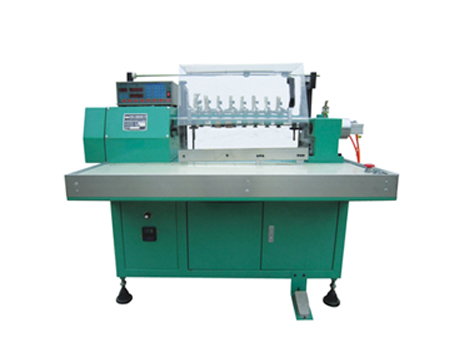
Electrical Motor Stator Coil Winding Machine for Cooler Motors
Dedicated multi-pole winding station engineered for pump and cooler motor stators, featuring precision flyer tension regulation.

HF Single Side Lacing Machine for Table Fan Motor Stator Coil
Compact 1000W industrial binding station executing programmable diamond or continuous cord lacing patterns for rigid end-turn stabilization.
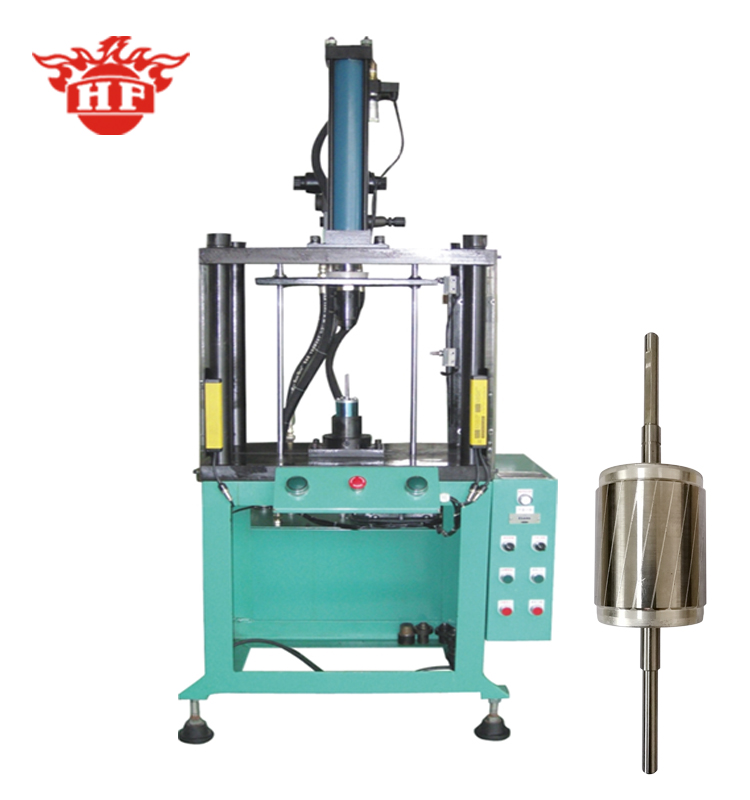
New Rotor and Shaft Inserting Hydraulic Press Machine HF-W50
Heavy-duty hydraulic pressing bed with linear stroke encoders, designed to prevent lamination core deflection during rotor shaft seating.

Automatic Slot Paper Inserting & Cutting Machine (1 kW)
High-speed slot liner inserting cell performing cold strip feeding, edge folding (cuffing), precision cutting, and insertion within 0.5–1.0s per slot.

Electric Iron Motor Shaft for Household Fan & Cooler Pumps
Precision turned and ground SC45 carbon steel rotor shafts held to tight diametrical tolerances for smooth bearing interface and minimal runout.
Engineering Stator Paper Inserting for Charlotte’s Advanced Manufacturing Sector
Strategic equipment integration for electric mobility, industrial air movement, utility power generation, and commercial hermetic compressors across the Piedmont Urban Crescent.
The Greater Charlotte metropolitan area—spanning Mecklenburg, Cabarrus, Gaston, Iredell, and York counties—has emerged as a foundational epicenter in the American Southeast's advanced manufacturing renaissance. As high-voltage electric mobility powertrains, large-scale industrial pumps, and mission-critical energy grid equipment concentrate along the Interstate 85 corridor, electrical machine manufacturers encounter strict quality criteria for stator core sub-assemblies. The stator slot insulation process represents the primary line of electrical defense against ground faults, partial discharge, and phase-to-phase breakdown. Deploying high-efficiency stator paper inserting machines (also termed stator slot cell inserters or insulation cuff-and-cut systems) has transformed from a labor-reduction measure into a critical operational necessity for motor OEMs striving to meet NEMA MG 1, IEEE 841, and UL 1446 standards.
The Dielectric Baseline: Stator lamination stacks produced from stamped electrical silicon steel invariably retain microscopic micro-burrs and sharp laminations. Without precise mechanical edge folding (cuffing) and uniform tension control, insulating liners such as DuPont Nomex®, DMD (Dacron-Mylar-Dacron), NMN composites, or polyimide films risk micro-perforation during winding insertion. Our equipment mitigates these micro-tears by combining progressive cam indexing, servo-driven push-rods, and hardened tungsten carbide tooling.
HVAC & Commercial Air Handling Systems
Metrolina houses leading climate-control and commercial air-handling equipment facilities. Modern permanent split capacitor (PSC) and electronically commutated brushless DC (EC/BLDC) motors demand tight slot fullness ratios. Our paper inserters accommodate deep skewed slots and narrow tooth openings, delivering uniform B-shape and U-shape insulation folds that maximize available slot cross-sectional area for copper fill.
Electric Mobility & Auxiliary EV Drives
With Charlotte connecting the Carolina "Battery Belt" and EV manufacturing ecosystems, suppliers of high-torque auxiliary motors—such as electric steering drives, hermetic HVAC compressors, and battery cooling pumps—require Class H and Class N thermal stability. Our machines handle multi-layer laminated aromatic polyamide composite materials without delamination or spring-back failure.
Heavy Industrial Pumps & Power Generation
The Charlotte area maintains a deep cluster of heavy industrial apparatus servicing municipal water infrastructure, energy processing facilities, and Duke Energy generation networks. Processing heavy lamination stack heights (up to 300 mm and beyond) requires robust mechanical guides and high-tonnage cuffing stations capable of pushing thick 0.35 mm to 0.50 mm slot liners into large frame profiles without lamination flaring.
The Mechanics of High-Speed Slot Insulation: Cuffing, Shearing, and Indexing
An engineering breakdown of how Zunqi equipment achieves 0.5-second cycle times while preventing dielectric degradation and structural insulation flaws.
The conversion of continuous roll-fed insulating paper into finished slot cells involves four synchronized mechanical operations: feeding, cuff folding, cut-to-length shearing, and axial push-insertion. Understanding each phase is crucial for tooling engineers evaluating machine robustness:
1. Precision Tensioned Strip Feeding: Continuous insulation rolls (whether Mylar®, DMD, or Nomex®) possess inherent coiled elasticity. An uncontrolled feeding stroke produces variable strip lengths, resulting in uneven cell protrusion past the lamination face. Our inserters use stepper-driven or servo-metered feed pinch rollers backed by pneumatic web dampers to ensure strip length repeatabilities within ±0.15 mm.
2. Double-End Mechanical Cuffing: Before the insulation is formed into a radial slot cell, both lateral edges must be creased and folded backward to form "cuffs" (typically 2.5 mm to 4.5 mm in width). The cuffs serve two critical purposes: they physically lock the cell against axial migration during automatic coil insertion, and they double the dielectric boundary at the abrasive lamination exit edge. Our machines utilize temperature-controlled or hardened precision-ground folding dies that crease composite materials without fracturing the internal polyester film layer.
3. Clean Shear Cut-Off & Forming: Once cuffed, high-alloy D2 or tungsten carbide shearing blades execute a clean, burr-free perpendicular cut. Dull cutting tools cause edge fraying and micro-tears that can drop breakdown voltage from 10 kV down to zero under hi-pot testing. The cut strip is immediately engaged by a forming mandrel that conforms the paper to the exact trapezoidal or semi-closed geometry of the target stator slot.
4. Axial Push-Insertion & Rotary Indexing: The formed paper cell is pushed through a guide nozzle directly into the stator core slot by a polished mechanical push-rod. A precision servo indexing turntable rotates the stator core by exact angular increments (determined by stator pole-slot counts: 24, 36, 48, or 72 slots). The machine dynamically skips designated empty or balance slots based on pre-programmed PLC recipe parameters, completing an entire 36-slot stator in under 20 seconds.
| Technical Parameter | Standard Fan / Cooler Series | High-Capacity Industrial Series | EV / Servo Precision Series |
|---|---|---|---|
| Stator Outer Diameter (OD) | Ø40 mm – Ø160 mm | Ø80 mm – Ø280 mm | Ø50 mm – Ø220 mm |
| Stator Stack Height Range | 10 mm – 120 mm | 30 mm – 260 mm (300 mm custom) | 15 mm – 180 mm |
| Insulation Thickness Range | 0.125 mm – 0.25 mm | 0.20 mm – 0.38 mm | 0.15 mm – 0.35 mm (High Temp) |
| Slot Insertion Cycle Time | 0.45 – 0.70 seconds / slot | 0.60 – 1.00 seconds / slot | 0.50 – 0.85 seconds / slot |
| Cuff Fold Width | 2.5 mm – 4.0 mm (Fixed/Adjustable) | 3.0 mm – 5.5 mm | 2.0 mm – 4.5 mm (Precision) |
| Control Core & HMI | Industrial PLC + Color Touchscreen | Multi-Axis PLC (Siemens / Delta) | Full High-Speed Servo Control |
| Primary Power Requirements | 220V 1-Phase / 380V 3-Phase (50/60Hz) | 380V / 480V 3-Phase 60Hz Configurable | Configured to Plant Mains (480V 60Hz) |
Manufacturing Trends Reshaping Stator Automation in North Carolina
Strategic adaptations for plant managers balancing high-mix low-volume production lines with aggressive productivity benchmarks.
The industrial corridor extending from Charlotte northward toward the Piedmont Triad and southwestward into upstate South Carolina is experiencing structural changes driven by the US Reshoring Initiative, clean energy legislation, and automation upgrades. When selecting automated stator paper insertion systems, local production facilities navigate three dominant trends:
1. Transition from Manual Slot Stuffing to Cell-Level Insertion: Across small-batch motor rebuild workshops and medium-tier OEMs in Gastonia, Concord, and Salisbury, manual insertion of pre-folded slot liners was historically tolerated. However, escalating skilled labor costs and stringent OEM hi-pot test rejection limits have rendered manual methods unviable. A single paper inserted 0.5 mm too shallow leaves an exposed steel tooth edge, provoking irreversible copper coil insulation abrasion during winding. Upgrading to an automated inserter amortizes equipment capital within 9 to 14 months while driving insulation fault rates toward near-zero PPM levels.
2. High-Mix Low-Volume (HMLV) Tooling Modularization: Unlike massive legacy factories dedicated to producing a single IEC or NEMA frame year-round, modern contract motor winders and tiered component producers in Charlotte handle dynamic product shifts. Production schedules may demand NEMA 56 frame ceiling/cooler fans on Monday and specialized 132-frame servo stators by Wednesday. Modern equipment must therefore prioritize rapid mechanical tooling changeover. Zunqi designs quick-release mandrel fixtures, modular cuffing blocks, and software recipe storage that allow line changeovers to occur within 20 to 35 minutes.
3. Complete Stator Assembly Line Integration: Standalone machinery is increasingly being unified into contiguous manufacturing cells. Stator production engineers no longer view paper insertion as an isolated island. Instead, slot insulation (Step 1) directly feeds coil winding (Step 2), followed immediately by combined coil and wedge inserting (Step 3), intermediate forming (Step 4), end-turn lacing (Step 5), and final dimension sizing (Step 6). Sourcing matched equipment from a single manufacturer ensures that stack datum points, slot clearances, and line cycle times match across each consecutive processing stage.
Zunqi Intelligent Equipment: Precision Manufacturing Infrastructure
Over 17 years exporting motor automation machinery from Dongguan's manufacturing corridor directly to North American, European, and global manufacturing operations.
Headquartered in Qishi Town, Dongguan, Guangdong, Zunqi Intelligent Equipment Co., Ltd. operates at the heart of the world’s most concentrated motor automation and precision engineering industrial base. For over 17 years, we have provided an engineering alternative to prohibitively priced European machinery without compromising mechanical rigidity, control precision, or long-term operational reliability.
Custom Tooling to Print
We do not sell generic off-the-shelf equipment. Every inserting mandrel, cuffing block, and push finger is custom-machined from hardened tool steel precisely to your lamination drawing or physical sample stator core.
Pre-Shipment Sample Run
We require customers to ship actual sample stator lamination cores to our Dongguan facility. We run physical trial tests with your specified insulation paper, recording a verified video run before releasing the machine for export packaging.
US Electrical Adaptation
All control systems can be configured with globally recognized electrical components (Siemens, Mitsubishi, Delta, Schneider, SMC pneumatics) wired specifically for US 480V 60Hz 3-phase or 220V single-phase systems.
Direct Engineering Support
Our multidisciplinary team of mechanical, electrical, and tooling engineers answers technical support inquiries within 9 hours, backed by full English operating schematics and comprehensive spare parts supply.
Turnkey Manufacturing Synergy: Beyond slot paper inserters, Zunqi designs and fabricates complete stator lines: Automatic Six Stations Outer Stator Coil Winders, Automatic Fan Motor Wedge & Coil Inserters, Hydraulic Stator Shaft Pressing Units, Coil Forming Stations, and CNC Double-Side End Winding Lacing Machinery. Sourcing an integrated line guarantees uniform datum points, seamless cycle matching, and single-source accountability.
Frequently Asked Questions for Charlotte Tooling & Plant Managers
Direct technical answers addressing North American plant standards, tooling requirements, maintenance, and logistics.
Upgrade Your Motor Assembly Capability in the Carolinas
Whether you are retooling an existing HVAC production line, establishing a high-performance EV traction motor assembly cell, or eliminating costly manual insulation bottlenecks, our engineering team is ready to review your stator drawings and supply a tailored equipment configuration.
