High-Performance Stator Production & Insulation Solutions
Engineered for electrical machinery facilities in Kranj and the Upper Carniola (Gorenjska) basin, our portfolio combines CNC servo kinematics, rapid stator tooling changeovers, and durable mechanical assemblies.

- Rated Power: 1000W; Dual Voltage 380V/220V 50Hz
- Automated needle indexing & variable pitch binding
- Prevents slot wedge shifting during lace tensioning
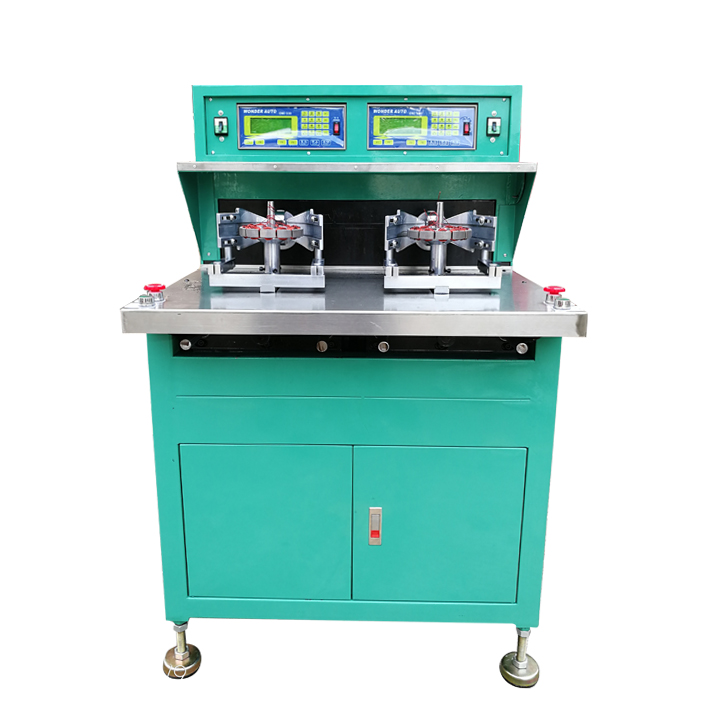
- Independent dual-head programmable PLC control
- Accurate micro-tension winding protects wire insulation
- Heavy-duty vibration dampening structural cast body

- 6 simultaneous indexing stations for external stators
- Precision hardened gearing with long-life gear drive
- Ideal for BLDC, drone, and industrial blower stators

- Optimized tooling dedicated to multi-slot laminations
- Integrated turns counter with automatic stop safety logic
- Smooth fly-fork wire laying eliminates enamel scuffing

- Dual station architecture: transformer bobbin & stator coils
- High precision pitch resolution via micro-stepping drive
- Flexible fixture clamping for diverse lamination depths

- Engineered specifically for outward-facing slotted cores
- Synchronized flyer heads ensure identical loop resistances
- Rapid changeover tooling (<20 minutes per frame size)

- Simultaneous coil group and slot wedge pushing in one stroke
- Full multi-axis servo motor control for push rod and blade
- Wedge cutting, forming, and feeding from reel stock

- High-precision rotor outer diameter surface skimming
- Integrated coolant pump circulation & pneumatic clamping
- Guarantees tight, uniform air-gap clearances for final assemblies
Precision Dielectric Engineering in Modern Stator Manufacturing
A rigorous examination of slot cell forming, edge cuffing dynamics, and phase-to-phase insulation reliability under variable frequency drive (VFD) stress.
1. Micro-Mechanics of Slot Cell Insulation Inserting
In high-performance electric motors, the slot insulation barrier serves as the primary ground insulation separating copper conductors from grounded electrical steel laminations. The insertion process executed by automatic slot insulation machines involves four synchronized kinematic steps: continuous roll unwinding, programmable cuff folding (edge-hemming), accurate cutoff length determination, and high-speed mechanical pushing into the stator slot matrix.
For industrial motor facilities operating in Kranj's advanced mechatronics corridor, mitigating edge burr abrasions is critical. When electrical steel laminations undergo laser cutting or stamping, micro-burrs (often 10–25 µm in height) reside along the inner perimeter of the slot teeth. If the insulation paper insertion tooling does not provide sufficient cuffing depth and geometric stability, these burrs can score or pierce through standard insulation films during coil inserting or post-winding forming. Our automated inserting systems use precision-ground SKD11 cold work die steel folding blades that create uniform, bilateral cuffs (typically 2.5 mm to 4.0 mm) that cradle the core stack ends, ensuring that high-voltage potential tests (such as 2.5 kV AC dielectric withstand tests) demonstrate zero punch-through failures.
2. Insulation Material Compatibility and Thermal Class Performance
Modern electric motors deployed in automotive drivetrains, HVAC commercial compressors, and industrial robotics demand stringent adherence to IEC 60085 thermal classes (ranging from Class F at 155°C to Class H at 180°C and Class C beyond 200°C). Our stator insulation machinery integrates adaptive tension brake drums and anti-static ionizing nozzles capable of handling diverse composite and technical papers:
| Insulation Substrate | Composition & Structure | Dielectric Breakdown | Thermal Index | Tooling & Mechanical Considerations |
|---|---|---|---|---|
| DMD (Dacron-Mylar-Dacron) | Polyester film bonded with non-woven polyester fleece | ≥ 12 kV / mm | Class F (155°C) | Requires sharp rotary shearing to prevent fibrous fleece fraying along slot cuffs. |
| NMN (Nomex-Mylar-Nomex) | Aramid paper cladding an inner polyester dielectric film | ≥ 15 kV / mm | Class H (180°C) | High tensile rigidity; requires heated pre-creasing guides on automated paper inserters. |
| Pure Aramid (DuPont Nomex® 410) | 100% Calendered meta-aramid synthetic polyamide | ≥ 18 kV / mm | Class H+ (200°C) | Exceptional tear resistance; demands carbide-tipped cutting punches with clearance < 0.008 mm. |
| Polyimide Laminates (Kapton® composites) | Polyimide aromatic core with high thermal stability | ≥ 22 kV / mm | Class C (220°C+) | Sensitive to excessive folding radii; needs custom radius forming shoes to eliminate micro-cracking. |
3. Preserving Partial Discharge Inception Voltage (PDIV) Under Inverter-Fed Stress
Motors operated by modern SiC (Silicon Carbide) or GaN (Gallium Nitride) variable frequency drives experience extreme dV/dt pulse voltage gradients exceeding 10 kV/µs. These high-speed voltage spikes lead to intense electrical fields at the interface between the stator tooth tip, the slot opening, and the ground wall liner. If mechanical damage occurs to the slot insulation paper during insertion or wedging, micro-voids form within the slot. Under operational conditions, partial discharge occurs across these microscopic air gaps, eroding the organic polymers and leading to premature motor failure.
Our servo-driven stator wedge and coil inserting systems feature multi-axis closed-loop position monitoring. By coordinating the thrust of the inserting pusher blades with the indexing position of the guide fingers, wire-pinching against slot liners is eliminated. The resulting stator coils retain pristine enamel integrity and complete dielectric cell boundaries, comfortably meeting the rigorous partial discharge thresholds specified by the European automotive and high-tier appliance supply chain.
Tailored Deployment Across Kranj's Manufacturing Clusters
From automotive sub-assembly plants to specialized industrial fan facilities, our automation meets the exact cycle time, dimensional precision, and CE requirements of Slovenia's engineering heartland.
Automotive Auxiliaries & E-Mobility Actuators
Kranj hosts leading tier-1 and tier-2 automotive component suppliers specializing in thermal management water pumps, electronic power steering (EPS) motors, and electronic braking system (EBS) actuators. These low-voltage 12V/48V BLDC motors demand compact slot fills and zero coil crossover errors. Our internal stator winding and precision slot cell machines provide tight end-turn profiles that fit restricted automotive enclosures.
High-Efficiency Industrial Fans & HVAC Ventilation
The production of external-rotor EC (Electronically Commutated) fans and high-airflow blowers requires specialized winding machines such as our multi-station outer stator winders. Paired with precise slot wedge inserting, these machines ensure that continuous run-hours across commercial refrigeration and industrial cleanrooms meet EU Ecodesign ErP efficiency regulations.
Robotics & Dynamic Servo Actuator Motors
Industrial automation builders across Central Europe demand low cogging torque, rapid acceleration, and supreme phase balance in servo drives. Our automatic coil and wedge inserting equipment guarantees consistent slot fill factors (up to 78%) without damaging delicate sub-millimeter copper magnet wires, supporting the high-density PMSM designs common in Kranj mechatronics lines.
Emerging Stator Trends Across Central European Manufacturing
How automation architectures are adapting to the EU Green Deal, Ecodesign Directive EU 2019/1781, and Industry 4.0 data exchange protocols.
Super-Premium Efficiency
Stricter EU energy efficiency regulations are pushing asynchronous industrial motor lines toward IE4 and IE5 permanent magnet designs. This requires thinner magnetic steel sheets (0.35 mm and 0.20 mm) that are more delicate, necessitating gentle pneumatic clamping and low-impact slot paper feeding mechanisms.
OPC-UA & Smart Diagnostics
Manufacturers in Kranj actively implement digital twin and MES-connected smart factories. Our control cabinets are architectured around open PLC platforms (Siemens S7-1200/1500, Mitsubishi, Omron) featuring Profinet and Modbus TCP interfaces for real-time tracking of slot cycle times, blade wear counts, and alarm logging.
High-Mix Low-Volume Production
European production shifts from massive monolithic runs to modular, flexible assembly cells. Our stator insulation inserters and winding machines feature modular guide shoes and quick-release push blocks, dropping changeover times between different stator stack heights and OD dimensions to under 25 minutes.
Recyclable & Bio-Based Films
In alignment with circular economy targets across Slovenia, motor engineering departments are evaluating recyclable mono-material slot liners such as high-temperature crystalline PET. Our machines feature adjustable thermal creasing dies that accommodate both traditional aramid papers and modern technical polymers without tearing.
Why Kranj Motor Manufacturers Partner With Zunqi
Combining 17 years of verified direct export expertise with bespoke tooling engineering and transparent European component integration.
Engineered to Your Stator Sample
We do not ship generic off-the-shelf machinery. Every inserting blade, expanding star, winding flyer, and clamping shoe is CAD-modeled directly from your physical stator core samples and engineering DWG/STEP files to ensure perfect fitment.
Global Component Architecture
We configure control and pneumatic systems with brands standard in European plants: Siemens PLCs, Schneider contactors, Omron sensors, and SMC pneumatics. This ensures that your Kranj maintenance engineers have immediate access to local spare parts.
Factory Acceptance Video Trials
Before export crating, each machine undergoes an extensive Factory Acceptance Test (FAT) using your supplied stator cores and magnet wire. We provide comprehensive unedited high-definition video runs and dimensional inspection certificates.
End-to-End Stator Workcells
From slot paper inserting to multi-station coil winding, simultaneous coil and wedge inserting, intermediate forming, CNC double-sided lacing, final forming, and rotor fine turning—we supply completely synchronized production lines.
Frequently Asked Questions by Kranj Procurement Teams
Practical answers covering European conformity, freight into Slovenia, machine customization, and electrical infrastructure compatibility.
How do your machines comply with European Union CE Directives?
All machines delivered to European destinations are manufactured to meet EU Machinery Directive 2006/42/EC, Low Voltage Directive 2014/35/EU, and Electromagnetic Compatibility (EMC) Directive 2014/30/EU. They feature dual-channel safety relays, physical E-stops, interlocked safety guards with safety switches, and bilingual operational manuals.
Can the electrical cabinets be configured for Slovenia's 400V 50Hz grid?
Yes. While domestic units in Asia often operate on 220V or 380V 60Hz, our export equipment is built with internal industrial transformers and servo power supplies tuned specifically for European 400V three-phase or 230V single-phase 50Hz electrical supplies, eliminating frequency-related motor overheating.
What is the standard delivery timeline and port routing to Kranj?
Standard tooling fabrication and machine assembly require approximately 35 to 45 business days depending on complexity. Ocean freight is typically routed directly from Shenzhen or Guangzhou port to the Port of Koper (Luka Koper), Slovenia, taking roughly 28 to 32 days at sea, followed by immediate road transit directly to Kranj.
What technical data is required to provide a firm machine quote?
To provide an accurate technical proposal and cycle-time estimation, our engineering desk requires your stator lamination drawings showing: Stator Outer Diameter (OD), Inner Bore Diameter (ID), Stack Height range, Slot count and Slot cross-sectional geometry, wire gauge diameter, and target production volume per shift.
Can your slot paper inserters handle variable stack heights?
Yes. Our automatic slot insulation machines feature digital servo paper feed mechanisms where the paper feed length and cut length can be adjusted directly via the HMI touchscreen in increments of 0.1 mm, accommodating multiple motor stack heights within the same lamination family without changing cutting dies.
How do you handle warranty claims and ongoing consumable tooling?
All machines include a comprehensive 12-month mechanical and electrical warranty. Critical wear components—such as slot cuffing blades, paper push rods, inserting blades, and wire guides—are manufactured using standardized modular designs. We ship an initial spare parts kit with each machine, with expedited air-courier replacements available within 3 to 5 business days.
Accelerate Your Stator Line Automation for Kranj
Consult with our mechanical and electrical application engineers today. Send your stator blueprints and production cycle requirements for an engineered proposal within 9 hours.
