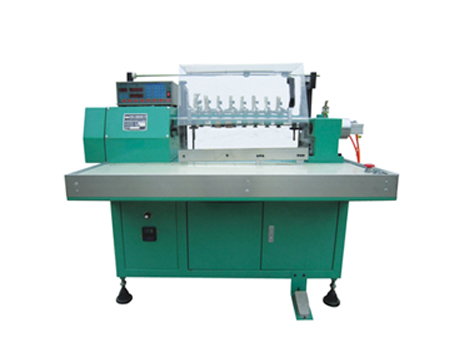
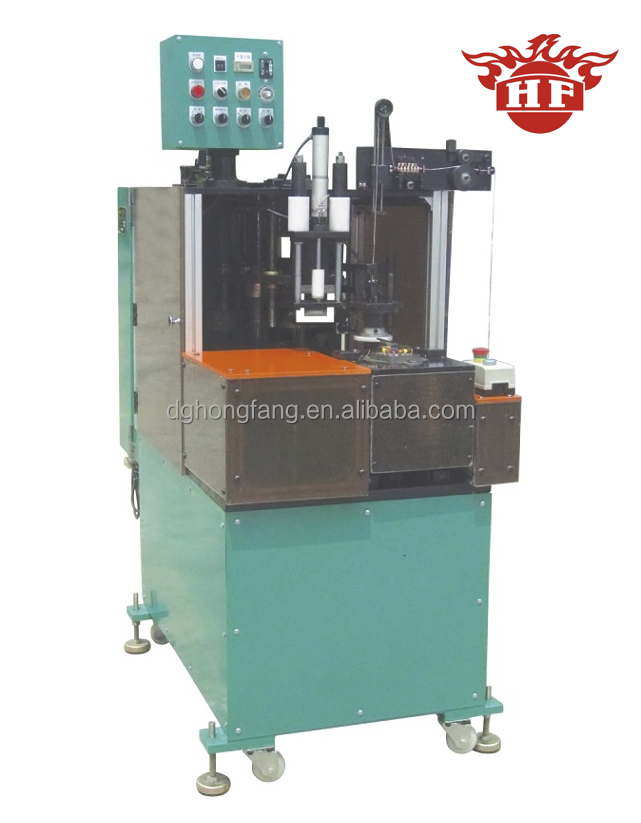
New Slot Paper Inserting Cutting Machine Table Fan Pump Cooler Motor Insulation Paper Gear Components 1 Year 1 kW 380V/220V
- Automated crease, edge cut & slot push
- 1 kW rating · 380V/220V configurable
- 1 Year factory guarantee
Engineered for high slot fill rates, uniform end-turn geometries, and minimum copper stress. Each machine integrates industrial PLC networks and is precision-calibrated for Daegu tier-1, tier-2 motor manufacturers and automation retrofits.
In modern automated electric motor assembly lines, stator coil forming (both intermediate shaping and final sizing) represents the most critical metallurgical and dimensional safeguard. Below is an engineering overview of why proper forming geometry dictates motor efficiency, partial discharge resistance, and compact housing compliance.
Intermediate forming occurs immediately after coil and wedge insertion. It uses internal expansion dies and external cuff shoes to push coil heads radially outward, clearing the central bore diameter so lacing needles can cycle without puncturing wire insulation. Final forming follows lacing, compressing end-turn height and outer contour to exact drawing tolerances (±0.2mm) to ensure interference-free motor housing insertion.
Excessive mechanical stress during shaping can cause micro-fissures in enamelled copper coatings (grade 180°C to 220°C), resulting in high partial discharge (PD) and phase-to-phase insulation failure. Our equipment implements controlled multi-stage hydraulic deceleration or servo profiling that redistributes coil masses uniformly without abrasive friction across slot cell edges.
When stators enter automatic rotor insertion cells, any single stray wire protruding into the bore causes line shutdown or catastrophic core scoring. Zunqi stator coil forming tooling employs hardened mandrel dies (SKD11 / Cr12MoV, heat-treated to HRC 58-62) that calibrate the inner perimeter of the coil overhang with precision concentricity to the stator lamination stack.
Daegu is South Korea's premier hub for advanced automotive parts, robotics, and industrial machinery. As the region accelerates its transition from ICE powerplants to e-Mobility, robotics, and high-efficiency smart pump units, stator forming precision becomes a non-negotiable prerequisite.
In the Dalseo-gu industrial corridor and Seongseo Industrial Complex (성서산업단지), Tier-1 automotive sub-suppliers manufacture electronic power steering (EPS) motors, electric water pumps (EWP), brake-by-wire actuators, and blower drives. Our forming equipment shapes tight coil heads that fit directly into space-constrained cast aluminum housings required by Hyundai, Kia, and tier-1 systems.
With the Korea Institute for Robot Industry Advancement (KIRIA) located in Daegu and major industrial robot clusters expanding in Technopolis (대구테크노폴리스), local roboticists produce low-cogging frameless BLDC torque motors and collaborative robot joint actuators. Zunqi forming machines ensure stator slots achieve maximum copper density while avoiding asymmetrical coil bulge.
Gyeongsangbuk-do's legacy manufacturing fabric around Daegu houses specialized industrial submersible pump producers, commercial HVAC compressor fabricators, and specialized textile machinery plants. These continuous-duty induction stators demand severe vibration resistance, achieved via uniform forming combined with our automatic double-side servo lacing.
South Korea's push toward carbon neutrality, factory digitisation, and the replacement of imported high-cost tooling has drastically altered how Korean factory managers and production engineering teams evaluate automation.
| Industry Trend | Traditional Stator Line Challenge | Zunqi Engineering Adaptation for Daegu | Strategic Benefit |
|---|---|---|---|
| Smart Factory Certification (스마트공장) | Black-box standalone machinery incapable of communicating with MES or ERP architectures. | Configurable PLC controls (Mitsubishi, Siemens, Omron) equipped with RS485/Ethernet fieldbus options for real-time stroke/cycle logging. | Full Traceability |
| Shift to IE4 / IE5 Super Premium Efficiency | Low slot fill ratios (~60%) and high copper I²R thermal losses due to imprecise hand insertion and loose coil heads. | Precision hydraulic multi-slide forming enabling slot fill rates up to 75-80%, shortening total end-turn copper length and reducing copper volume. | 1.8-3.2% Heat Cut |
| High-Mix Low-Volume (HMLV) Production | Tooling changeovers taking 4 to 6 hours on legacy European or Japanese machines, causing downtime. | Quick-release clamping mandrels, modular segmented forming dies, and pre-saved digital recipe parameters on touch screens. | <35 Min Changeover |
| Local Supply Chain Cost Rationalization | Exorbitant capital expenditures for Italian or German winding and forming machinery without local responsiveness. | Factory-direct pricing from our Dongguan manufacturing campus with Korean-standard electrical component options and sub-9h remote diagnostics. | 45-60% CAPEX Saving |
Headquartered in Qishi Town, Dongguan, Guangdong Province—the center of global high-precision machinery manufacturing—Zunqi Intelligent Equipment Co., Ltd. has delivered motor production solutions for over 17 continuous export years. We are a verified manufacturer operating across a comprehensive 51–100 person technical campus.
Unlike trading intermediaries, Zunqi designs, machines, assembles, and tests every forming, winding, inserting, and lacing unit in-house. Before any machine departs for Busan or Incheon ports bound for Daegu, it completes full trial runs with the client's actual laminated stator cores and wire samples, validated by high-resolution factory video inspection.

Forming machines do not operate in isolation. They are an intrinsic link in a synchronized production line. Zunqi designs harmonized workcells that optimize takt time across every single stator phase.
Automated slot paper inserting machines form and push Nomex, DMD, or polyester film into stator core slots. Concurrently, multi-station or fly-winding machines wind high-precision copper coils with programmable turn counters and zero wire crossover.
Pre-wound coil bundles and protective top wedges are pushed into the stator lamination slots in a single synchronized stroke. Tooling guide fingers prevent conductor skinning, protecting the dielectric integrity of every phase group.
The intermediate stator forming press expands inner clearances and flares outer overhangs. Double-sided servo lacing machines bind coil bundles tightly with knot-locking reliability, followed immediately by final sizing to drawing specifications.
Clear, unambiguous technical answers regarding electrical specifications, customs clearance into South Korea, tooling fabrication times, and on-site commissioning.
Submit your stator core drawings, wire parameters, and daily production targets. Receive a comprehensive line layout, cycle-time simulation, and direct export quotation within 9 hours.