Precision Stator Manufacturing & Assembly Machinery
Direct factory supply from our Dongguan automation facility. Each system integrates hardened tooling tailored to specific stator stack heights, slot numbers, and marine-spec wire tensions suitable for repair shops and OEMs in Saint Vincent and the Grenadines.
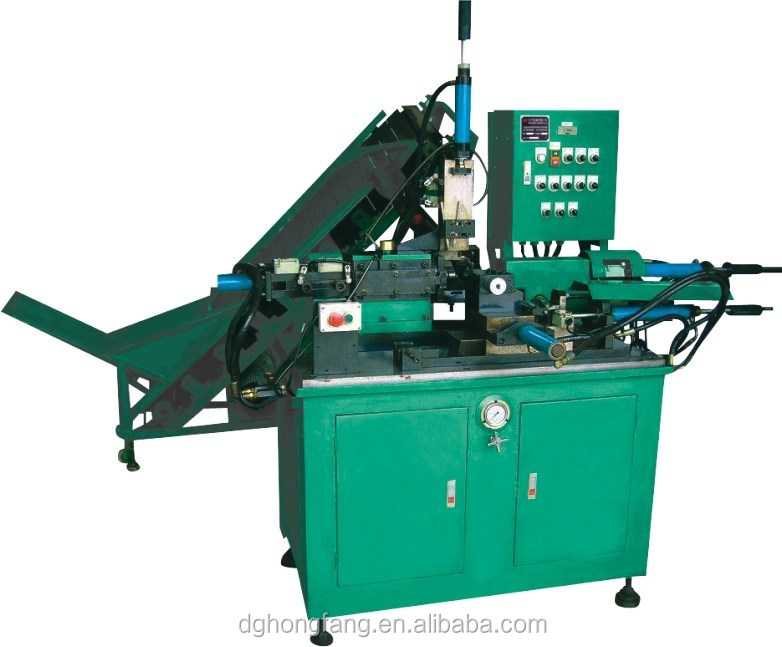
Automatic Rotor Fine Turning & Surface Cutting Machine HF-C60
Equipped with PLC motor pump logic, this high-precision cutting lathe finishes rotor outer diameters with tight runout tolerances to guarantee optimal magnetic air-gaps.
View Specifications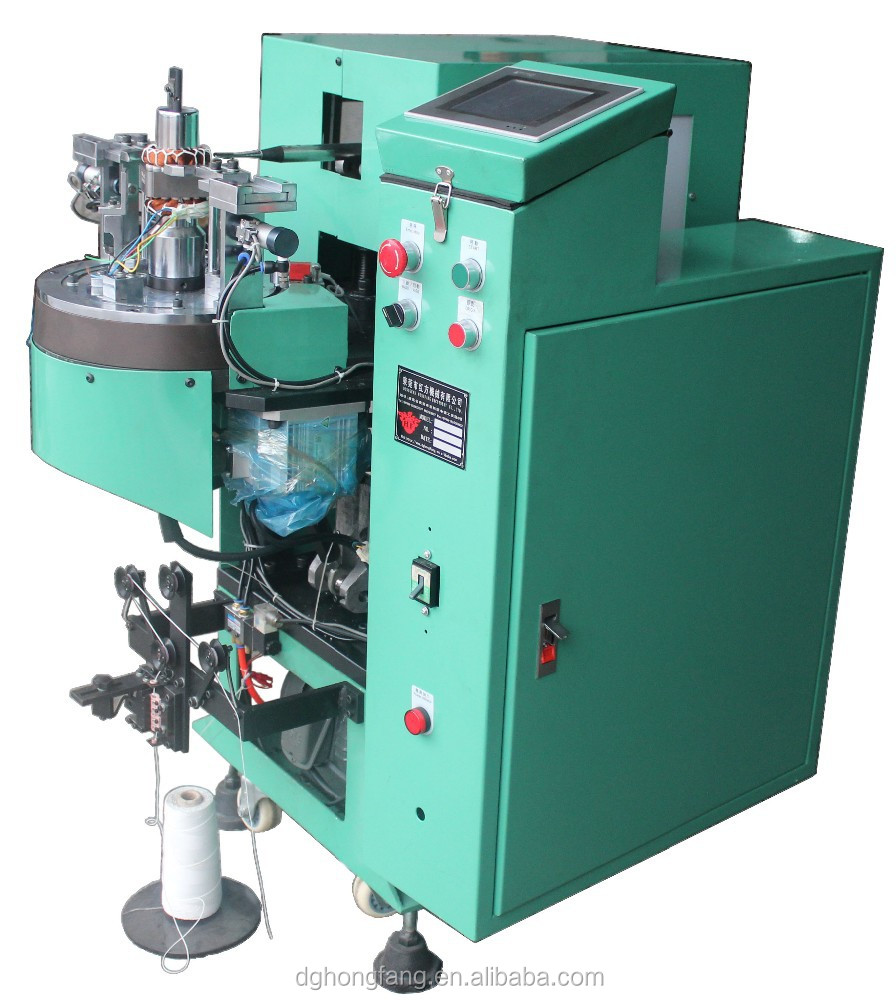
HF Single Side Lacing Machine for Motor Stator Coils (1000W)
Dedicated coil tying and lacing solution with programmable indexing. Engineered for standard 380V/220V dual voltage operation across appliance and fractional horsepower motors.
View Specifications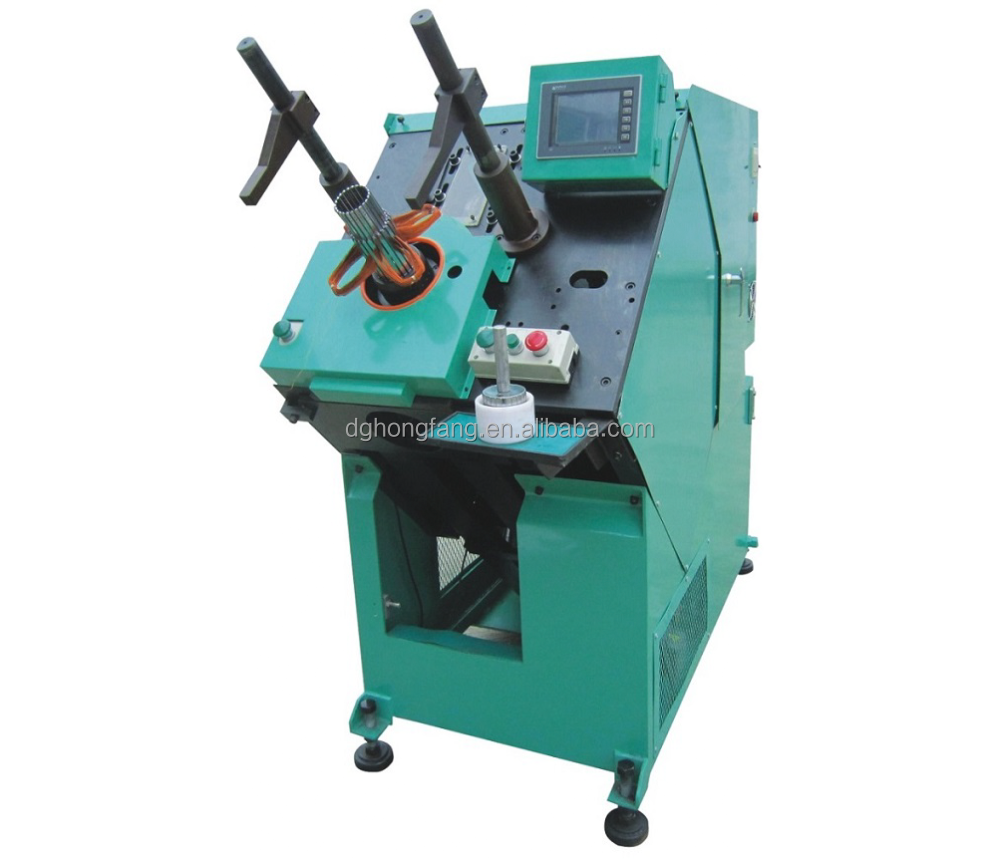
Automatic Servo System Stator Coil and Wedge Inserting Machine
Simultaneously pushes pre-wound copper/aluminum coils and cut slot insulation wedges into lamination slots in a single stroke, preserving enamel integrity.
View Specifications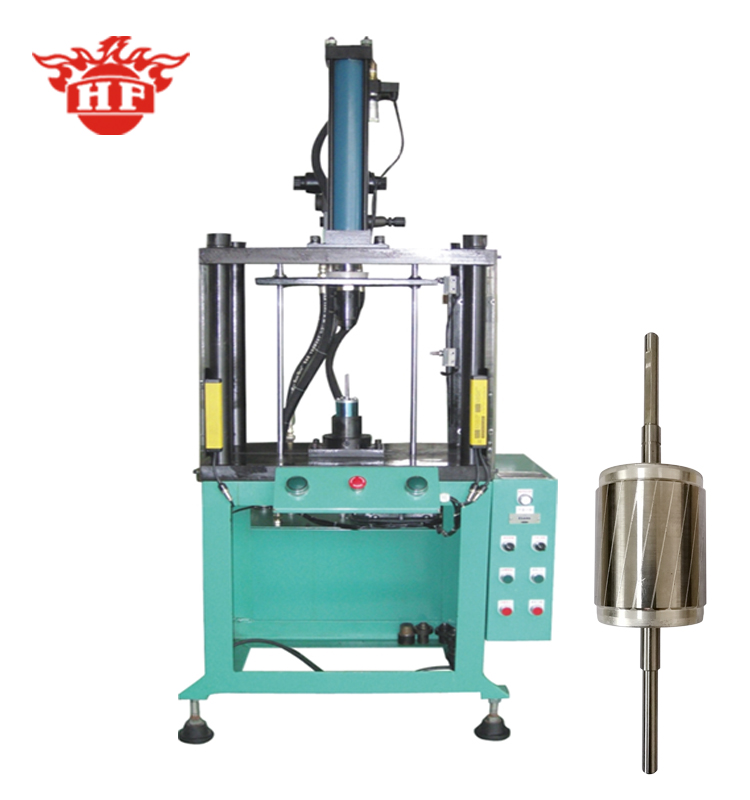
New Rotor and Shaft Inserting Hydraulic Press Machine HF-W50
Calibrated hydraulic ram system configured for interference-fit rotor shaft assembly. Prevents eccentric deviation and preserves tight axial concentricity tolerances.
View Specifications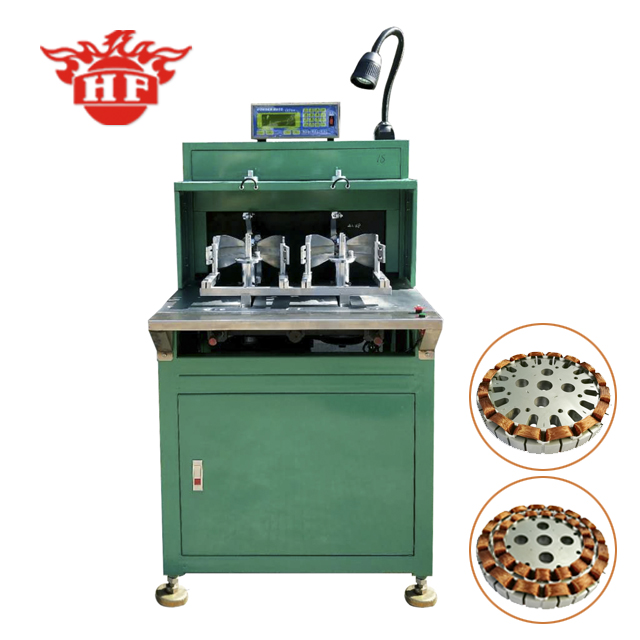
Automatic Ceiling Fan Two-Station Stator Winding Machine
Continuous flyer winding apparatus designed for outer rotor ceiling fan stators. Programmed for forward and reverse phase alternations with digital tension regulation.
View Specifications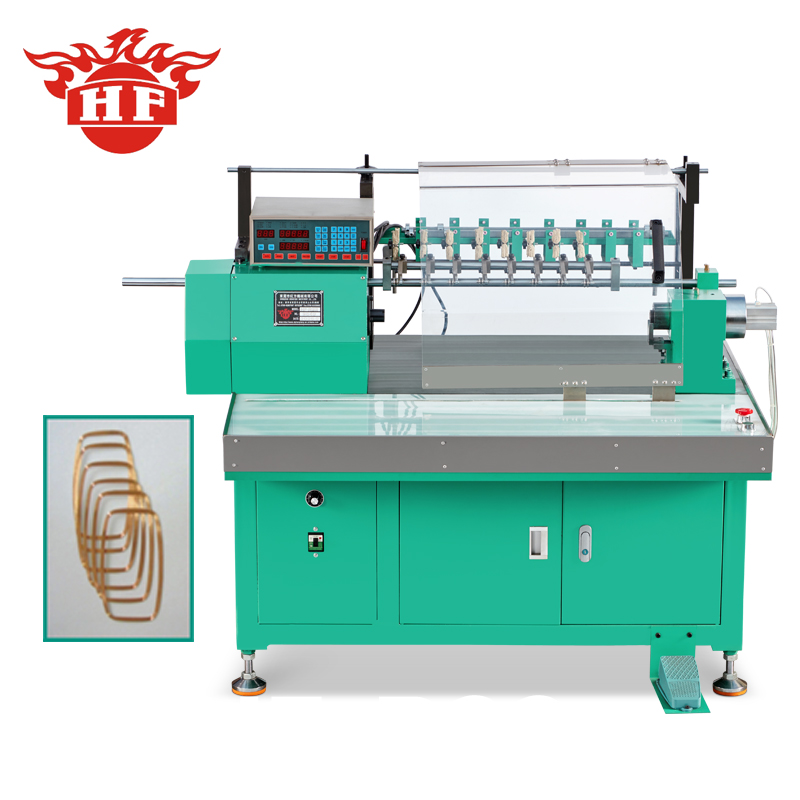
HF-R22 Semi-Automatic 8-Head Coil Winding Machine
Multi-spindle batch coil winder tailored for single-phase and 3-phase pump, refrigeration, and fan motor coils. Delivers high throughput with consistent winding turns.
View Specifications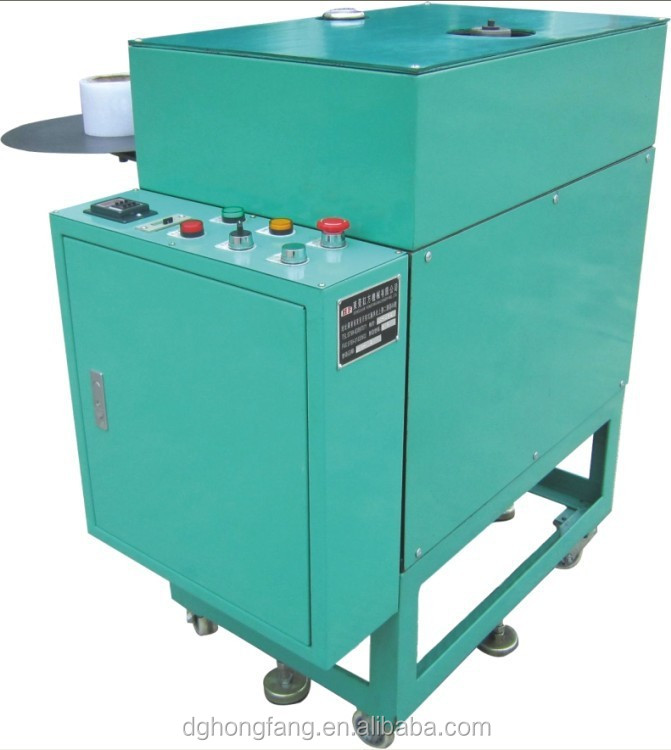
Slot Paper Inserting & Cutting Machine (1kW 220V/380V)
High-speed slot cell liner machine. Performs edge hemming, creasing, mechanical shearing, and bottom insertion of DMD/Nomex insulation paper in one sequence.
View Specifications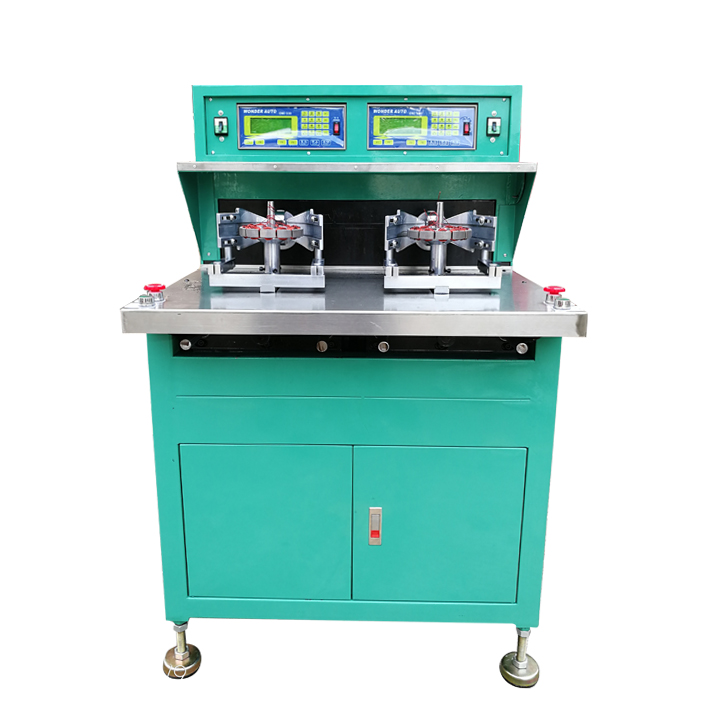
Heavy-Duty Certified 2-Controller Ceiling Fan Winding Machine
Engineered with dual independent microcomputer controllers, allowing parallel or asynchronous winding cycles for high production efficiency and zero downtime.
View SpecificationsStator Coil Tying & Lacing Mechanics in Tropical Maritime Environments
An in-depth evaluation of mechanical consolidation, dielectric breakdown mitigation, and electrodynamic stress management for electric motors operating in the island microclimates of St. Vincent & the Grenadines.
1. The Critical Role of Automated Stator Coil Tying (Lacing)
In alternating current (AC) induction motors, permanent magnet synchronous motors (PMSM), and brushless DC (BLDC) systems, the stator end-turn windings represent the mechanically and thermally most vulnerable zone of the electromagnetic assembly. During across-the-line starting or sudden step-load transients, electromagnetic coils experience severe Lorenz forces ($F = I \cdot L \times B$). These forces manifest as continuous cyclic deflections at double the operational electrical frequency.
Without rigorous, mechanically uniform stator coil tying (traditionally termed stator lacing or stitching), individual magnet wires vibrate microscopically against adjacent conductors. In high-vibration applications—such as marine aux gensets, port crane winches, and water purification booster pumps in Saint Vincent—this micro-friction erodes the micron-thin ester-imide or polyamide-imide enamel layer, causing inter-turn shorts, phase-to-phase flashovers, and catastrophic winding failure.
Technical Insight: Automated servo lacing machines apply constant, software-controlled cord tension (calibrated between 20 N and 55 N depending on wire bundle cross-section). Unlike manual hand-tying, which suffers from operator fatigue and erratic tie intervals, automated tying ensures a uniform mechanical clamping modulus across the entire 360-degree perimeter of the coil overhang.
2. Climatic & Grid Challenges in St. Vincent & the Grenadines
Saint Vincent and the Grenadines (SVG), situated in the southern Windward Islands of the Eastern Caribbean, is characterized by a maritime tropical climate with perpetual atmospheric salt mist (aerosolized sodium chloride), sustained relative humidity routinely exceeding 80%, and ambient temperatures often reaching 32°C. This environment generates unique operational demands for electric motor rebuilders and assembly plants across Saint Vincent (Kingstown, Georgetown, Arnos Vale) and throughout the Grenadines (Bequia, Mustique, Canouan, Union Island):
- Hygroscopic Moisture Ingress: In marine air, loose end windings create air voids within the coil bundle that capture humid, salt-laden ambient air. Once the motor de-energizes and cools through dew-point condensation, electrolytic deposits initiate galvanic corrosion on copper/aluminum leads and break down slot insulation liners.
- Thermal Cycling & Insulation Creep: Island grid conditions under VINLEC (St. Vincent Electricity Services Limited) involve local voltage fluctuations caused by long transmission feeders and localized diesel-solar hybrid microgrids. Voltage sags trigger increased amperage draw, leading to thermal expansion and contraction cycles that loosen hand-tied end lacing.
- High Solid-Consolidation Varnish Penetration: Vacuum Pressure Impregnation (VPI) and trickle-varnish dip processes depend on a geometrically compact coil bundle. Automated tying packs the coil heads tightly against shaping formers, ensuring that high-grade Class H resins penetrate uniformly without forming unevaporated solvent bubbles or dielectric voids.
3. Precision Kinematics: Comparing Stitch Formats
Industrial stator lacing machines deploy specialized kinematic needle bars and rotary hook loops to perform three principal stitching topologies:
1. Continuous Slot-to-Slot Stitching: The needle loops around the stator end-turn bundle at every single tooth opening, executing a lockstitch knot that guarantees maximum bundle compactness. This is essential for high-shock marine thrusters and heavy quarry aggregate conveyor motors in SVG.
2. Skip-Slot (Alternate) Stitching: Used predominantly in mass-produced light commercial fan, refrigeration, and water circulation pump stators. The machine binds alternating slots, reducing operational cycle time by up to 40% while preserving sufficient rigidity for low-vibration continuous-duty motors.
3. Dual-End Simultaneous Lacing (Servo Double-Side): Rather than tying the connection lead side and non-connection side sequentially, advanced double-side machines deploy opposed synchronized servo spindles. Both coil heads are laced simultaneously in under 18 seconds, eliminating differential axial stress on stator lamination stacks.
| Equipment Classification | Primary Machine Model | Applicable Stator Dimensions | Operational Cycle Time | Electrical Power Spec | Standard Tooling Material |
|---|---|---|---|---|---|
| Single-Side Stator Lacing | HF-BS10 / Table Fan Series | OD Φ30 – Φ160 mm; Stack 10 – 120 mm | 0.5 – 1.0 s / slot | AC 220V/380V ±10% 50/60Hz | Cr12MoV Vacuum Quenched (HRC 60-62) |
| Servo Double-Side Lacing | HF-BS20 Servo Industrial | OD Φ40 – Φ220 mm; Stack 15 – 180 mm | 12 – 22 s / complete stator | 3-Phase 380V / 220V 1.5 kW | SKD11 High-Carbon High-Chromium Tool Steel |
| Coil & Wedge Inserter | Automatic Servo Inserter | ID Φ25 – Φ130 mm; Stack ≤ 160 mm | 15 – 30 s / unit | AC 380V/220V 50Hz 3.0 kW | Tungsten Carbide / PVD Titanium Coated Blades |
| Slot Insulation Inserter | HF-D50 High Speed | ID Φ20 – Φ140 mm; Stack 8 – 150 mm | 0.25 – 0.45 s / slot | Single Phase 220V 1.0 kW | Hardened Alloy Guide Rails & Cutters |
| Rotor Surface Turning Lathe | HF-C60 Precision Lathe | Rotor OD Φ20 – Φ100 mm; Core ≤ 150 mm | 8 – 15 s / unit | 380V/220V 1.5 kW PLC Pump | Carbide Indexable Inserts (Diamond Compatible) |
Strategic Electromechanical Applications in St. Vincent & the Grenadines
Tailoring industrial stator manufacturing and motor re-manufacturing machinery to the critical supply chains, utility infrastructures, and maritime logistics of the southern Windward Islands.
Marine Aux Drive & Vessel Rewinds
Maritime transport is the economic backbone connecting St. Vincent to Bequia, Mustique, and Union Island. Inter-island ferries, commercial fishing fleets, and cargo vessels require rugged 50Hz and 60Hz auxiliary generators, bilge pumps, and cooling fan stators tied to withstand constant engine room vibration and salt atmospheric exposure.
Grenadines RO Desalination Plants
Because surface freshwater is scarce in the Grenadines, reverse osmosis (RO) desalination plants operate continuously under severe load. High-pressure pump motor stators rewound or manufactured with automated tying and wedge insertion avoid premature insulation burnout caused by transient backpressure surges.
VINLEC Power Plant Auxiliaries
St. Vincent Electricity Services Limited relies on thermal diesel generation in Cane Hall and Lowmans Bay, supported by hydro units in Cumberland and South Rivers. Our rotor fine-turning lathes and coil-forming equipment ensure plant auxiliary blower, radiator, and lubrication pump motors maintain zero air-gap eccentricity.
Agro-Processing & Root Crop Refining
Saint Vincent's agricultural processing facilities—such as arrowroot starch extraction mills in Orange Hill and agro-packaging centers—rely on wash pumps, centrifugal separators, and industrial hammer mills. Automated slot insulation and multi-spindle coil winders empower local repair workshops to service these critical harvest-season motors without foreign supply chain lead times.
Luxury Resort HVAC & Marine Chillers
High-end eco-resorts across Mustique and Canouan operate large, quiet chillers and complex variable-refrigerant HVAC loops. Motors tied with automated single-side and double-side lacing exhibit dampened acoustic harmonics, preventing electromagnetic hum and ensuring long bearing and winding lifespan in ultra-clean luxury environments.
Port Kingstown Gantry & Shore Crane Hoists
Port Kingstown serves as the central container handling terminal for the nation. Heavy-duty slip ring motors, brake motors, and hydraulic winch systems operating in marine salt fog require Class H insulation, reinforced Nomex wedge insertion, and deep-knot mechanical lacing to endure severe reverse-torque braking cycles.
Electromechanical Trends Across the Southern Caribbean Arc
The transition toward clean energy microgrids, high-efficiency BLDC systems, and localized equipment refurbishment in Saint Vincent and the Grenadines.
1. Transition to High-Efficiency IE3/IE4 Motors
With electricity tariffs in small island developing states (SIDS) heavily correlated to imported fuel prices, SVG industrial facilities are actively upgrading from outdated standard-efficiency motors to IE3 and IE4 premium efficiency designs. These motors require narrower slot designs, higher slot-fill copper factors, and automated coil inserting machines to prevent winding enamel damage during insertion.
2. Proliferation of BLDC & PMSM Ceiling Fans
High ambient Caribbean temperatures require continuous residential and hospitality airflow. The rapid adoption of brushless DC (BLDC) ceiling fans has shifted manufacturing and servicing focus toward internal multi-pole stator winding machines, where computer-controlled flyers wind precision coils directly onto multi-station segmented stators.
3. Nearshoring of Motor Refurbishment & Repair
Supply chain delays from North American and European motor OEMs have led regional engineering firms in Kingstown and Barbados to establish domestic repair depots. Sourcing factory-direct semi-automatic coil winders, slot insulations inserters, and lacing equipment allows island workshops to turn around emergency rewinds within 48 hours rather than waiting 12 weeks for imported replacements.
17 Years of Dedicated Motor Automation Engineering
Headquartered in Qishi Town, Dongguan City, Zunqi Intelligent Equipment Co., Ltd. provides factory-direct equipment engineering, custom stator-matched tooling, and dependable lifecycle support for motor manufacturers worldwide.
Stator-Specific Tooling
We do not ship generic machines. Tooling formers, inserting blades, and lacing fixtures are precision CNC-machined strictly to your stator lamination drawings and sample laminations to guarantee proper fitment.
Configurable Controls
Electrical enclosures can be customized with industrial PLCs, servo amplifiers, and touchscreen HMIs from Siemens, Mitsubishi, Omron, Delta, or Schneider to align with your shop maintenance protocols.
Factory Trial Video Acceptance
Before ocean crate dispatch, our technicians run your physical stator samples on the completed machine, producing a full HD operational test video verifying cycle speed, stitch tension, and wedge placement.
Marine Export Crating
Every machine is coated with long-duration Vapor Corrosion Inhibitor (VCI) oils, wrapped in thick vacuum-sealed barrier film, bolted to a reinforced skid, and crated in fumigation-free plywood for safe sea transit to Port Kingstown.
Procurement & Technical FAQ for St. Vincent & the Grenadines Buyers
Essential technical details on voltage compatibility, tooling customization, freight handling, and warranty coverage for Caribbean electromechanical engineering teams.
Can your stator lacing and winding machines run on St. Vincent's electrical grid? +
Yes. The national power grid managed by VINLEC delivers 230V single-phase and 400V three-phase power at a frequency of 50 Hz. Many imported industrial machines from North America default to 60Hz. At Zunqi, our electrical cabinets and drive motors are engineered to order: we configure transformers, servo drivers, PLC power supplies, and high-frequency motors specifically for 230V/400V 50Hz (or dual-frequency 50Hz/60Hz) to prevent overheating and ensure seamless operation in Kingstown and across the islands.
How do we verify that the machine tooling fits our specific stator laminations? +
We work directly from your engineering CAD drawings (.DWG, .DXF, or .STEP) showing the stator outer diameter (OD), inner diameter (ID), stack height, slot count, and slot opening profile. Additionally, many Caribbean clients courier 1 or 2 blank stator core stacks to our Dongguan facility. We build custom coil formers, insertion fingers, and lacing fixtures to match your exact parts, and conduct live test runs before shipment.
What is the Minimum Order Quantity (MOQ) and lead time for export? +
Our Minimum Order Quantity (MOQ) is strictly 1 set for standalone machines (e.g., individual stator lacing machines, slot insulative paper inserting machines, or hydraulic shaft presses). Standard machine manufacturing and custom tooling fabrication typically take 25 to 35 business days. Express batch assembly of standard fan coil winders can be fulfilled in approximately 15 to 20 days.
How are machines protected against salt-mist corrosion during sea freight to Port Kingstown? +
Long-distance maritime shipping to Caribbean ports requires rigorous anti-corrosion protection. All polished tooling surfaces, guide shafts, and bare metals are coated with high-viscosity VCI anti-rust oil, wrapped in multi-layer vacuum heat-sealed barrier film with desiccant canisters, bolted down to internal structural runners, and enclosed in heavy-duty, fumigation-certified export plywood crates.
What kind of after-sales technical support is provided to SVG repair shops? +
All Zunqi equipment includes a 1-year factory warranty covering core mechanical assemblies, PLCs, and servo motors. Remote commissioning support is delivered via high-definition video calls, annotated step-by-step schematics, and English operation manuals. In addition, critical wearing spares (lacing needles, cut-off blades, push fingers, pneumatic seals) are packed with the machine to keep your production operational without international shipping delays.
Can a single lacing machine handle multiple stator stack heights? +
Yes. Our single-side and double-side stator coil lacing machines feature adjustable vertical clamping tables and programmable needle stroke limits. A single machine model can typically accommodate stator stack heights ranging from 15 mm to 120 mm (or up to 180 mm on heavy industrial frames). Adjusting for a new stack height takes less than 10 minutes via touchscreen parameter input and mechanical handwheel positioners.
Can Zunqi deliver a complete, matched motor production line? +
Yes. We specialize in end-to-end stator and rotor production cells. This includes Step 1 (Slot Insulation Paper Inserting), Step 2 (Coil Winding), Step 3 (Coil & Wedge Inserting), Step 4 (Intermediate Coil Head Forming), Step 5 (Stator Coil Lacing/Tying), Step 6 (Final Sizing Forming), Step 7 (Rotor Surface Turning), and Step 8 (Hydraulic Shaft Pressing). Coordinated tooling ensures that cycle times and handling interfaces align seamlessly across all eight machines.
Upgrade Your Motor Stator Production for St. Vincent & the Caribbean
Whether you are retooling a marine electric repair station in Port Kingstown, setting up an agro-industrial motor refurbishing cell, or launching high-efficiency ceiling fan assembly, our application engineers will review your stator drawings and provide a turnkey proposal within 9 hours.
