Industrial Stator Coil Assembly & Machining Machinery
Direct supply to rewinding facilities, pump manufacturers, and heavy-equipment rebuilders throughout Concepción, Talcahuano, and Coronel. Tooling customized precisely to your lamination profiles.

- Power: 1 kW | 380V / 220V Dual Option
- Automated slot edge creasing & cutting
- Complete with 1-Year Factory Warranty

- Gauge Range: 0.1–1.2mm Copper/Alu Wire
- Single Phase 220V Stable Operation
- Programmable turns & pitch indexing

- Material: SC45# High-Precision Carbon Steel
- Precision ground tolerance for bearings
- Custom keyways & stepped turnings

- 2-Station Dual Spindle Outward Winding
- Suitable for BLDC, stepping, & transformers
- CNC controlled wire laying traverse

- Optimized for wet & centrifugal pump setups
- High surface hardness & anti-corrosion treat
- Tight concentricity for low vibration run
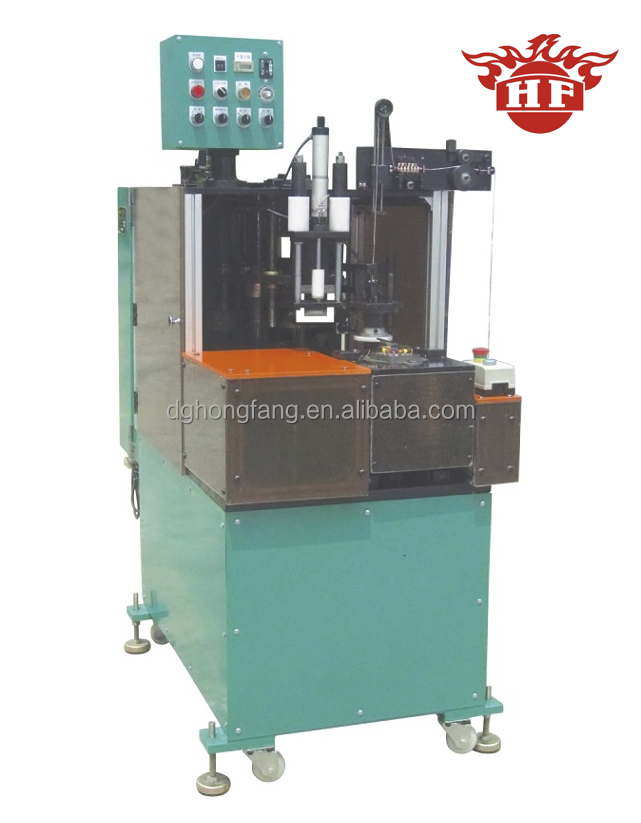
- High-speed simultaneous double-side tying
- Dual-axis servo knotting & needle control
- 1000W 220V/380V Industrial Rated Drive

- Rotor flyer winding with commutator hooker
- High-speed balanced dynamic rotation
- Integrated cycle diagnostics & digital HMI

- 6-Station Multi-Spindle High Throughput
- Heavy-duty indexing turntable mechanism
- Complete PLC core integration & 1-Yr support
Stator End-Turn Tying & Binding Dynamics: Principles of Dielectric Integrity
In alternating current induction motors, synchronous permanent-magnet machinery, and high-output industrial drives, the physical stability of end-windings is directly proportional to service life. Stator coil tying—commonly referred to in international manufacturing standards as coil lacing—is not merely an aesthetic packaging phase. It is an essential electromechanical stabilization process designed to neutralize electromagnetic forces (Lorentz forces) that pulse through winding bundles under severe motor starting currents and variable-frequency inverter harmonics.
1. The Mechanical Science of Needle Kinematics & Tension Profiling
During the start-up transients of three-phase induction motors across line-start (DOL) or soft-starter modes, current surges reaching 6 to 8 times the rated full-load amperage generate electrodynamic repulsion forces proportional to the square of the peak instantaneous current (F ∝ I²). Without continuous, high-tension end-turn tying, individual copper conductors experience microscopic cyclic movement. Over thousands of operating cycles, this micro-fretting degrades the thin layer of polyester-imide or polyamide-imide insulation enamel, inevitably causing inter-turn shorts, phase-to-phase flashovers, or catastrophic phase-to-ground dielectric punctures.
Our automated stator coil tying machinery—specifically the HF-BS20 Servo-Type Automatic Double-Side Lacing platform—resolves manual tying variability through dual-axis synchronized servo kinematics. The tying needle follows an elliptical reciprocating trajectory that traverses through the stator tooth gaps without abrading slot liners or bruising copper wire enamel. Integrated closed-loop electronic tension brakes maintain cord tension within ±0.5 N, preventing loose ties on large coil knuckles or cord severance on tight inner turns.
2. Stitching Architecture: Continuous Diamond, Segmented, and Slot-by-Slot Binding
Depending on the thermal classification and vibration spectrum of the target machine, lacing programs are configured via touch-screen HMI into distinct stitch topologies:
Slot-by-Slot Continuous
Every stator tooth receives a full loop and locking hitch. Ideal for high-vibration applications such as rock crushers, vibrating screens, and shipboard dredge pumps where maximum shear restraint is mandatory.
Skip-Slot (Intermittent)
Alternating pitch lacing tailored for fractional horsepower motors, ceiling fans, and residential pump units where rapid cycle times (under 12 seconds per stator) provide substantial factory cost optimizations.
Double-Hemisphere Servo Knot
Simultaneous upper and lower needle heads cycle synchronously, applying identical compression to both coil overhangs. This maintains rotor air-gap clearance tolerances and eliminates axial coil flaring.
3. Thermal Dissipation vs. Compaction Density in Heavy Duty Stators
A critical engineering consideration in modern stator construction is the trade-off between coil overhang compaction and cooling air convective flow. In totally enclosed fan-cooled (TEFC) and explosion-proof (Ex d) motors, tying cords must bundle the coil heads tightly enough to fit inside cast-iron end shields without contacting rotating balance rings. However, over-compression of phase insulation can create thermal hot spots by blocking internal cooling pathways. Zunqi machines achieve millimeter-precise mechanical forming followed by servo-controlled tying, ensuring uniform wire density that preserves critical air channels and optimizes conductive thermal dissipation into the stator core housing.
Application Scenarios Across Concepción & Greater Biobío
Concepción represents Chile's premier industrial and manufacturing capital outside the Santiago metropolitan area. From the deep-water maritime infrastructure of Talcahuano to the forestry, pulp, and petrochemical hubs along the Biobío River basin, automated stator tying and rewinding equipment operate under demanding regional parameters.
Pulp & Cellulose Processing (Arauco, Laja, Nacimiento)
Heavy Chemical Exposure & Continuous Run Duty
Cellulose processing mills along the Biobío basin demand ultra-reliable electric drives operating continuous 24/7 campaigns. Chemical recovery boilers, chippers, digestor slurry agitators, and black liquor circulation pumps subject motors to aggressive ambient sulfur dioxide (SO₂), chlorine traces, and elevated moisture levels. In this environment, stator tying must utilize synthetic Dacron, Nomex, or polyester glass cords laced with uniform tension. Any loose end-turns will absorb chemical particulates and suffer corona breakdown under VFD-induced switching spikes.
Talcahuano Shipyards & Marine Engineering (ASMAR)
High Salinity & Heavy Mechanical Shock
The naval repair complexes, dry docks, and commercial vessel retrofitting facilities at the Port of Talcahuano service high-amperage auxiliary winch motors, bow thrusters, bilge drainage turbines, and ballast pump systems. Shipboard motors operate in confined holds subjected to continuous marine salt spray, high ambient humidity, and intense low-frequency engine vibrations. Stator coil tying machines installed in local rewinding shops ensure double-sided lock stitching that prevents coil movement during severe wave-impact torsional shock loads.
Coronel Industrial Hub & Fishmeal Plants
High-Pressure Washdowns & Cyclic Thermal Shocks
Fish processing, pelletizing plants, and industrial food freezers in Coronel require motors rated for IP56/IP66 environments. High-pressure caustic washdowns cause rapid thermal expansions and contractions inside stator frames. If the stator coil heads are tied irregularly, thermal cycling causes differential expansion between copper conductors and insulating phase separators, leading to premature winding ground faults. CNC servo tying creates uniform, tight bundles that withstand vacuum-pressure impregnation (VPI) resins.
Hydroelectric & Wind Transmission Auxiliary Drives
Clean Energy Generation along Laja & Pangue
The mountainous interior of the Biobío region houses critical hydro generation complexes (Ralco, Pangue, El Toro). Auxiliary stator systems—including governor oil pressure pump motors, turbine cooling circulators, and sluice gate hoists—must guarantee 100% startup reliability. Stator tying machines equipped with PLC memory store multiple stator lamination geometries, allowing regional service centers to rebuild both legacy European generators and modern Asian asynchronous motors without extensive tooling changes.
Manual Lacing vs. Automated Servo Double-Sided Tying
A rigorous engineering and economic evaluation demonstrates why motor rebuild centers and production plants across Central Chile are transitioning away from manual needle lacing.
| Evaluation Parameter | Manual Bench Tying | Standard Cam-Driven Machine | Zunqi HF-BS20 Servo Double-Side |
|---|---|---|---|
| Cycle Time (36-Slot Stator) | 12 to 18 Minutes | 45 to 60 Seconds | 14 to 22 Seconds |
| Tension Uniformity (ΔN) | ± 8.0 N (Fatigue-dependent) | ± 3.0 N (Mechanical springs) | ± 0.5 N (Digital Servo Control) |
| Double-End Binding Speed | Sequential (Flip manually) | Sequential or Dual-station | Simultaneous Synchronous Binding |
| Slot Geometry Adaptability | Operator dependent | Requires manual gear swap | HMI Profile Selection (Servo Indexing) |
| Wire Insulation Scratch Risk | Moderate (Awl needle contact) | High if stroke misaligned | Zero (Programmable needle path) |
| Grid Voltage Compatibility | N/A (Manual labour) | Fixed regional voltage | 380V / 220V 50Hz (Chile Standard Ready) |
| Dielectric VPI Penetration | Uneven cord tightness blocks resin | Acceptable | Optimized uniform compression pores |
Emerging Trends Driving Stator Automation in Concepción
1. The Nationwide IE3 and IE4 Super-Premium Efficiency Mandate
Under Chile’s National Energy Efficiency Law (Ley 21.305), industrial energy consumers in Concepción and Coronel are under regulatory pressure to upgrade or rewind low-voltage induction motors to minimum IE3 efficiency baselines. High-efficiency stators present unique manufacturing hurdles: they feature elevated slot fill factors (often exceeding 78%), thinner tooth tips, and larger wire cross-sections to minimize I²R copper resistance losses. Manually inserting and tying these high-density winding packs frequently leads to pinched insulation and excessive winding resistance imbalance. Automated tying platforms ensure that dense coil heads are compacted symmetrically without deforming the stator bore profile.
2. Electrification and Port Decarbonization in the Biobío Bay
The port terminals of San Vicente, Lirquén, and Talcahuano are systematically electrifying material-handling cranes, container straddle carriers, and bulk ship-loading conveyors to curtail diesel emissions. Heavy-duty traction drives, permanent magnet synchronous motors (PMSM), and auxiliary brushless exciters utilize complex multi-pole winding topologies. Local electro-mechanical rewinding companies are upgrading tooling from legacy manual lathes to multi-station automatic winders and servo-driven lacing machines to service these imported high-pole-count electric powertrains locally.
3. Nearshoring Industrial Supply Lines to China-Direct Manufacturing
Historically, motor rebuilding facilities across the Biobío region sourced replacement machines, winding heads, and replacement parts through high-margin intermediaries in North America or Europe. With increasing logistical connectivity via the Pacific maritime lanes directly into San Antonio and San Vicente, Concepción manufacturers now procure factory-direct from advanced manufacturing clusters like Dongguan. This direct supply model slashes equipment capital expenditure by 40–60% while providing custom-machined tooling matched directly to native motor drawings.
Frequently Asked Questions for Concepción Buyers
Essential technical, logistical, and electrical specifications for procurement engineers importing stator manufacturing equipment into Central-Southern Chile.
Why International Industrial Buyers Partner With Zunqi
Located in Qishi Town, Dongguan, Zunqi Intelligent Equipment operates at the epicenter of South China's high-precision machinery manufacturing cluster, offering unmatched mechanical build quality and supply chain agility.
Onsite Verified Operations
Our Dongguan production workshop has been independently inspected and verified onsite by leading third-party audit agencies on Alibaba.com. Buyers can verify our business license, plant equipment, machining centers, and live assembly floors before issuing payment.
Integrated Line Cohesion
We do not just manufacture standalone tying machines. We engineer complete, synchronized motor manufacturing lines: slot insulation paper insertion, CNC coil winding, simultaneous coil and wedge insertion, intermediate forming, double-sided tying, and final coil sizing.
Custom CNC Tooling Precision
Our internal CNC machining department cuts lacing blades, needle holders, expanding mandrels, and guide fingers from hardened tool steels (SKD11 / Cr12MoV). Precision heat treatment guarantees minimum wear even under high-tensile fiberglass cord operations.
Modernize Your Stator Production Line for Concepción Today
Whether you require a single high-speed servo double-side tying machine or a turnkey automated stator assembly line for industrial motors, our technical sales engineers will evaluate your drawings within 9 hours.
