
Automated Stator Coil Forming & Insertion Systems
Delivering micron-level mechanical tolerances, symmetrical end-turn clearance, and robust electrical insulation integrity for industrial drives, heat pumps, and alpine servo motor manufacturing.




Engineering Excellence in the Rhine Valley & Vaduz Industrial Ecosystem
Precision electro-mechanical requirements for Liechtenstein's premium automation clusters, high-performance cleanroom drives, and thermodynamic energy systems.
High-Efficiency Heat Pump Drives
Vaduz and the broader St. Gallen Rhine Valley corridor lead Central Europe in next-generation building energy technologies. Stator coil shaping plays a vital role in hermetic and semi-hermetic scroll compressor motors. Hydraulic expansion dies precisely compress end windings without bruising enamelled wire coatings, maximizing copper slot fill and optimizing boundary clearances inside compact, gas-cooled housings.
Precision Robotics & Tool Spindles
Liechtenstein's specialized machine tooling and fastener automation industries demand high-torque-density servo motors. In these compact stators, phase-to-phase insulation paper must stay pristine during final coil head calibration. Our intermediate and final shaping presses deploy multi-segment CNC expansion dies that control inner radial clearance, outer envelope, and axial height simultaneously.
Harsh-Environment Pumping Systems
From chemical fluid processing to high-altitude building management systems, regional manufacturers require motors capable of enduring heavy thermal cycling. Our stator shaping solutions guarantee uniform mechanical geometry prior to slot lacing and resin encapsulation, preventing premature localized corona discharge, wire chafing, and vibration damage.
Stator Shaping & Line Integration Matrix
Comprehensive technical specifications for multi-stage stator coil forming, expanding, and pressing units designed to integrate with automated assembly loops.
| Process Step | Equipment Type | Kinematic Mechanism | Primary Engineering Function | Critical Quality Criterion |
|---|---|---|---|---|
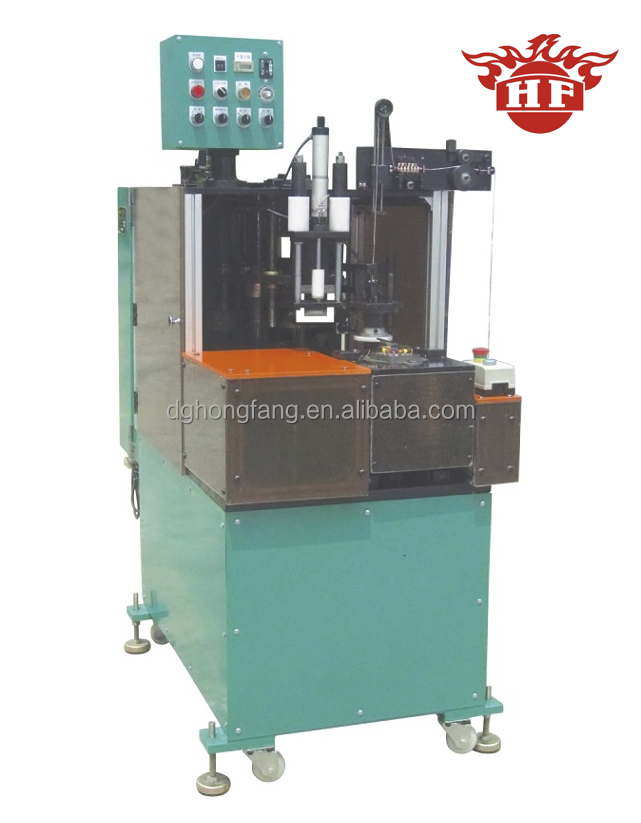
| Intermediate Forming | Vertical Hydraulic Expansion Shaper | Multi-Segment Core Die & External Clamp | Pre-shapes coil overhang to clear the stator bore before mechanical lacing | Bore pass-through diameter clearance (±0.05 mm) |
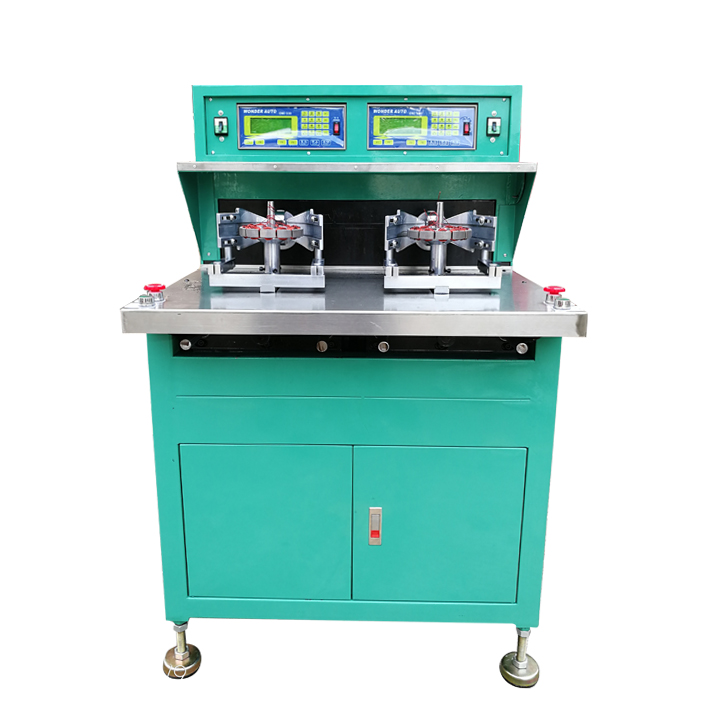
| Automated Lacing | Servo Dual-Side Binding Machine | Twin Synchronized Servo Needles | Locks shaped coil heads mechanically with tensioned polymeric cord | Uniform chord tension without cutting copper enamel |
| Final Forming | Solid Tool Head Multi-Jaw Press | Hydraulic / Heavy Servo Piston | Calibrates exact overall envelope (ID, OD, stack height) for motor housing fit | No copper-to-iron contact; strict axial height limitation |
| Insulation Inserting | Slot Wedge & Paper Inserter | Mechanical Cam / Servo Indexer | Inserts creased insulation barrier films prior to coil assembly | Zero slot-edge flare; tear-free cuff folds |
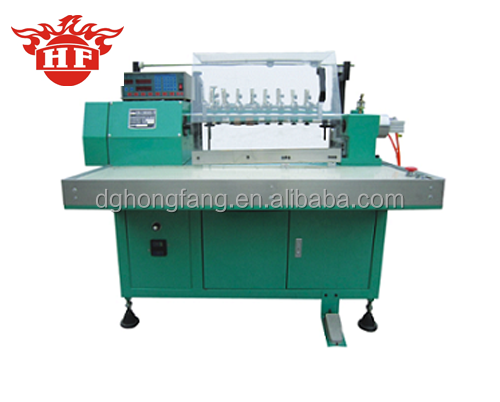
| Rotor Turning | Rotor OD Fine Lathe (HF-C60) | Pneumatic Chuck & Hard-Alloy Tool Post | Turns laminations to ensure an ultra-uniform air gap with shaped stators | Total Indicated Runout (TIR) ≤ 0.008 mm |
Procurement & Technological Trends in the Alpine Corridor
How European industrial shifts toward copper reduction, higher power densities, and decentralized automation influence machinery investments in Liechtenstein.
Shift Toward Hairpin & High Slot-Fill Topologies
While traditional random wound coils remain dominant across standard pump and fan stators, manufacturers in the Rhine basin are rapidly adopting segmented tooth architectures and tight concentric coils. Advanced stator shaping machinery must offer programmable, servo-controlled stroke profiles to compress dense copper packages without exceeding tensile thresholds of thin slot liners.
Industry 4.0 Traceability & Press Monitoring
Liechtenstein's manufacturing infrastructure operates under stringent ISO 9001 and IATF 16949 audit regimes. Procurement managers increasingly require pressure-versus-displacement telemetry on hydraulic and servo shaping tooling to catch anomalies—such as an extra turn or defective insulation wedge—instantly on the line before the unit reaches dipping and curing.
Modularity & Rapid Tooling Changeover
Given the high variety and moderate batch sizes typical of Vaduz specialty engineering firms, machine downtime represents an intolerable overhead cost. Modern stator shaping machinery features modular quick-swap tooling sets, allowing an operator to transition between different stack heights, core diameters, and slot counts in less than 20 minutes.
Open-Architecture Controls & Standardized Components
Configured directly to the preferred electrical and pneumatic standards of Central European maintenance departments.
Siemens
Schneider
Mitsubishi
Omron
SMC Pneumatics
Why International Engineers Rely on Zunqi Motor Equipment
Backed by seventeen years of dedicated manufacturing experience, direct custom tooling capability, and verified factory infrastructure.
Custom Tooling from Your Physical Stators
We do not deliver generic, off-the-shelf presses. Our toolmakers calculate slot envelope geometry, wire springback factors, and core stacking variance directly from your CAD drawings or physical stator laminations, running complete validation tests before dispatch.
Comprehensive Full-Line Balancing
From slot paper creasing and CNC winding to intermediate expanding, lacing, final forming, and precision rotor shaft insertion, we balance cycle times and handling interfaces across your entire stator line to eliminate bottlenecks.
Pre-Delivery Video Acceptance & Support
Every equipment build undergoes comprehensive FAT (Factory Acceptance Testing) with client-supplied wire and core materials. Video telemetry, cycle validation, and electrical continuity tests are fully documented prior to international export crating.
Frequently Asked Questions: Stator Coil Shaping Procurement in Vaduz
Clarifications on electrical grid compatibility, import documentation, tooling tolerances, and after-sales service for Liechtenstein buyers.
Are Zunqi stator shaping machines compatible with 400V 50Hz European electrical grids?
Yes. While our standard single-phase auxiliary units operate on 220V, all heavy hydraulic and servo stator shaping machines can be custom-wired and certified for European three-phase 400V 50Hz networks. We install Siemens or Schneider low-voltage switchgear and CE-compliant safety interlocks upon client specification.
How does the machine avoid damaging enamel coatings during high-pressure coil forming?
Our shaping tools utilize high-grade alloy steel (Cr12MoV or equivalent) hardened and polished to mirror finishes (Ra ≤ 0.2 μm) with radius-relieved transitions. The expanding dies follow multi-stage progressive speed curves governed by proportional hydraulics or servo drives, ensuring copper wire redistributes naturally into slot clearances rather than scraping against sharp laminated edges.
What is the lead time for custom tooling engineered for our specific stator drawing?
Standard machines with custom-machined tooling sets generally require 30 to 45 business days for fabrication, electrical wiring, and multi-stage testing. If clients dispatch physical stator stacks and wire reels to our Dongguan testing facility, we perform full production verification runs before packing.
What export logistics protocols are used for delivery into Liechtenstein or Switzerland?
Equipment is vacuum-sealed with VCI anti-corrosion barrier film, loaded with desiccant charges, and anchored in heavy-duty fumigation-free plywood export crates designed for sea container and overland transshipment (via Rotterdam or Hamburg directly through Swiss customs corridors into Vaduz).
What warranty coverage and long-term spare part support do you provide?
All machines carry a standard 1-year mechanical and electrical parts warranty. Critical wearable components (forming fingers, push needles, lacing hooks, and seals) are cataloged with worldwide air-express replenishment within 3–5 working days, complemented by remote high-definition video commissioning support.
Optimize Your Stator Production Line Today
Speak with our senior application engineers to evaluate cycle times, tool geometries, and turnkey configurations for your facility.
Contact Us