Stator Preforming, Winding & Insertion Systems for Osaka Motor Plants
Direct-from-manufacturer automation modules optimized for high slot-fill ratios, dielectric integrity, and compact end-turn envelopes. Every unit is customized to your lamination stack dimensions before delivery.

Automatic Slot Paper Inserting & Cutting Machine
- Rated Power: 1.0 kW (220V/380V configurable)
- High-speed slot indexing & precise edge flanging
- 1-Year Comprehensive Factory Warranty
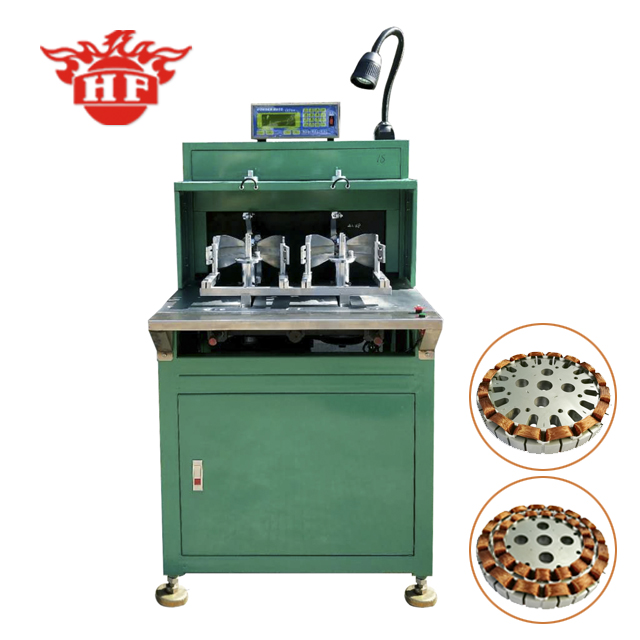
Dual-Station High Efficiency Stator Winding Machine
- Dual-station simultaneous winding operation
- PLC tension control for minimal wire stretch
- Optimized for external and internal multi-pole stators

Rotor Turning & Surface Fine Cutting Machine
- Integrated coolant pump and heavy-duty casting
- Micro-concentricity turning for silent air gaps
- Touchscreen parameters with quick tool indexing
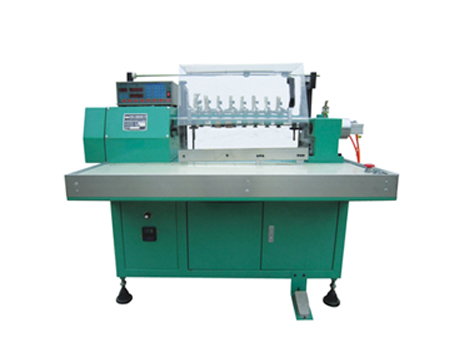
Electric Motor Stator Coil Production Winder
- Automated layering and programmable turn counts
- Handles copper and aluminum wire (0.10–1.20mm)
- Rigorous vibration dampening frame structure

Single-Side Automatic Stator Coil Lacing Machine
- Power: 1000W | Voltage: 380V/220V 50/60Hz
- Slot-by-slot, interval or customized stitch pattern
- Eliminates wire bundle looseness under thermal stress

Industrial Stator Coil Preforming & Forming Machine
- Hydraulic/pneumatic high-pressure uniform shaping
- Internal expanding, outer clamping & end pressing
- Guarantees inner bore clearance for rotor insertion

Two-Station Outer Stator & Transformer Winding System
- Synchronous dual-spindle digital controller
- High torque at low RPM for heavy magnetic wire
- Quick-change mandrels for rapid batch changeover

Fully Automatic CNC Motor Coil Manufacturing Station
- Multi-axis servo coordination for precise layering
- Automatic wire hooking, cutting, and transfer cycle
- Industrial 220V operation for clean plant integration
The Mechanics of Precision Stator Preforming: Optimizing Copper Fill & Dielectric Safety
In modern automated electric motor assembly, stator coil preforming represents the decisive step between coil insertion and final lacing. Discover how precise axial compaction, radial expansion, and mechanical boundary control prevent insulation degradation while elevating thermal dissipation.
Volumetric Crown Consolidation & Flare Control
When magnet wire coils are pushed into stator laminations, the overhang heads (end-turns) emerge with irregular bundle geometry. Our preforming tooling executes a dual-action cycle: an expanding internal mandrel moves radially outward to define the rotor bore clearance envelope, while contoured exterior clamp dies apply calibrated hydraulic compression. This prevents end-turn flare that leads to mechanical interference with cast aluminum motor end-bells.
By regulating pressure profiles during intermediate forming, our machinery avoids micro-fractures in the wire's ester-imide overcoat, ensuring that corona discharge resistance meets strict Japanese industrial thresholds.
Preservation of Phase-to-Phase Dielectric Barriers
High-efficiency inverter-driven motors operated under pulse-width modulation (PWM) variable frequency drives experience extreme dV/dt voltage transients. At the preforming stage, phase separation papers (Nomex, DMD, or PET) positioned between coils are vulnerable to shearing or slippage under excessive kinetic impact.
Our equipment incorporates servo-proportional pressing kinetics. Rather than slamming the coil head, the machine decelerates at the point of initial copper contact, gradually distributing displacement force across the winding perimeter. This ensures phase insulation remains firmly locked in place without edge tearing or creasing.
Slot Fill Factor Augmentation & Thermal Dissipation
Elevating motor energy efficiency classes from IE3 to IE4/IE5 super-premium standards demands maximizing copper density inside each stator slot. However, higher slot fill ratios (>75%) make insertion challenging and result in heavily congested knuckle areas at the tooth exit.
Through precision-ground tooling made from Cr12MoV vacuum-quenched alloy steel (HRC 58-62), our preforming machines exert precise axial back-pressure. This compacts the copper bundle, opens internal cooling channels, and shortens the conductive path, significantly cutting winding resistance ($I^2R$ copper losses) in thermal testing.
Technical Parameter Reference: Stator Coil Preforming & Forming Series
| Machine Specification Parameter | Standard Model HF-PF30 | Heavy Duty HF-PF60 | Customized EV/Compressor Spec |
|---|---|---|---|
| Applicable Stator Outer Diameter (OD) | Φ40 mm – Φ160 mm | Φ90 mm – Φ260 mm | Up to Φ350 mm (Custom Tooling) |
| Stator Lamination Stack Height | 10 mm – 150 mm | 30 mm – 250 mm | Up to 320 mm (Extended Stroke) |
| Operating System & Drive Mechanism | Hydraulic Proportional / Pneumatic | High-Pressure Dual Hydraulic Circuit | Full AC Servo Electric Cylinder Driven |
| Hydraulic System Working Pressure | 2 – 5 MPa (Adjustable) | 3 – 7 MPa (Programmable) | Closed-loop Load Cell Monitored |
| Single Cycle Duration (Tact Time) | 8 – 14 Seconds / Unit | 10 – 16 Seconds / Unit | 6 – 10 Seconds / Unit |
| Input Power Configuration | 200V / 220V 3-Phase, 50/60 Hz | 200V / 380V 3-Phase, 50/60 Hz | Configurable to Customer Plant Grid |
| Core Control Architecture | Mitsubishi / Omron PLC + HMI | Siemens / Delta PLC Interface | Industrial PC with Recipe Management |
Engineered for Osaka's High-Spec Motor Manufacturing Clusters
From Kadoma and Higashiosaka to Sakai and Amagasaki, Kansai's precision manufacturing corridor is renowned globally for uncompromising motor craftsmanship. Here is how our stator processing systems align with local operational demands.
Key Application Verticals in Osaka & Kansai
- Variable-Refrigerant HVAC Compressors: Osaka houses premier global leaders in commercial and domestic heat pumps. Our preforming machines form deep-pocket, oil-resistant stator windings with zero enamel cracking under R32 and CO2 refrigerant atmospheres.
- Industrial Robot Actuators & AC Servos: Factory automation hubs across Higashiosaka require compact end-turn envelopes for hollow-shaft robotic joints, allowing ultra-short servo housings without stator-to-casing dielectric flashover.
- Submersible & Chemical Process Pumps: Sakai industrial belt pump fabricators rely on our rigid coil expanding tooling to eliminate loose wires that could vibrate and wear against epoxy encapsulation layers during high-vibration operation.
- Automotive Auxiliary BLDC Motors: Supporting Tier-1 Japanese suppliers assembling electric power steering (EPS), electric brake boosters, and active battery cooling circulators.
Kansai Manufacturing Trends & Procurement Drivers
- Mitigating Demographic Labor Scarcity: Japanese machine shops face skilled technician retirement. Our machines replace manual wooden-mallet forming with automated, single-button programmable cycles that guarantee repeatable results regardless of operator skill.
- Strict Compliance with METI & Top-Runner Standards: Japan's Ministry of Economy, Trade and Industry enforces stringent Top-Runner efficiency mandates. Tight stator coil preforming directly reduces resistance and harmonic losses needed to meet IE4 ratings.
- Flexible High-Mix, Low-Volume Batches: Japanese subcontractors often switch stator runs multiple times per week. Tooling changeovers on our forming machines are designed for completion in under 30 minutes via modular quick-coupling locators.
- Clean Plant Footprint: Enclosed splash-proof guarding, low acoustic output (<72 dB), and leak-free hydraulic coupling align seamlessly with Japanese 5S workplace management methodologies.
Harmonizing Stator Line Stages: From Core Insulation to Final Lacing
A preforming machine performs best when mechanically synchronized with preceding and subsequent manufacturing steps. Our matched tooling design prevents bottlenecking and guarantees seamless transfer between stations.
Slot Insulation
Automatic folding and insertion of insulation paper liners into bare stator stacks, forming uniform cuffs that protect coils from sharp electrical steel punch burrs.
Winding & Insertion
Simultaneous insertion of wound copper groups and slot closing wedges in a single linear stroke, preventing friction damage to magnet wire enamel.
Preforming & Expanding
Internal mechanical collet expansion and axial end-turn compression to sculpt coil heads, establish rotor bore clearance, and position inter-phase separators.
Lacing & Final Sizing
Servo-driven needle lacing binds both coil ends firmly before final hydraulic sizing establishes the finished outer diameter envelope for motor shell insertion.
Why Japanese Motor Manufacturers Partner with Zunqi Intelligent Equipment
Headquartered in Dongguan’s advanced precision equipment manufacturing belt, Zunqi brings over 17 years of dedicated export engineering to Asian and global markets. We bridge factory-direct pricing with rigorous machine tool performance.
Custom Tooling Tailored to CAD Samples
We do not supply generic off-the-shelf dies. Every preforming mandrel, wedge guide, and clamp blade is CNC machined precisely to your stator lamination drawings and sample physical cores sent to our workshop.
100% Pre-Shipment Video Inspection
Prior to crating, your stator core sample undergoes trial runs on the actual machine. We measure end-turn heights, check phase isolation, and transmit high-definition operating test videos for engineering sign-off.
Configurable Japanese Automation Components
To streamline maintenance and reduce local spare parts inventory in Osaka plants, we routinely configure control cabinets with Mitsubishi PLCs, Omron sensors, SMC pneumatics, and Yaskawa servo drives upon request.
Heavy Duty Rigidity & Stress Relief
Machine bed frames are fabricated from thick-gauge normalized structural steel plates, precision surface-milled and heat-treated to eliminate internal stresses, ensuring lifelong geometric accuracy under repetitive forming forces.
Comprehensive 1-Year Machine Warranty
Every piece of motor manufacturing machinery is backed by a 1-year factory warranty. We supply full technical dossiers, schematics, and air-express replacement parts if component failures occur during operation.
Single-Set Order Flexibility (MOQ 1 Set)
Whether you require a single pilot machine for a prototype R&D cell in Kansai Science City or a high-capacity turnkey line for high-volume production, we support orders starting from just 1 unit.
Frequently Asked Questions by Japanese Engineers & Buyers
Clear answers to electrical compatibility, quality validation, customs dispatch to Kansai ports, and technical collaboration workflows.
Can the machinery run directly on Osaka’s 200V 60Hz 3-phase industrial power supply? +
Yes, absolutely. Western Japan (including Osaka, Kyoto, Kobe, and Wakayama) operates on a 60Hz grid frequency with typical industrial three-phase service at 200V. We wire transformers, motors, and inverter drives specifically for 200V/60Hz operation before factory acceptance testing, eliminating the need for expensive external voltage transformers at your facility.
How do you guarantee that preforming tooling will not scratch our magnet wire coating? +
All tool surfaces that contact insulated magnet wire are fabricated from vacuum heat-treated Cr12MoV or high-grade tool steel (HRC 60+), ground to a high-polish Ra ≤ 0.2 μm mirror finish, and finished with smooth entry radii. In addition, our PLC-controlled forming cycles apply controlled proportional pressure to distribute forces smoothly across the bundle rather than exerting sharp, scraping impact.
What data or samples must we supply to receive a formal tooling and machine quotation? +
To engineer matched tooling, we request your stator lamination CAD drawing (stator outer diameter, inner bore diameter, slot dimensions, and stack height range), the wire specification (single or multi-strand diameter), slot fill percentage, and the allowable end-turn height/OD boundaries. Sending 3 to 5 blank stator core samples allows our technicians to execute physical test runs before equipment shipment.
What are the typical transit times and shipping modalities to the Port of Osaka or Kobe? +
From our manufacturing plant in Dongguan, equipment is transported to Shenzhen or Guangzhou port. Ocean freight transit to Osaka Port (Nanko) or Port of Kobe takes approximately 3 to 5 days, making overall shipping exceptionally rapid compared to Western routes. Machines are vacuum-sealed in VCI anti-corrosion barrier film, loaded with desiccant, and secured inside solid fumigation-free ISPM-15 export plywood cases.
Are HMI interfaces, wiring schematics, and operator manuals provided in Japanese or English? +
All machines are delivered with bilingual English and Japanese touch screen operator interfaces (HMI). Control labels, error alarms, and parameter programming screens can be translated into Japanese Katakana/Kanji for ease of line-worker operation. Comprehensive electrical schematics, pneumatic piping diagrams, and mechanical maintenance manuals are supplied in clear English or Japanese documentation.
How does your after-sales support function if on-site travel to Japan is restricted? +
Our machines arrive pre-assembled and calibrated, meaning initial installation primarily involves leveling the base, connecting 200V power and clean compressed air lines. We provide comprehensive step-by-step video guidance, annotated wiring manuals, and remote video conference sessions directly between our senior commissioning engineers and your plant technicians. Replacement wear parts can be dispatched via DHL/FedEx to Osaka within 48 to 72 hours.
Can one preforming machine handle multiple stator sizes via interchangeable tooling? +
Yes. The machine framework is engineered to accept modular tooling sets. When changing between motor models sharing similar stack ranges, your operators only need to swap the inner expander mandrel and the outer forming clamp jaws. Tooling sets can be indexed and fastened via dowel locators in approximately 20 to 30 minutes, maximizing plant agility.
