Specialized Stator Winding & Assembly Machinery
Engineered for seamless integration with stator coil final forming, end-turn lacing, and slot insulation operations across industrial equipment lines.

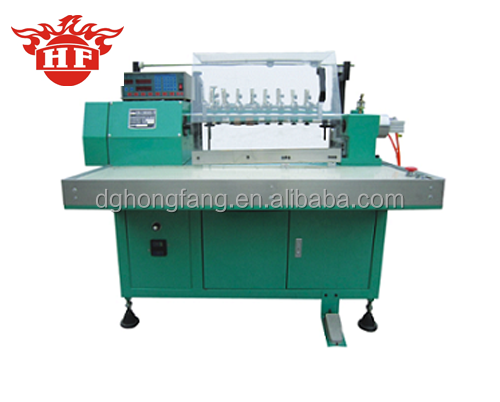






Kinematics & Tooling Dynamics of Stator Coil Final Forming
In electric motor manufacturing, the stator coil final forming machine serves as a decisive quality checkpoint between coil insertion, phase insulation placement, intermediate forming, and final varnish impregnation. The primary mechanical challenge during final forming is managing the severe spatial constraints of the stator core overhang while strictly preserving enamel wire insulation integrity. When multi-strand enameled copper or aluminium wires are wound and inserted into lamination slots, the overhang (end-turn bundle) naturally expands radially outward and axial-wise due to internal residual stresses. Without precision forming, these coil heads will inevitably collide with the end shields or cast-iron motor frame, causing dielectric flashovers or air gap contamination.
Our final forming machinery operates on a synchronized five-action kinematic sequence: internal expansion tooling, external clamping blocks, forward end-pressing dies, backward end-pressing dies, and central sizing mandrels. Driven by high-pressure hydraulic cylinders or multi-axis closed-loop AC servo drives, the internal forming mandrel expands radially from the center of the stator bore. This expansion establishes the exact boundary clearance required for subsequent rotor insertion, completely eliminating rotor scrape risks. Simultaneously, concentric outer forming jaws press radially inward, consolidating the phase coils into a compact, geometric profile that guarantees uniform thermal heat dissipation across the peripheral end-bracket ventilation chambers.
Critical Forming Parameters & Boundary Tolerances
Industrial machinery deployed for high-torque or severe-duty applications requires strict geometrical control. The table below delineates the baseline operating tolerances achieved by our stator coil final forming systems when calibrated for heavy-duty industrial electric motors:
| Dimensional Variable | Engineering Significance | Standard Tolerance | Servo-Hydraulic Capability |
|---|---|---|---|
| Internal Overhang Bore (ID) | Guarantees free passage of dynamic rotor without mechanical abrasion | +0.15 mm / -0.00 mm | ±0.03 mm |
| External Overhang Diameter (OD) | Prevents dielectric ground strike against cast-iron frame housing | +0.00 mm / -0.20 mm | ±0.05 mm |
| Axial Overhang Height | Ensures non-interference clearance with motor end-bells and bearings | ±0.35 mm | ±0.08 mm |
| Enamel Coating Elongation | Mitigates microscopic copper micro-fracturing and turn-to-turn shorts | < 3.5% strain | Controlled < 1.8% controlled stroke |
| Phase Insulation Integrity | Prevents interphase dielectric breakdown during surge withstand tests | No displacement | 100% boundary locking die system |
Unlike standard generic pneumatic presses that deliver abrupt, uncontrolled impact forces, our machines utilize controlled ramp-pressure profiles. By modulating the stroke velocity through programmable proportional relief valves and digital position encoders, the tooling allows enameled magnet wire to experience progressive molecular deformation. This approach prevents micro-crazing on polyesterimide (PEI) and polyamide-imide (PAI) enamel coats, ensuring high breakdown voltages (exceeding 4.5 kV in standard hipot dielectric testing) and eliminating hidden electrical insulation failures before the stator reaches vacuum pressure impregnation (VPI).
Localization Context: Industrial Deployment Across Gomel
Engineered to meet the stringent mechanical standards, heavy duty-cycles, and climate parameters of Gomel’s manufacturing hub.
Agricultural Machine Drives
Gomel is a regional center for agricultural heavy equipment (notably combine harvesters and self-propelled utility machines). Our final forming machines compact heavy-wire stators for high-vibration starter motors, hydraulic actuator pump motors, and cooling drives where coil head deflection can cause premature mechanical failure under rough field operating loads.
Machine Tool & Spindle Drives
The Gomel industrial basin maintains a strong machine-building legacy requiring servo-spindles and high-precision feed motors. Forming end-turns to an exact profile allows motor builders to minimize non-active copper length, lowering overall coil copper resistance (I²R loss), improving flux density, and running cooler under constant industrial cycling.
Submersible & Chemical Pumps
Proximity to chemical and petrochemical infrastructure along the Sozh and Dnieper logistical corridors requires explosion-proof and hermetically canned pump motors. Our tooling applies specialized forming dies that maintain slot liner extensions and phase paper separations, ensuring absolute compliance with ATEX and GOST explosion-proof insulation safety margins.
Modernization Trends in Stator Overhang Optimization
Addressing higher slot fill ratios, thinner lamination steel, and stringent motor efficiency classes.
As Eurasian markets and local industrial plants transition toward mandatory IE3 (Premium Efficiency) and IE4 (Super Premium Efficiency) standards, the fundamental architecture of induction and synchronous reluctance stators is shifting. Manufacturers are forced to raise the slot fill factor—frequently exceeding 75% to 82% of gross slot area. When slot fill reaches these densities, standard manual or light mechanical forming methods lead to catastrophic wire pinching, insulation tears, or bent stator core laminations.
The modern manufacturing roadmap for factories serving Gomel and surrounding regions involves three key technical advances:
- Servo-Electric Absolute Stroke Control: Replacing traditional mechanical linkages with dual-opposed CNC servo drives that dynamically map resistance during the forming stroke. This enables micrometer-level dead-stop positioning regardless of batch variations in wire hardness or lamination tolerances.
- Modular Multi-Segment Expanders: Integrating 8-to-12 segment radial expanding tooling that distributes outward stress evenly around the 360-degree stator bore, eliminating polygonal bore distortion and preserving precise roundness on thin, low-loss electrical steel stacks (e.g., 0.35 mm and 0.27 mm silicon steels).
- Synchronized Phase Separation Verification: Utilizing integrated optical or laser height inspection within the forming station to confirm that phase separation papers have not shifted, wrinkled, or sheared during the radical compression of end-turn loops.
By investing in stiff, high-rigidity machine frame architectures with closed box-column fabrications, our stator coil final forming machines ensure that even high-copper-mass windings for traction, compressor, and heavy industrial drives are shaped consistently without mechanical frame deflection.
Why Motor Manufacturers Partner with Zunqi
Providing end-to-end stator and rotor production equipment directly from South China’s premier motor machinery engineering hub.
17 Years Onsite Checked
Headquartered in Qishi Town, Dongguan, Zunqi Intelligent Equipment operates with 51–100 skilled engineers and machinists. Our factory premises are independently verified onsite by international auditing bodies, establishing verifiable trade history and solid creditworthiness.
Integrated Line Machinery
We supply fully matched machinery across all stator stages: paper inserting, coil winding, coil & wedge inserting, intermediate forming, double-sided lacing, and final forming, plus rotor fine-turning and shaft press machines. Everything is unified under single-source engineering accountability.
Flexible Architecture & Spares
All PLC control systems, servo motors, touchscreens, and pneumatic valves are available with globally recognized platforms (Siemens, Mitsubishi, Schneider, SMC, Delta, Airtac) to make maintenance, electrical integration, and spare part sourcing straightforward for local facilities.
Frequently Asked Questions for Gomel Buyers
Addressing power standards, custom tooling, freight arrangements, and installation support.
What are the electrical power configuration options for operations in Gomel? +
How is custom tooling engineered to our plant's specific stator stack drawings?
What anti-corrosion protection and crating methods are utilized for long-distance rail/sea transit? +
Can one final forming machine handle multiple stator models through tooling changeovers? +
What after-sales commissioning, parameter guidance, and warranty terms apply? +
Ready to Modernize Your Stator End-Turn Forming Line?
Submit your motor stator drawings, stack heights, and target shift capacity. Our engineering team typically responds within 9 hours with a detailed machine proposal, cycle-time estimate, and tooling layout.
Inquire Now