Production-Ready Electric Motor Manufacturing Equipment
Direct factory supply delivering repeatable cycle times, rigid mechanical alignments, and flexible electrical configurations configured specifically for the European market.
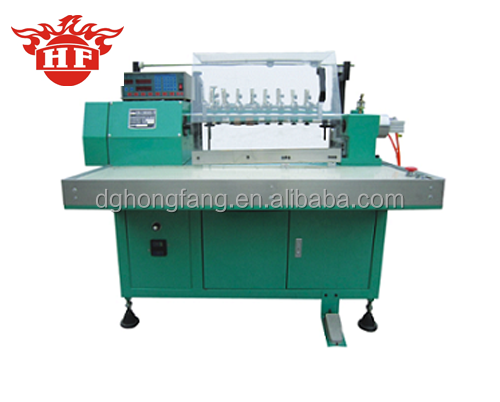



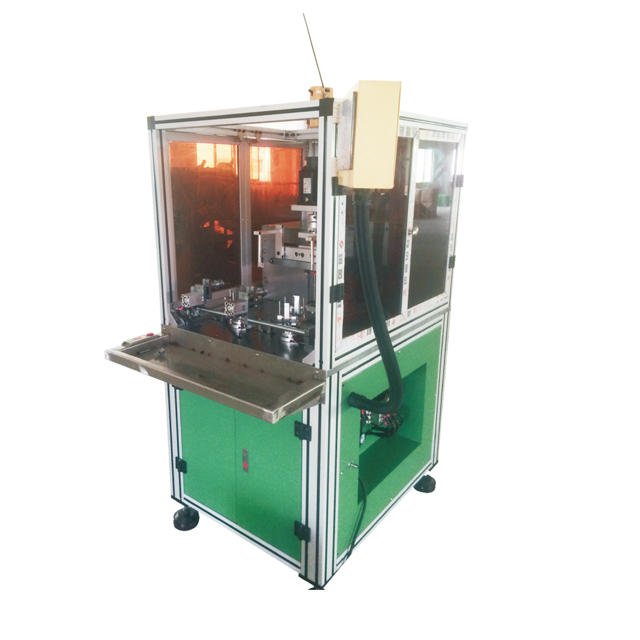



Comprehensive Engineering Review: Single Side Coil Lacing in Modern Italian Manufacturing
In the heart of Central Italy, the industrial corridors extending from Florence (Firenze) through Osmannoro, Scandicci, Prato, and Pistoia have cultivated world-renowned engineering sectors. While globally revered for luxury design and precision mechanics, Tuscany maintains an expansive ecosystem of specialized electromechanical engineering, industrial chiller fabrication, high-pressure wine processing pumps, leather finishing machinery, and bespoke HVAC drives. In these demanding operational spheres, the electrical motor serves as the uninterrupted kinetic core.
Within an electric motor manufacturing line, coil lacing (or winding head stitching) is often considered the defining line between an average unit and an industrial-grade electric motor built for harsh harmonics and long life cycles. The single side coil lacing machine specifically addresses applications where asymmetrical coil profiles, distinct winding leads, or high-density terminal terminations make double-side simultaneous lacing unnecessary or geometrically impractical. By mechanically securing stator coil overhangs with high-tensile lacing cord, the single side lacing operation prevents coil displacement, eliminates magnetic vibration chatter during variable frequency drive (VFD) switching, and guarantees dielectric clearance before the stator core advances to intermediate/final forming and varnish impregnation.
Architectural Kinematics: How Single Side Coil Lacing Operates
A dedicated single-side lacing system utilizes high-precision hook needle mechanisms synchronized mechanically or via multi-axis servomotors to index the stator core incrementally across every designated slot. During the cycle:
Continuous Wire Tensioning
Controlled thread-braking guides feed dacron, nomex, or nylon braided lacing cords without fraying outer thread strands, sustaining homogeneous tension around high-fill slot groups.
Dividing Head Servo Indexing
Numerical rotary chucks accommodate 8 to 48 slot geometries seamlessly. Operators program pitch jumps, slot-skipping, or customized dual-stitch cycles directly via touchscreen HMI.
Needle Penetration Clearance
Slender needle profiles penetrate cleanly through copper wire bundles and slot cell insulation cuffs without micro-scratching enameled magnet wire films or inducing early corona discharge.
Technical Parametric Matrix: Single Side Lacing vs. Manual Tie vs. Double Side Lacing
For engineering managers in Tuscany evaluating line retooling or expansion, analyzing capital deployment, floor space, and operational efficiency is paramount:
| Evaluation Parameter | Single Side Automatic Lacing | Double Side Servo Lacing | Manual Hand Lacing (Benchtop) |
|---|---|---|---|
| Cycle Time per Unit (24 slots) | 12 – 18 seconds / stator | 10 – 14 seconds (both ends) | 180 – 300 seconds / stator |
| Tooling Cost & Simplicity | Low-to-Medium (Fast changeovers) | Medium-to-High (Paired sync tools) | Zero tooling (High labor expenditure) |
| Lead Termination Accommodation | Exceptional (Leaves front open) | Requires clear lead pathways | Manual intervention around leads |
| Tension Uniformity (N) | Constant (±1.5 N programmatic) | Constant (±1.5 N programmatic) | Highly variable (±12 N operator fatigue) |
| Integration into Florentine Cells | Ideal for batch/lean cellular setups | Optimal for dedicated high-volume lines | Not viable under modern Industry 4.0 audits |
Localized Industrial Application Scenarios Across the Florence Metropolitan District
Industrial motor applications across Tuscany diverge noticeably from generic consumer-appliance production. Plants throughout the Florence-Prato-Pistoia basin, as well as downstream suppliers supporting naval shipbuilders in Livorno, demand machines capable of tackling high varnish absorption, multi-pole rewinds, and stringent vibration damping. Here is where the single side coil lacing platform excels locally:
Commercial HVAC & Industrial Refrigeration
Tuscan thermal-management machinery makers require hermetic compressor stators bound rigidly. Single side lacing binds stator bottoms with maximum compression, avoiding mechanical interference with gas suction lines.
Textile, Tanning & Finishing Actuators
Textile mills around Prato rely on custom three-phase geared motors exposed to thermal swings and chemical humidity. Firm lacing prevents localized coil friction and dielectric breakdown under aggressive ambient cycles.
Sanitary Food & Viticulture Pumping
Centrifugal and helical cavity pumps used in Chianti bottling and food handling require compact drive stators. Reliable coil binding guarantees minimal coil end overhang, allowing reduced motor shell envelopes.
Local Trends Driving Motor Production Upgrades in Italy
Italian electromechanical manufacturers are navigating unprecedented market dynamics. The widespread enforcement of the EU Ecodesign Regulation (EU 2019/1781) has rendered standard IE1 and IE2 induction motors obsolete for most industrial uses, forcing rapid transitions to IE3 Premium Efficiency and IE4 Super Premium architectures.
To meet IE4 thresholds, motor designers increase copper slot-fill factors up to 75%–82%, using thicker copper wire gauges or multi-wire strands. These dense, rigid coil bundles present extreme resistance during forming and binding. Manual lacing technicians experience severe repetitive strain injuries (RSI) when hand-pulling knots through dense slot channels. As a direct result, manufacturers in the Florence metropolitan area are actively transitioning to programmable single side coil lacing machines equipped with pneumatic core boosters, high-torque needle drivers, and variable cord-tension controllers.
Furthermore, modern Italian factories embrace the Piano Transizione 4.0 (Industry 4.0) fiscal incentives. Purchasing automated stator equipment that integrates industrial PLCs (such as Siemens S7 or Omron platforms) allows Tuscan enterprises to capitalize on substantial tax credits while linking production performance directly to cloud-based Manufacturing Execution Systems (MES).
Zunqi Intelligent Equipment: Engineering Strengths & Supplier Advantages
Backed by over 17 years of specialized manufacturing and international export experience from our hub in Qishi Town, Dongguan, Zunqi Intelligent Equipment Co., Ltd. bridges precision automation and cost-effective capital investment for global motor makers.
Custom Tooling to Your Stator Geometry
We do not deliver generic, off-the-shelf fixtures. Every lacing needle profile, core expanding arbor, and clamping jaw is custom-machined directly to your provided technical stator drawings or physical core samples.
Interoperable European Electrical Standards
We accommodate your factory standards. Control systems can be configured with premium global components including Siemens, Schneider Electric, Mitsubishi, Panasonic, Airtac, and Omron to streamline local component replacement.
End-to-End Stator Manufacturing Turnkey Capability
Beyond isolated lacing units, Zunqi engineers matched equipment chains: from slot cell paper inserting, multi-head coil winding, coil & wedge insertion, through to intermediate/final forming and rotor turning.
* Every piece of machinery leaves our facility only after rigorous multi-cycle factory acceptance testing (FAT) using the client's actual copper wire specification and lamination stacks. Complete high-definition video documentation is provided for sign-off prior to dispatch.
Frequently Asked Questions by Italian & European Buyers
Direct technical answers addressing voltage requirements, CE marking, tooling changeovers, and logistics into the Florence port network.
Can the machine be configured for Italian standard 3-Phase 400V 50Hz or Single-Phase 230V?
Yes. While our standard compact machines frequently run on 220V single-phase supplies, every system exported to Florence and the European Union is built according to local electrical grid specifications. We customize transformers, servo power supplies, and PLC power rails to operate natively on 380V/400V 50Hz or 230V 50Hz without external stepping converters.
What happens when we introduce a new stator stack height or outer diameter?
Tooling changeover on our single side lacing machines is modular and mechanical. Stack height adjustments take under 15 minutes via quick-release calibrated screw lifts. When transitioning to a different stator ID or slot pitch, interchangeable tooling plates, expanding mandrels, and needle guides can be ordered separately from Zunqi and replaced on-site.
How are machines packed to prevent saltwater corrosion during shipment to Livorno or Genoa?
Shipments bound for Italy receive export-grade crating. All bare metal pathways, ground surfaces, and needles are coated with specialized anti-rust oil, wrapped in multi-layer VCI (Vapor Corrosion Inhibitor) film, heat-sealed, and bolted securely onto heavy-duty fumigation-free plywood skids.
Can the machine execute different lacing patterns (e.g., slot-by-slot, skip-slot, or double-lace)?
Yes. The onboard industrial touchscreen interface features an intuitive pattern editor. Operators can define stitch sequences, select continuous binding, program skipped slots around heavy lead breakout positions, or command automatic terminal locking knots directly without mechanical recamming.
What is the minimum order quantity (MOQ) and remote commissioning process?
Our MOQ is 1 set. Because our machines arrive pre-assembled and pre-calibrated against your factory sample, installation is virtually plug-and-play. We provide detailed English electrical schematics, English UI touchscreen interfaces, video setup walk-throughs, and real-time remote engineer support with typical response times under 9 hours.
