17+
Years Manufacturing & Global Export Experience
0.5-0.8s
Ultra-Fast Lacing Speed per Slot
100%
Pre-Dispatch Sample Trial Testing
≤ 9h
Direct Engineering Inquiry Response Time
Production Equipment Catalog
Precision Stator Assembly & Machining Systems
Explore our factory-engineered stator winding, slot insulating, rotor turning, and coil lacing machinery available for standard and bespoke orders.
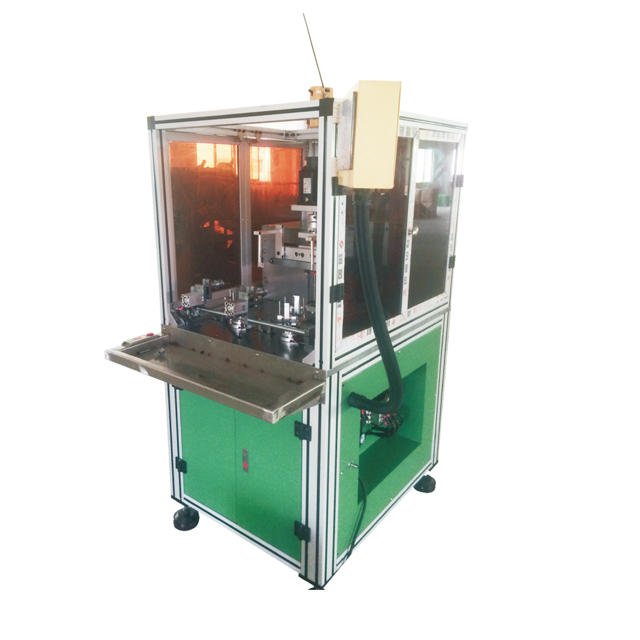
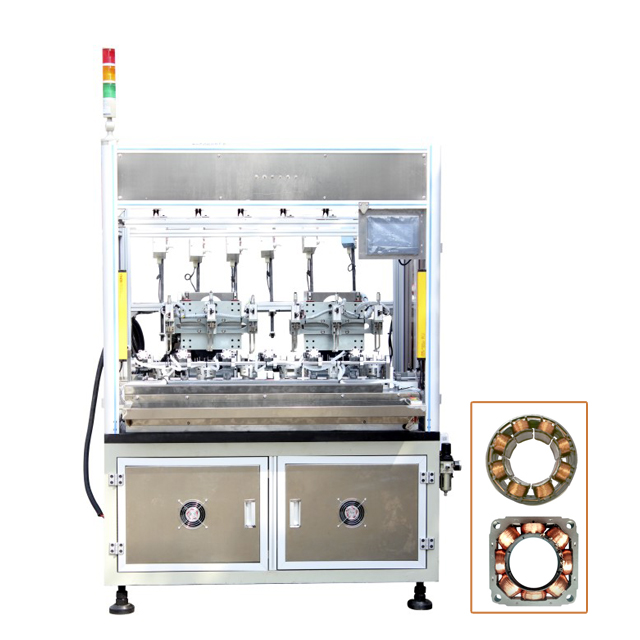
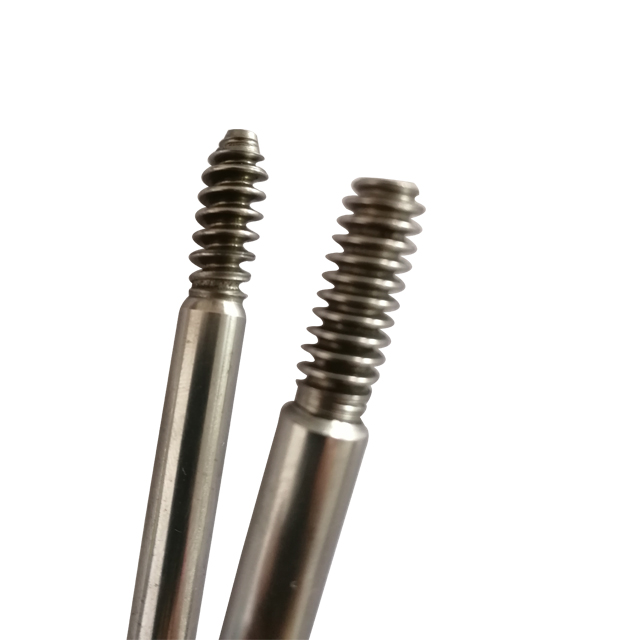
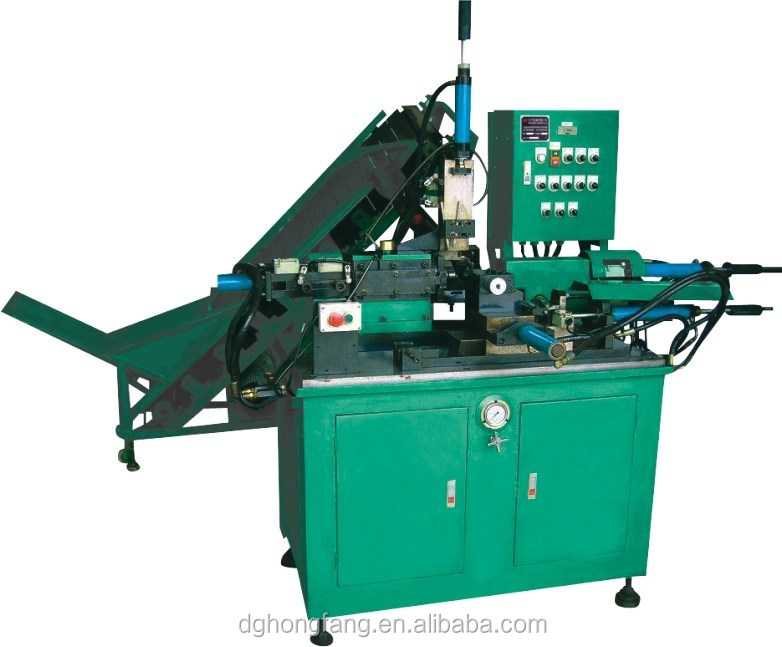
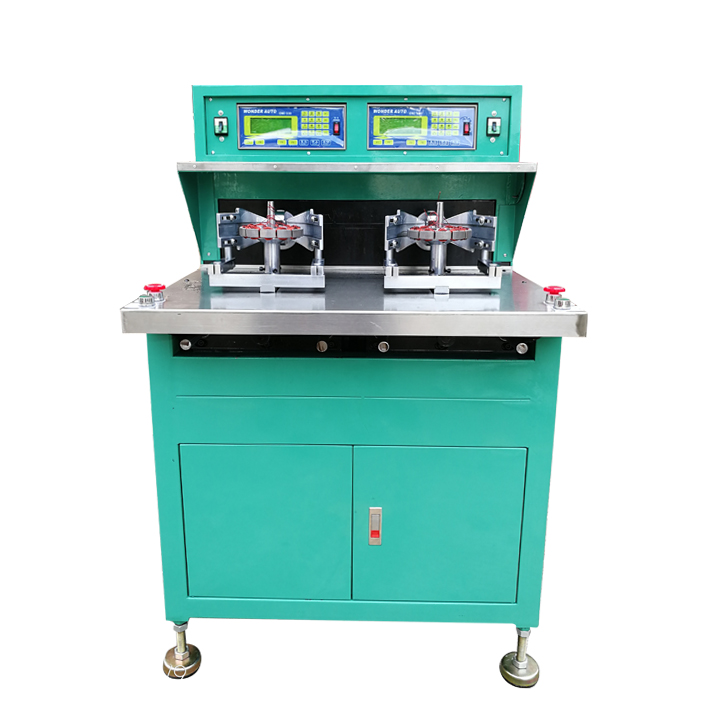
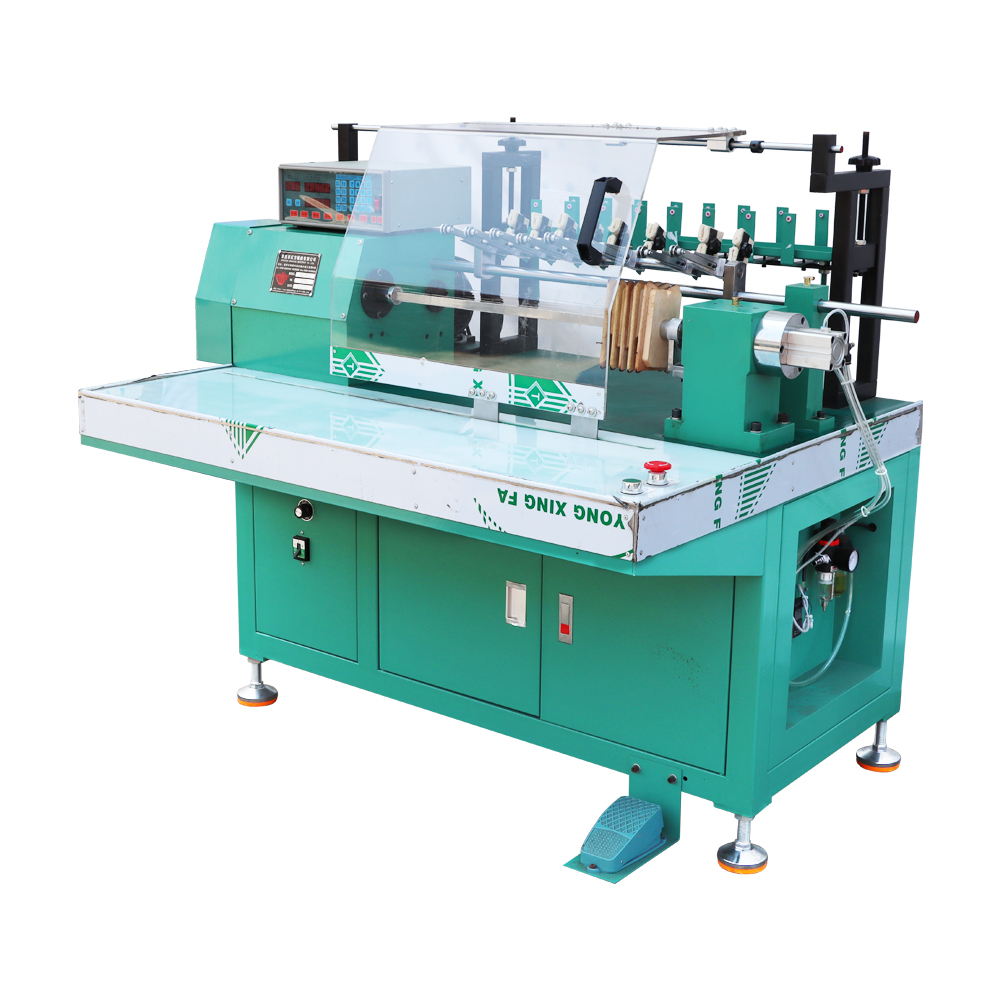
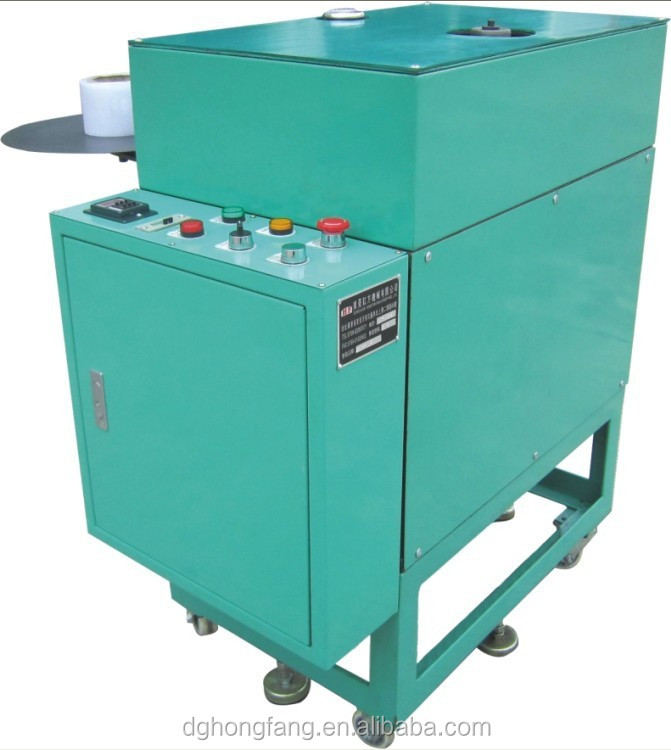
Engineering Architecture: The Mechanics of Single-Side Stator Coil Lacing
In the electro-mechanical manufacturing hierarchy, the coil lacing phase dictates structural resistance against Lorentz forces, mechanical vibration, and dynamic thermal cycles. While double-sided lacing serves high-mass, symmetrical stators, the single side coil lacing machine offers unprecedented agility for low-to-medium stack height electric motors, particularly in repair, custom-batch rewinding, and dedicated small-frame production lines. By tensioning, indexing, and interlocking high-tensile polyester, Nomex, or polyamide lacing tape around coil overhangs on the non-lead side, this machine ensures that electromagnetic copper arrays maintain precise geometric clearance from rotor end rings and housing caps.
Operating through an articulated mechanical indexing fixture governed by dual-axis or quad-axis servo positioning, our single side lacing systems utilize a synchronized hooking-needle kinematic sequence. As the stator core is clamped within hardened, quick-change chuck jaws, the needle pierces through slot phase barriers, draws the cord with constant-tension friction damping, loops across the stator crown, and secures an automated knot. This minimizes manual operator involvement, cuts end-turn deflection under mechanical stress, and eradicates short circuits induced by micro-vibration during continuous motor startup sequences.
Programmable Stitch Geometry
Configurable slot-by-slot, skip-slot, or custom interval binding via intuitive industrial touch interfaces (Siemens, Delta, or Mitsubishi options).
Pneumatic & Servo Damping
Active back-tension monitors ensure cord tension remains within ±3% deviation, stopping strand scuffing or insulation fractures.
Rapid Tooling Interchange
Engineered for agile job shops: stack height and mandrel diameters change out completely in under 15 minutes with standardized keys.
Single-Side Lacing Operational Parameters
| Performance Attribute | Standard Workshop Model | High-Speed Production Variant | Marine / Heavy Rewind Custom |
|---|---|---|---|
| Stator Outer Diameter (OD) | Φ40 mm – Φ160 mm | Φ50 mm – Φ140 mm | Up to Φ220 mm (Extended Fixture) |
| Stator Stack Height Range | 10 mm – 150 mm | 15 mm – 120 mm | 20 mm – 200 mm |
| Lacing Speed | 0.6 – 0.8 s / slot | 0.45 – 0.6 s / slot | 0.7 – 0.9 s / slot (Heavy Cord) |
| Power Configuration | 1Φ 220V ±10% 50/60Hz, 1.0 kW | 3Φ 380V / 220V, 1.5 kW | 3Φ 208V / 220V (Nassau Localized) |
| Pneumatic Requirement | 0.4 – 0.7 MPa Clean Dry Air | 0.5 – 0.8 MPa Clean Dry Air | 0.5 – 0.7 MPa Anti-Moisture Trap |
Geographic Application Analysis
Deployment Scenarios Across Nassau & New Providence
Strategic operational viability of compact stator lacing systems within the Commonwealth of The Bahamas.
Commercial HVAC & Marine Chiller Rewinding
Nassau's luxury resorts, cruise terminals, and commercial hubs rely heavily on chiller pump motors that operate under corrosive maritime air. Salt spray accelerates coil degradation. Local motor rebuild workshops utilize single-side lacing machinery to quickly rewind and lace replacement stators with high dielectric Nomex cord, restoring failed air conditioning and refrigeration systems without multi-week freight delays from mainland suppliers.
Submersible & Reverse-Osmosis Pump Overhauls
Potable water generation throughout New Providence relies on high-pressure sea-water reverse-osmosis (SWRO) facilities and deep-well submersible drainage motors. These wet-environment stators undergo extreme hydraulic torque shocks. Automated single-side lacing ensures that every coil pass is locked down tight, preventing turn-to-turn friction and premature failure inside sealed stator housings.
Inter-Island Marine Auxiliaries & Generator Maintenance
From the bustling port of Nassau to freight operations serving the Family Islands, commercial diesel gensets, ventilation blowers, and bilge pumps demand 24/7 uptime. Having single-side coil lacing systems situated locally allows marine electrical contractors to process varied stator stack heights and turn out rebuilt auxiliary motors with repeatable, factory-grade coil heads in hours.
Industrial Modernization & Self-Reliance Trends in the Nassau Market
The industrial landscape of Nassau and the broader Bahamian economy is actively pivoting away from passive reliance on imported complete replacement motors toward rapid domestic rebuilding and regional resilience. Escalating ocean logistics tariffs, freight container surcharges, and supply chain vulnerability have forced mechanical workshops, port service operators, and utility service partners in Nassau to invest in on-island capital equipment.
Moreover, the shift toward higher-efficiency motor standards (IE3 and IE4 equivalents) across Caribbean commercial facilities has introduced tighter stator slot fill factors and denser coil heads. Hand-lacing is no longer viable: it produces uneven tension, risks nicking magnet wire enamel, and leads to phase-to-phase breakdown. Adopting modular, single-side lacing automation gives Nassau facilities consistent coil-head profiling that easily fits into standard motor end bells while reducing workshop labor hours by over 70%.
Why Partner With Us
The Zunqi Manufacturing & Sourcing Advantage
17 years of dedicated motor equipment engineering from Dongguan, China to global workshop benches.
Direct Factory Engineering vs. Equipment Brokerage
Located in Qishi Town, Dongguan, our manufacturing hub combines in-house CNC machining, electrical automation programming, and physical stator trial-winding facilities. We build stator equipment from the base frame up—guaranteeing verified tolerances rather than markups from middlemen.
- Tooling Customization: Every needle guide, press plate, and indexing jaw is cut to your provided stator lamination CAD drawings or physical sample.
- Complete Motor Line Integration: Seamlessly pair single-side lacing machines with our paper inserters, 4-station/6-station internal coil winders, and rotor turning units.
- Tropicalized Electrical Enclosures: Power components and wiring run industrial-grade insulation and moisture-resistant grounding, crucial for the humid Caribbean climate.
- 1-Year Warranty & Lifetime Technical Support: Complete documentation, video commissioning, and direct engineering access with typical reply turnaround under 9 hours.
Standard Export & Freight Readiness
For shipments destined for Nassau (via Nassau Container Port or transshipped via Port of Miami/Fort Lauderdale), every machine undergoes an intensive preservation protocol:
- All bare metal mandrels and sliding ways receive VCI anti-rust oil barrier coating.
- Multi-layer hermetic vacuum plastic packaging prevents moisture migration during Atlantic transit.
- Fixed baseplate bolting inside heavy-duty, fumigation-free export plywood cases.
- Comprehensive commissioning video and parameter backup included inside the crate.
*MOQ is just 1 set. Customized voltage conversions (208V/220V single-phase or three-phase 60Hz) fully configured before departure.
Buyer Due Diligence
Frequently Asked Questions for Nassau Buyers
Addressing common technical, voltage, freight, and tooling questions raised by Caribbean and international buyers.
Can this single-side coil lacing machine run on Nassau's standard electrical grid? +
Yes. In Nassau and across The Bahamas, the standard distribution grid commonly provides 120/208V or 120/240V at 60 Hz. Our equipment can be factory-wired and tuned for single-phase 220V 60Hz or three-phase 208V/220V/480V 60Hz. We specify this before assembly so you won't need expensive step-up or phase-shifting transformers on site.
How does single-side lacing differ from double-side lacing in motor rebuilding? +
Single-side lacing addresses the non-lead coil end-turn first, providing dedicated clearance and tight profiling where space is tightest. In rewinding applications, motor technicians prefer single-side units because lead connections on the opposing side often require manual splicing, thermal protector tie-ins, and flexible sleeving before final closure. This configuration also delivers maximum machine agility at a lower investment threshold than heavy double-sided production stations.
What happens if we process stators with varying stack heights and slot numbers? +
The machine uses a programmable PLC system and servo indexing motor. Changing from an 8-slot, 16-slot, 24-slot, or 36-slot stator is handled directly on the touchscreen menu. Vertical stack heights are matched by adjusting the central clamp column with a dial indicator. If the stator bore diameter changes significantly, interchangeable mandrels can be swapped out in roughly 15 minutes.
What is the logistical procedure and lead time for delivery to Nassau? +
Standard manufacturing and custom tooling calibration take 15 to 25 working days. For Nassau clients, shipments typically move via ocean freight from Shenzhen/Guangzhou ports to Miami/Fort Lauderdale, followed by regional ocean carriers directly into Nassau Container Port (Arawak Cay). We supply complete commercial documentation, packing lists, and Certificates of Origin for Bahamian customs clearance.
How are spare wear parts, needles, and cutting blades supplied over time? +
Each machine ships with an initial maintenance kit containing spare high-tensile lacing needles, hooking knives, return springs, and pneumatic tubes. Long-term replacement components are maintained in regular stock at our Dongguan factory and can be dispatched via international courier (DHL/FedEx) straight to Nassau within 4 to 6 business days.
Request Your Custom Stator Lacing Machine Proposal
Send us your stator lamination drawings (OD, ID, slot count, stack height) or physical sample specifications. Our technical engineering desk will review your data and return a detailed quote and tooling proposal within 9 hours.
