Featured Fan Motor Assembly & Stator Production Machinery
Engineered to streamline domestic and industrial fan stator manufacturing, coil rewinding, and rotor finishing with micro-precision tooling, rapid mechanical indexing, and ruggedized PLC drive electronics.
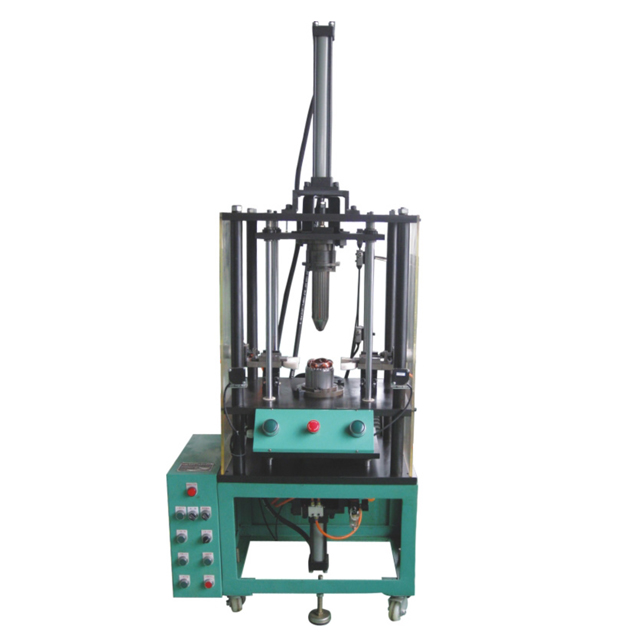
HONGFANG Motor Stator Coil Forming & Shaping Machine for Manufacturing Plant New 1 Year Warranty 1 kW
- Precise coil end-turn head shaping
- Clean clearance for rotor installation
- 1 Year factory guarantee
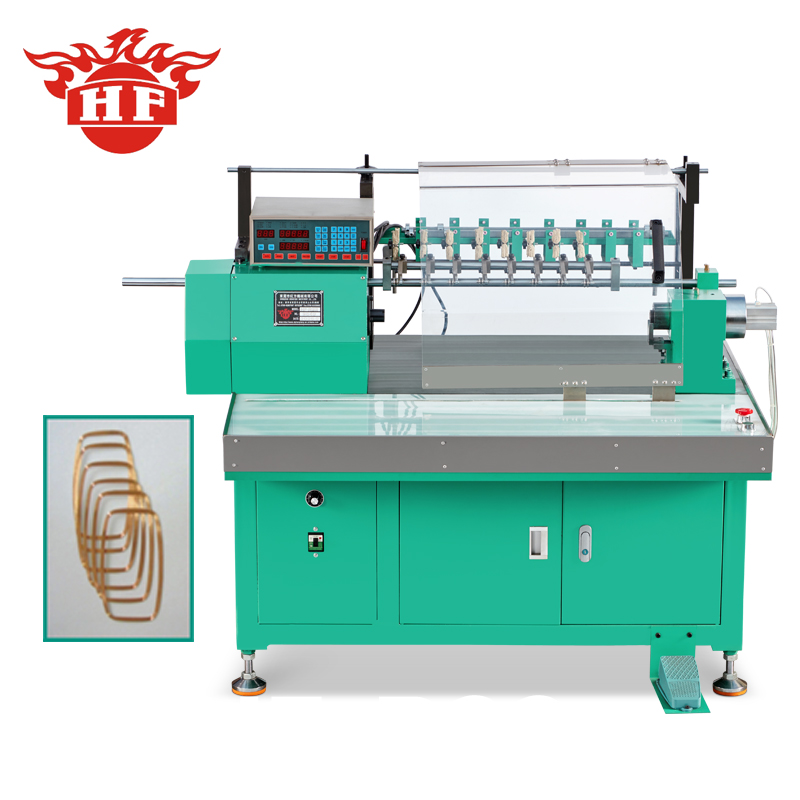
HF-R22 Coil Winding Machine Semi Automatic Coil Making Machine 8 Heads for Fan Motor Cooler Motor Pump Motor
- Multi-spindle simultaneous winding
- Constant magnetic tensioner system
- Supports copper & aluminum wire
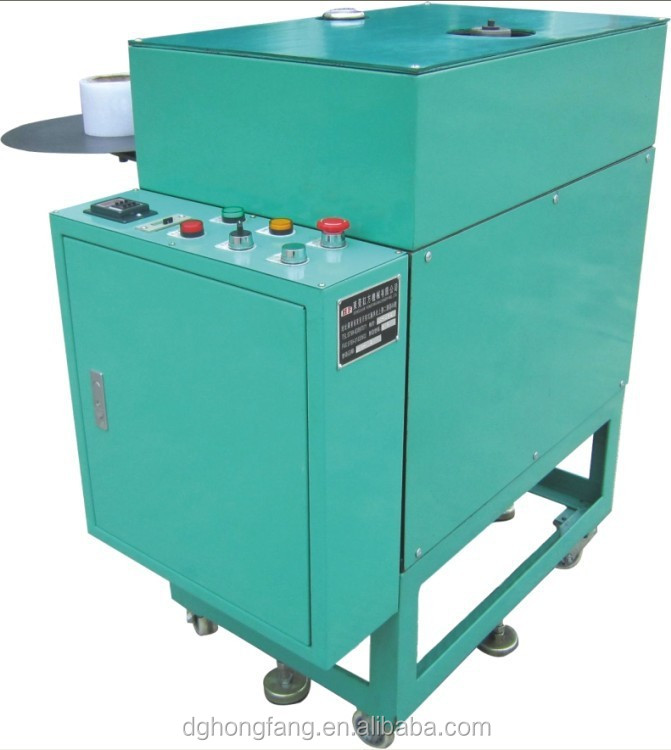
New Slot Paper Inserting Cutting Machine Table Fan Pump Cooler Motor Insulation Paper Gear Components 1 Year 1 kW
- Automated crease, cut & feed
- Zero short-circuit edge tears
- Dual voltage 220V/380V available
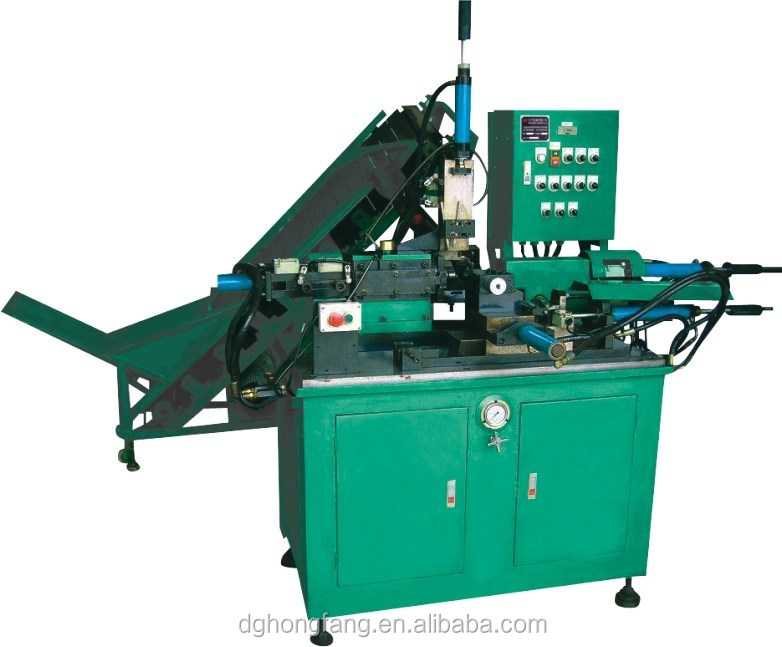
Automatic Rotor Fine Turning & Surface Cutting Machine HF-C60 with PLC Motor Pump-1 Year Warranty
- Ultra-precise OD roundness finish
- Protects air-gap electromagnetic flux
- Integrated coolant pump module
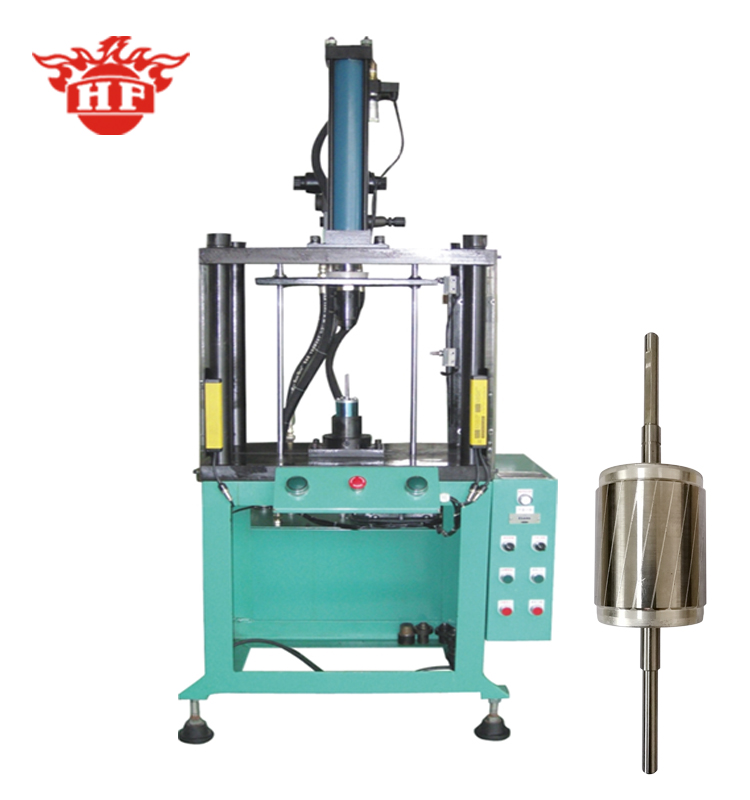
New Rotor and Shaft Inserting Hydraulic Press Machine for Manufacturing Plant 1 Year Warranty HF-W50
- Controlled interference fit insertion
- Eliminates shaft runout & eccentricity
- High-rigidity steel c-frame
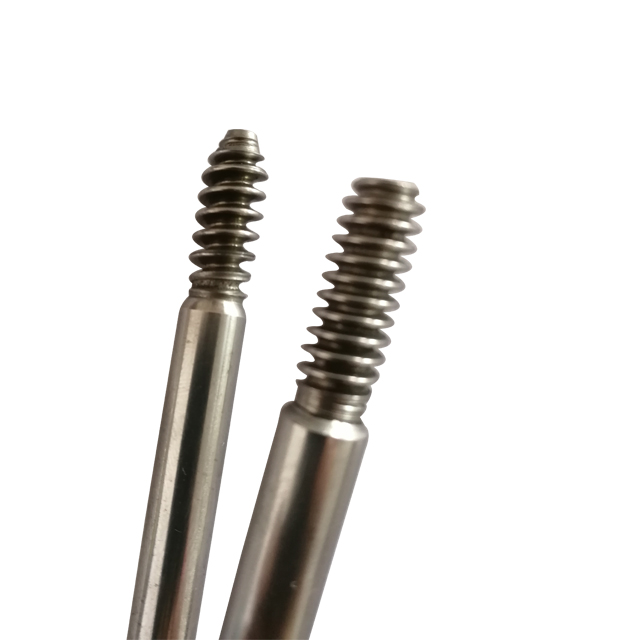
Good Quality Electric Iron Motor Shaft for Household Table Fan Cooler Pump Motors
- Precision ground bearing journals
- Anti-corrosive blackening / nitriding
- Matched with table/ceiling fan rotors
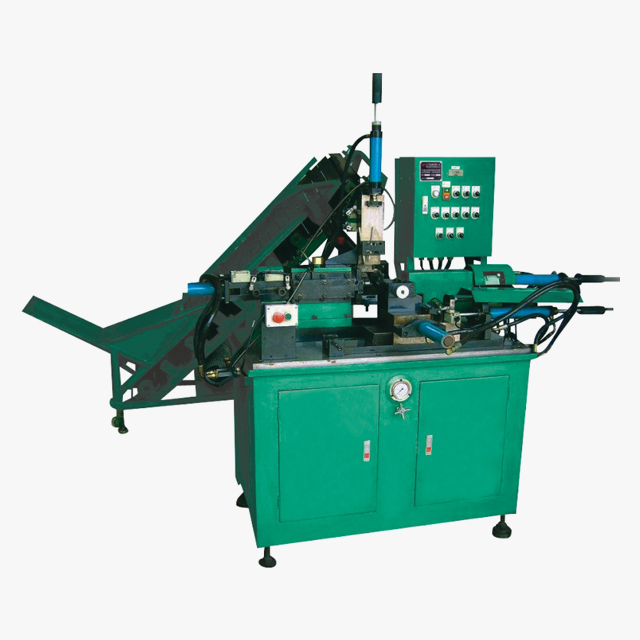
Hot Sale Fan Motor Rotor Rough Turning & Surface Cutting Machine with Engine Gear PLC Core Components 1 Year Warranty
- Heavy stock removal on cast rotors
- Stable PLC drive cycle management
- Carbide indexable tooling system
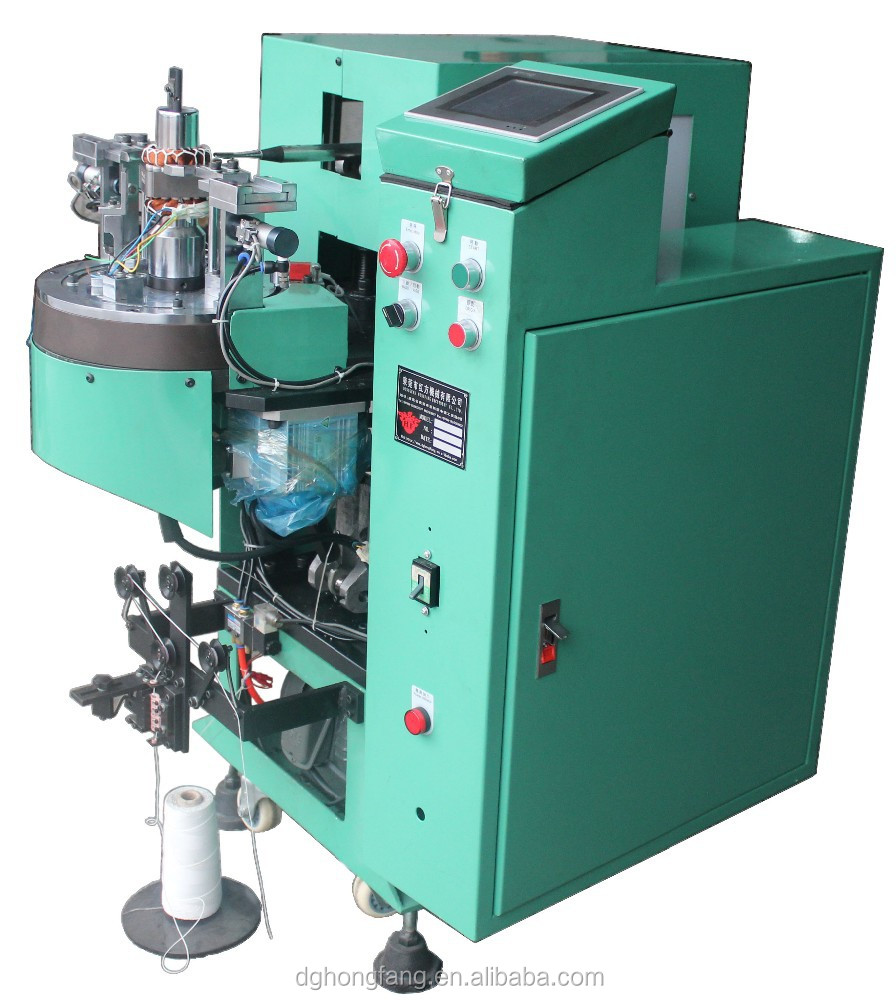
HF Single Side Lacing Machine for Table Fan Motor Stator Coil 1000W 380V/220V
- Tight mechanical tie stitch binding
- Vibration-resistant coil overhang
- Variable stitch spacing selector
Engineering Semi-Automatic Coil Winding Systems for Artibonite & Gonaïves Electromechanical Enterprises
As the economic capital of the Artibonite Department, Gonaïves represents a critical junction in Haiti's northern commercial corridor. In an equatorial marine climate with year-round temperatures routinely hovering between 30°C and 37°C, continuous indoor and commercial ventilation is not a luxury—it is an economic and public health necessity. Consequently, household pedestal fans, ceiling sweepers, industrial blowers, and solar DC circulation fans experience intense, uninterrupted operational cycles. However, the local electrical ecosystem poses severe mechanical and thermal challenges to electric motor assemblies.
1. Power Grid Realities & The Engineering Rationale for Localized Semi-Automatic Winding
Electromechanical workshops and motor manufacturing facilities in Gonaïves operate under extreme grid fluctuations. Municipal utility feeds from Électricité d'Haïti (EDH) are characteristically intermittent, forcing commercial facilities, repair shops, and light industrial assemblers to rely on hybrid power architectures: off-grid solar photovoltaic banks, diesel generator sets, and low-frequency step-up inverters.
Under these erratic power regimes, line voltages routinely sag down to 85V–95V or spike past 250V. In conventional induction motors (both shaded pole and permanent split capacitor designs), voltage drops cause current draw to skyrocket proportionally to maintain shaft torque. The resultant \(I^2R\) copper losses dramatically elevate stator internal winding temperatures, causing premature thermal breakdown of thin class-B (130°C) magnet wire enamels and brittle paper liners.
Manual stator rewinding—the historical standard in Gonaïves workshops—fails to resolve this failure cycle. Manual winding operators experience uneven manual hand-pull tension, inconsistent turn counts across opposing pole pairs, and irregular coil stack height. This creates severe magnetic flux asymmetry, which induces parasitic harmonic currents, acoustic hum, overheating, and rapid stator coil burn-out within weeks of operation.
Deploying semi-automatic multi-spindle coil winding machinery (such as the HF-R22 8-Head Coil Winding Machine) completely bridges this technological gap:
| Operational Metric | Traditional Manual Rewinding | Semi-Automatic Industrial Winder (HF-R22) | Engineering Advantage in Gonaïves Market |
|---|---|---|---|
| Slot Fill Factor | 60% – 66% (Loose, randomized) | 78% – 84% (Tightly packed layers) | Maximizes thermal conductivity through the iron core; lowers running temperature by 14°C–19°C. |
| Tension Uniformity | Variable (±35% manual variance) | ±1.5% via Magnetic/Mechanical Damping | Prevents wire stretching, insulation enamel micro-cracking, and shorted turn faults. |
| Cycle Time (4-Pole Stator) | 75 – 110 minutes / set | 3.5 – 6.5 minutes / batch (multi-head) | Over 12x productivity multiplier; enables batch manufacturing under short diesel generator runs. |
| Wire Compatibility | Standard copper only (fragile) | Copper, high-grade Aluminum & CCA (0.1–1.2 mm) | Allows profitable use of enameled aluminum wire to offset soaring Caribbean copper import tariffs. |
| Turn Counting Accuracy | Subject to human error (±12–25 turns) | Zero-defect digital optical encoder (0 turns error) | Balanced phase impedance eliminates low-voltage stall and rotational vibration. |
2. Comprehensive 8-Stage Motor Manufacturing Flow
Building or remanufacturing a dependable fan motor stator does not end with the coil winder. To achieve high operational lifespan in the high-humidity, salt-laden marine air of the Gulf of Gonaïves, machines must work in harmonic synchronization:
Step 1: Precision Slot Insulation
Our New Slot Paper Inserting Machine cuts, creases, and pushes DMD/Nomex insulation paper into every core slot without ragged edges or fiber fracture, guaranteeing dielectric integrity.
Step 2: Multi-Station Coil Winding
The HF-R22 Semi-Automatic Winder forms main and auxiliary coil nests with program-controlled traversing speed, pitch matching, and exact turn counts.
Step 3: Stator Coil & Wedge Insertion
Coil bundles and top closure wedges slide smoothly into stator slots simultaneously without scraping wire enamel, eliminating inter-turn short circuits.
Step 4: Intermediate Forming
The HONGFANG Motor Stator Coil Forming Machine applies uniform hydraulic pressure to flare coil overhang outwards, ensuring clear path for the lacing needle.
Step 5: Stator End Lacing
Using the HF Single Side Lacing Machine, high-tensile polyester cord binds end turns rigidly. Tight lacing stops coil flexing from 60Hz magnetic pulsation.
Step 6: Final Coil Dimensioning
Final hydraulic dies size the outer diameter and axial height of the coil head so the motor end shields and oscillation gearbox bolt on without contact.
Step 7: Rotor Turning & Dynamic Trimming
Our HF-C60 Surface Cutting & Fine Turning Machine skins the squirrel-cage rotor OD, ensuring an exact, concentric 0.25mm–0.35mm air-gap with the stator core.
Step 8: Hydraulic Shaft Press-Fitting
The HF-W50 Hydraulic Press forces our SC45 Ground Iron Motor Shaft into the core with precision depth stops, eliminating shaft deflection and wobble.
Localization Context: Industrial Transformation in the Artibonite Valley
Importing finished electric fans from East Asia or North America into Haiti carries high ocean-freight volume surcharges, container clearance delays at regional ports, and vulnerability to domestic currency exchange volatility. A standard 40ft container can hold only a limited quantity of bulky, pre-assembled fan cages and motor housings.
Conversely, importing enameled magnet wire reels, raw silicon steel lamination stacks, and assembling or rewinding fan motors directly in Gonaïves generates immense economic advantages:
- Container Space Efficiency: Raw materials and un-wound motor iron cores occupy less than 15% of the shipping volume of assembled boxed fans. A single container provides enough raw material to build or rewind tens of thousands of motors locally.
- Rapid Repair & Municipal Service: When industrial cooling units in hospitals, schools, grain processing plants, and food storage facilities in Gonaïves breakdown, waiting 6 to 12 weeks for an overseas replacement motor causes severe operational paralysis. With our semi-automatic machinery on-site, a failed motor is completely stripped, insulated, rewound, shaped, and pressed within 3 hours.
- Adaptation to 110V 60Hz and 12V/24V Solar BLDC Motors: Local manufacturers in Artibonite can customize winding turns specifically for low-voltage brushless DC (BLDC) solar applications or heavy-duty 110V 60Hz grids with surplus thermal capacity, making their motors drastically more resilient than generic off-the-shelf imports.
- Aluminum vs. Copper Flexibility: In price-sensitive Haitian consumer markets, our 8-head winders can be precisely dialed with gentle acceleration curves and ceramic wire-guide pulleys to wind enameled aluminum wire without necking or stretching, cutting coil raw-material cost by up to 52%.
Direct Manufacturer Advantages from Dongguan, China
Based in Qishi Town, Dongguan City—the core precision manufacturing hub of Southern China—Zunqi Intelligent Equipment Co., Ltd. provides factory-direct industrial automation backed by rigorous engineering standards:
Onsite-Checked & Audited Factory
Our manufacturing plant, assembly bays, and export logistics are independently audited onsite on Alibaba.com. You deal directly with the equipment builder, eliminating trading intermediary markups.
Custom Tooling to Stator Samples
Every winding head, coil former, inserting blade, and hydraulic shaping die is CNC-machined precisely to your physical motor core drawing or sample. No generic tooling mismatches.
Tier-1 Electrical Architecture
We configure machine control cabinets around internationally available industrial components: Siemens, Mitsubishi, Delta, Inovance, Omron, and SMC pneumatics for simple local replacement.
Live Video Acceptance Testing
Before any crate is sealed for freight shipment to Gonaïves or Port-au-Prince, we run your stator sample on the machine under real power and transmit full HD inspection video for sign-off.
Comprehensive Remote Engineering Desk
Multilingual technical engineering support connects via high-speed video call to assist your local mechanical operators with setup, parameter programming, and maintenance.
Heavy-Duty Tropical Export Crating
All machinery is coated in vapor-corrosion inhibiting (VCI) oils, sealed in barrier foil with desiccant packs, and bolted into fumigation-free solid plywood export cases for long maritime routes.
Frequently Asked Questions for Buyers in Gonaïves & the Caribbean
Clear, practical answers regarding voltage matching, generator usage, freight routing, and custom tooling setup.
Can these machines run reliably on local generators or 110V/220V 60Hz single-phase power in Gonaïves?
Yes. Haiti's electrical frequency is predominantly 60Hz, with voltage supplies varying between 110V and 220V. We configure the machine's internal transformers, PLC power modules, variable frequency drives (VFDs), and servo controllers to match your local power standard (e.g., single-phase 220V 60Hz or three-phase 380V/220V 60Hz). Furthermore, our control systems feature wide-input tolerance (±15%) to prevent unexpected shutdowns during diesel generator frequency drift.
What is the minimum order quantity (MOQ) and delivery lead time?
The MOQ for our winding, inserting, forming, lacing, and rotor processing machines is 1 set. Individual accessories, custom winding fixtures, and SC45 steel shafts are supplied in small batch quantities. Typical production and tooling customization time at our Dongguan factory is 15 to 25 business days following technical drawing sign-off.
How do you ensure the tooling fits our specific fan motor stators?
We work directly from your technical CAD drawing or physical sample. Before building your winding forms or inserting fingers, our engineers verify key stator parameters: stator outer diameter (OD), inner diameter (ID), stack height, slot dimensions, number of slots (e.g., 16-slot, 24-slot), wire gauge, and turns per pole. We test-run the machine with your actual core dimensions and provide high-definition trial winding video prior to shipping.
Can the machine wind both copper and aluminum magnet wire without snapping?
Yes. Because aluminum wire has lower tensile strength and higher elongation sensitivity than copper, our semi-automatic winders utilize magnetic or electronic hysteretic tension controllers combined with polished ceramic or ruby eyelets. This ensures smooth acceleration profiles without jerking, eliminating wire stretching and enamel micro-fracturing.
What shipping and maritime logistics options are available for Gonaïves, Haiti?
We provide full export crating and export documentation (commercial invoice, packing list, certificate of origin, Bill of Lading). Cargo is typically routed via ocean container lines to the primary international container terminals in Haiti—Port-au-Prince or Cap-Haïtien—where your clearing agent completes customs clearance before transport along Route Nationale 1 (RN1) directly to Gonaïves. We support FOB, CIF, and CFR terms.
What after-sales service and spare parts support are provided after delivery?
Every machine is covered by a 1-year comprehensive factory warranty. Along with the crated equipment, we provide a complete maintenance toolkit, extra wearing parts (guide needles, tension springs, limit switches, and drive belts), and complete English-language operator manuals. Technical commissioning, parameter calibration, and troubleshooting are conducted seamlessly via live video support with our Dongguan engineering department.
Upgrade Your Motor Production Line with Factory-Direct Engineering
Send your stator dimensions, stack heights, and target output per shift to our engineering team. We will review your requirements and provide a detailed equipment layout and customized price quotation within 9 hours.
