Engineered Motor Stator & Rotor Manufacturing Systems
Precision-matched winding, rough & fine turning, wedge inserting, and lacing machinery calibrated for European precision tolerance thresholds and continuous production shifts.
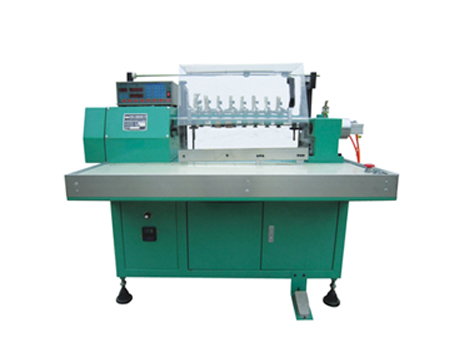
Electrical Motor Stator Coil Winding Machine
Optimized for rapid cycle cooler and appliance motors. Multi-layer continuous indexing with synchronized wire tensioning.
Technical Details
Armature Winding Machine for Fan & DC Drives
High-speed dual-flyer winding technology ensuring uniform slot fill factors and tight commutating lead dressing.
Technical Details
Six-Station Outer Stator Coil Winding Unit
Multi-pole synchronous external stator turret winding with CNC nozzle arrays for high-density brushless motor architectures.
Technical Details
HF-C60 Rotor Fine Turning & Surface Cutter
PLC-governed micro-finishing lathe cell delivering runout under ≤ 0.003 mm and mirror-grade Ra 0.4 μm laminated surfaces.
Technical Details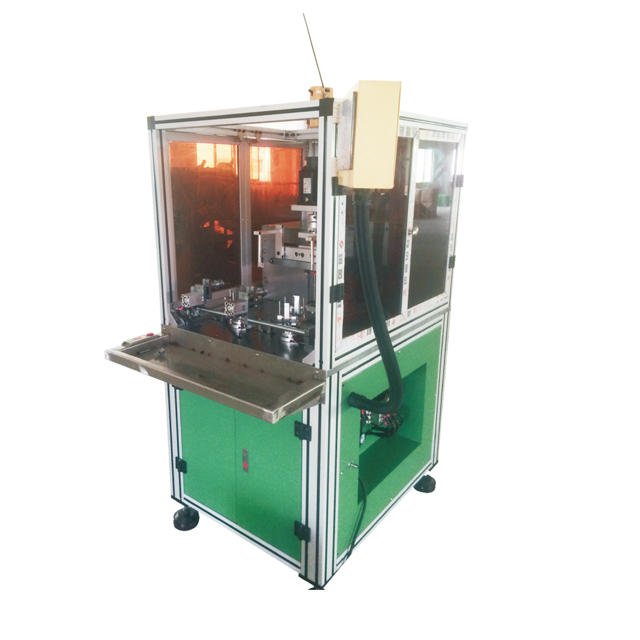
4-Station Internal Stator Winding Machine
Engineered for high slot-fill ratios in fractional-horsepower and servo stators. Controlled via industrial programmable servo axes.
Technical Details
Rotor Rough Turning & Surface Sizing Machine
High-torque initial OD skimming station removing cast aluminium flashing and balancing sprues with integrated chip evacuator.
Technical Details
Fully Automatic Wire Winding Workcell
Dual-material handling supporting both enamelled copper and aluminium wire with zero-breakage adaptive payoff tensioners.
Technical Details
HF Single-Side Coil Lacing Workstation
High-speed structural binding with adjustable cord tension, automatic knotting, and programmable needle traverse kinematics.
Technical DetailsHigh-Precision Rotor Turning & Finishing Dynamics for Liechtenstein's Precision Manufacturing Ecosystem
Addressing the strict physical demands of European electromagnetic drivetrains: air gap uniformity, eddy-current suppression, and dynamic rotational symmetry.
The Aerodynamic & Electromagnetic Dilemma of Air Gap Tolerances
In modern high-efficiency permanent magnet synchronous motors (PMSM) and squirrel-cage induction systems manufactured across the Alpine Rhine Valley corridor, the radial mechanical air gap between stator bore and rotor outer diameter is frequently engineered down to less than 0.25 mm. Even microscopic runout variations (> 0.01 mm) trigger disproportionate magnetic pull (UMP), causing acoustic harmonics, bearing degradation, and reduced torque density. Our rotor turning centers incorporate dual-center hydrostatic clamping, granite-damped machine bases, and servo-compensated diamond or CBN (Cubic Boron Nitride) tool posts to guarantee concentricity across entire lamination stacks.
Interlaminar Smearing Elimination & Eddy Current Control
A conventional lathe tears or smears thin silicon steel laminations (0.2 mm to 0.5 mm grade), bridging insulated sheets and short-circuiting electrical steel boundaries. This dramatically amplifies core eddy current losses and causes thermal saturation. Zunqi rotor turning machinery utilizes optimized shear-angle inserts and ultra-high surface cutting velocities (> 350 m/min) combined with pneumatic mist atomization. The result is cleanly severed lamination stacks without mechanical interlaminar smearing, preserving the core electrical insulation, minimizing stator-induced hysteresis, and elevating overall motor efficiency toward IE4 and IE5 standards.
Localized Industrial Application Scenarios in the Principality of Liechtenstein
Tailored production kinematics addressing the specific industrial clusters spanning Vaduz, Schaan, Balzers, Eschen, and Bendern.
High-End Cordless Power Tool & Direct Fastening Motors (Schaan Corridor)
Liechtenstein is globally renowned for top-tier direct fastening, rotary hammer drills, and heavy civil construction power equipment. These tools demand high-power-density BLDC motors capable of withstanding severe vibrational shocks up to 50G and heavy cyclical thermal swings. Our turning centers finish high-coercivity permanent magnet brushless rotors with balanced shaft presses, ensuring rotor integrity during rapid load reversals and heavy percussion cycles.
Ultra-High Vacuum (UHV) Valves & Thin-Film Deposition Drives (Balzers)
The southern industrial hub around Balzers is an international epicentre for optical coating, semiconductor vacuum gates, and high-vacuum instrumentation. Motors deployed in molecular pump mechanisms and vacuum transfer robotics require zero particulate generation and ultra-low outgassing under cleanroom environments. Zunqi machines deliver dry turning or minimal-residue mist machining that produces perfectly concentric rotors without coolant retention inside core skew slots.
Automotive Mechatronics & Steering Column Drives (Eschen / Unterland)
Liechtenstein hosts pivotal Tier-1 suppliers specializing in electrical power steering (EPS), active suspension dampers, and drivetrain actuators. In these automotive drive modules, audible noise (NVH) is scrutinized by premium European vehicle manufacturers. Our rotor fine turning cell HF-C60 guarantees strict roundness and low residual unbalance, curbing acoustic resonance to < 42 dB(A) when installed into the steering gearbox.
Medical, Dental & Lab Micromotors (Schaan / Vaduz Precision Sector)
With global dental industry leaders headquartered in the Principality, micromotors operating between 40,000 to 200,000 RPM represent a flagship product category. At these extreme rotational speeds, centrifugal forces amplify microscopic concentricity errors into catastrophic vibrations. Our micro-turning cells ensure precise dynamic concentricity of dental handpiece armatures and autoclave-resistant dental micro-rotors down to micron precision.
High-Precision Packaging & Automation Linear Actuators
The Rhine Valley manufacturing hub serves global food, pharmaceutical, and electronic component packaging. Servo-driven spindle drives, pick-and-place gantry actuators, and high-frequency indexing arms require motors with minimal torque ripple. Zunqi stator inserting, coil forming, and rotor finishing lines assure uniform magnetic permeance across 360° rotational paths, eliminating cogging torque anomalies.
Hydroelectric, HVAC & Alpine Renewable Auxiliaries
Operating in mountainous alpine environments with extreme seasonal temperature fluctuations, ventilation fan motors, heat exchange pumps, and micro-hydro controllers require hermetically sealed, moisture-proof assemblies. Our robust rough and fine rotor turning equipment handles oversized shaft journals and cast aluminium rotor end-rings with balanced thermal expansion allowances.
Liechtenstein & Central European Motor Manufacturing Trends
How the shift to Industry 4.0, circular economy principles, and higher electrical efficiency directives govern machinery purchasing decisions.
1. The Accelerating Migration from AC Induction to PMSM and SynRM
Across the European Economic Area (EEA), European Union Ecodesign Regulations (EU 2019/1781) mandate unprecedented operational efficiencies for industrial electric motors. Liechtenstein manufacturing entities are rapidly sunsetting legacy asynchronous fan and pump motors in favor of Synchronous Reluctance Motors (SynRM) and Interior Permanent Magnet (IPM) architectures. Because SynRM rotors feature intricate flux barriers punched directly into the lamination sheets, traditional high-stress turning tends to collapse structural ribbing. Our HF-C60 machines incorporate programmable feed rates and vibration-damped pneumatic tailstocks that preserve fragile flux barrier bridges without internal core deformation.
2. Integration with Swiss-Liechtenstein Industrial IoT & Automation Cells
Due to high skilled labor costs in the Principality and surrounding Swiss cantons (St. Gallen, Graubünden), local factories prioritize non-stop, unattended lights-out operations. Machine tools must seamlessly integrate with robotic arm load/unload stations (such as Staubli, KUKA, or FANUC) via standardized communication protocols. Zunqi offers open PLC architectures compatible with Siemens S7-1200/1500, Mitsubishi iQ-R, or Omron Sysmac platforms, featuring digital I/O handshakes, automated pneumatic gripper chucking, and real-time tool wear monitoring to enable predictive maintenance.
3. Traceability, CE Directives & Precision Metrology Feedback
Under European safety and quality directives (Machinery Directive 2006/42/EC, Low Voltage Directive 2014/35/EU, and EMC Directive 2014/30/EU), machine safety, emergency circuit redundancy, and acoustic emissions are tightly regulated. Furthermore, medical and automotive suppliers in Liechtenstein require individual component serialisation. We configure our rotor turning cells with integrated post-process optical laser micrometer stations that measure outer diameter and runout immediately following the cut cycle, rejecting out-of-spec rotors automatically and logging quality records directly to shopfloor MES databases.
4. Energy Conservation, Material Scrap Reduction & Sustainable Production
Given the rigorous corporate decarbonization targets across Alpine enterprises, reducing raw material waste during rotor turning is paramount. High-speed rough-turning cycles remove the minimum radial allowance necessary (down to 0.15 mm per side) compared to traditional crude lathes that cut away 0.5 mm or more of structural material. This minimizes scrap metal, extends cutter tool lifespans by up to 300%, and lowers energy draw per finished rotor unit by 35% compared to multi-pass conventional processing.
Machining Benchmark: Conventional Lathe vs. Dedicated Automated Rotor Lathe
Quantitative performance comparison demonstrating the productivity and electromagnetic benefits of specialized rotor turning technology.
| Performance & Engineering Metric | Standard Metalworking Lathe | Conventional Semi-Auto Lathe | Zunqi Automatic Rotor Fine Turning Cell |
|---|---|---|---|
| Radial Runout Accuracy (TIR) | 0.030 mm – 0.050 mm | 0.015 mm – 0.025 mm | ≤ 0.003 mm – 0.005 mm (High Precision) |
| Surface Roughness (Ra) | Ra 1.6 – 3.2 μm | Ra 0.8 – 1.6 μm | Ra 0.2 – 0.4 μm (Mirror lamination finish) |
| Lamination Smearing / Shorting | Severe; heavy core heating | Moderate; requires deburring | Zero smearing; sharp shear angle cuts |
| Average Cycle Time (Standard Core) | 45 – 70 seconds / part | 25 – 35 seconds / part | 8 – 14 seconds / part (High-speed single stroke) |
| Part Clamping & Centering | Manual 3-jaw chuck | Pneumatic dual centers | Self-centering dual collet / hydraulic tailstock |
| Labor Requirement per Shift | 1 Skilled Machinist per station | 1 Operator per 2 machines | Unattended / 1 Operator per 5–8 machines |
| MES / Industry 4.0 Interface | None | Limited dry contacts | Open PLC / Profinet / EtherNet/IP / Modbus TCP |
Why European Engineering Directors Partner with Zunqi
Direct manufacturer capabilities headquartered in the world's dense hardware innovation hub in Dongguan, bridging precision engineering with scalable capital efficiency.
17+ Years Export Proven
Over seventeen consecutive years of international trade supplying motor manufacturing plants across 45 countries, verified on-site by third-party inspection bureaus.
Tailored Tooling to Your Drawing
No generic, off-the-shelf mismatch. Every coil former, inserting blade, shaft press die, and rotor collet is CNC-ground specifically to your proprietary 2D/3D part drawings.
Complete Matched Process Lines
From slot insulation inserting and high-speed coil winding to lacing, intermediate forming, rotor turning, and shaft pressing, every machine shares identical cycle-time synchronization.
Western Industrial Automation Brands
Control architectures are configurable using genuine Siemens, Omron, Mitsubishi, Schneider, Delta, Panasonic, and SMC pneumatics for seamless local spare parts access in Europe.
Pre-Shipment Sample Run-Off
Clients send their actual physical stator cores and rotor shafts to our Dongguan factory. We run live trials, record micro-metrology test videos, and approve parts before crating.
1-Year Warranty & Fast Response
Complete mechanical and electrical coverage for 12 months, backed by remote video guidance, direct engineer chat with an average response time under 9 hours, and guaranteed parts stock.
Frequently Asked Questions by Liechtenstein Purchasing & Engineering Teams
Detailed technical, regulatory, and logistics answers for operations teams in the Principality and surrounding Alpine DACH region.
How does Zunqi assure compliance with European CE regulations and Swiss/Liechtenstein safety standards?
Can the rotor turning and winding equipment accommodate 400V 50Hz 3-phase European power networks?
What is the procedure for custom tooling development for proprietary stator or rotor profiles?
How are equipment deliveries handled logistically to Liechtenstein (Schaan, Vaduz, or Eschen)?
What is the Minimum Order Quantity (MOQ) and lead time for a complete rotor turning cell?
How do you provide post-installation technical service and maintenance support in Liechtenstein?
Can your machines process complex skewed rotors and encapsulated permanent magnet (IPM) rotors?
Modernize Your Electric Motor Production Line Today
Connect with Zunqi Intelligent Equipment's Senior Application Engineers. Send your stator or rotor blueprint for a comprehensive technical review, cycle-time simulation, and direct factory pricing within 9 hours.
