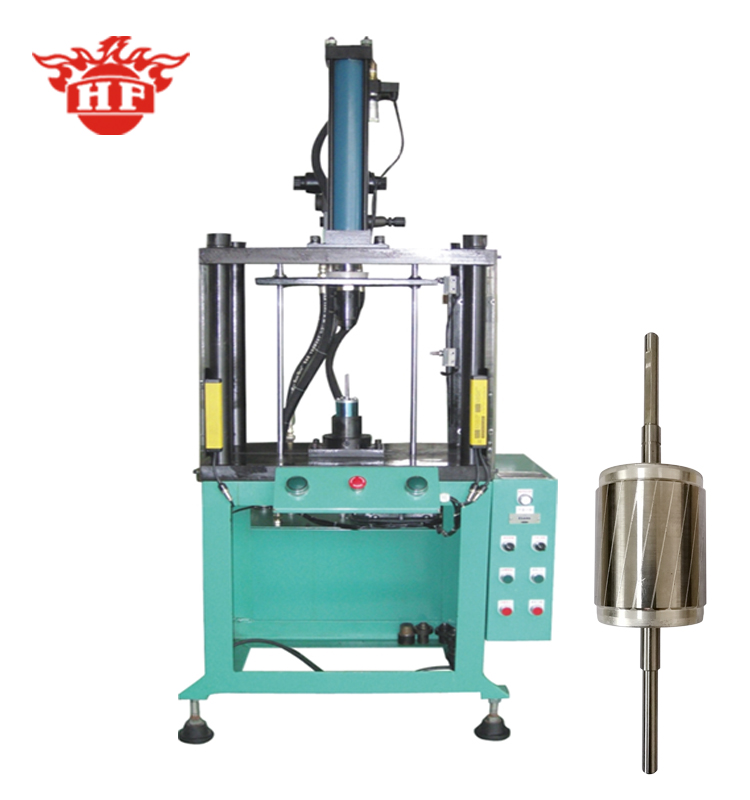
New Rotor and Shaft Inserting Hydraulic Press Machine HF-W50
- ● Precision hydraulic press fit
- ● Protects bearing journal concentricity
- ● 1-Year comprehensive factory warranty
Factory-direct automated machinery designed for severe-duty industrial motors, permanent-magnet synchronous rotors (PMSM), and precision appliance drives meeting stringent US electrical efficiency standards.

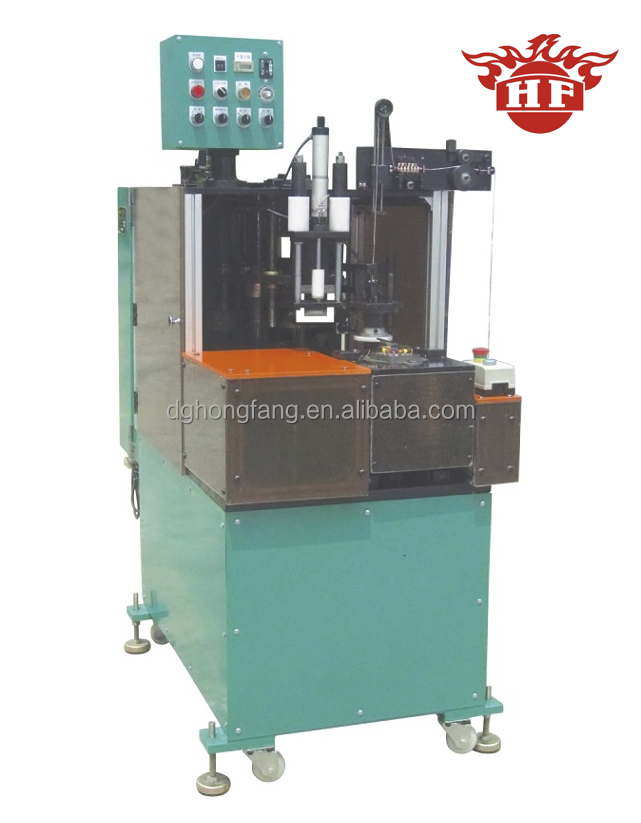



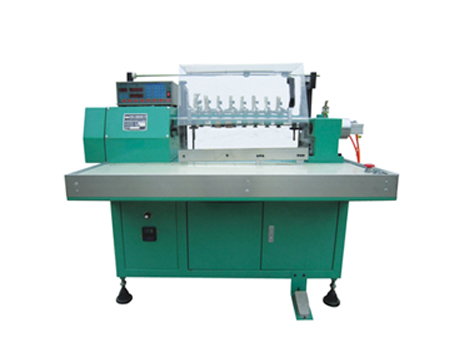

A deep dive into why rotor fine turning, balanced core assembly, and micro-concentricity dictate mechanical reliability and electrical losses in modern e-mobility and advanced automation systems.
Modern electrical powertrain and industrial servo performance relies fundamentally on the geometry of the air gap between the stator and the rotor. In fractional horsepower drives up through heavy industrial traction units, an air gap variance of mere micrometers leads directly to unbalanced magnetic pull (UMP), high harmonics, parasitic eddy current losses, bearing chatter, and elevated acoustic resonance. For plant managers, automation integrators, and tooling engineers navigating the Austin market and the broader Texas manufacturing corridor, procuring robust, micro-tolerance rotor machining equipment has evolved from a standard machine tooling choice into a primary competitive benchmark.
Radial runout on rotor laminations produces magnetic asymmetry across the air gap. When rotor outer diameters deviate past ±0.005 mm, magnetic radial pull creates high-frequency micro-deflections in shaft bearings. This drastically degrades continuous torque density, cuts motor operating lifetime, and reduces the inverter efficiency of permanent magnet (PMSM) systems.
Historically, motor builders handled rotor lamination stacking and shaft assembly in disparate steps, finishing rotor outer diameters on conventional universal lathes. This fragmented workflow introduced cumulative tolerance stack-up: shaft runout combined with core misalignment produced unacceptable Total Indicated Runout (TIR). Modern rotor production lines eliminate these variables by combining hydraulic press operations with continuous outer-diameter fine-turning machines equipped with diamond or cubic boron nitride (CBN) tool heads, dynamic coolant pumps, and digital pneumatic steady-rests.
| Machining Phase | Technical Objective | Primary Tooling Configuration | Tolerance Standard | Critical Quality Indicator |
|---|---|---|---|---|
| 1. Shaft Insertion | Pressing motor shaft into stacked core laminations | Hydraulic ram with load-cell feedback (HF-W50 Series) | Interference ±0.002 mm | Axial seating depth & journal concentricity |
| 2. Skew Alignment | Locking rotor slots at specified angle to dampen cogging | Hydraulic/mechanical keying fixture | ±0.1° electrical angle | Suppression of torque ripple harmonics |
| 3. Fine OD Turning | Cutting rotor outer diameter down to air gap clearance | Rigid CNC turning spindle with live centers | Outer diameter ±0.003 mm | Consistent electromagnetic flux across poles |
| 4. Surface Deburring | Eliminating lamination bridging and copper/aluminum smears | High-speed polishing / multi-axis edge trim | Ra ≤ 0.8 μm | Prevention of localized eddy-current heating |
| 5. Dynamic Balancing | Eliminating rotational eccentric mass at rated RPM | Dual-plane vector measurement with mill trim | ISO 1940 Grade G1.0 to G2.5 | Acoustic vibration dampening & bearing longevity |
Precision rotor machining must synchronize tightly with stator manufacturing steps—insulation inserting, precision multi-station coil winding, automated coil inserting, intermediate shaping, servo lacing, and final dimension forming. When rotor finishing is harmonized with matched stator production, plants witness an immediate drop in rejected motor sets during final bench testing (hi-pot, surge, surge resistance, and no-load tests).
From the Tesla Gigafactory supply chain to semiconductor foundries in Taylor and Round Rock, Texas manufacturing facilities require extreme-duty, high-repeatability machinery.
The explosive growth of electric vehicle manufacturing along the Austin-San Antonio corridor mandates hairline runout in high-RPM drive motors, EPS (electric power steering) actuators, and thermal management fluid pumps where NVH (noise, vibration, and harshness) limits are exceptionally strict.
Cleanroom fabrication facilities throughout Round Rock, Pflugerville, and Taylor operate massive cleanroom air handlers and high-purity fluid pumps continuously. Motors in these units require precision-turned rotors and double-laced stators to resist thermal breakdown and eliminate unassisted maintenance shutdowns.
Texas energy resilience initiatives continue to accelerate deployment of high-efficiency fan drives, commercial cooler blowers, and smart-meter motor actuators. Machinery must process high-silicon electrical steels without delaminating tooth tips or creating inter-lamination shorts.
How engineering procurement teams in Texas are optimizing capital expenditure by merging proven Asian automation engineering with American factory floor control standards.
Automated slot paper inserting and high-density winding machinery are replacing labor-intensive hand-feeding, increasing copper fill factors above 75% for greater efficiency.
Texas plant managers increasingly specify open-architecture PLC frameworks—deploying Siemens, Mitsubishi, Schneider, or Delta systems to streamline maintenance protocols.
Manual lever presses have yielded to digital hydraulic rams featuring displacement transducers and load sensors to record interference force for every single rotor shaft assembly.
Rather than dealing with disparate vendors for winding, inserting, forming, lacing, and rotor turning, factories are choosing turnkey lines where tooling clearances are fully matched.
Headquartered in Dongguan—the epicenter of precision electromechanical manufacturing—Zunqi Intelligent Equipment Co., Ltd. delivers factory-direct motor automation backed by 17 years of global export pedigree.
Every rotor fine turning clamp, coil former, inserting blade set, and lacing fixture is engineered directly to your CAD drawings or physical rotor/stator samples. We complete trial test-runs on your physical parts before boxing.
Eliminate inter-vendor finger pointing. We build and balance matched equipment across the entire flow: slot cell insertion, precision multi-station winding, wedge inserting, coil expansion forming, and servo lacing to rotor turning.
Enjoy a full 1-year warranty on core mechanical gear systems, accompanied by on-demand remote video guidance, comprehensive technical documentation, and an average engineering consultation response time under 9 hours.
Critical technical, electrical, logistical, and warranty details motor builders evaluate before placing machine orders.
A: All machines can be configured for US power infrastructure, including 480V 3-phase 60Hz, 208V–240V 3-phase, or standard 120V/220V single-phase systems. Our factory pre-configures transformers and electrical control cabinets to match your facility's exact electrical feed before container packing.
A: The minimum order quantity is exactly 1 unit for all standalone rotor turning machines, hydraulic presses, coil inserters, and multi-station winders. For standardized replacement motor shafts (SC45# steel/iron) or custom-machined replacement inserting blades, orders are handled in volume batch sizes.
A: Absolutely. Our engineering department designs tooling around your part print or physical lamination sample. You provide outer diameter (OD), inner diameter (ID), stack height, slot count, and shaft interference requirements, and we supply fully matched clamping collets and press heads.
A: We provide detailed video-guided installation walkthroughs, complete wiring schematics, and operator instruction manuals. Our senior engineers execute remote live sessions to calibrate initial production runs. For large, multi-machine lines, on-site commissioning engineer visits can be scheduled.
A: Our semi-automatic and automated winding equipment supports enameled copper and aluminum wire spanning 0.1 mm to 1.2 mm in diameter. Heavy-gauge industrial motor winders can be tailored for larger square or rectangular wire specifications upon technical evaluation.
A: Every machine is coated with heavy-duty anti-rust VCI film, thoroughly greased on exposed tool steels, bolted to solid wooden pallet skids, and crated in fumigation-free export plywood cases designed for maritime container transit through Houston or rail transfer to Austin.
Connect directly with our senior tooling engineers. Submit your rotor dimensional drawings, stator stack parameters, and required cycle times for a comprehensive engineering proposal and tooling feasibility report.
