Rotor Fine Turning and Surface Cutting Machine Supplier & Exporter for the Pyongyang Market
High-precision micro-turning, concentricity optimization, and electrical lamination finishing tailored for electric motor manufacturing resilience across Pyongyang's industrial facilities.
17+
Years Global Exporting
±0.005mm
OD Turning Repeatability
3000 RPM
High-Precision Spindle
≤9h
Technical Response Time
1 Year
Comprehensive Warranty
Core Manufacturing Solutions
Precision Rotor & Stator Assembly Machinery
Configured specifically to handle alternating regional industrial voltage, tough silicon steel alloys, and high-duty production cycles in heavy equipment and electric motor fabrication.
Primary Focus
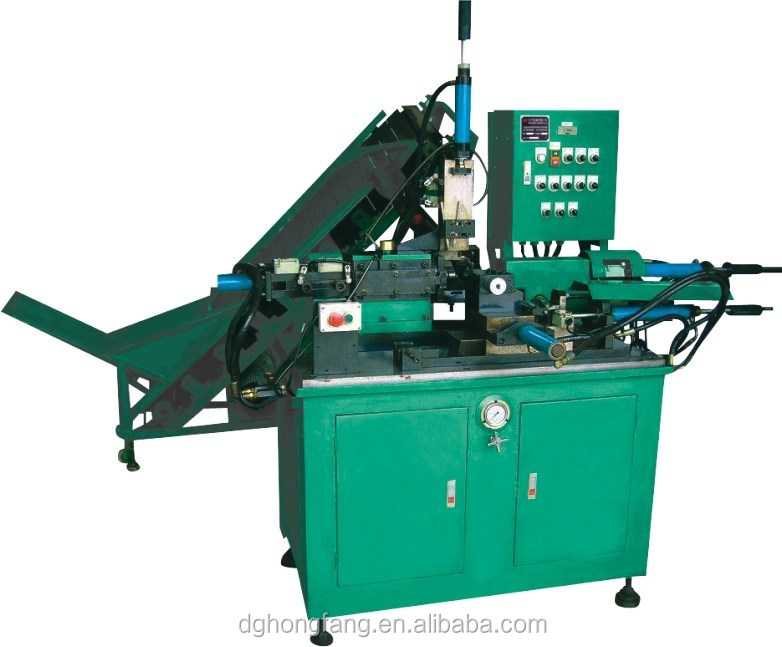
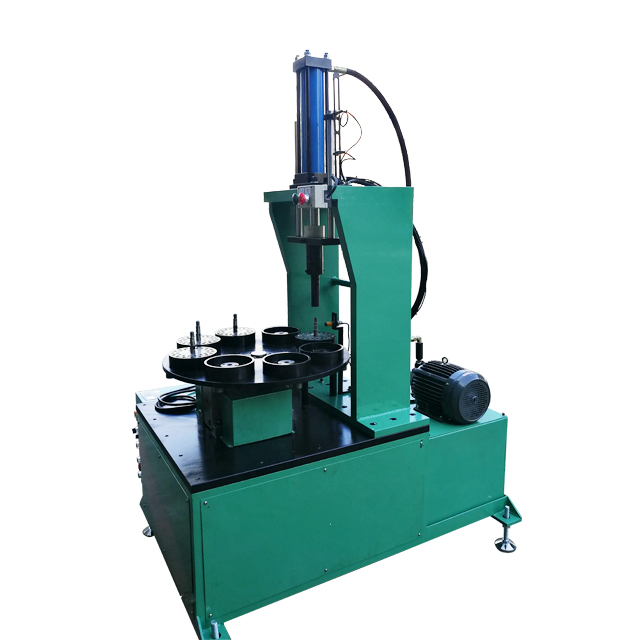
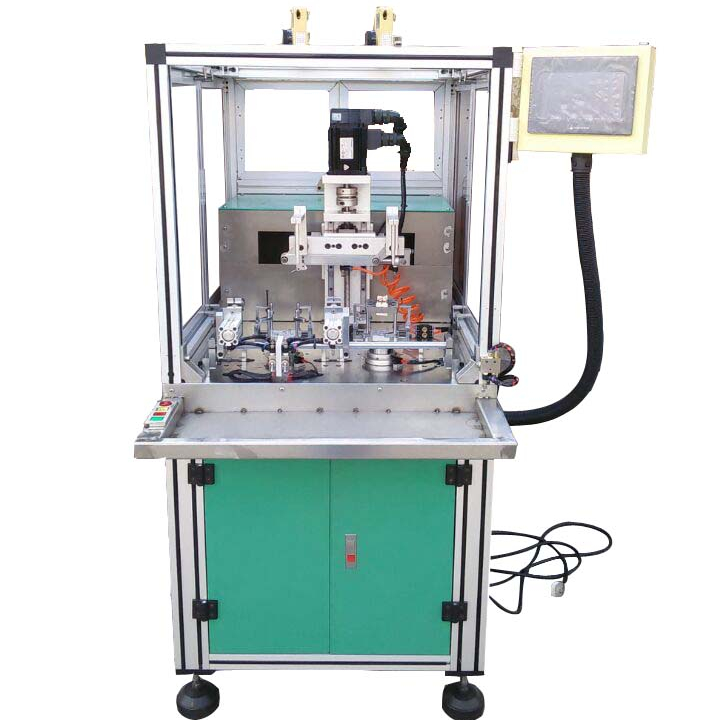
Automatic Rotor Fine Turning & Surface Cutting Machine HF-C60
Engineered with PLC industrial logic, integrated coolant pump, and diamond PCD tool post for tight outer diameter tolerances and minimal lamination short-circuiting.
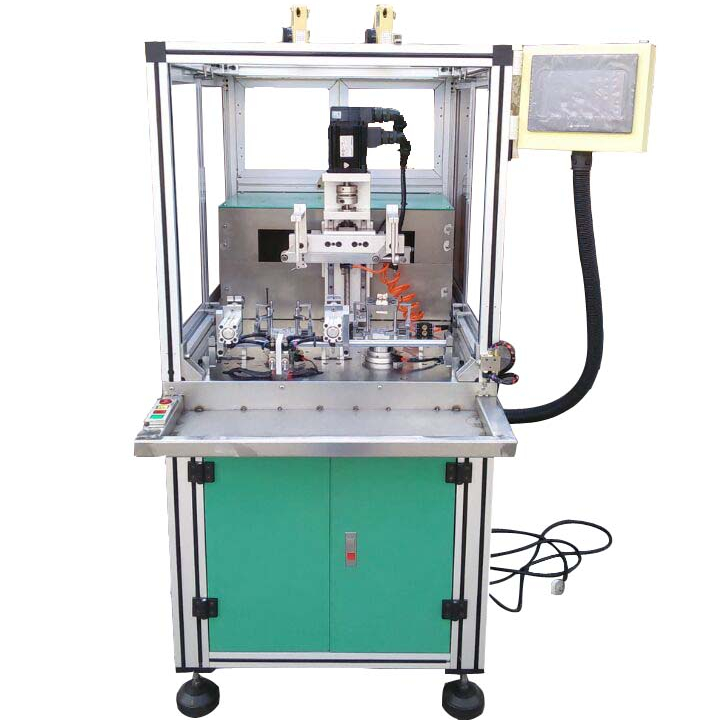
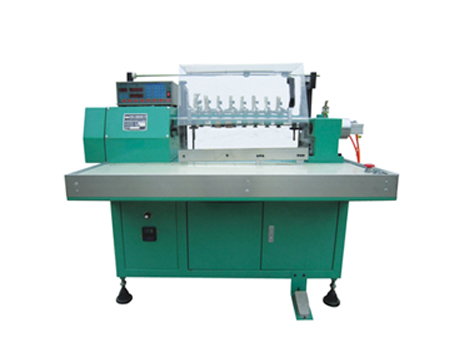
Simultaneous dual-station outer stator coil fabrication. Heavy-duty construction geared for high torque output and long continuous winding cycles on industrial motors.
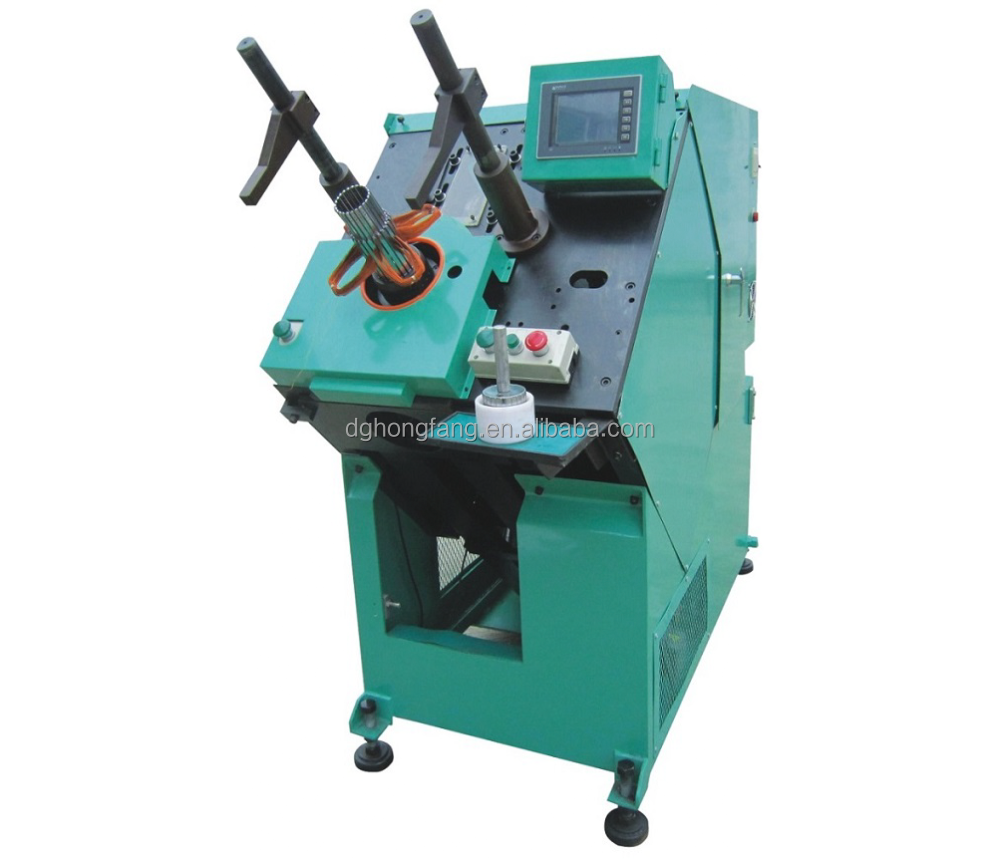
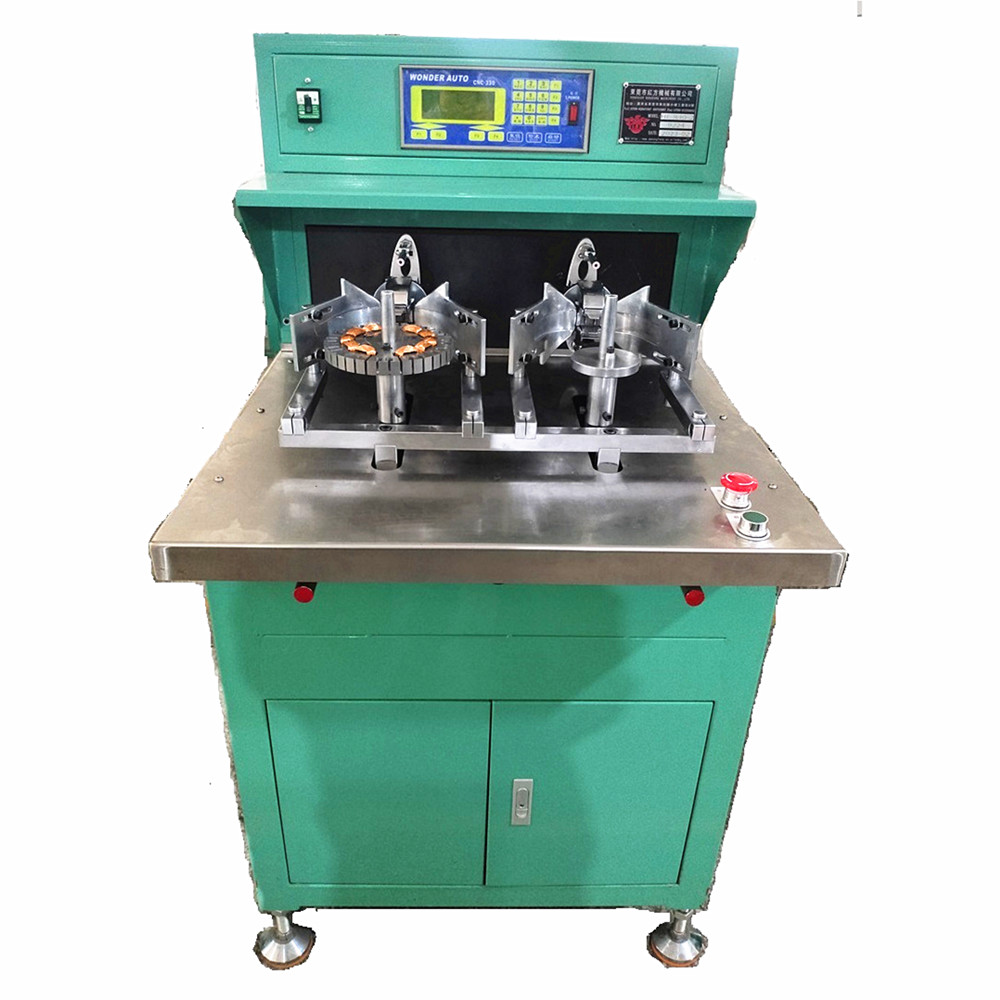
Pushes pre-formed coils and insulating slot wedges into motor laminations concurrently, mitigating enamel friction scratches and reducing manual operator strain.
The Physics of Rotor Fine Turning & Surface Micro-Cutting in Electric Machine Manufacturing
In electric motor fabrication, the outer diameter (OD) finish of squirrel-cage rotors and permanent magnet assemblies directly dictates electrical efficiency, acoustic performance, and thermal resilience. The gap between the stator bore and rotor circumference—often as tight as 0.25 mm to 0.50 mm in standard IE2/IE3 induction motors—demands extreme radial runout limits below ±0.01 mm. Any geometric eccentricity creates asymmetric magnetic pull (AMP), precipitating high-frequency mechanical vibration, bearing load fatigue, and premature coil winding breakdown.
Traditional grinding operations on stacked rotor cores frequently smear the ductile electrical sheet steel laminations across the insulating interlaminar varnish. This micro-level mechanical burring creates electrical short circuits along the periphery of the rotor iron. These shorts induce massive parasitic eddy currents, escalating core temperatures and generating excessive harmonic noise. Zunqi's automated rotor fine turning machinery addresses this metallurgical challenge by substituting grinding with single-point diamond PCD (Polycrystalline Diamond) or high-density CBN (Cubic Boron Nitride) ultra-fine surface skiving and cutting.
By deploying high spindle velocities up to 3000 RPM coordinated with precise servo-driven cross-feed slide rates, the cutting edge of our HF-C60 series produces cleanly sheared silicon steel edges rather than compressive plastic smear. Cast aluminum squirrel-cage bars or embedded copper conductor strips are cut uniformly with the surrounding silicon steel sheets without leaving longitudinal burrs. This maintains an exceptionally high interlaminar insulation resistance, reducing stray load losses by up to 18% compared to conventionally abraded rotors.
Process Parameter
Standard Grinding Methods
Zunqi Diamond Fine Turning (HF-C60)
Benefit for Pyongyang Motor Builders
Lamination Smearing (Burr)
High (Smears varnish layer; induces eddy currents)
Virtually Nil (Sharp shear plane cut)
Lower rotor operating temp; prevents iron loss
Outer Diameter Circularity
±0.025 mm to ±0.040 mm
±0.005 mm to ±0.008 mm
Uniform air gap; eliminates magnetic whistle
Cycle Time (Ø80 x 100mm core)
45 – 70 seconds (Requires dressing cycles)
12 – 22 seconds (Single pass automated)
Tripled production output per shift
Coolant Requirement
Heavy wet flooding; sludge disposal issues
Integrated micro-mist / dry cutting compatible
Reduced fluid maintenance in cold climates
Surface Roughness (Ra)
Ra 1.6 – 3.2 µm
Ra 0.8 – 1.6 µm
Superior aerodynamic slip & tight gap accuracy
Localized Application Scenarios in Pyongyang's Industrial Landscape
Pyongyang's industrial ecosystem—along with surrounding manufacturing centers such as Nampo and the Taean industrial corridor—is experiencing a concerted push toward manufacturing modernization, electrical grid conservation, and heavy industrial self-reliance. As machine building enterprises, mining equipment manufacturers, and municipal facilities upgrade their electro-mechanical drives, high-precision rotor finishing machines are pivotal across several core applications:
Industrial Pump & Heavy Blower Motors
Used by municipal waterworks, agricultural irrigation facilities, and heavy blast furnace blowers. Rotors turned on our systems operate continuously without thermal runaway caused by air-gap friction or unbalance.
Mining Machinery & Coal Transport Drives
Conveyor drive motors, flotation cell agitators, and mine drainage submersible pumps demand robust IP55/IP68 motors capable of withstanding rough electrical input while maintaining torque efficiency.
Traction & Rail Modernization Motors
Subway rolling stock maintenance shops and regional locomotive repair works utilize rigid rotor turning equipment to service DC traction armatures and large asynchronous AC traction drive shafts.
Agricultural Processing & Milling Motors
Grain elevators, threshing machinery, and food processing lines rely on robust small-to-medium single-phase and three-phase motors (0.75 kW to 7.5 kW) fabricated at local electrical plants.
Domestic Appliance & Ventilation Systems
Ceiling fans, centrifugal exhaust blowers, and air-conditioning units for residential developments in Pyongyang demand whisper-quiet motors, achievable solely through vibration-free dynamic turning.
Submersible Water Well Pump Rotors
Submersible borehole motors operate inside stainless steel cans where stator-rotor clearances are critically tight. Accurate rotor OD turning prevents physical sleeve scoring and insulation puncture.
Procurement teams and plant directorships operating within the Pyongyang mechanical sphere are navigating structural transitions. The historic reliance on labor-heavy manual metalworking is giving way to automated, deterministic machine tools. Three fundamental engineering trends dominate the region's motor production initiatives:
1. The Transition to High-Efficiency Standards (IE2 to IE3 Equivalence)
Given the overarching priority placed on power grid efficiency across heavy industrial sectors, motor efficiency is closely scrutinized. A loose or eccentric rotor air gap consumes excessive magnetizing reactive power, dragging down plant power factors and causing line voltage drops. Implementing fine-turning automation guarantees precise, uniform gap geometry across large production batches, enabling manufacturers to certify their electrical machines for higher efficiency classes without increasing copper mass.
2. Hardened Tooling & Closed-Loop Control Against Power Grid Irregularities
Electromechanical facilities in the region encounter frequent industrial line voltage fluctuations. Standard off-the-shelf hobbyist or light-industrial lathes fail rapidly under brownout conditions or heavy mechanical loading. Zunqi's machines feature heavy ribbed cast-iron bases, robust isolation transformers, wide-tolerance industrial switchgear (compatible with 220V/380V ±15% fluctuations), and isolated PLC power banks. Mechanical movements operate via hardened linear guideways and ground ballscrews that sustain precision even in non-climate-controlled factory halls.
3. Self-Reliant Tooling Swaps & Rapid Re-Tooling
Pyongyang motor enterprises typically operate flexible batch lines rather than million-unit single-model factories. A single machine shop often turns rotors for 0.75 kW fan motors in the morning and 5.5 kW compressor drives in the afternoon. Zunqi machines integrate quick-change pneumatic expanding mandrels, mechanical collet stops, and pre-programmed digital PLC recipe memories. Operators can execute full diameter and core length changeovers in under 8 minutes without external toolmaker intervention.
Detailed technical, electrical, and logistical answers to support industrial enterprise buyers, trade facilitators, and electrical plant managers.
What power supply voltages and frequency standards are compatible with this equipment?
Our machines are tailored for three-phase 380V (50Hz) standard industrial grid supplies, with single-phase 220V control circuitry. Because regional industrial grids can experience voltage drops or temporary surges, our export models for the Pyongyang market are configured with wider operating tolerances (±15% voltage tolerance), heavy-duty line filters, and electromagnetic braking circuits to prevent electronic damage or positioning drift during grid sags.
How does the machine clamp different rotor designs without bending or scratching the shaft?
Depending on whether your rotors have pre-pressed shafts or bare center bores, our machines utilize either dual-center pneumatic tailstock clamping (locating on the shaft center holes for maximum concentricity) or pneumatic internal expanding arbors (locating on the rotor core bore). Clamping pressures are fully adjustable via pneumatic regulator valves, ensuring rigid cut support while avoiding bearing journal scoring or shaft deflection.
What is the cutter life and replacement availability for the fine-turning tool inserts?
The HF-C60 machine uses standard ISO-geometry tool holders equipped with diamond PCD or specialized cubic boron nitride (CBN) cutting inserts. On standard high-silicon electrical steels with cast aluminum slots, a single cutting tip typically completes 15,000 to 25,000 rotor passes before indexed rotation. Because tool posts conform to international standardized metric shanks, replacement tips are readily obtainable or can be bundled in bulk wear-part export packages directly from our Dongguan facility.
Can this machine be operated without complex computer coding skills by local plant technicians?
Yes. The machine control system is built around an industrial programmable logic controller (PLC) coupled to a clear touch-screen Human-Machine Interface (HMI). Operators do not need to write G-code. You simply enter the rotor core length, target outer diameter, feed speed, and retract parameters. The machine stores up to 50 distinct part recipes. Training requires less than one shift, supported by comprehensive bilingual schematics and mechanical breakdown documentation.
What is the export logistics route, transit packaging, and rust mitigation for maritime/rail shipment?
Machines leave our Dongguan plant packed for long-duration transit. All bare ground guideways, chucks, and precision surfaces are coated with heavy-grade industrial anti-rust grease, wrapped in multi-layer Vapor Corrosion Inhibitor (VCI) foil, hermetically vacuum-sealed, and secured into heavy, export-compliant fumigation-free plywood crates with internal steel-bolted chassis brackets. Shipments can be routed via standard maritime transport to Nampo port or overland rail freight via Dandong/Sinuiju, accompanied by full commercial invoices, packing lists, and testing certificates.
How do you handle factory acceptance testing (FAT) if our technical team cannot travel before shipping?
Prior to dispatch, we invite buyers to dispatch sample rotor cores and drawings to our Dongguan workshop. We build your specific tooling, install the test specimens, and run full machining cycles while recording high-resolution dimensional verification videos (measuring outer diameter, roundness, surface roughness with calibrated dial indicators and profilometers). We only pack and ship after the technical testing reports receive full buyer authorization.
Can the rotor machine integrate alongside our existing winding and shaft inserting operations?
Absolutely. Our rotor fine turning equipment is designed as an autonomous standalone manufacturing cell or can be synchronized with automated pneumatic conveyor bypasses. It fits seamlessly immediately downstream from rotor aluminum die-casting and shaft hydraulic press-fitting, and directly upstream from dynamic balancing and final motor housing insertion.
What after-sales maintenance support, wearing parts, and warranty guarantees are supplied?
Every unit includes a 1-year factory-backed warranty covering all non-consumable mechanical and electrical parts (PLC, servo motors, spindle drives, structural bearings). Every export crate includes a dedicated primary maintenance toolkit, spare limit sensors, pneumatic fittings, drive belts, and extra diamond inserts. Our engineering support desk typically replies within 9 hours for remote technical assistance.
Why Choose Zunqi Intelligent Equipment Co., Ltd.
Headquartered in Qishi Town, Dongguan, Guangdong Province—the center of Southern China's high-precision equipment manufacturing basin—Zunqi Intelligent Equipment Co., Ltd. has spent over 17 years specializing exclusively in electric motor manufacturing automation. Unlike general trading intermediaries, we maintain complete in-house control over mechanical design, tooling fabrication, PLC programming, and electrical cabinet assembly.
Tooling Tailored to Your Part Drawings
Every winding former, inserting finger, expanding collet, and rotor clamp is machined directly to match the customer's proprietary rotor/stator lamination geometry, rather than forcing standard compromises.
Single-Source Whole Line Capability
From slot insulation paper folding to automatic winding, coil/wedge insertion, hydraulic forming, double-sided lacing, rotor skiving, and shaft pressing, we provide completely matched production lines.
Verified Factory & Onsite Audits
Our workshop premises, trade history, production equipment, and credit metrics are verified onsite on international platforms, ensuring complete transparency for industrial buyers.
Our machinery has been exported worldwide across Asia, Eastern Europe, the Middle East, and Latin America. We understand the technical necessity of straightforward, resilient, and serviceable equipment that delivers reliable precision through long industrial shifts.
Request Technical Proposals & Factory Pricing
Send your rotor dimensions (OD, core stack length, shaft diameter) and target production capacity. Our engineering team typically responds within 9 hours with equipment specifications, tooling drawings, and cost estimations.