Featured Stator Coil Forming & Rotor Finishing Machinery
Direct-from-factory OEM/ODM solutions tailored for electric pump, fan, automotive actuator, and heavy industrial drive manufacturing. Tooling engineered to your exact lamination stack dimensions.







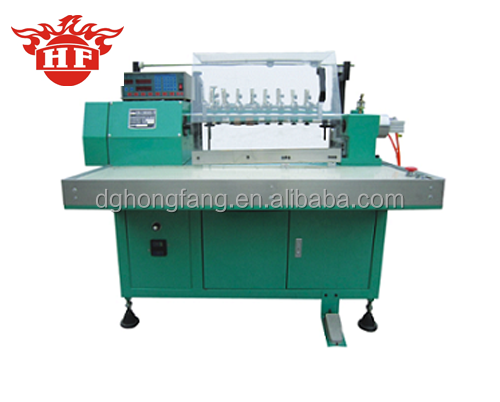
The Critical Mechanics of Stator Coil Forming in Modern Electric Machines
Optimizing slot-fill density, preventing inter-turn insulation micro-fissures, and maintaining strict end-turn boundary envelopes under EU Ecodesign directives.
In precision electric motor assembly, stator coil forming (intermediate shaping and final sizing) stands as the ultimate mechanical gating operation between winding insertion and final varnishing. When winding copper or aluminum magnet wire into laminated magnetic cores—whether through direct needle winding or automated coil-and-wedge insertion—the resulting coil overhang (end-turn) naturally flares outward with substantial volumetric irregularity. In high-efficiency industrial motors (IE3, IE4, and IE5 standards), mechanical tolerances within the end bell housing are razor-thin. Failure to compress the coil head uniformly induces physical rubbing against the rotor fan blades, causes high-voltage dielectric breakdown due to crushed slot liners, and leads to destructive hot spots within motor housings.
The stator forming process is typically divided into two distinct technical stages:
1. Intermediate Forming (Pre-Shaping)
Conducted immediately post coil-and-wedge inserting. An internal expanding mandrel inserts into the core bore while radial jaws expand outward, flaring the inner perimeter of the copper coils to leave ample clearance for automatic lacing needles.
- Prevents lacing needle strikes against copper wire
- Calibrates slot-exit curvature radius
2. Final Forming (Sizing & Compacting)
Conducted following single- or double-sided coil lacing. A dual-acting axial hydraulic cylinder descends with matched upper and lower male/female forming dies, compressing the coil head simultaneously from both ends to establish exact axial height and outer envelope diameter.
- Ensures complete clearance within aluminum end shields
- Eliminates thermal air pockets inside coil heads
Localized Application Scenarios in the Liège Electromechanical Ecosystem
From the Meuse Valley heavy metallurgical corridor to Sart-Tilman high-tech science parks, how Zunqi equipment integrates into Wallonia’s manufacturing landscape.
The Province of Liège has long functioned as the industrial backbone of Wallonia, Belgium, historically celebrated for mechanical metallurgy, rail engineering, and weapons precision tooling. In the contemporary industrial era, Liège and its contiguous industrial zones (such as Hauts-Sarts in Herstal, Seraing, Sart-Tilman Science Park, and the Port Autonome de Liège logistics zone) are aggressively repositioning into leading centers for green transition engineering, industrial pump systems, aerospace auxiliary drives, and electric transit retrofits. Our OEM/ODM stator forming and winding lines are engineered specifically to answer the operational profiles of these advanced production plants:
Centrifugal Pumps & Fluid Handling (Seraing & Herstal)
Manufacturers supplying submersible drainage pumps, chemical process circulators, and municipal wastewater impellers require stators with exceptional thermal dissipation and rigid coil ends that resist high-pressure liquid potting pressures.
- Stator OD: 80 mm – 260 mm
- High-pot test dielectric safety > 2500V
HVAC, Industrial Chilling & Air Handling (Benelux Belt)
The Liège logistics triangle (connecting Aachen, Maastricht, and Brussels) demands continuous production of hermetic refrigeration compressors and ultra-quiet commercial ventilation motors conforming to sound pressure limits.
- Zero enamel scratching on high-speed copper wires
- Strict overhang height restriction for compact casings
Rail & Heavy Transit Equipment Overhauls
As a central node on European rail corridors (SNCB logistics, freight wagons, passenger rolling stock), local repair and OEM rebuild centers demand versatile forming and fine turning machinery to rebuild traction motor auxiliary exciters.
- Rapid tooling changeover between batch runs
- Compatible with high-temperature Class H insulation
Technological Trends Reshaping Stator Production in Wallonia & Western Europe
How strict EU energy efficiency regulations, Industry 4.0 data exchange, and nearshore supply chain resiliency are transforming motor factory procurement.
1. Mandated IE4/IE5 Super-Premium Efficiency
Under Commission Regulation (EU) 2019/1781, motors marketed across Belgium and the EU must meet increasingly stringent efficiency classes. Achieving IE4/IE5 requires packing more active copper into each stator slot, increasing slot-fill factors beyond 75%. High-density windings demand servo-monitored, progressive forming dies that avoid pinching copper against lamination slot edges.
2. Migration from Manual Rewinding to Semi-Automated Cells
With Belgian labor costs among the highest in the Eurozone, regional mid-tier manufacturers and rewinding specialists can no longer rely on manual mallets, wooden blocks, and manual shaping jigs. Small-footprint, automatic forming stations allow single-operator workflows, multiplying shift output fivefold while standardizing quality.
3. Industrial Telemetry & CE-Grade Automation Architecture
Procurement teams in Wallonia enforce strict safety protocols under the European Machinery Directive 2006/42/EC. Modern forming equipment must integrate dual safety light curtains, ergonomic dual-hand start buttons, and open control architectures (Siemens S7, Schneider, Omron) capable of logging production metrics over OPC-UA protocols.
Technical Parameters: Stator Forming & Line Machinery
Engineered for rapid integration into existing manufacturing cells. Custom dies available for odd lamination profiles.
| Equipment Model | Process Function | Applicable Stator OD | Stack Height Range | Drive Mode & Power | Cycle Time (Approx.) |
|---|---|---|---|---|---|
| HF-W120H Final Forming | 2nd Coil Final Sizing | Ø 40 – 160 mm | 10 – 120 mm | Hydraulic / 2.2 kW | 6 – 10 s / unit |
| HONGFANG 1 kW Forming | Intermediate / Pre-Forming | Ø 30 – 140 mm | 8 – 90 mm | Pneumatic-Hydraulic / 1.0 kW | 4 – 7 s / unit |
| HF-BS20 Servo Lacer | Dual-End Coil Binding | Ø 40 – 180 mm | 12 – 140 mm | Full Servo / 1.5 kW | 0.5 s / stitch |
| HF-C60 Rotor Turning | Rotor OD Fine Cutting | Ø 20 – 110 mm | 10 – 150 mm | CNC Servo / 3.0 kW | 12 – 25 s / pc |
| HF-LO2-6G Multi-Station | Internal Stator Winding | Ø 25 – 120 mm | 10 – 80 mm | Multi-axis Servo / 4.5 kW | Multi-station index |
17 Years of Dedicated Motor Automation Engineering
Based in Qishi Town, Dongguan—at the absolute core of South China's advanced mechatronics cluster—Zunqi Intelligent Equipment Co., Ltd. bridges the gap between high-capital European machine builders and low-reliability generic suppliers. We deliver true factory-direct OEM/ODM capabilities with full engineering documentation:
-
01Tailor-Made Stator Tooling To PrintWe do not supply off-the-shelf dies. Every former, expanding shoe, and blade assembly is precision CNC milled to match your stator lamination drawings and stack tolerances.
-
02Live Trial Runs on Your Raw SamplesShip your stamped lamination core and wire samples to our Dongguan facility. We test-wind, form, and record detailed multi-angle high-speed video acceptance protocols before container dispatch.
-
03Western European Component CompatibilityOur PLC cabinets can be configured with Siemens, Schneider, Mitsubishi, or Omron control architectures, paired with SMC pneumatics, ensuring seamless spare part sourcing in Belgium.
Frequently Asked Questions for Liège & European B2B Buyers
Detailed technical answers addressing import compliance, electrical grids, tooling design, and after-sales service in Belgium.
Do your machines comply with European Union CE Marking & Belgian Safety Standards? +
Yes. All machines exported to the European Union are engineered strictly in accordance with Machinery Directive 2006/42/EC, Low Voltage Directive (LVD) 2014/35/EU, and Electromagnetic Compatibility (EMC) Directive 2014/30/EU. Electrical cabinets feature EN 60204-1 compliant wiring, safety emergency-stop relays, dual safety door interlocks, and CE-marked optoelectronic safety light curtains to safeguard operators during high-pressure forming strokes.
Can the electrical system accommodate the Belgian 400V 3-Phase / 230V 50Hz grid? +
Absolutely. Our machines are built to your specific shopfloor power supply. While light benchtop units operate on 230V single-phase 50Hz, our industrial hydraulic forming presses, rotor fine-turning lathes, and multi-station winders are custom wired with transformers and drives matched to 3-phase 400V 50Hz (or legacy 3-phase 230V found in select older Walloon industrial facilities).
What engineering deliverables do you need to fabricate customized forming dies? +
To manufacture precision dies, we require: (1) Stator lamination 2D/3D CAD drawings indicating outer diameter (OD), inner diameter (ID), slot count, and slot geometry; (2) Lamination stack height range; (3) Wire gauge (copper diameter in mm) and number of turns per slot; (4) Maximum permissible coil overhang height ($H_{ov}$) and outer diameter allowed by your motor's end bracket. Supplying 2–3 physical unstuffed stator cores allows us to conduct zero-defect trial validation.
How are machines shipped to Liège, and what are the typical transit routes? +
Shipments to the Liège market can utilize multiple multimodal freight routes: (1) Ocean Freight: Shipped from Shenzhen/Guangzhou ports to the Port of Antwerp-Bruges or Rotterdam (approx. 28–32 days), then barged along the Meuse River or trucked directly to your Liège facility; (2) Direct Rail Freight: China-Europe Railway Express directly arriving at Liège Logistics Hub (approx. 18–22 days); (3) Air Freight: Direct cargo flights landing at Liège Airport (LGG) for rapid delivery of spare tooling or urgent prototype lines. All equipment is sealed in VCI anti-rust barrier packaging and bolted inside export-grade fumigation-free plywood crates.
What after-sales technical support and spare parts service is provided in Belgium? +
Every machine includes a comprehensive 1-year mechanical and electrical warranty. We provide complete English electrical schematics, hydraulic piping diagrams, and detailed commissioning documentation. Remote engineers provide video-guided commissioning and parameter tuning. For critical components (PLC, sensors, servos), we integrate internationally available brands like Siemens, Schneider, SMC, and Omron, allowing your maintenance staff to source replacements locally within 24 hours. Critical spare tooling sets (forming blades, push fingers, needles) can be pre-packed with the machine order.
Can a single forming machine handle multiple stator models with quick changeovers? +
Yes. Our forming equipment is engineered with modular quick-change die architecture. Changing from one stator stack height to another with the same diameter requires simple digital height adjustments on the touchscreen. For different stator laminations, a mechanical die changeover (internal mandrel and external forming shoes) typically takes an experienced technician less than 25 minutes using standard dowel pin alignment guides.
Request Complete Engineering Specifications & Tooling CAD
Consult with our senior motor automation engineers. Send us your stator lamination drawings and cycle-time requirements for a matched turnkey equipment proposal.
