Featured Stator Coil Inserting & Manufacturing Machinery
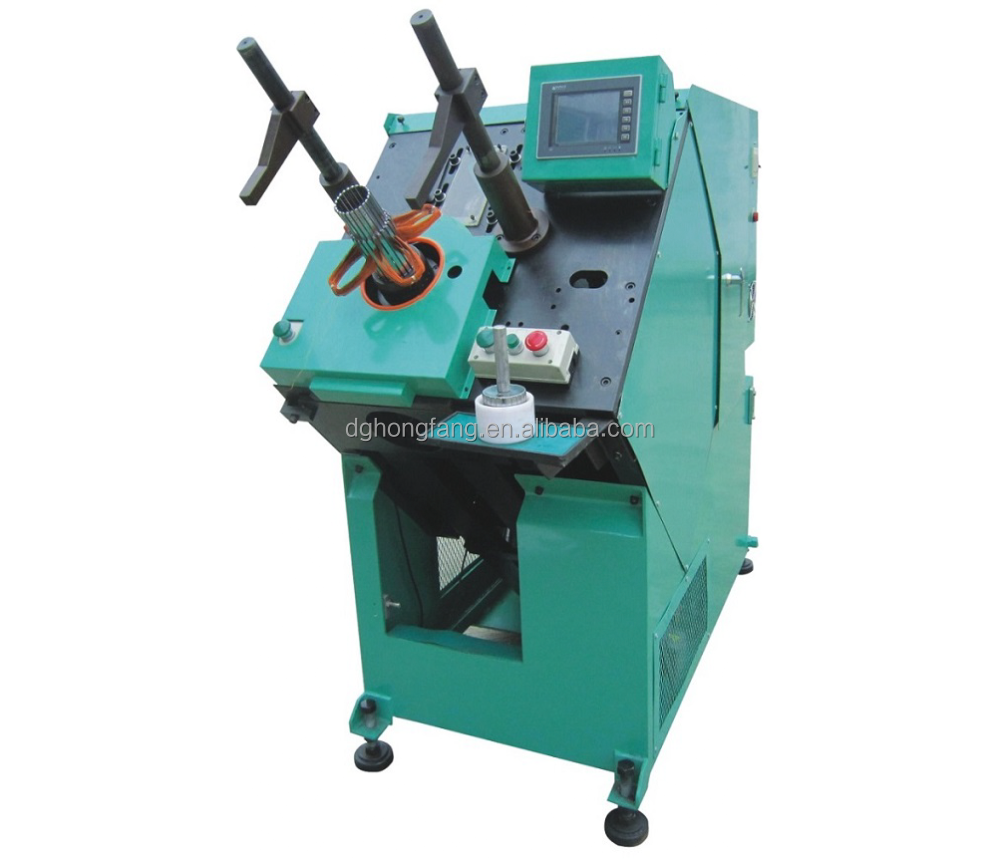
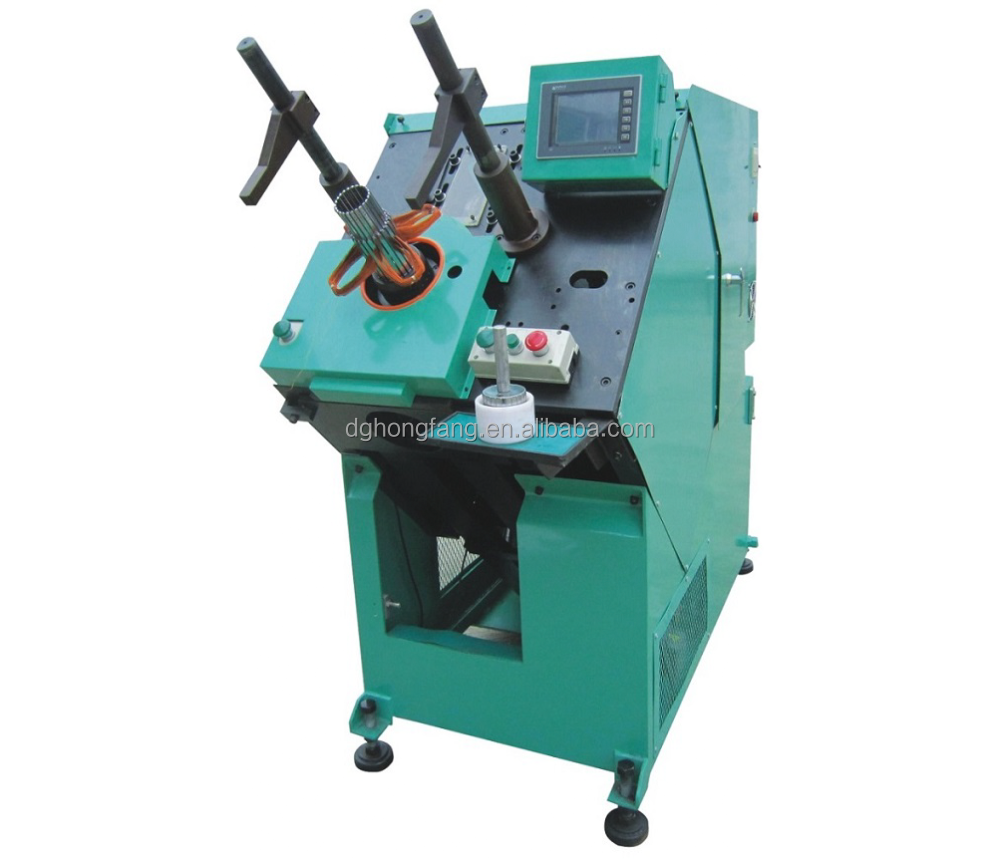
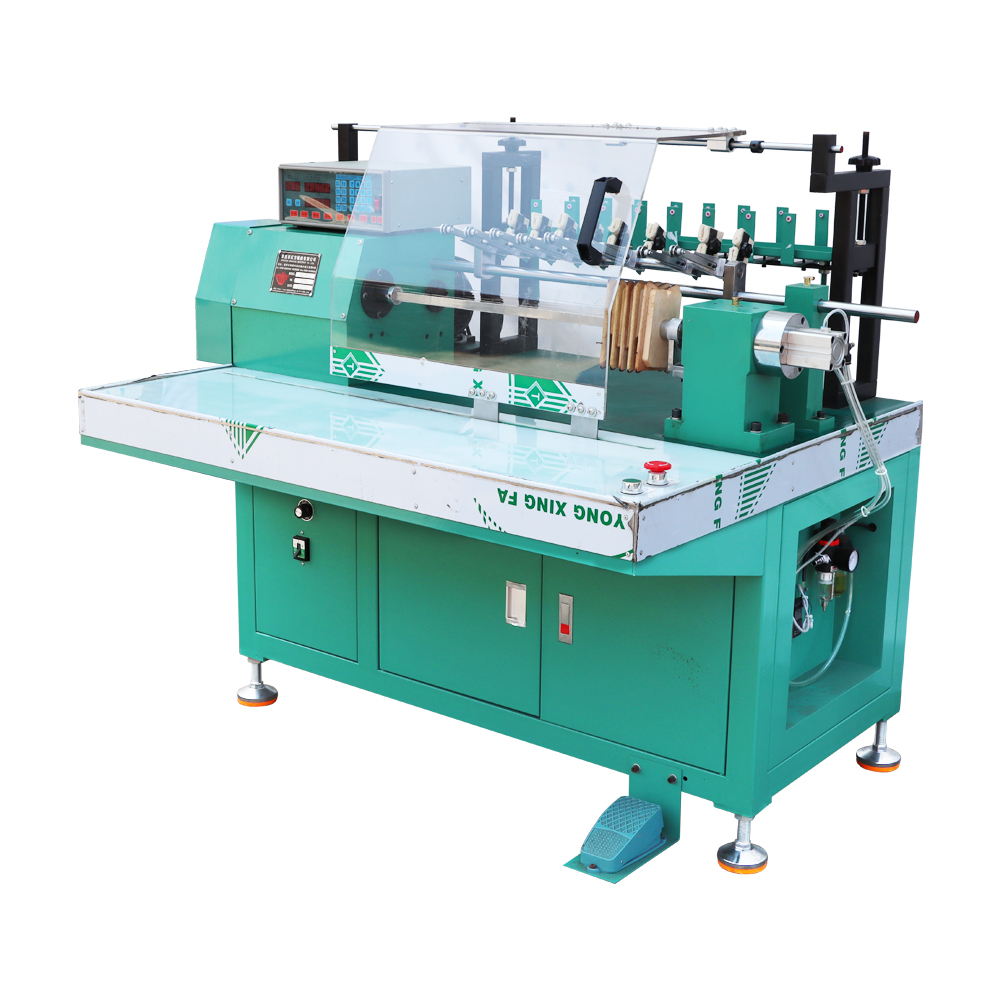
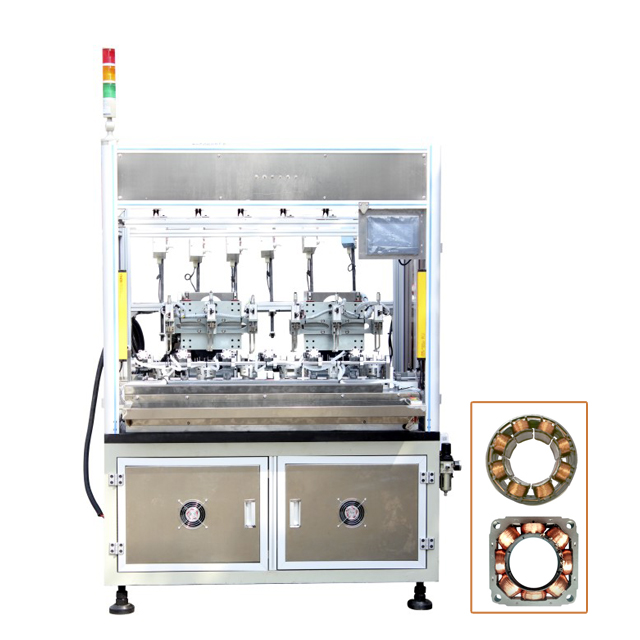
Constructed in our Guangdong production facility to exacting electromechanical tolerances, these eight production-ready units provide turn-key stator insertion, high-speed coil winding, and rotor pressing operations customized to match your workshop voltage and motor drawings.
Engineering Whitepaper: Advanced Stator Coil & Wedge Insertion Dynamics Serving San Ignacio
The manufacturing and electromechanical rewinding sectors serving San Ignacio and its adjacent commercial districts are facing a transformational technological shift. As small-to-medium electrical repair plants, HVAC component fabricators, and agricultural pump refurbishers modernize away from tedious manual insertion toward high-speed automation, the demand for precision-calibrated automatic stator wedge paper and coil inserting machines has reached an all-time high.
In classical manual insertion protocols, operators feed enamelled magnet wire into tight stator lamination slots by hand or using simple wooden drifts. This outdated approach exposes copper or aluminium wire insulation to continuous micro-abrasions, leading to early inter-turn dielectric breakdowns, variable slot fill factors, uneven end-turn heights, and inconsistent phase balances. When operating in demanding tropical or sub-tropical industrial environments—such as the microclimates characteristic of San Ignacio—thermal cycling combined with ambient humidity exacerbates these microscopic defects, causing motor failures in irrigation pumps, air circulators, and light industrial plant machinery.
Synchronized Electro-Pneumatic Coil and Wedge Insertion Kinematics
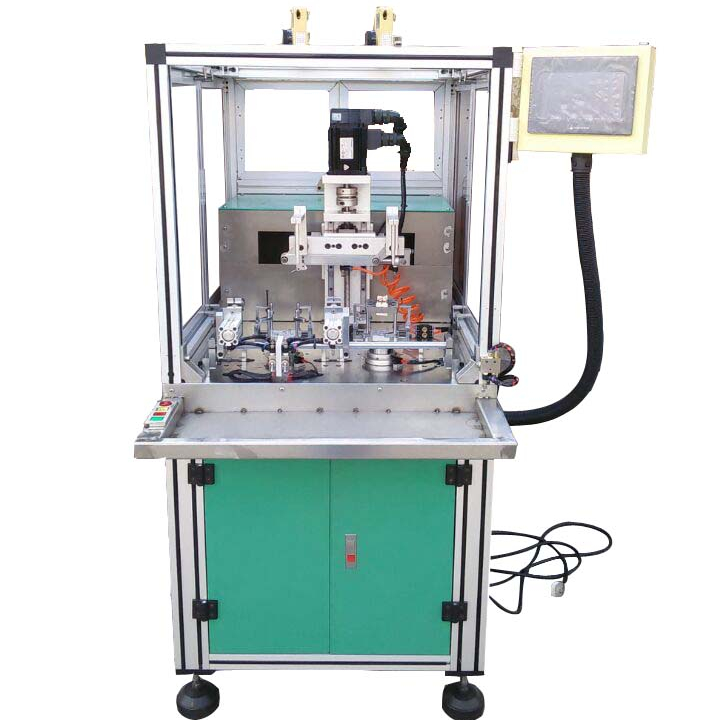
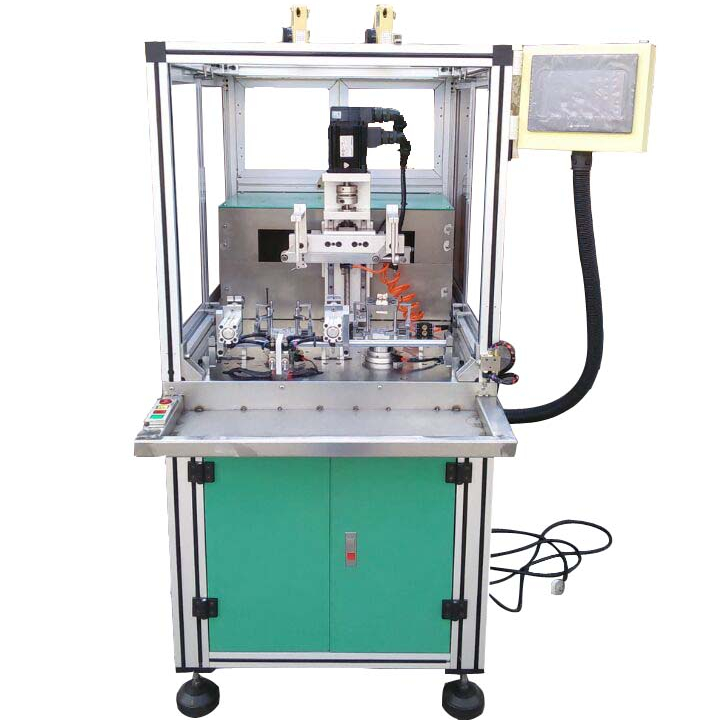
Zunqi Intelligent Equipment addresses these manufacturing vulnerabilities by deploying simultaneous coil-and-wedge insertion cycles. Driven by programmable servo axes or hardened mechanical transfer linkages, the machine pushes pre-wound coil groups and precision-creased slot wedges into the stator core in one single, coordinated upward stroke.
Tooling Guided Fingers
Specially treated alloy-steel guiding blades protect the enamelled wire coating. The blades enter the stator bore first, creating a frictionless boundary between the lamination teeth and the wire bundles during vertical displacement.
Integrated Wedge Feeding & Forming
Insulation paper (DMD, Nomex, or polyester film) is drawn from continuous reel stock, accurately measured, creased into rigid U or semi-circular profiles, severed by high-speed shear dies, and driven into slot lips concurrently.
Adjustable Stroke & Clamping Forces
Features independent electronic depth limiters and mechanical interlocks to adapt directly to variable stack heights (from 10mm ceiling fan stators up to 150mm heavy-duty pump laminations) without core displacement.
Detailed Workflow: From Coil Preparation to Wedge Confinement
Understanding the exact sequence of mechanical transformations within the machine allows manufacturing plant engineers serving San Ignacio to anticipate throughput schedules and tool changing protocols:
- Step 1: Core Localization & Clamping: The operator seats the pre-insulated stator core onto the index plate. An internal expanding collet or external radial jaws locate the stack from the outer diameter (OD) or inner diameter (ID), securing concentricity with the vertical inserting head within ±0.03mm.
- Step 2: Coil Transfer Transfer: Coils wound on our multi-station semi-automatic winders are positioned over transfer tooling. The push-fingers align with each slot opening.
- Step 3: Wedge Feed & Sizing: While coil tooling aligns, the paper feed mechanism pulls roll insulation, scores the edge fold lines, precisely cuts the length matching stator stack height plus required electrical creepage margins, and deposits the formed wedge into the guide magazine.
- Step 4: Synchronous Insertion Stroke: The hydraulic or servo ram advances upward. Guiding blades spear through the core; push rods follow immediately behind, driving copper wire groups directly into the slot bottom while simultaneously sliding the slot wedge along upper retaining grooves.
- Step 5: Ejection & Reset: The tooling retracts below the work table under pneumatic damping. The finished stator is de-clamped, displaying immaculate end turns prepared for immediate progression to intermediate forming and lacing operations.
Comparative Technical Specifications for Regional Machinery Implementation
| Performance Parameter | Automatic Wedge & Coil Inserter | Semi-Automatic Winder | 6-Station Internal Winder | Rotor Hydraulic Press HF-W50 |
|---|---|---|---|---|
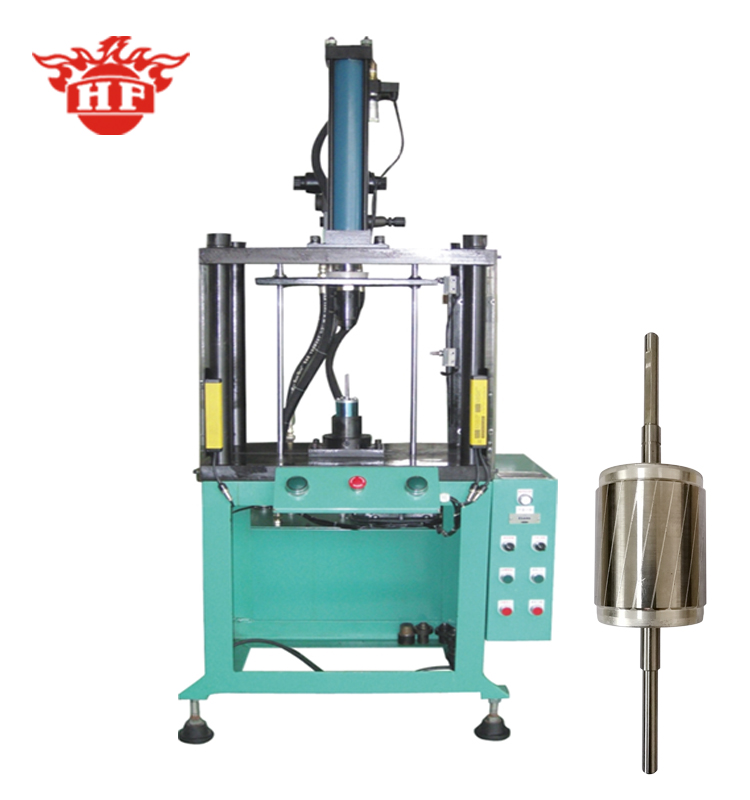
| Primary Application | Simultaneous wire & wedge slot insertion | Single/multi-tier coil group winding | BLDC & multi-pole internal stator winding | Rotor core & shaft interference fit press |
| Power Consumption | 1.5 kW – 3.0 kW (Servo/Hydraulic) | 0.75 kW – 1.5 kW | 3.5 kW (Multi-axis drive) | 4.0 kW (Hydraulic pump unit) |
| Standard Voltage | 220V 1-Phase / 380V 3-Phase Configurable | Single Phase 220V ±10% 50/60Hz | 3-Phase 380V (220V step-down option) | 3-Phase 380V / 220V Industrial |
| Applicable Stator ID | Ø30 mm – Ø160 mm | N/A (Coil former dependent) | Ø18 mm – Ø90 mm | N/A (Rotor OD up to 180 mm) |
| Cycle Time per Unit | 12 – 25 seconds / stator | Dependent on turn count | 6 stators indexed simultaneously | 8 – 15 seconds / shaft insertion |
| PLC Architecture | Mitsubishi / Delta / Siemens Option | Dedicated Digital Micro-controller | Industrial PLC + Color Touch HMI | Relay Logic or Micro PLC System |
Localized Application Scenarios Serving San Ignacio & Surrounding Industries
Equipment deployed to support San Ignacio operations must meet diverse, resilient industrial criteria. Whether intended for light agro-industrial assembly, municipal water infrastructure maintenance, or specialized appliance production, our equipment lines fulfill specific operational niches:
Ceiling & Ventilation Fan Manufacturing
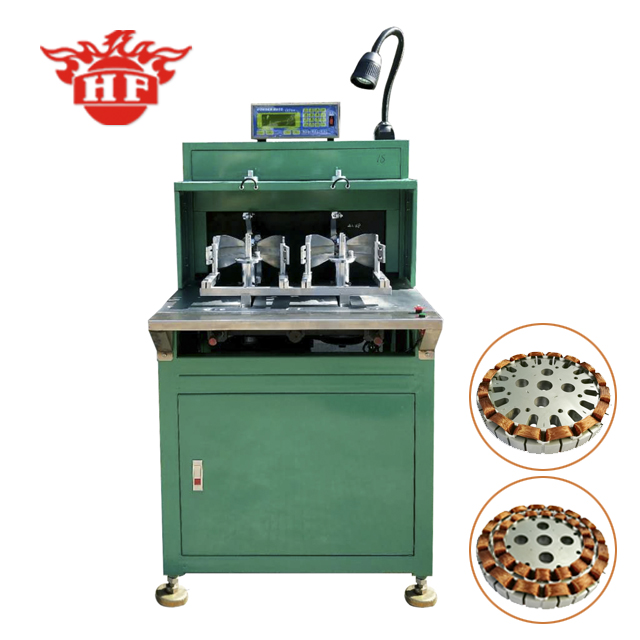
San Ignacio's warm climate drives high continuous demand for residential ceiling fans, commercial air circulators, and evaporative cooling units. Our HF-R40-2C and Two-Station automatic ceiling fan winding machines deliver high-speed dual-spindle output, winding outer and inner coils with extreme tension consistency.
Deep-Well & Submersible Water Pumps
Local agricultural producers and municipal supply networks rely on robust deep-well and surface booster pumps. The high slot fill ratio achieved by our Automatic Coil and Wedge Inserting machines ensures that pump stators handle high hydraulic head loads without overheating.
Electric Motor Overhaul & Rewind Centers
Repair facilities frequently deal with mixed batches of stators from power tools, compressors, and industrial drives. Our tooling changeover packages allow rewind technicians to switch stack diameters and slot configurations in under 30 minutes, maximizing shop flexibility.
By eliminating wire kinking and automating wedge retention, manufacturers eliminate the root cause of early warranty returns, establishing their products as durable, premium-grade hardware across regional distribution chains.
Technological & Regional Industrial Trends in San Ignacio's Motor Sector
As the electrical supply grid continues to expand and national efficiency standards evolve, motor production facilities serving San Ignacio are navigating several distinct manufacturing developments:
1. The Transition to Premium Efficiency (IE3 / IE4 Standards)
Legacy standard motors (IE1) feature wide slot geometries with modest wire densities. To achieve IE3 and IE4 efficiency certifications, stators require higher slot copper fill factors (often exceeding 75% to 80%). Achieving such dense wire packing by hand without scuffing the enamel coat is virtually impossible. Automated coil and wedge inserting machines apply controlled, progressive hydraulic force to compress and guide dense coil bundles deep into narrow slot openings, making compliant high-efficiency motor manufacturing technically viable.
2. Aluminum-to-Copper Wire Flexibility
Due to volatility in global base metal prices, many appliance motor producers are adopting enameled aluminum magnet wire for cost competitiveness, while reserving electrolytic copper for heavy-duty industrial machinery. Aluminum possesses a lower tensile yield strength and higher elongation sensitivity. Our semi-automatic fan motor winders and inserting tools feature micro-polished ceramic eyelets, roller bearings, and gentle pneumatic pushers specifically engineered to wind and insert 0.1mm to 1.2mm aluminum wire without necking or stretching.
3. Adoption of Brushless DC (BLDC) and Permanent Magnet Motors
Modern inverter-driven cooling and pumping equipment is rapidly shifting toward internal multi-pole stators. The HF-LO2-6G Six Stations Internal Winding Machine represents the frontier of this trend, enabling manufacturers to wind complex BLDC internal poles automatically with PLC needle-guiding heads, reducing manual labor overhead by more than 80%.
Why Choose Zunqi Intelligent Equipment?
Headquartered in Qishi Town, Dongguan City—China's electromechanical production hub—Zunqi Intelligent Equipment Co., Ltd. combines nearly two decades of precision machine tooling with dependable global export infrastructure.
Custom Tooling to Your Motor Drawing
We do not sell one-size-fits-all hardware. Coil formers, inserting blades, wedge magazines, and clamping jaws are CNC-machined to your exact stator lamination CAD drawings and verified with physical sample trial runs prior to export.
Comprehensive End-to-End Production Lines
We supply fully matched machinery covering the entire production line: from stator paper insulation insertion and coil winding, to coil & wedge inserting, intermediate forming, double-sided lacing, rotor turning, and hydraulic shaft pressing.
Global Component Architecture
To ensure long-term ease of maintenance for clients serving San Ignacio, our electrical cabinets can be custom-configured using world-renowned industrial components including Siemens, Mitsubishi, Schneider, Delta, Omron, SMC, and Airtac.
Onsite Verified Alibaba Gold Supplier
With more than 17 years of proven export trade history, our manufacturing facility, production capability, and financial creditworthiness have undergone rigorous third-party onsite verifications, providing total commercial security.
Pre-Shipment Video Inspection Protocols
We request clients to send stator samples directly to our Dongguan workshop. We build your machine tooling, conduct comprehensive test runs, record multi-angle video proof of cycle times, and package the processed samples in your crate.
Dedicated Technical Support & Rapid Spares
Every automated unit carries a comprehensive 1-year warranty. Our engineering desk replies within 9 hours, backed by long-term availability of wear-resistant inserting blades, wedge knives, and wire guide assemblies.
Frequently Asked Questions: Procuring Stator Machinery for San Ignacio
Key technical and procurement considerations addressed by our export engineering team for clients purchasing equipment for regional deployment:
Q1: Can the inserting machine be adapted to our local electrical power supply in San Ignacio?
Yes. While standard production units run on 220V single-phase or 380V three-phase 50Hz/60Hz, our electrical engineering team can configure transformers, frequency inverters, and servo power supplies to match your facility's local voltage grid before the machine leaves our factory.
Q2: What technical data do we need to submit for custom tooling manufacture?
To fabricate your insertion tooling, we require: (1) Stator outer diameter (OD) and inner diameter (ID), (2) Minimum and maximum stack heights, (3) Total slot count and cross-sectional slot drawing, (4) Magnet wire diameter and turns per coil, and (5) Wedge insulation material specifications.
Q3: Can one machine insert stators with different stack heights?
Yes. If the stator lamination profile (ID and slot shape) remains identical, the machine accommodates varying stack heights (e.g., 20mm to 70mm) through simple touch-screen stroke adjustments and mechanical spacing shims without replacing the primary inserting blades.
Q4: How do we handle tool changeovers for different motor model families?
Tooling packages—consisting of the guide finger cluster, push rod assembly, and wedge magazine—are designed as modular quick-change blocks. An experienced maintenance technician can execute a full model-to-model tooling changeover in approximately 25 to 40 minutes.
Q5: What are the export packaging specifications for overseas ocean freight?
Every machine is degreased, coated with heavy-duty VCI anti-rust oil, wrapped in multi-layer moisture-barrier plastic film, and secured to heavy timber skids within a fumigation-free, structural plywood export crate built to withstand rough maritime handling.
Q6: How is operator training and initial commissioning conducted?
We provide complete bilingual video documentation, comprehensive wiring diagrams, and high-definition step-by-step commissioning guides. Our senior application engineers also host real-time video conference setup sessions to guide your team through electrical connection and test cycles.
Modernize Your Motor Stator Manufacturing Operations Today
Connect directly with Zunqi Intelligent Equipment's electromechanical engineering team. Submit your stator core drawings or production volume requirements, and receive a customized technical proposal and commercial quotation within 9 hours.
