Featured Stator Coil Inserting & Winding Machinery
Explore industrial-grade motor manufacturing machines calibrated for high repeatability, zero copper enamel abrasion, and direct deployment into Cambodian industrial production lines. Every machine is rigorously factory-tested before international dispatch.
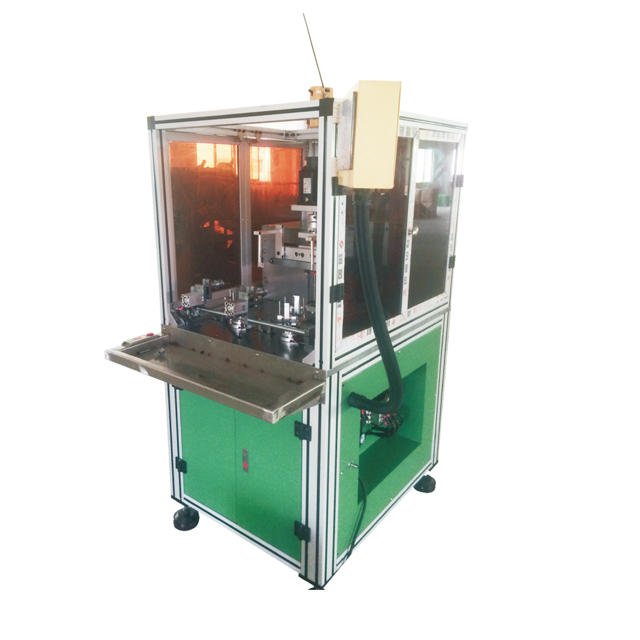
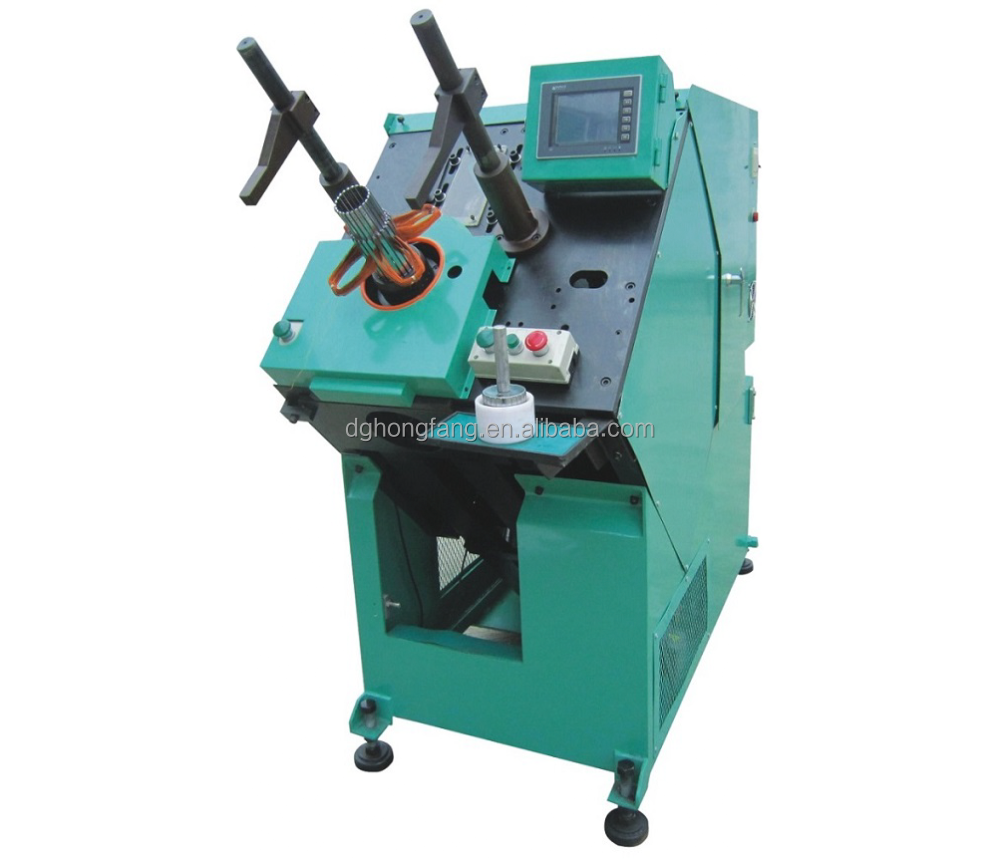
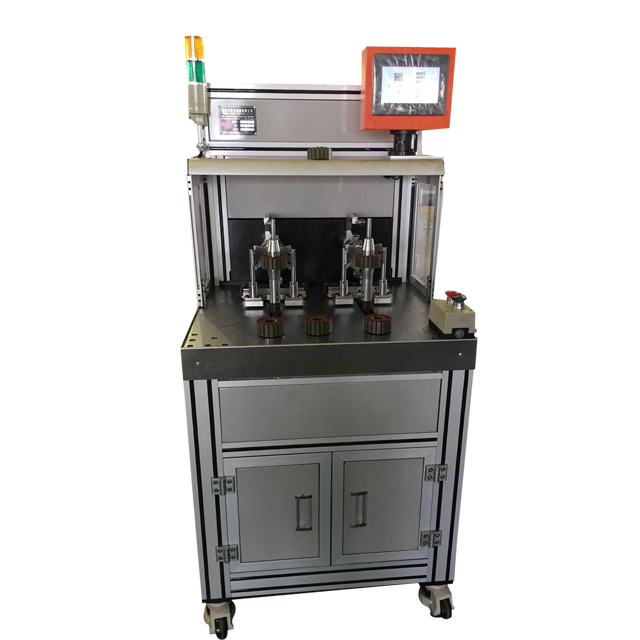
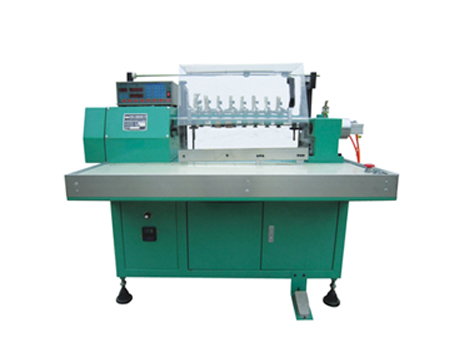
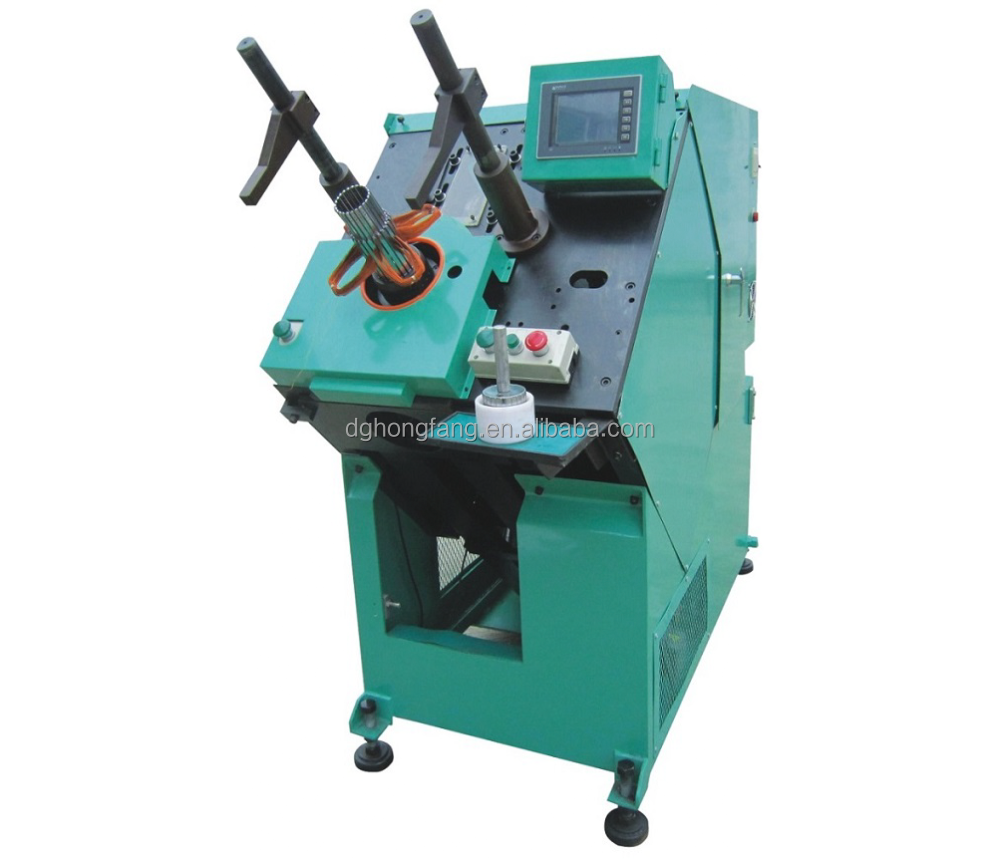
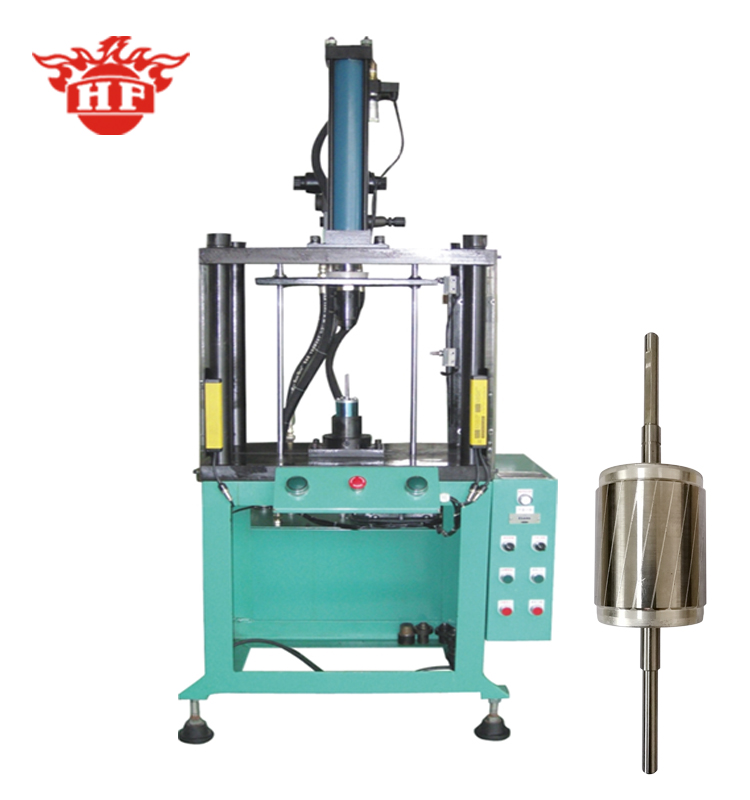
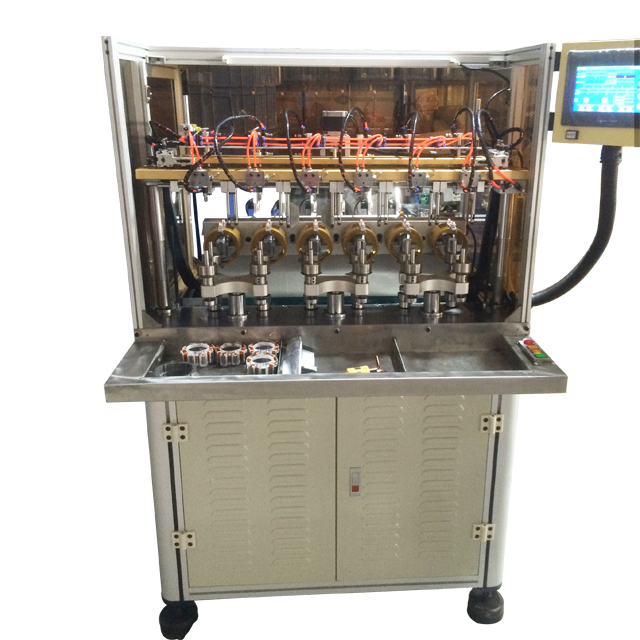
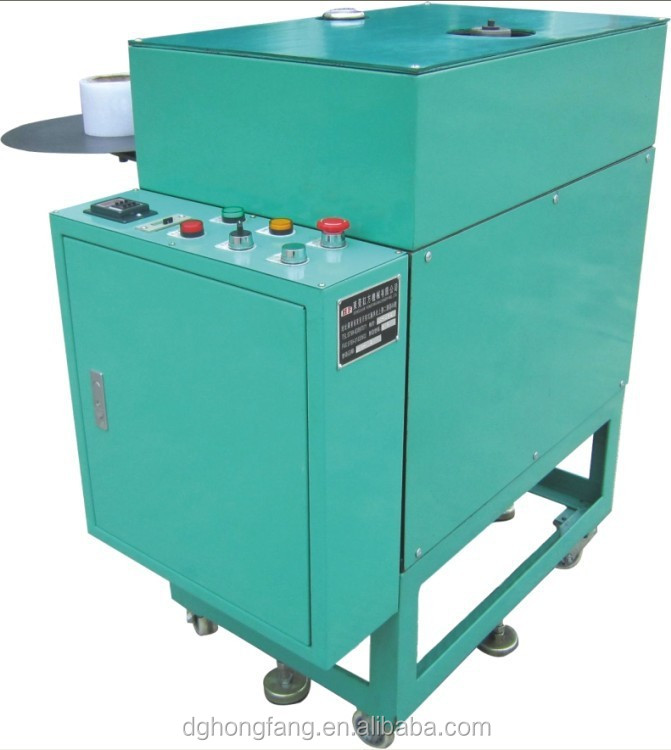
Engineering Principles: Stator Coil & Wedge Insertion Dynamics
The automated insertion of enameled magnet wire coils and dielectric slot closure wedges into electrical steel stator laminations represents the most delicate, mechanically critical phase of electric motor manufacturing. Manual coil insertion suffers from high scrap rates due to mechanical abrasion of wire insulation, inconsistent slot fill ratios, operator fatigue, and long cycle times. Zunqi Intelligent Equipment designs industrial-grade automatic stator wedge paper and coil inserting machines that combine synchronous servo drive mechanisms with precision-ground tool-steel guide blades to insert full phase groups and wedge insulators in a single smooth, continuous mechanical stroke.
In modern induction, permanent magnet synchronous (PMSM), and brushless DC (BLDC) motor assembly, the coil inserting machine performs a tri-fold kinematic operation:
Progressive Wedge Feeding & Creasing
Continuous insulation paper (such as DMD, NMN, or Nomex) is drawn from coils, precisely measured by incremental encoders, creased into rigid structural profiles, cut to exact stack-length tolerances, and aligned directly underneath the insertion blades ready for instant transfer into the stator core slot openings.
Synchronized Servo Push-Rod Motion
Our dual-axis servo architecture controls the stroke acceleration and deceleration curves of the coil pushing fingers. This guarantees that copper or aluminum magnet wires enter stator slots under calibrated axial forces, preventing wire crossovers, inter-turn shorts, or tension-induced thinning of the copper conductor cross-section.
Mirror-Polished Tool Steel Tooling
Every insertion blade, guide strip, and pushing finger is forged from Cr12MoV or imported high-alloy die steel, vacuum heat-treated to HRC 60-62, and precision finished to sub-micron surface roughness (Ra ≤ 0.2 μm). This mirror surface allows ultra-low friction gliding of wires even at dense slot fill ratios approaching 78%.
Cambodia Electric Motor Manufacturing Landscape & Application Scenarios
The manufacturing sector in the Kingdom of Cambodia is experiencing an unprecedented structural upgrade. Driven by the Royal Government of Cambodia's Industrial Development Policy (IDP 2015–2025) and bolstered by Qualified Investment Project (QIP) incentives administered by the Council for the Development of Cambodia (CDC), industrial capital is moving aggressively beyond garment assembly into electrical machinery, consumer appliance assembly, light electric mobility, and precision electro-mechanical components.
Automated stator coil inserting machines play a vital role across several key manufacturing clusters established within Cambodia's premier Special Economic Zones (SEZs):
1. Residential & Commercial Fan Motor Assembly
Cambodia's tropical climate creates continuous domestic and regional export demand for ceiling fans, standing pedestal fans, exhaust systems, and evaporative air coolers. Motor assembly facilities located in Phnom Penh SEZ (PPSP) and Kandal Province require dependable coil inserting systems capable of handling 8-pole, 16-pole, and 32-pole single-phase asynchronous and BLDC stators. Our automated fan motor coil inserters handle thin copper and copper-clad aluminum wires (0.12 mm to 0.45 mm) without tension-breakage, maintaining cycle times under 15 seconds per stator.
2. Agricultural & Aquacultural Water Pump Motors
The extensive agricultural zones flanking the Mekong and Tonle Sap basins—including Battambang, Kampong Cham, and Siem Reap—rely heavily on fractional and multi-horsepower submersible and centrifugal water pumps for irrigation and aquaculture. Pump motor stators demand deep-slot laminations, heavy gauge magnet wires (0.6 mm to 1.2 mm), and heavy-duty insulation papers to withstand high moisture and continuous running hours. Zunqi heavy-duty stator coil inserting machines feature reinforced hydraulic and servo rams capable of seating dense coil packets into deep pump lamination stacks up to 160 mm without slot tooth deformation.
3. Light Electric Mobility & E-Tricycle Powertrains
Urban clean transportation initiatives in Phnom Penh and tourist transport transition in Angkor Archaeological Park have sparked rapid growth in electric two-wheelers, e-rickshaws, and light electric tuk-tuks. Producing high-torque permanent magnet hub motors and BLDC traction stators demands utmost precision in copper slot-fill percentage to maximize thermal dissipation and magnetic flux density. Our multi-station winding and automatic inserting machinery line enables Cambodian factories to localize high-efficiency EV drive production with automated wedge indexing and computerized tension controls.
4. Cross-Border Industrial Clusters (Bavet & Poipet)
Cambodia's border economic zones—such as Manhattan SEZ in Bavet (bordering Vietnam) and Poipet SEZ (bordering Thailand)—serve as key links in multinational "Thailand+1" and "Vietnam+1" manufacturing value chains. Tier-2 and Tier-3 electrical subcontractors operate here to supply global appliance OEMs. These export-driven plants require automated machinery that complies with international safety directives (CE, ISO9001), runs common industrial PLC platforms (Siemens, Delta, Mitsubishi), and offers fast tooling changeovers to support multiple motor frame sizes (IEC 56 through 132) on a single shop floor.
Technical Comparison: Stator Coil Insertion Architectures
When selecting stator coil insertion equipment for a new manufacturing facility or automating an existing manual winding workshop in Cambodia, engineering managers must balance mechanical drive type, cycle speed, slot fill capacity, and tooling flexibility. The matrix below contrasts conventional manual methods against our semi-automatic and fully automated CNC servo coil inserting systems.
| Performance Metrics | Manual Coil & Wedge Insertion | Semi-Automatic Mechanical Inserter | Zunqi Dual-Servo CNC Inserter |
|---|---|---|---|
| Cycle Time (36-Slot Stator) | 12 – 25 Minutes / Stator | 25 – 40 Seconds / Stator | 12 – 18 Seconds / Stator |
| Maximum Slot Fill Factor (η) | ≤ 58% (High labor strain) | Up to 68% | Up to 78% (Optimized magnetic flux) |
| Wire Insulation Scrap Rate | 3.5% – 6.0% (Frequent scraping) | 0.8% – 1.5% | ≤ 0.1% (Mirror-polished Cr12MoV blades) |
| Insulation Wedge Consistency | Manual cutting; variable length | Automated feeding; fixed length | Programmable servo feeding; ±0.1mm tolerance |
| Labor Dependency & Skill Need | Highly skilled operators required | Semi-skilled loading/unloading | Single operator manages 2-3 work cells |
| Stator Stack Height Range | Unrestricted but fatigue-prone | 20 mm – 120 mm | 10 mm – 220 mm (Custom tooling available) |
| Power Grid Adaptability | None (Manual tools) | Standard 380V ±5% | Wide-voltage design (380V/220V ±10%, 50Hz EDC grid) |
| Control Interface & Diagnostics | None | Relay logic / Basic pushbuttons | 7-inch Color HMI Touchscreen (EN/KH/CN) |
Macro Trends Shaping Motor Manufacturing in Cambodia (2025–2030)
Investing in automated electric motor production lines in Cambodia requires an understanding of the country's macroeconomic fundamentals and manufacturing evolution. As local labor costs across traditional regional manufacturing powerhouses rise, Cambodia's favorable demographic dividend—with over 65% of the population under the age of 35—creates a highly trainable workforce suited for automated equipment operations.
QIP Duty & VAT Exemptions
Under Cambodia's upgraded Law on Investment, enterprises classified as Qualified Investment Projects (QIP) enjoy full exemptions on customs duties, special taxes, and Value Added Tax (VAT) when importing capital production equipment, machinery tooling, and construction materials for export-oriented factories.
Upgrading from Garments to Electronics
The Ministry of Economy and Finance is actively driving industrial diversification. Motor winding, component lamination, and automated assembly are prioritized sub-sectors receiving preferential utility rates in state-backed special industrial zones.
Deepwater Logistics via Sihanoukville Port
The modernization of the Sihanoukville Autonomous Port (PAS) and direct logistics corridors linking Southern China's Pearl River Delta to Phnom Penh ensure that replacement tooling, custom inserter push rods, and spare parts arrive in Phnom Penh within 5 to 7 transit days.
Why Southeast Asian Motor Factories Partner with Zunqi
Headquartered in Qishi Town, Dongguan City, China—the heart of the world's most concentrated industrial equipment and electrical motor manufacturing ecosystem—Zunqi Intelligent Equipment Co., Ltd. has spent over 17 years refining automated machinery for motor makers worldwide. We understand that buying equipment abroad requires ironclad confidence in engineering rigor, electrical stability, and long-term after-sales reliability.
17+ Years Export Track Record
Verified onsite by international credit checking bodies, Zunqi maintains continuous export transactions across ASEAN, South Asia, Latin America, and Europe with a proven 9-hour engineering response time.
Tailored Stator Tooling
We do not deliver generic "one-size-fits-all" machines. Every blade set, wedge guide, and coil forming mould is custom CNC-machined to your exact stator lamination drawings and physical steel samples.
Top Tier Global Components
We assemble our electrical and pneumatic systems using readily serviceable components from trusted industrial brands: Siemens, Mitsubishi, Delta, Schneider, SMC, and Airtac, simplifying maintenance for your engineers.
Live FAT Video Acceptance
Before any crate leaves our facility, we load your supplied stator cores and winding specifications for a complete trial production run, supplying HD video proof of speed, slot fill, and insulation integrity.
Cambodian Factory Procurement: Frequently Asked Questions (FAQ)
Common technical, electrical, and commercial questions asked by production heads, maintenance supervisors, and purchasing directors in Cambodia.
Are your motor stator inserting machines compatible with Cambodia's industrial electrical grid?
What is the Minimum Order Quantity (MOQ) and lead time for custom tooling?
Can one machine handle multiple stator models, stack heights, and frame sizes?
How are machinery installation, operator training, and after-sales support managed in Cambodia?
What documentation do you provide for Cambodian Customs and QIP tax exemption clearance?
Can your coil inserting machines handle both copper and aluminum magnet wires?
Upgrade Your Cambodian Stator Line Today
Whether you are establishing a new electric motor assembly plant in Phnom Penh SEZ or replacing labor-heavy manual insertion lines, our engineering desk will evaluate your stator drawings and provide a turnkey technical proposal within 9 hours.
