Featured Stator & Rotor Production Solutions Serving Riga
From single-station repairs to multi-station automated line integration, explore our core equipment configured for industrial motor rewinding, ventilation systems, and electric powertrain manufacturing.

New Hydraulic Pressure Ceiling Fan Motor Stator Shaft Inserting Press Machine Gear-Driven Operation 1 Year Manufacturing Plant
Gear-driven hydraulic press engineered for uniform stator-shaft interference fitment without mechanical deformation or air-gap misalignment.

HF Single Side Lacing Machine for Table Fan Motor Stator Coil 1000W 380V/220V
Compact stator coil lacing solution offering continuous single-edge binding with adjustable needle pitch and pneumatic index locking.

HONGFANG HF-D50 220V 1000W Green Insulation Paper Insertion Machine for Cooler Motor with 1 Year Warranty Paper Cutting Stator
Automatic paper feeding, creasing, cutting, and slot cell insertion delivering zero-defect dielectric liners for submersible and cooler motors.

Automatic Semi Automatic Coil Winding Machine for Fan Motor Stator Copper/Aluminum Wire Single Phase 220V 0.1-1.2mm Wire
Versatile CNC coil flyer winding station compatible with copper and aluminium enamelled magnet wire for single-phase fan stators.
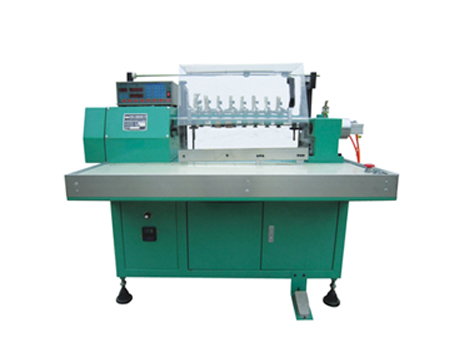
Electrical Motor Stator Coil Winding Machine for Cooler Motor
High-torque programmable winding apparatus designed for multi-speed induction stators requiring deep slot fill and precise turn indexing.
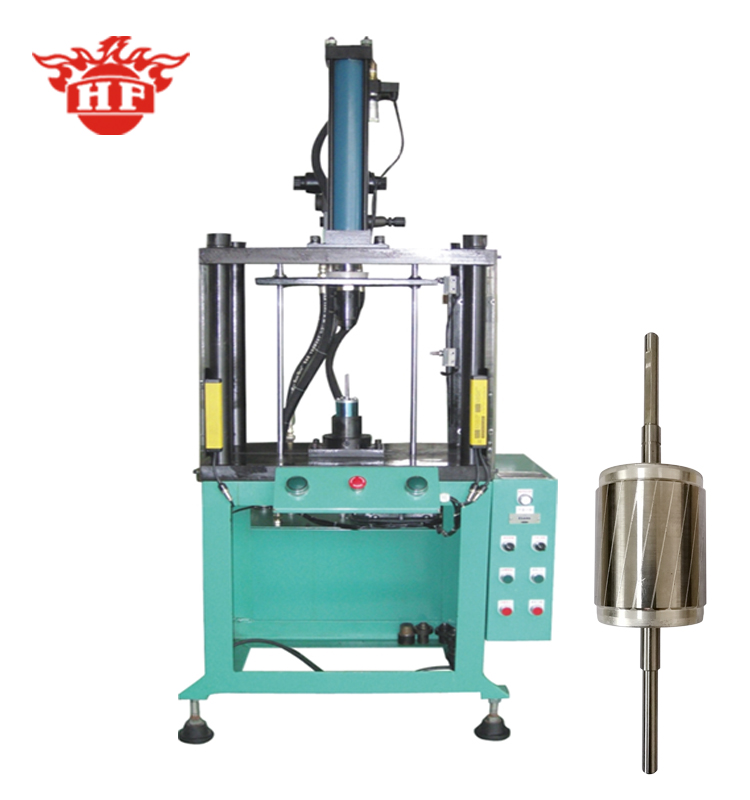
New Rotor and Shaft Inserting Hydraulic Press Machine for Manufacturing Plant 1 Year Warranty HF-W50
Industrial rotor assembly machine engineered with controlled tonnage stroke to lock drive shafts into laminated squirrel-cage rotors.

HF-W120H HONGFANG Electric Motor Stator Coil Final Forming Second Shaping Machine for Manufacturing Plant New 1 Year Gear
Secondary shaping hydraulic workstation delivering radial compression to overhang coils to guarantee housing and bore tolerances.

Hot Sale Armature Winding Machine for Fan Motor
Dual-flyer high-speed armature winder with automated commutator indexing and tension regulation for fractional horsepower DC drives.
Electromechanical Integrity: The Physics of Stator Coil Lacing in Industrial Motors
In electric motor manufacturing and rewinding, stator coil lacing is not merely a finishing cosmetic procedure; it is a critical mechanical fortification process that directly determines an electric motor's service life, mean time between failures (MTBF), and electromagnetic efficiency.
During direct-on-line (DOL) starting or high-frequency switching via variable frequency drives (VFDs), electric motor stator windings experience severe electrodynamic shock loads. The instantaneous electromagnetic force (Lorentz Force: F = I × (L × B)) acting between adjacent coil turns can reach peak values up to 40 times normal rated levels. Without uniform, high-tension binding across the coil overhang:
Micro-Fretting & Inter-Turn Shorts
Microscopic oscillation between unlaced magnet wires rubs away polyurethane, polyesterimide, or polyamide-imide enamels, producing devastating inter-turn dielectric breakdown.
Geometric Clearance Compromise
Loose overhang bundles expand thermally during thermal class F and H duty cycles, fouling end-bells, blocking forced convection cooling ducts, or colliding with internal rotor fans.
Harmonic Resonance Degradation
Under non-sinusoidal pulse-width modulation (PWM) inverter supply, loose coils resonate mechanically, generating high acoustic noise profiles and loosening structural slot wedges.
Industrial Automation Trends: Serving Riga's Evolving Manufacturing Landscape
As the primary industrial hub of Latvia and a vital logistics node along the Baltic maritime corridor, Riga maintains a sophisticated engineering heritage in heavy machinery, electrical apparatus repair, maritime propulsion servicing, and industrial ventilation systems.
In facilities operating across Riga's historical industrial clusters—such as the Freeport of Riga industrial zone, Mārupe business park, and regional electro-mechanical service centers in Salaspils and Jelgava—motor assemblers and rewinding workshops face pressing competitive challenges:
Transition from Manual Overhang Binding to Automated CNC Precision
Historically, motor rebuilding across the Baltics relied heavily on artisanal manual tying using linen or polyester cord. However, soaring labor costs in Riga (averaging annual wage indexations of 6-8%), coupled with an acute scarcity of veteran winding winders, make manual lacing a major production bottleneck. An automated HF-series stator coil lacing machine completes a stator end-turn lacing cycle in 12 to 24 seconds—a task requiring 15 to 25 minutes of rigorous manual hand strain.
Stricter European Ecodesign Regulations (EU 2019/1781)
With the European Union enforcing strict IE3 and IE4 minimum efficiency standards for low-voltage induction motors operating across Latvia and Northern Europe, OEMs cannot tolerate excessive copper loss or distorted magnetic fields. High-precision mechanical lacing guarantees high slot fill densities and compact overhang shapes, reducing copper resistance (I²R losses) by optimizing the mean turn length of magnet copper wire.
Furthermore, Riga's maritime and logistics sector demands heavy-duty marine pump motors, crane hoist drives, and wastewater aeration blowers capable of enduring high humidity, salt spray, and extreme thermal cycling. Machine-laced stators deliver structural rigidity during resin impregnation (VPI or dip-and-bake), eliminating internal air voids that accelerate partial discharge.
Comparative Analysis: Manual Lacing vs. Pneumatic Indexing vs. CNC Servo Double-Side Lacing
Selecting the optimal equipment configuration for a production floor in Riga depends on production volume, stator stack height variations, slot count complexity, and coil pitch. The following engineering matrix evaluates operational parameters:
| Performance Metric | Traditional Manual Lacing | Pneumatic Single-Side (HF-Single) | Dual-Servo Double-Side (HF-BS20) |
|---|---|---|---|
| Lacing Cycle Time (36-Slot Stator) | 12 – 20 minutes | 25 – 45 seconds / side | 14 – 22 seconds (Both Ends) |
| Tension Uniformity (N) | ± 45% (Operator Fatigue Dependent) | ± 15% (Mechanical Brake) | ± 3% (Closed-Loop Servo Tension) |
| Lacing Patterns Supported | Variable (Non-Repeatable) | Slot-by-slot, Skip-slot | Programmable: Slot-by-slot, skip, double-stitch, cross |
| Wire Insulation Damage Risk | High (Uneven hand-hook friction) | Low (Smooth polished needle eye) | Near Zero (Servo trajectory synchronized) |
| Applicable Stator Stack Height | Manual reach limit (Fatigue prone) | 10 mm – 160 mm | 15 mm – 250 mm (Heavy Frame Motors) |
| Compatibility with EU Power Grid | N/A | Single-Phase 220V / Three-Phase 380V | EU Standard 400V 50Hz (Customizable Delta/Siemens) |
Why Baltic Industrialists Partner with Zunqi Intelligent Equipment
Headquartered in Dongguan—the world's capital for precision machine manufacturing and electromechanical integration—Zunqi Intelligent Equipment Co., Ltd. (operating the Hongfang machinery lines) delivers 17+ years of international manufacturing, testing, and deployment expertise directly to clients in Latvia and Northern Europe.
Custom-Machined Stator Tooling
Every stator core geometry is unique. Send us your stator lamination drawings (PDF/DWG) or physical samples from your Riga plant. Our engineering department designs and CNC-mills customized inserting fingers, guide needles, and forming jaws hardened to HRC 58-62.
Western European Control Options
While our standard builds feature robust Delta or Inovance control platforms, we configure machines for European plants with Siemens S7-1200 PLCs, Schneider contactors, Omron sensors, and SMC pneumatics, guaranteeing immediate parts interchangeability.
Door-to-Door Baltic Freight & CE Documentation
We provide full export crating in fumigation-free solid plywood cases, complete with VCI anti-rust barrier packaging for maritime transport via the Port of Riga, accompanied by comprehensive English wiring schematics and CE technical files.
Frequently Asked Questions: Purchasing & Operating in Latvia
Direct answers for factory directors, plant engineers, and purchasing officers across Riga and the wider Baltic industrial sector.
Q: Can machines be configured for Latvia's electrical grid (400V 3-Phase / 230V Single-Phase 50Hz)?
Yes. All machines built for clients in Riga and the European Union are equipped with CE-compliant power systems designed for 400V/230V ±10% at 50Hz. Control circuits run on stabilized 24VDC for maximum operator safety in accordance with EN 60204-1 standards.
Q: What lacing cord materials are compatible with your lacing machines?
Our needle feed mechanisms accommodate all standard industrial lacing twines, including waxed polyester cord, flat braided polyester twine, Nomex® aramid lacing tapes (for Class H insulation applications), and high-tensile fiberglass cords without jamming or tension fraying.
Q: How long does tooling changeover take when switching stator frame sizes?
For our single-side and double-side CNC machines, a complete tooling changeover (stator clamping ring, height stops, and index positioning) requires approximately 15 to 25 minutes using modular quick-release fixtures. Stator winding parameters are instantly recalled via the touchscreen HMI.
Q: How do you provide post-sales technical commissioning in Riga?
We provide complete bilingual video documentation, comprehensive PLC ladder schematics, and live remote video commissioning with our lead automation engineers. In addition, every machine ships with a comprehensive spare parts kit (extra needles, hook blades, tension springs, proximity sensors).
Q: What is the typical lead time for custom-tooled machines shipped to Latvia?
Standard fabrication and customized tooling verification take 20 to 35 business days. Sea freight to the Port of Riga typically spans 30 to 38 days, while critical rush units can be dispatched via air freight to Riga International Airport (RIX) within 7 days.
Q: What is the Minimum Order Quantity (MOQ) and warranty period?
Our MOQ is strictly 1 set for all standalone machinery (winding, inserting, lacing, forming, and shaft pressing). All equipment is backed by our full 1-year manufacturer warranty, with lifelong engineering consultation and replacement part availability.
Modernize Your Stator Production Line in Riga
Submit your stator lamination drawing, stack dimensions, and desired cycle time. Our senior engineering staff will review your specifications and furnish a comprehensive proposal with tooling simulations within 9 hours.
