
- Dual micro-computer control system
- Simultaneous 2-station high-speed cycle
- Zero enamel scratch guide mechanism

- Wire range: 0.1mm - 1.2mm Cu/Al
- Precision magnetic tensioners
- Multi-pitch programmable flyer

- High-rigidity cast machine bed
- Sub-micron concentricity control
- Pneumatic quick-clamp tooling
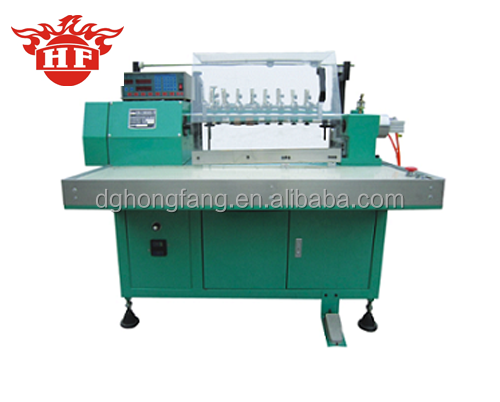
- 8 high-efficiency winding spindles
- Operating velocity up to 3000 RPM
- Automated coil transfer ready
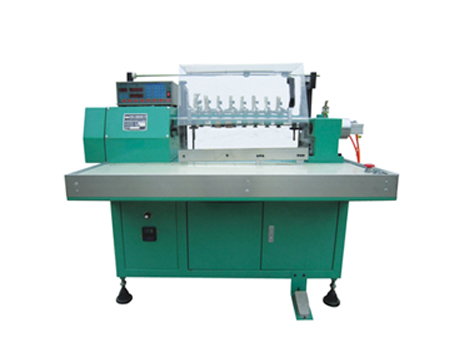
- Deep slot lamination handling
- Heavy-duty copper gauge capability
- Programmable stepping pitch

- Cuffing, cutting, forming in 1 pass
- Nomex, DMD, Mylar compatible
- Cycle time: 0.35s – 0.5s per slot

- Continuous & slot-skipping lacing
- Uniform tension needle system
- Compact footprint for cell layout

- Simultaneous coil & wedge transfer
- Custom-profiled pushing fingers
- Zero-enamel scuff tooling design
The Japanese electric motor manufacturing landscape stands at an inflection point. Characterized by unmatched precision engineering, stringent Monozukuri philosophies, and strict adherence to Japanese Industrial Standards (JIS C 4004 / JIS C 4210), production plants across Japan—from the industrial heartlands of Aichi, Shizuoka, and Kanagawa to the precision machinery corridors of Kansai—face an urgent dual imperative: drastically elevating production efficiency while overcoming an acute demographic transition. As legacy manual coil insertion masters retire, automated motor coil inserting machines have evolved from simple capital expenditure into core strategic infrastructure.
Modern high-efficiency induction motors, variable-frequency drives (VFD), brushless DC (BLDC) motors, and permanent magnet synchronous motors (PMSM) demand slot fill factors exceeding 75% to 82% to achieve IE4 (Super Premium Efficiency) and IE5 (Ultra Premium Efficiency) ratings. At these densities, manual insertion risks inter-turn insulation fatigue, microscopic enamel abrasions, and inconsistent phase-to-phase spacing. Zunqi Intelligent Equipment Co., Ltd. bridges this technological threshold, exporting high-precision, servo-synchronized coil and slot wedge inserting systems calibrated specifically for Japanese electrical requirements, footprint constraints, and quality assurance benchmarks.
Technical Distinction: Unlike standard insertion machines that utilize fixed-stroke mechanical linkages, our export-grade machines for the Japanese market employ programmable multi-axis servo synchronization. Both the pushing fingers and the wedge delivery guides advance along an adaptive velocity curve, eliminating tensile shock on ultra-fine enameled copper wires (down to 0.1 mm) as well as heavy gauge inverter-rated magnet wires.
In Japanese motor manufacturing facilities, partial discharge extinction voltage (PDEV) tests and surge voltage wave tests reject any stator lamination showing microscopic varnish layer removal. The fundamental challenge of stator coil insertion lies in the frictional interface between the enameled conductor, the slot cell insulation paper, and the electrical silicon steel teeth. To guarantee zero damage during high-velocity simultaneous insertion, Zunqi adopts proprietary manufacturing processes for tooling guides, insertion blades, and wedge pushers:
DC53 & SKD11 Tooling Steels
Guide blades and insertion teeth undergo vacuum heat treatment (HRC 60–62) followed by cryogenic stabilization. This prevents microscopic tool deflection during continuous production runs in automotive Tier-1 factories.
Mirror Micro-Finishing (Ra ≤ 0.2μm)
Every wire guide channel receives progressive CNC diamond lapping and mirror polishing. Reducing boundary friction ensures polyimide, polyamide-imide (PAI), and polyester-imide enameled wires glide smoothly without scuffing.
Dual-Stroke Wedge Feeding
Integrated pneumatic-servo wedge mechanisms feed, crease, cut, and seat insulation wedges (Nomex, DMD, polyester film) into the slot lips simultaneously with the magnet wire, preventing slot liner roll-back or dislocation.
| Technical Parameter | Standard Commercial Grade | Japan Export Grade (Zunqi Monozukuri Edition) | Significance for Japanese Motor Plants |
|---|---|---|---|
| Insertion Motion Drive | Hydraulic / Fixed Mechanical Cam | Multi-Axis Absolute Servo (Mitsubishi/Panasonic/Delta) | Programmable acceleration curves avoid wire stretch & impact shock |
| Applicable Wire Diameter | 0.25 mm – 0.85 mm | 0.10 mm – 1.20 mm (Multi-strand grouping) | Supports both precision micro-motors and industrial pump stators |
| Stator Stack Height Range | 20 mm – 160 mm | 10 mm – 260 mm (Adjustable tooling kits) | Rapid changeover for multiple motor frame sizes (IEC & JIS standards) |
| Wedge Material Compatibility | Standard Polyester (PET) film | DMD, NMN, Nomex, Polyimide, Vulcanized Fiber | Class F, H, and Inverter-Duty high-temperature insulation compliance |
| Power Grid Compliance | 380V 50Hz Standard | 200V 3-Phase 50Hz (East Japan) / 60Hz (West Japan) | Seamless factory integration across Tokyo, Nagoya, and Osaka grids |
| Safety & E-Stop Architecture | Basic mechanical limit switches | Dual-channel Safety Relays & Optical Light Curtains | Complies with Japanese Industrial Safety & Health Law standards |
The Japanese archipelago features distinctly specialized regional manufacturing corridors. A motor coil inserting machine exporter cannot offer a "one-size-fits-all" solution. Zunqi configures equipment parameters to match the dominant motor topologies within Japan's key manufacturing prefectures:
Automotive Auxiliaries & xEV Actuators
Concentrated in Aichi, Shizuoka, and Mie prefectures. Production focuses on Electronic Power Steering (EPS), high-efficiency radiator fan motors, electric water pumps (EWP), and HVAC blower motors. Our inserting machines guarantee 100% wedge retention and strict end-turn dimensional limits for compact under-hood packaging.
Precision Servo Motors & Collaborative Robots
Centered around Osaka, Kyoto, and Hyogo. Focuses on low-cogging torque, high-dynamic response industrial servo stators. With multi-pole, small-skew slots, our micro-tolerance blade assemblies ensure flawless winding insertion without deforming ultra-thin electrical steel sheets (0.2 mm – 0.35 mm).
Factory Automation & Semiconductor Equipment
Spanning Kanagawa, Saitama, and Ibaraki. Demands compact motor designs, zero particle generation, and cleanroom compatibility. Zunqi offers clean-pneumatic configurations, enclosed gear drives, and anti-static ESD-rated discharge fixtures.
Inverter Air Conditioning & Compressor Stators
Major production lines for energy-saving rotary and scroll compressor motors. These motors operate under pressurized refrigerant and oil environments, requiring precise Class H insulation wedge insertion without edge burrs that could compromise dielectric oil purity.
Industrial Submersible & Hydraulic Pump Motors
Deep-well, continuous-duty industrial pump motors with deep-slot lamination stacks (up to 250 mm+). Our high-thrust servo ball-screw inserters provide continuous, uniform force through the entire stack length without jamming.
Traction Auxiliaries & Commercial Transit
High-reliability auxiliary air compressor and door actuator motors for Shinkansen and metropolitan subway networks. Stators must endure extreme thermal cycling and shock loads, verified through our post-insertion forming and double-sided lacing processes.
Japan's motor manufacturing sector is rapidly advancing under multiple technological and macroeconomic pressures. Understanding these trends is critical for plant managers, procurement directors, and production engineering chiefs evaluating Chinese equipment suppliers:
The Japanese Ministry of Economy, Trade and Industry (METI) has highlighted the retirement of senior craftsmen across the manufacturing base. In manual winding and inserting workshops, operator fatigue causes varying wire tension and micro-abrasions that go undetected until final high-pot testing. Automatic inserting equipment eliminates human inconsistency, codifying the tactile skill of experienced technicians into digital servo profiles stored on touch-screen interfaces.
Under the Japanese Energy Conservation Act (Top Runner Program), industrial three-phase induction and permanent magnet motors must meet IE4/IE5 efficiency benchmarks. Achieving these ratings without increasing stator frame size requires maximizing active copper density. Our inserting tooling is designed for tight slot openings (down to 1.5 mm) with optimal slot fill ratios, giving Japanese motor designers the physical space needed to optimize electromagnetic efficiency.
Unlike unified national grids, Japan is split between 50Hz (Eastern Japan, powered by Tokyo Electric Power) and 60Hz (Western Japan, powered by Chubu/Kansai Electric Power) at 200V AC. Standard import machines with non-isolated 380V 50Hz electrical components require expensive external transformers. Zunqi configures all export machines with direct 200V (50Hz/60Hz selectable) primary power cabinets, certified industrial control transformers, and Japanese wire-color coding (JIS C 0446).
Headquartered in Qishi Town, Dongguan City—within the premier advanced manufacturing corridor of Guangdong Province—Zunqi Intelligent Equipment Co., Ltd. has served global electric motor manufacturers for over 17 years. Combining proprietary mechanical engineering with open-architecture industrial controls, we deliver factory-direct pricing without sacrificing the reliability expected by overseas procurement teams.
Custom Stator Tooling
Every set of inserting blades, pushers, and wedge magazines is custom CNC-machined to your exact stator lamination drawings and slot geometries.
Japanese Component Brands
Full integration of Japanese PLCs, touch panels, and servos (Mitsubishi Electric MELSEC, Omron Sysmac, Panasonic) for seamless integration with your plant floor.
Physical Trial Testing (FAT)
We invite Japanese buyers to send real stator laminations and magnet wire for live test-winding and video acceptance before crate dispatch.
Complete Turnkey Lines
Seamless compatibility across insulation paper inserting, coil winding, inserting, forming, double-sided lacing, and rotor turning machines.
Our onsite-checked manufacturing facility operates with 51 to 100 skilled engineers and machinists. With published trade capacity, audited Alibaba supplier verification, transparent transaction histories, and an average response time of under 9 hours, we provide Japanese buyers with transparent, low-risk procurement from technical consultation through long-term wearing parts supply.
A motor coil inserting machine operates at peak efficiency when integrated into a matched equipment line. Mismatched cycle times or poorly formed coil bundles create bottlenecks and increase wire scrap rates. Zunqi designs balanced production lines where each station complements the next:
| Sequence | Process Step | Dedicated Machine | Key Machine Functionality | Quality Checkpoint |
|---|---|---|---|---|
| Phase 01 | Slot Cell Insulation | Stator Slot Insulation Inserting Machine | Pneumatic cutting, edge creasing, and slot-by-slot liner insertion | Dielectric withstand voltage & cuff height symmetry |
| Phase 02 | Coil Group Winding | Multi-Spindle / Flyer Stator Coil Winder | High-speed flyer or multi-station winding onto transfer cups | Turn-count accuracy & enamel surface integrity |
| Phase 03 | Coil & Wedge Insertion | Automatic Coil & Wedge Inserting Machine | Simultaneous transfer of coil bundles and slot closing wedges | Zero crossed wires, complete slot filling, wedge centering |
| Phase 04 | Intermediate Forming | Stator Coil Intermediate Forming Machine | Hydraulic/mechanical expansion to clear the inner rotor bore | Internal bore clearance & end-turn outer diameter |
| Phase 05 | End-Turn Lacing | Servo Double-Sided Stator Coil Lacing Machine | Simultaneous tying of both coil heads with synthetic cord | Stitch tension, knot integrity & lead wire securing |
| Phase 06 | Final Sizing / Forming | Final Stator Coil Forming Machine | Final dimensional sizing of end-turn height and envelope | Outer enclosure clearance & phase separation verification |
| Phase 07 | Rotor OD Turning | Rotor Fine Turning & Surface Cutting Machine | Precision skimming of rotor outer diameter with diamond tooling | Air gap tolerance consistency (±0.01 mm) & low runout |
| Phase 08 | Shaft Assembly | Electric Motor Rotor Shaft Pressing Machine | Controlled force hydraulic or servo interference fit pressing | Shaft concentricity, axial position & push-out force |
