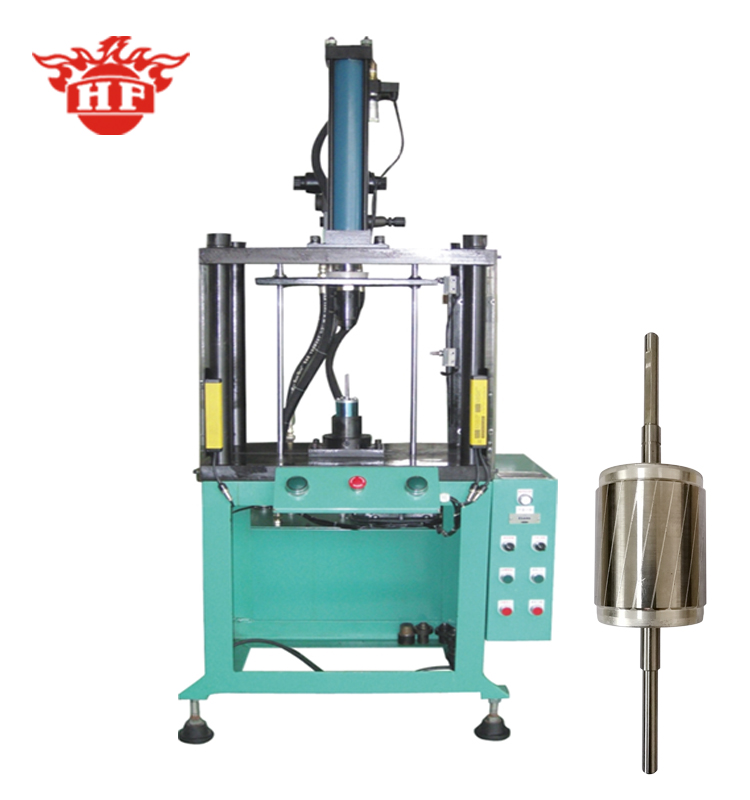
New Good Quality Fully Automatic Fan Motor Coil Winding Machine
- ✓ Dual-station flyer winding cycle
- ✓ Copper & aluminium wire (0.1–1.2 mm)
- ✓ Dedicated industrial PLC control
From single-cell fine turning lathes to complete automated stator assembly cells. Every system features dedicated tooling engineered specifically to your core lamination drawings and UK electrical grid configurations.
How precision CNC rotor outer-diameter turning eliminates electromagnetic flutter, curtails harmonic losses, and delivers compliant Ecodesign IE3/IE4/IE5 performance.
In electric motor manufacturing—specifically induction motors, shaded-pole assemblies, external rotor impellers, and brushless permanent magnet (BLDC) fan units—the mechanical clearance between the stationary iron core (stator) and the rotating body (rotor) defines the electromagnetic transfer efficiency. In the United Kingdom, where industrial electrical energy tariffs demand peak operating efficiency under the Ecodesign for Energy-Related Products Regulations, fan manufacturers face rigorous testing regimes. An irregular air gap, stemming from imprecise rotor core turning, produces parasitic eddy currents, excessive audible noise (NVH), elevated mechanical vibration, and catastrophic stator-rotor contact under thermal expansion.
Traditional grinding operations on squirrel-cage die-cast rotors often result in microscopic smearing of aluminum across silicon steel laminations. This microscopic bridge "shorts out" the insulated magnetic sheets, dramatically escalating core eddy current losses. Modern rotor turning via dedicated CNC diamond tooling (PCD) produces a crisp, shear cut across alternating steel and aluminum surfaces, leaving clean lamination boundaries while preserving the precise radial dimension within ±0.003 mm.
Our dedicated Fan Motor Rotor Turning Machine lineup utilizes ultra-rigid cast-iron bed structures, pneumatically actuated precision collets, and dynamically balanced spindle drives. Designed to interface seamlessly with modern lean-manufacturing cells across the Midlands, South East, and Yorkshire manufacturing corridors, these machines achieve high-cycle repeatability, eliminating secondary deburring or dynamic balancing rework.

| Machining Attribute | Zunqi Rotor Turning Series (HF-C60/C80) | Conventional Industrial Lathe | Cylindrical Grinding Machine |
|---|---|---|---|
| Cycle Time (Ø80mm x 40mm) | 8 – 14 Seconds (Automated Pneumatic) | 45 – 90 Seconds (Manual clamping) | 35 – 60 Seconds + Dressing cycles |
| Lamination Smearing Risk | Extremely Low (PCD Shear Geometry) | Moderate to High (HSS / Carbide deflection) | High (Abrasive grain drag shorts laminations) |
| Radial Runout (T.I.R.) | ≤ 0.005 mm (≤ 5 microns) | ≤ 0.025 mm | ≤ 0.004 mm |
| Clamping Mechanism | Shaft Center + Expanding Pneumatic Collet | 3-Jaw Manual Chuck (Induces stress warp) | Between Centers with Dog Carrier |
| Surface Roughness (Ra) | Ra 0.8 – 1.6 µm (Optimal for Air Friction) | Ra 2.5 – 3.2 µm | Ra 0.4 – 0.8 µm |
| Dust & Swarf Extraction | Enclosed Dedicated Vacuum Manifold | Open Slideway (Contaminates lead screws) | Coolant Sludge Disposal Required |
Supplying Tier-1 ventilation fabricators, bespoke specialist pump engineers, and domestic extractor assembly plants across England, Scotland, and Wales.
UK commercial building codes (Approved Document F) mandate ultra-quiet, energy-optimized mechanical ventilation. Our rotor turning lathes process squirrel-cage induction rotors for inline centrifugal blowers and axial roof extractors, guaranteeing concentricity that suppresses 100Hz electromagnetic hum in public and hospital spaces.
With British housebuilders heavily deploying Mechanical Ventilation with Heat Recovery (MVHR) systems under Part L thermal efficiency rules, motor manufacturers must achieve micro-air gaps in fractional horsepower (FHP) BLDC and shaded-pole motors. Our equipment eliminates dimensional eccentricity on high-speed continuous-running motors.
Supplying tier suppliers servicing the UK EV battery thermal conditioning and rolling-stock traction cooling sectors. Machining rotors designed for elevated ambient temperatures requires burr-free conductor bars and perfect outer diameter tolerances to preserve torque density across demanding operational thermal cycles.
Strategic imperatives impacting equipment procurement for operations managers across the British manufacturing landscape.
Under Statutory Instrument 2021 No. 745 (The Ecodesign for Energy-Related Products and Energy Information Regulations), UK motor manufacturers are aggressively retooling lines to eliminate losses. Rotor surface finish and dimensional precision directly control the motor's reactive power (power factor) and stray load losses. Upgrading from rough lathing to automated diamond PCD fine turning is the single fastest mechanical ROI to elevate fan motor efficiency classes.
UK precision engineering hubs in the West Midlands and Northern England report severe shortages of seasoned lathe machinists. Investing in our automated rotor turning machines—equipped with single-button auto-clamping, servo tool-feed, and integrated safety light curtains—empowers general floor operators to run multiple production cells safely and without error, drastically lowering per-unit production cost.
British engineering managers require hardware that avoids proprietary component lockouts. Zunqi builds control systems utilizing globally available, UK-supported component architectures—including Siemens S7, Mitsubishi Electric, Schneider Electric, and Omron switchgear—ensuring that UK factory maintenance teams have immediate access to regional spare parts and PLC diagnostics.
With 17 years of dedicated global export experience from our Dongguan automation facility, we bridge the gap between competitive factory-direct equipment and uncompromising industrial reliability.
We do not sell rigid off-the-shelf machines. Every rotor collet, coil former, inserting blade, and hydraulic shaping mould is engineered directly from your supplied CAD blueprints and verified using physical core samples prior to shipping.
Prevent finger-pointing between separate vendors. We supply the complete matched stator and rotor chain: slot insulation insertion, coil winding, simultaneous wedge/coil insertion, intermediate/final shaping, lacing, rotor turning, and shaft hydraulic pressing.
Every UK export machine undergoes an intensive multi-hour trial run on our test floor using your exact core specifications. High-definition test videos, dimension reports, and radial runout micrometer logs are signed off by you prior to container packing.
All units are packed in non-coniferous ISPM-15 compliant fumigation-free solid plywood crates, vacuum sealed with VCI anti-corrosion barrier wrapping for rough North Atlantic sea voyages. Complete maintenance toolkits and wear spares are included.
Clear, direct answers regarding electrical supply, logistics to British container ports, customs documentation, and on-site support.
Yes, absolutely. We engineer the internal control transformer and servo power stage to match the UK three-phase 415V 50Hz or single-phase 230/240V 50Hz electrical distribution. Motors, VFDs, and PLC power supplies are properly rated to avoid neutral overload or frequency drift.
We routinely arrange CIF, CFR, FOB, and DDP shipments to all primary United Kingdom ocean freight terminals, including the Port of Felixstowe, Southampton, London Gateway, and Liverpool. Airfreight options via Heathrow (LHR) or Manchester (MAN) are available for urgent tooling or small cells.
All machines carry an unrestricted 1-Year Comprehensive Warranty. Because our systems feature intuitive PLC touchscreens with English operating logic and schematic diagrams, 95% of UK clients install and commission via our live engineer video walk-throughs. If physical commissioning is required, our technical service engineers can travel to your site.
Standard machine frames are maintained in semi-assembled stock. Dedicated rotor clamping tooling, collets, and diamond tool holders designed to your lamination drawings require 20 to 30 calendar days for precision machining, heat treatment, and factory trial testing.
Yes. Fan motor rotors universally employ skewed squirrel-cage bars to suppress cogging torque. Our machine kinematics and ultra-sharp PCD insert geometry handle intermittent cutting shocks over skewed slots without chipping tool edges or pulling burrs into the core iron.
Every shipment is accompanied by a full English operations and maintenance manual, comprehensive electrical ladder logic diagrams, pneumatic schematics, spare parts exploded assembly drawings, and factory test inspection certificates.
Speak directly with our senior tooling engineers. Send your rotor or stator engineering drawing today for a comprehensive cycle-time analysis, technical configuration, and competitive CIF/DDP United Kingdom quote.