OEM & ODM Stator Automation · ISO 9001:2015

China Wholesale Stator Winding Inserting Machine Manufacturer & Supplier in the Rome Market

Engineered for Italian HVAC, Industrial Pumps, and E-Mobility Motor Fabricators Requiring Sub-Micron Precision, CE Compliance, and High Copper Slot-Fill Density.

17+
Years Export Experience
≤9h
Rapid Engineering Desk
99.8%
Insertion Yield Rate
CE / EN
Harmonized EU Safety
Machinery Portfolio

Industrial Stator Winding, Inserting & Finishing Systems

Factory-direct electrical automation engineered in Dongguan and tailored to European technical specifications. Each modular station provides high slot filling capacity, programmable multi-axis servo coordination, and low cycle degradation.

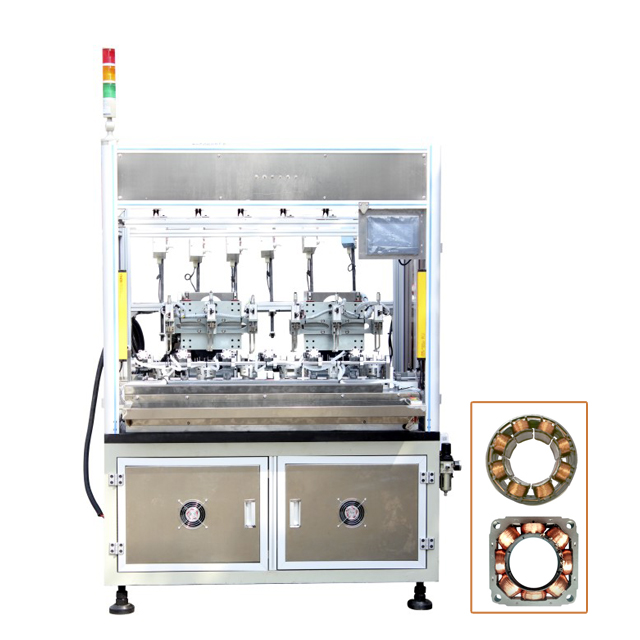
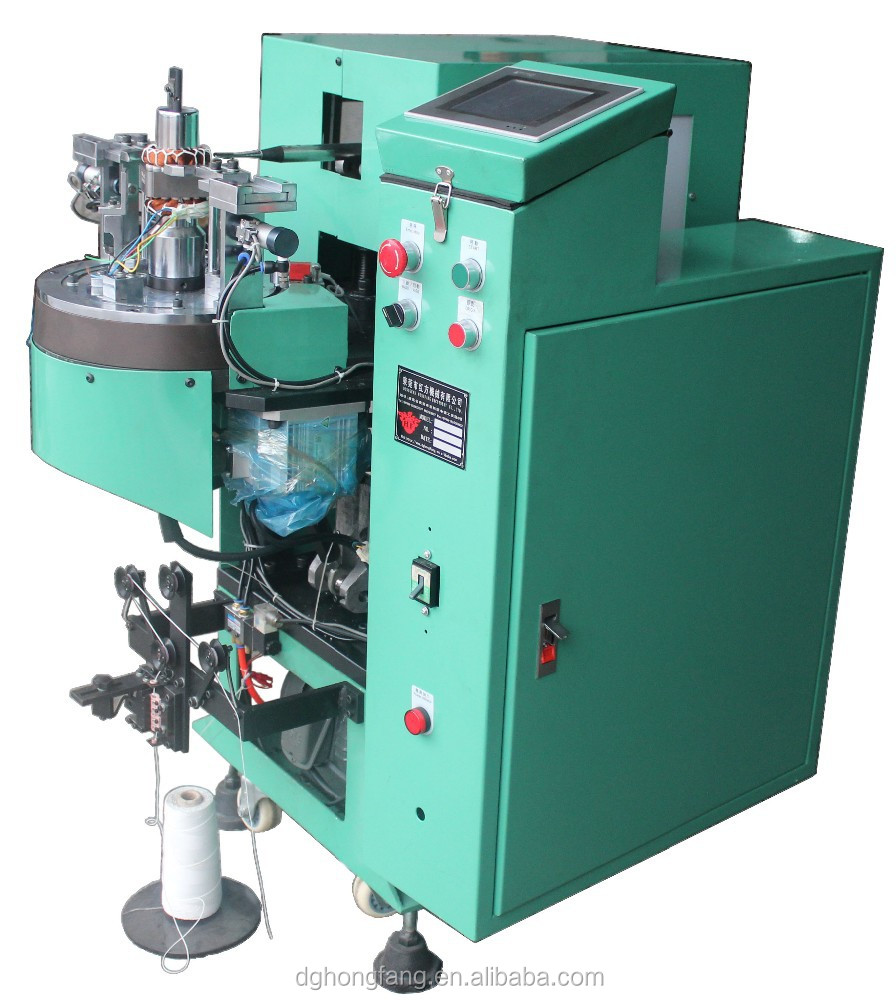
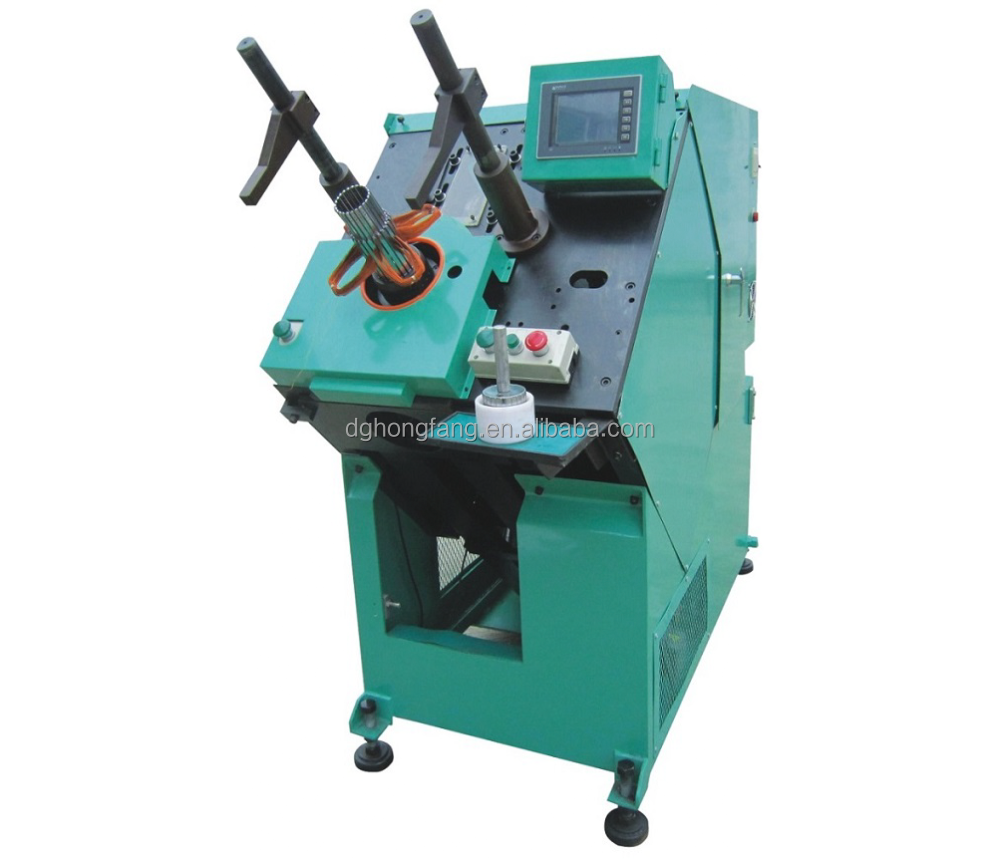
Simultaneous Feed Coil and Wedge Paper Inserting Machine

Coil & Wedge Paper Inserting Machine

Single-stroke simultaneous coil bundle and slot-wedge insertion system. Eliminates manual tucking, protects wire enamel, and ensures zero displacement of slot insulation cells.

  • Tooling customized to stator inner diameter
  • Driven by dual high-torque servo drives
Technical Architecture

Physics-Informed Coil Insertion & Wedge Forming Mechanisms

Standard Chinese stator winders often encounter slot insertion jamming when applied to high-silicon European lamination steels. Our inserting systems incorporate patented kinematic advancements designed to protect insulation integrity.

Zero-Abrasion Push-Blade Kinematics

The insertion tooling utilizes ground SKD11 tool-steel push blades treated with titanium carbonitride (TiCN) coating. As the pushers descend through the stator bore, they guide the coil bundles and slot insulation wedges under synchronized velocity profiles, eliminating enamel scrape and localized partial discharge failure points.

Integrated Wedge Creasing & Feeding

Rather than requiring pre-cut wedges, the automatic wedge magazine uncoils Nomex®, DMD, or polyester film directly from roll stock, creases the strip precisely into an omega or U-profile, shears it to exact stack length +3mm margin, and seats it in the same downward stroke as the coil insertion.

Multi-Tier Industrial Control Architecture

Control systems are standardized on Siemens S7-1200 or Mitsubishi FX5U PLCs with high-resolution color HMIs. Italian plant managers can toggle directly between Italian and English interfaces, fine-tune stroke speeds, control jogging modes, and archive production recipes for over 100 individual stator topologies.

Regional Adaptation

Deploying Stator Automation Across the Rome & Lazio Manufacturing Hub

While northern regions like Lombardy and Emilia-Romagna receive substantial industrial attention, the industrial cluster surrounding the Metropolitan City of Rome—encompassing Pomezia, Frosinone, Latina, and the Tiburtina tech corridor—harbors world-class production facilities specialized in commercial fluid pumps, railway ventilation, aerospace actuation, and high-efficiency HVAC equipment.

Manufacturing enterprises in central Italy operate under stringent European efficiency directives (specifically EU Ecodesign Directive 2019/1781 mandating IE3 and IE4 minimum motor efficiencies). Achieving these ratings requires significantly higher slot fill factors (often exceeding 78%), which manual or semi-automated inserting setups cannot achieve without causing wire crimping or ground faults.

Tailored for Italian 400V 50Hz Grid Architecture

Every stator winding and inserting machine destined for Rome or the broader Italian market is factory-configured for 3-Phase 400V ±10% at 50Hz, complete with CE-compliant emergency circuitry (Pilz safety relays), IP54 electrical enclosures, and Schneider or Omron low-voltage switchgear.

By sourcing directly from our Dongguan manufacturing facilities, Italian equipment builders and Tier-2 motor sub-suppliers reduce their capital expenditure by 45% to 60% compared to domestic European machine tools, while retaining complete compatibility with Siemens/Schneider spare parts locally available through Italian automation distributors.
Rome Market Technical Compatibility

Grid Standardization: 400V 3-Phase, 50Hz & 230V 1-Phase auxiliary supply. Neutral and protective earth terminals matched to Italian CEI 64-8 electrical safety codes.
Tactical Line Cycle Times: Stator wedge & coil insertion achieved in 12 to 24 seconds depending on stack height (15mm to 160mm) and slot count (8 to 48 slots).
Import Documentation & Logistics: Customs dispatch under Taric code 8479.89.97. Seamless sea-freight routing via Port of Civitavecchia or air cargo into Rome Fiumicino (FCO).
Engineering Matrix

Technical Specification Comparison: Stator Inserting & Winding Series

Compare our primary stator assembly modules. All systems are delivered pre-calibrated to customer drawings with bespoke push-blade sets and transfer magazines.

Model Series Primary Operation Stator OD Range Stack Height Cycle Time Compatible Insulation Standard PLC Core
ZQ-CWI-40 Simultaneous Coil & Wedge Insert Ø30 – Ø160 mm 15 – 150 mm 14 – 22 sec/pc Nomex, DMD, Mylar, PET Mitsubishi FX5U
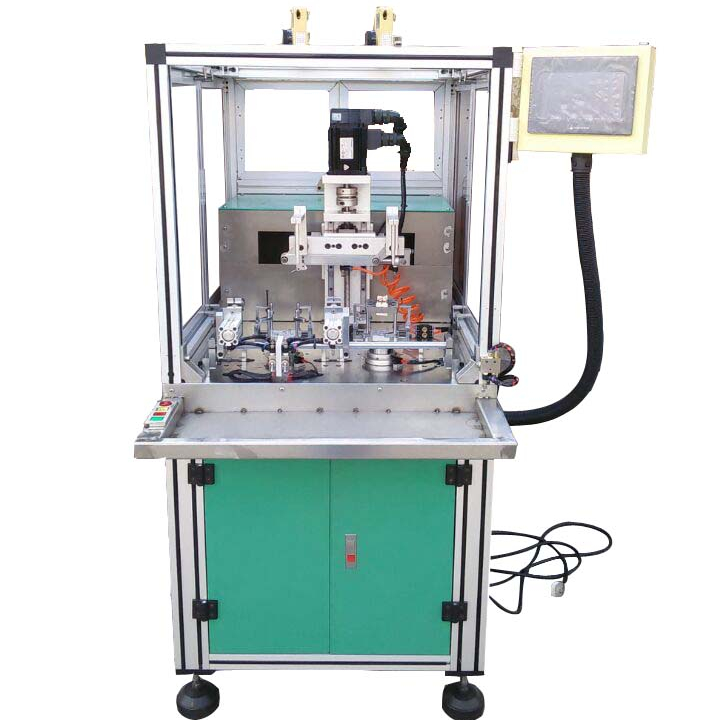
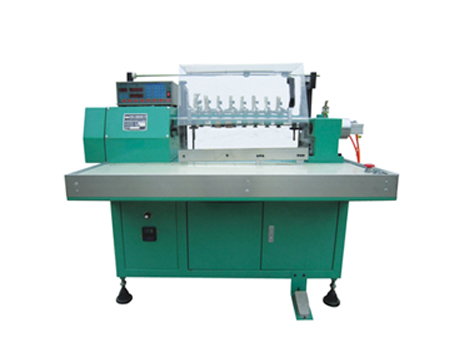
HF-LO2-6G 6-Station Internal BLDC Winding Ø20 – Ø120 mm 10 – 90 mm 8 – 16 sec/index Direct Core Slot Overmolding Delta Multi-Axis
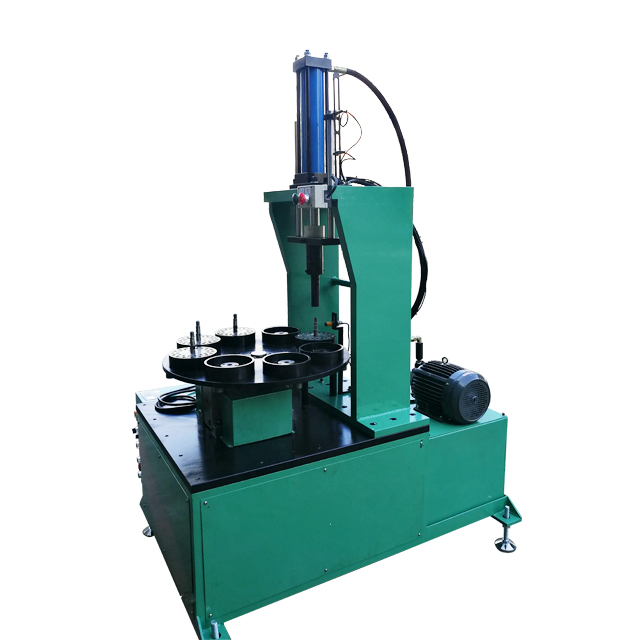
ZQ-W120H Hydraulic Final Coil Forming Ø40 – Ø220 mm 20 – 200 mm 9 – 14 sec/pc Class F & H Wire Bundles Siemens S7-1200
HF-BS20 Servo Double-Side Lacing Ø30 – Ø180 mm 10 – 160 mm 0.5 – 0.9 sec/stitch Polyester Cord, Nomex Tape Inovance Dual-Drive
HF-C60 Precision Rotor Core Turning Ø25 – Ø140 mm 20 – 250 mm 18 – 30 sec/pc N/A (Lamination Face) PLC Controlled CNC Tool
Enterprise Reliability

Why Engineering Procurement Teams Choose Zunqi Intelligent

Headquartered in Qishi Town, Dongguan, Guangdong, Zunqi Intelligent Equipment operates at the epicenter of precision machine tooling. We bridge Chinese manufacturing speed with uncompromising European operational standards.

17+ Years Global Export Authority

With nearly two decades exporting to more than 40 nations, we maintain verified onsite certification on Alibaba.com, an exceptional credit rating, and comprehensive international trade insurance, protecting your payment and machine shipment milestones.

Precision Tooling to Your Physical Drawing

We do not deliver generic, off-the-shelf assemblies. Every inserting shoe, push blade, and winding mandrel is custom CNC-machined to your exact lamination stamping drawing. We require physical stator cores for comprehensive factory acceptance testing (FAT) prior to shipping.

Rapid Technical Support Desk (≤9 Hours)

Our dedicated European export engineering group bridges time zone differences with verified response turnarounds within 9 hours. We provide bi-lingual documentation, schematic wiring diagrams, and high-definition video commissioning support.

Industrial Hardened Export Packaging

Every unit undergoes multi-layer protection: anti-rust protective oiling, VCI barrier film heat-sealing, chassis bolt-down stabilization to steel-reinforced bases, and heavy-duty, fumigation-free ISPM-15 plywood crating engineered for rough maritime logistics.

Single-Source Turnkey Stator Production

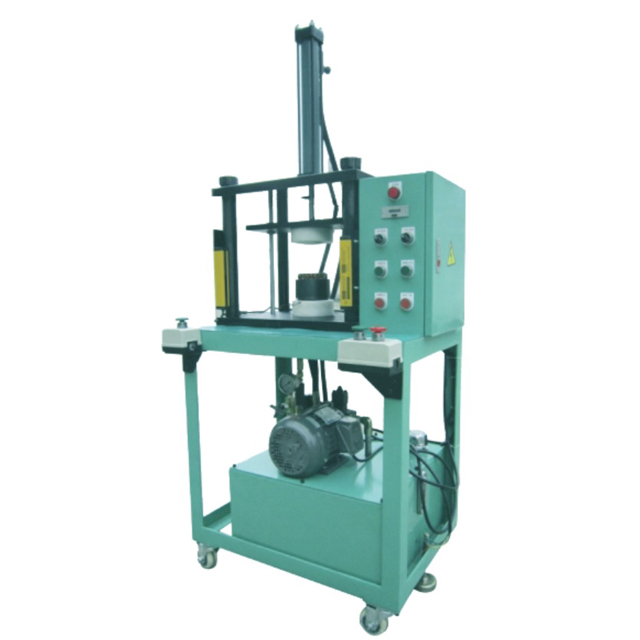
From slot cell paper insertion and coil winding to automatic coil-and-wedge inserting, intermediate forming, CNC lacing, final hydraulic shaping, and rotor shaft assembly—our machinery portfolio ensures completely synchronized line cycle times without inter-station bottlenecks.

1-Year Comprehensive Warranty & Spare Kit

All core mechanical, electrical, and hydraulic components carry a full 12-month manufacturer replacement warranty. Every shipment includes an initial spare-parts consumables kit containing extra push blades, lacing needles, cutting blades, and pneumatic seals.

Procurement FAQ

Frequently Asked Questions by Italian Engineering Buyers

Clear, definitive answers addressing customs logistics, technical tooling lead times, component availability, and remote commissioning for the Italian market.

What are the lead times and shipping routes for machine deliveries into Rome and Lazio? +

Standard manufacturing lead time for customized stator inserting and winding equipment is typically 25 to 40 days, which includes bespoke CNC tooling design, physical sample trial winding, and FAT video sign-off. Shipping via ocean freight from Shenzhen/Guangzhou ports to the Port of Civitavecchia (Rome's primary maritime gateway) or Naples takes approximately 28 to 34 days on direct sea lanes. For urgent line retrofits, air freight into Rome Fiumicino (FCO) takes 5 to 7 days.

Can your inserting tooling handle high-fill European IE3/IE4 stators without damaging magnet wire enamel? +

Yes. Premium-efficiency motors designed according to European standards require high slot-filling factors often exceeding 75% to 80%. Our machines utilize specialized progressive push-blade profiles and micro-polished guide shoes manufactured from hardened SKD11 tool steel. The servo-driven insertion mechanism allows programmable acceleration, deceleration, and micro-inching, ensuring that wire bundles enter the slots smoothly without mechanical scraping, dielectric pinholing, or wedge rupture.

How does your company manage CE compliance and European safety directives? +

All machinery exported to Italy and the wider European Union is constructed strictly following EU Machinery Directive 2006/42/EC, Low Voltage Directive 2014/35/EU, and Electromagnetic Compatibility (EMC) Directive 2014/30/EU. Safety architectures incorporate multi-beam safety light curtains, dual-channel emergency stop buttons connected via certified safety relays, interlocking access panels, and fully enclosed sheet-metal guards.

Are electrical components serviceable with parts locally sourced in Italy? +

Absolutely. We build our electrical control systems using internationally recognized component architectures. Customers can specify Siemens, Schneider Electric, Mitsubishi, Omron, or Delta PLCs and servos. Pneumatics are standardized on SMC or Airtac. If an electrical relay, proximity sensor, or solenoid valve ever needs replacement years down the road, your maintenance crew can source identical replacement parts from local Italian automation supply houses.

What sample data or physical components do you need to begin manufacturing our machine? +

To engineer the custom insertion tooling, we require: (1) 2D/3D CAD drawings of your stator lamination profile showing slot dimensions and core bore, (2) Minimum and maximum core stack heights, (3) Wire gauge (enamelled copper diameter or SWG/AWG) and winding schedule (turns per coil and coil group arrangements), and (4) Slot insulation paper and wedge material specifications. For guaranteed zero-defect line integration, we ask clients to courier 5 to 10 loose lamination stacks and a sample coil bundle to our Dongguan workshop for physical trial runs.

How are installation, parameter tuning, and operator training handled remotely? +

Every machine arrives pre-assembled and factory-calibrated. Upon uncrating, your engineers connect electrical and pneumatic lines according to our numbered color-coded schematics. We furnish step-by-step video training covering tooling changeover, slot indexing alignment, and HMI recipe programming. Furthermore, our senior automation engineers host live video commissioning sessions via Zoom/Teams to oversee initial production runs alongside your maintenance technicians.

Ready to Modernize Your Stator Production Line in Italy?

Send your stator core drawings, target stack heights, and daily output goals to our technical engineering team. Receive an engineering proposal, cycle-time simulation, and detailed FOB/CIF Rome quote within 9 hours.