Precision Coil Forming & Rotor Processing Systems
Our turnkey equipment portfolio powers modern electric drive manufacturing. Every platform provides stable modular tool sets, PLC automated sequences, and CE-compliant safety systems tailored for Swiss shopfloor integration.

HF-W120H HONGFANG Electric Motor Stator Coil Final Forming Machine
- Dual hydraulic cylinders for multi-axis compression
- Inner expanding mandrel + outer clamp tooling
- 1-Year warranty on core gear & hydraulic components

Automatic Rotor Fine Turning & Surface Cutting Machine HF-C60
- Integrated PLC motor and cutting coolant pump
- Preserves lamination insulation against short circuits
- High-speed automated pneumatic clamping fixture
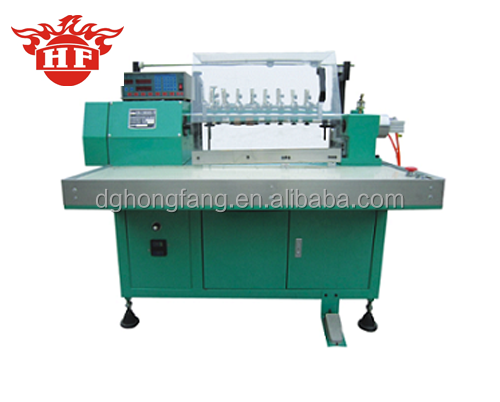
HF New CNC Auto Stator Coil Winding Machine (8 Heads, 3000 RPM)
- Simultaneous multi-head semi coil group winding
- Wire tension servo modulation across 0.1–1.2 mm
- Built for fan, pump, and small industrial drives

Precision Electric Iron Motor Shaft for Household & Industrial Motors
- High torsional rigidity with ground bearing seats
- Induction-hardened dynamic stress profiles
- Customized diameters and keyway press specifications

Fan Motor Rotor Rough Turning & Surface Cutting Machine
- Rapid stock removal prior to final cylindrical grind
- PLC-directed feed rate to prevent rotor skewing
- 1-Year warranty on heavy machine cast frame
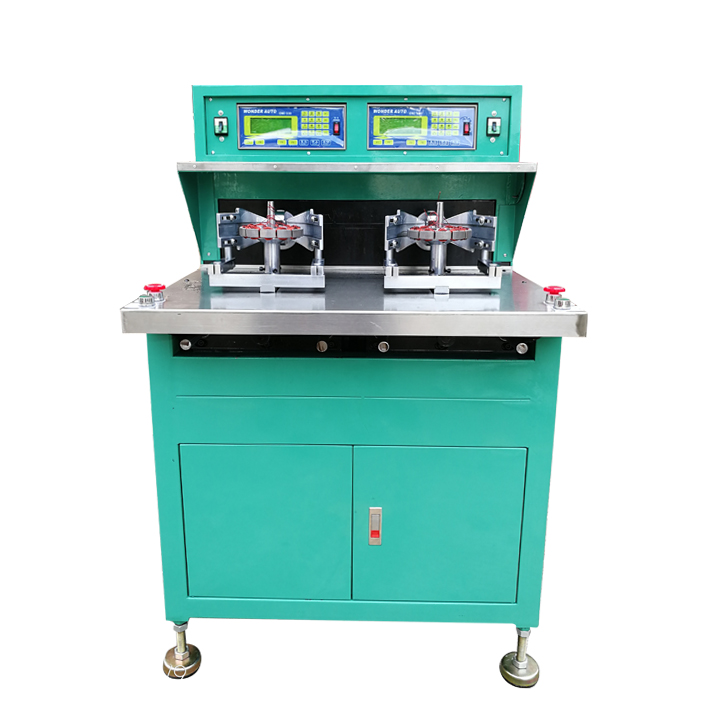
Heavy Duty 2-Station Automatic Ceiling Fan Winding Machine
- Independent dual-station PLC automation
- Runs smoothly on standard 220V 50Hz single-phase
- Optimized for domestic appliance and HVAC stators

2-Station External Stator Winding Machine for Transformer Motors
- Twin flyer arms for balance-wound outer stators
- Programmable indexing with micro-step precision
- Ideal for robotics, servo, and specialty transformers

HONGFANG HF-D50 Green Insulation Paper Insertion Machine
- Automatic slot edge folding, feeding, and cutting
- Zero puncture risk on high-grade Nomex/DMD sheets
- Single-step setup for variable stator lamination stacks
Precision Coil Forming in Demanding Induction & BLDC Motors
A rigorous examination of end-turn mechanical deformation, air-gap preservation, and copper fill factor optimization for Swiss electro-mechanical assemblies.
In modern industrial drive engineering, stator coil final forming—often categorized as the secondary or final shaping phase—determines the operational envelope and reliability of three-phase induction machinery and permanent magnet brushless motors. After coil and slot-wedge insertion, the winding end-turns exhibit volumetric springback and radial flaring. Without controlled mechanical forming, these wire bundles interfere with motor end-bells, impede rotor clearance, and reduce thermal dissipation throughput.
Our flagship HF-W120H Stator Coil Final Forming Machine deploys a synchronized 5-directional hydraulic expansion and compression mechanism. The core tooling features an inner expanding core mandrel, expanding slide shoes, and segmented outer clamping dies. This configuration guides individual copper conductors without damaging the enamelled dielectric coating, maintaining insulation integrity up to 4.5 kV/μm surge ratings required by European inverter-duty motors (IEC 60034-18-41).
Technical Information Gain: Secondary final forming controls magnetic stray flux losses by precisely defining coil overhang height. Maintaining uniform copper compacting increases slot space utilization, which reduces stator hot-spot resistance and supports Swiss IE4 Super-Premium and IE5 Ultra-Premium efficiency compliances.
Micro-Symmetric Force
Balanced hydraulic cylinders apply balanced radial containment, eliminating uneven stresses that cause internal phase-to-phase insulation failures during high vibrational duty.
Dielectric Preservation
Custom-ground tooling faces with mirror-polished radius junctions protect enameled copper and aluminum winding surfaces from scratching, micro-cracking, and pinhole deterioration.
Rapid Tool Changeover
Quick-release positioning pins and standardized modular bolster plates enable complete tooling changes for varying stator stack heights and bore dimensions in under 25 minutes.
Serving the Lausanne & Canton of Vaud Industrial Cluster
Tailored manufacturing parameters aligned with Western Switzerland's precision robotics, specialized laboratory drives, and clean-tech pumping sectors.
The industrial corridor surrounding Lake Geneva—anchored by the innovation hubs of Lausanne, Renens, Morges, and Yverdon-les-Bains—is known worldwide for micromachining, high-precision automation, medical devices, and clean-technology systems. The region demands motor equipment that achieves extreme repeatability, quiet acoustic profiles, and long mean-time-between-failures (MTBF).
Collaborating with machine builders throughout the Canton of Vaud, our equipment is tuned to handle varied winding designs. Whether winding miniature stators with 0.1 mm fine copper wire or forming heavy industrial pump windings, our systems maintain the structural discipline expected by Swiss engineers.
Emerging Manufacturing Vectors in Romandy
How Swiss energy policies and industrial automation standards guide the procurement of next-generation stator forming machinery.
Manufacturers in Romandy are undergoing structural operational transitions driven by the Swiss Energy Strategy 2050 and Federal eco-design frameworks. Key developments transforming local stator procurement include:
Transition to IE4 & IE5 Efficiency
Swiss regulations disincentivize inefficient motor designs. Enhancing copper volume via final forming reduces ohmic heat generation, qualifying motors for top-tier energy classifications.
Inverter-Driven Surge Hardening
Variable frequency drives (VFDs) generate voltage spikes that challenge stator insulation. Controlled secondary forming avoids internal physical stresses that lead to partial discharge.
Deterministic Shopfloor Integration
Lausanne operations demand comprehensive digital telemetry. Our PLC platforms interface seamlessly via industrial Ethernet protocols (Profinet, Modbus TCP) to connect with local MES layers.
| Process Parameter | Conventional Manual Forming | Zunqi Hydraulic Final Forming | Swiss Compliance Benefit |
|---|---|---|---|
| Coil Overhang Tolerance | ±1.5 mm to ±2.5 mm | ±0.05 mm to ±0.1 mm | Eliminates casing contact; reduces housing dimensions |
| Slot Fill Factor Optimization | Up to 68% - 72% | Up to 78% - 84% | Supports IE4/IE5 efficiency compliance |
| Dielectric Failure Rate | 0.8% - 1.2% per batch | < 0.02% (Scratch-free dies) | Drastically reduces factory warranty claims |
| Cycle Time per Unit | 45 to 90 seconds (manual touchup) | 6 to 12 seconds automated | Lowers unit labor overhead in high-wage regions |
Why Lausanne Engineering Buyers Source From Zunqi
Combining competitive Chinese supply chain integration with world-class engineering execution, factory-direct testing, and transparent warranties.
Dongguan Manufacturing Hub
Situated in Qishi Town, Dongguan, our 51–100 person manufacturing facility produces every core chassis, precision tooling set, and hydraulic sub-assembly in-house.
Tooling Verified by Stator Samples
We do not guess your dimensions. Customers send their laminations, drawings, or copper samples for dynamic physical trials, validating cycle times and clearances before shipping.
Tier-1 Component Architecture
We configure machines with the control brands your plant already standardizes on: Siemens, Mitsubishi, Schneider, Omron, Delta, or SMC pneumatics for fast maintenance.
Rapid Swiss Timezone Support
Our dedicated international desk maintains an average response time of under 9 hours, ensuring your production requests are addressed within the same working day.
Complete Turnkey Line Matching
Avoid finger-pointing between multiple vendors. We supply matched machinery from paper insertion and coil winding to wedge inserting, forming, lacing, and rotor turning.
Export-Grade Protective Packaging
Every shipment is treated with VCI anti-corrosion barrier coatings, vacuum-sealed, and secured inside solid, fumigation-free plywood crates for safe long-distance transit.
Frequently Asked Procurement Questions
Clear, direct answers to common questions about power compatibility, Swiss logistics, tooling customizations, and after-sales service.
Can the machine be configured for Swiss 400V 50Hz electrical supplies?
Yes. While our domestic line runs on 220V/380V, our export manufacturing systems are routinely custom-built for European 3-phase 400V at 50Hz, or single-phase 230V systems. All internal transformers, thermal relays, servo drives, and breaker ratings match local Swiss SEV/CE electrical regulations.
What is the minimum order quantity (MOQ) and production lead time?
The minimum order quantity for our forming, winding, and rotor machines is exactly 1 set. Standard tooling configurations typically ship within 20 to 30 working days following engineering drawing sign-off and physical stator sample validation.
How do you verify tooling accuracy before shipping to Lausanne?
We use a strict 8-step build protocol. You supply your stator core drawings or send a raw stator stack to our Dongguan plant. We machine dedicated hardened tooling, perform live forming trials, document dimension reports via optical CMM, and provide clear HD testing video for your engineering sign-off prior to dispatch.
What logistics channels support delivery to Western Switzerland?
We provide full multimodal export solutions. Shipments can arrive via sea container through Antwerp or Rotterdam followed by overland rail freight directly into the Vaud customs depot, or via expedited air cargo directly to Geneva (GVA) or Zurich (ZRH) airports for urgent production commissioning.
What scope of after-sales technical support and warranty is provided?
Every piece of equipment is backed by a comprehensive 1-year factory warranty covering core gearing, hydraulics, PLC logic, and motor assemblies. Ongoing operational support includes remote video diagnostics, detailed English technical wiring schematics, and rapid dispatch of wearing parts and custom tooling inserts for new motor product generations.
