Engineered Motor Manufacturing & Rotor Assembly Machinery
Factory-direct automation solutions configured to your mechanical drawings, voltage parameters (380V/50Hz Chilean standard), and batch throughput requirements. Built in Dongguan, China with verified CE certification and full export warranty.
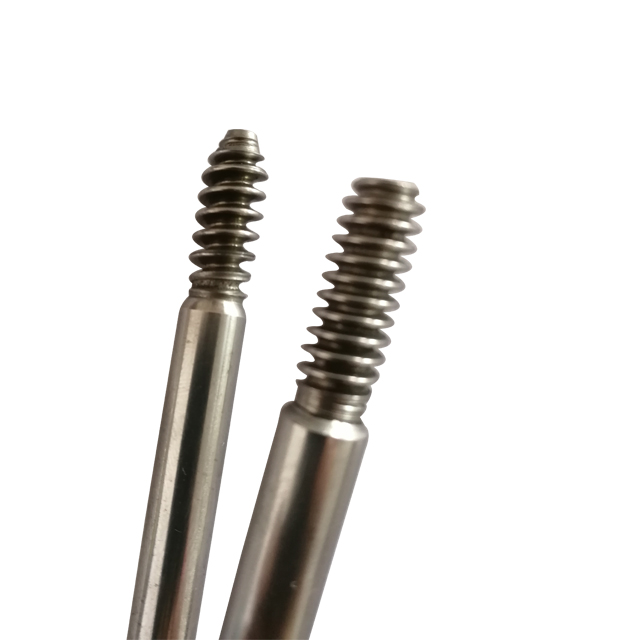
Good Quality Electric Iron Motor Shaft for Household Table Fan Cooler Pump Motors
- Hardened iron alloy & high concentricity
- Suited for cooler pumps & fan stators
- Bulk export crates for Valparaíso port
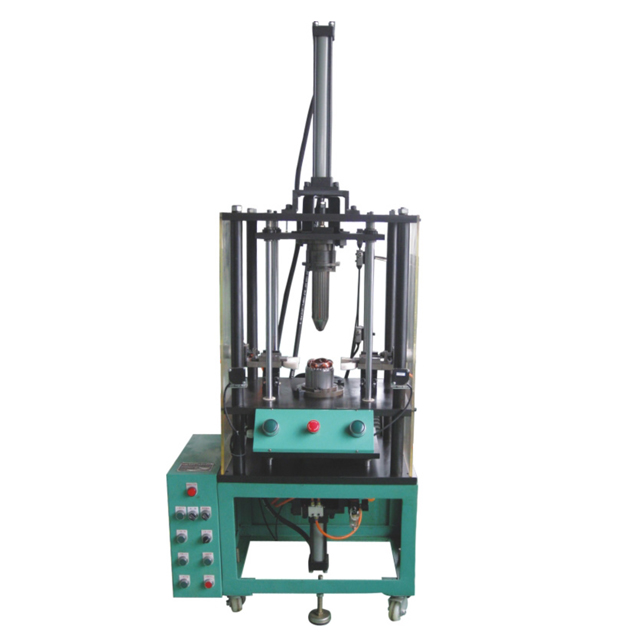
HONGFANG Motor Stator Coil Forming & Shaping Machine 1 kW
- Dual-stage intermediate & final forming
- Prevents winding scrape & bore encroachment
- 1-year warranty & full tooling sets
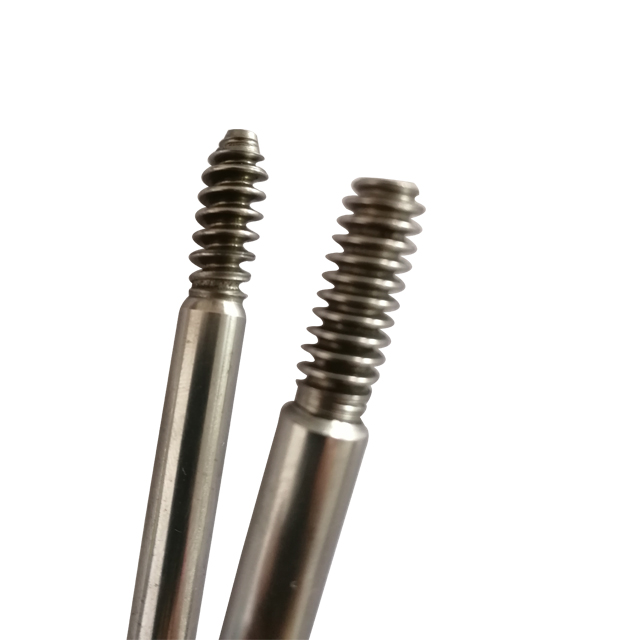
Electric Motor Spares SC45# Carbon Steel Motor Shaft Components
- Precision ground OD tolerance (h6/js6)
- Resistant to torsional stress & fatigue
- Custom length and keyway machining
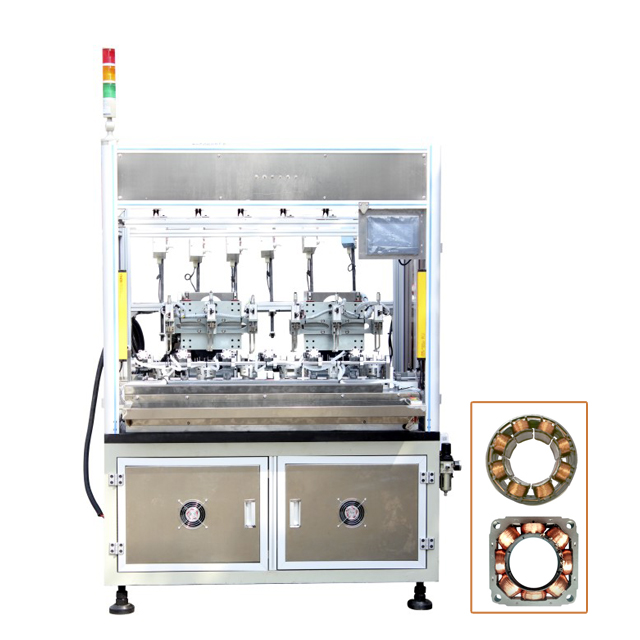
HF-LO2-6G Six Stations Internal Winding Machine PLC Control
- High-speed multi-pole inner winding
- Independent flyer servo tensioning
- Touch HMI with fault diagnostic system
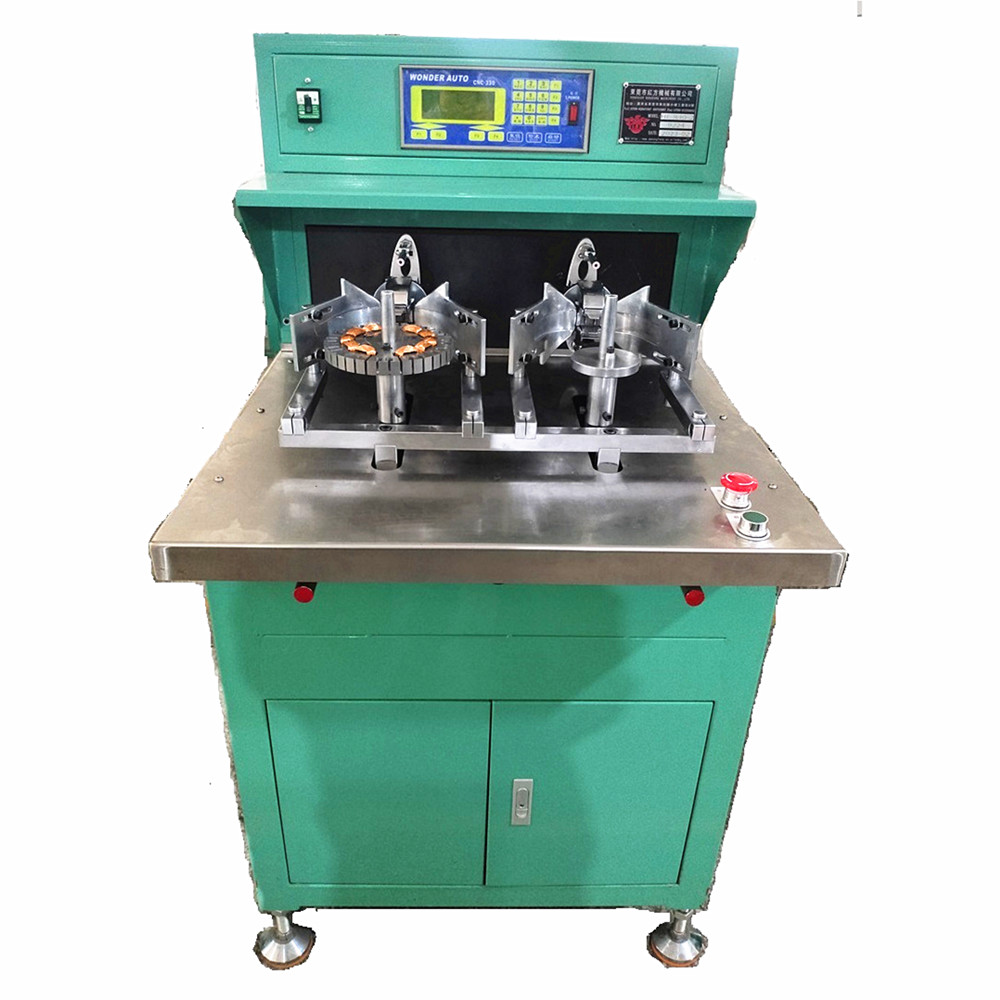
HF-R40-2C Two-Station Automatic Ceiling Fan Stator Coil Winder
- Synchronous dual-station coil winding
- Copper & aluminum magnet wire support
- Highly stable tooling indexing cycle
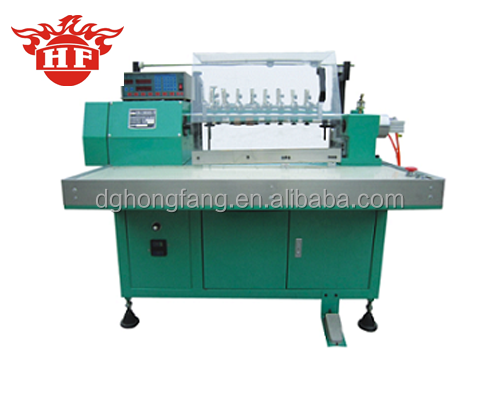
New Fully Automatic Motor Coil Winding Machine High Output
- Microprocessor-controlled wire feeding
- Rapid recipe change for diverse stators
- Continuous heavy-duty plant operation
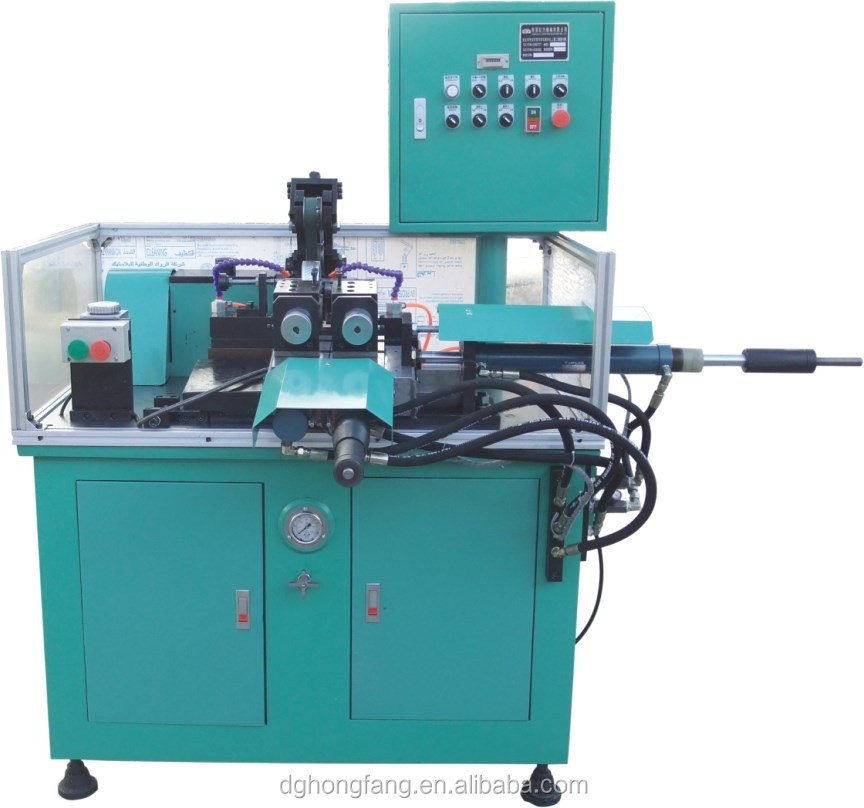
HF Rotor Turning & Aluminum Surface Cutting Machine with PLC
- Precision outer diameter skim cutting
- Eliminates electrical air gap variations
- Integrated flood coolant & chip extraction
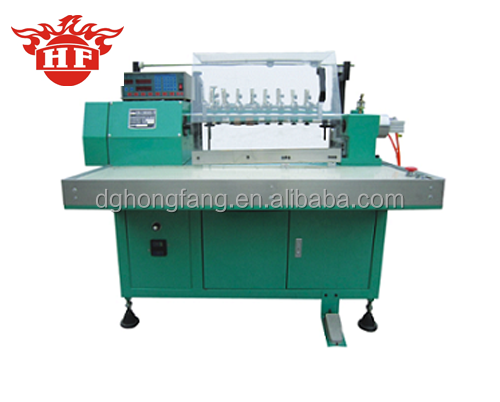
HF CNC Auto Stator Coil Winder 8 Heads 3000 RPM High Speed
- Mass production 8-head simultaneous winding
- Dynamic wire array tension control
- Ideal for table fan & fractional HP stators
Rotor Shaft Interference Pressing Dynamics in Modern Induction Motors
The mechanical integrity of an electric motor rotor core and its drive shaft assembly is fundamentally determined during the press-fitting phase. In three-phase squirrel-cage induction motors, high-efficiency synchronous reluctance units, and permanent magnet industrial motors, the transmission of rated torque without mechanical slip relies on an interference fit (shrink or press fit) between the rotor electrical steel laminations and the central transmission shaft. Improper pressing creates localized micro-bending of the shaft, lamination flare, severe eccentricities, and premature bearing race degradation caused by high unbalance forces during high-speed rotation.
For industrial rebuilders, OEM electric motor manufacturers, and heavy-duty maintenance facilities serving the commercial and maritime infrastructure of Valparaíso, San Antonio, and the Santiago Metropolitan logistics corridor, achieving high radial runout tolerances (under 0.015 mm TIR) is critical. Traditional manual screw presses and uncontrolled hydraulic shop presses lack real-time load-displacement curves, leading either to incomplete insertion depth or excessive axial force that cracks silicon steel laminations and buckles the rotor stack.
Engineering Benchmark: "Modern industrial motor specifications require continuous tonnage monitoring and micro-depth digital stop gauges. Controlled servo-hydraulic shaft pressing eliminates lamination skewing and guarantees zero plastic deformation of the bearing seat journals."
Mechanical Mechanics: Calculating Required Fitting Force
To accurately configure an electric motor rotor shaft pressing machine, engineering teams in Valparaíso must evaluate the interference parameters based on Lamé's thick-cylinder equations. The pressing force ($F_{press}$) required to insert an SC45# or 42CrMo steel shaft into a magnetic lamination core is expressed as:
$F_{press} = \pi \cdot d \cdot L \cdot P_{int} \cdot \mu$
Where $d$ represents the nominal shaft diameter at the core seating zone, $L$ is the total axial stack height of the rotor laminations, $P_{int}$ is the contact interface pressure generated by the interference dimension (commonly ISO interference fits m6, k6, or r6), and $\mu$ is the dynamic friction coefficient during dry or lubricated assembly (typically ranging between 0.12 and 0.18). Our machines integrate closed-loop servo-hydraulic manifolds capable of monitoring this force curve with an accuracy of 0.5% throughout every millimeter of stroke, automatically aborting the cycle if an anomalous force spike indicates mechanical galling or dimensional mismatch.
Air-Gap Uniformity & The Critical Role of Post-Pressing Rotor Turning
Even with precision pressing, high radial forces can produce minor lamination blooming. An irregular rotor outer diameter creates an uneven electromagnetic air gap between the stator bore and rotor surface. In induction motors, an air gap variance of just 10% can increase unbalanced magnetic pull (UMP) by over 25%, drastically elevating audible magnetic hum, high-frequency vibration, and bearing operating temperature. Integrating the HF Rotor Turning & Surface Cutting Machine immediately downstream from the shaft pressing station ensures perfect concentricity relative to the true bearing journals, achieving optimal air gap consistency, reducing motor stray load losses, and complying with international MEPS IE3 and IE4 efficiency standards.
Localized Application Scenarios Across Valparaíso & Central Chile
As Chile’s prime maritime gateway and cultural heart, the Greater Valparaíso region (encompassing Viña del Mar, Quilpué, Villa Alemana, and Concón) operates alongside major logistics hubs and industrial corridors requiring robust, non-stop electrical motor performance.
Port of Valparaíso & Terminal Pacífico Sur (TPS)
Valparaíso handles millions of tons of containerized fruit exports and general cargo annually. Quay cranes (STS), rubber-tyred gantry cranes (RTG), and maritime winch systems depend on heavy-duty electric motors exposed to corrosive marine saline air. Rebuilding workshops in the region utilize our rotor shaft pressing machines to replace damaged shafts and re-laminate high-torque electric crane hoist motors without thermal distortion.
Concón & Quintero Industrial Petrochemical Corridor
Heavy refining, chemical handling, and coastal energy terminals require explosion-proof (Ex d / Ex e) motors driving centrifugal pumps, chemical mixers, and cooling compressors. Our servo-controlled shaft pressing machines ensure absolute precision fits on certified stainless and hardened alloy shafts, preventing mechanical sparking, radial deflection, and catastrophic seal failure in hazardous industrial zones.
Aconcagua Valley Agro-Industrial & Cold Storage
The agricultural basin of Quillota, San Felipe, and Los Andes produces world-class table grapes, avocados, and citrus fruits channeled directly through Valparaíso. This massive agro-industrial network relies on thousands of submersible irrigation pumps, evaporative cooler fan motors, and cold storage compressor units. Repair plants utilize our automated winding and shaft pressing machinery to deliver fast turnaround times before seasonal harvest peaks.
Zunqi Servo-Hydraulic Pressing vs. Conventional Shop Presses
Detailed engineering comparison showcasing operational efficiency gains, quality improvements, and lower scrap rates for electric motor manufacturing facilities.
| Performance Dimension | Zunqi Automatic Rotor Shaft Press | Standard Workshop Hydraulic Press | Traditional Thermal Shrink Assembly |
|---|---|---|---|
| Displacement & Depth Control | High Precision ±0.01 mm via digital linear scales | Manual visual gauge (±1.5 mm error prone) | Uncontrolled thermal cooling shift (±0.8 mm) |
| Real-Time Force Monitoring | Load-cell with graphical force-displacement curve | None; analog pressure gauge with zero data logging | Zero force feedback during cooling cycle |
| Lamination Protection | Guided tooling sleeve prevents core skewing | Frequent core flare and lamination buckling | Thermal oxidation and insulation varnish breakdown |
| Cycle Efficiency | 15 – 25 seconds per rotor core | 3 – 8 minutes per unit (manual trial & error) | 20 – 45 minutes (pre-heating and cooling soak) |
| Operator Safety Architecture | Dual light curtains, two-hand tiedown, CE interlocks | Exposed open ram with minimal guarding | Severe burn hazards and heavy thermal emissions |
Electrification & Industrial Evolution in Chile's V Region
Key market forces shaping capital investments in electric machinery, motor remanufacturing, and port logistics equipment across Valparaíso and neighboring provinces.
Chile National Green Hydrogen & Clean Energy Pivot
Chile's ambitious push toward becoming a green hydrogen export superpower is transforming industrial power systems. In the Valparaíso region, heavy logistics hubs are converting diesel-driven material handling systems to electric drive trains, dramatically elevating the demand for high-efficiency inverter-duty motors and precision motor rebuild facilities.
Port Automation & Cold Chain Decarbonization
Terminal Pacífico Sur (TPS) and Puerto Ventanas are investing heavily in automated container handling systems and all-electric refrigeration racks for fruit exports. Every electric motor used in continuous duty must maintain strict IE3 efficiency classes, driving repair centers to replace worn-out shafts with tight-tolerance SC45# components.
Stringent SEC Chile Energy Efficiency Regulations
The Superintendencia de Electricidad y Combustibles (SEC) enforces strict compliance regarding minimum energy performance standards (MEPS). Reconditioned motors can no longer compromise on air-gap tolerances or core losses; automated shaft pressing and rotor turning machines provide the repeatability needed to pass compliance audits.
Frequently Asked Questions for Valparaíso & Chilean Importers
Detailed answers addressing electrical compatibility, customs clearance, shipping routes, seismic stability, and technical after-sales support.
Are your machines directly compatible with Chile’s 380V 50Hz industrial electrical grid? +
What are the typical shipping logistics, transit times, and incoterms to the Port of Valparaíso? +
How does your engineering team guarantee machine anchoring for Chile's high seismic activity? +
Can the Human-Machine Interface (HMI) and operator software be configured in Spanish? +
How do you handle tooling customization for non-standard motor rotor geometries? +
What warranty coverage and long-term spare parts support do you provide to Chilean customers? +
Why Motor Manufacturers Worldwide Partner with Zunqi
Headquartered in Qishi Town, Dongguan—the epicenter of precision industrial manufacturing in China—Zunqi Intelligent Equipment delivers uncompromised engineering value backed by seventeen years of verified trade excellence.
17+ Years Export Track Record
Over a decade and a half of continuous verified export transactions on international platforms, serving clients across Latin America, North America, Southeast Asia, and Europe.
Tailored Tooling to Drawing
We do not sell rigid, one-size-fits-all hardware. Every fixture, pressing ram, inserting finger, and winding mold is custom-machined to your exact rotor and stator geometry.
Full Process Line Solutions
From slot insulation inserting to automatic coil winding, coil inserting, lacing, forming, rotor turning, and shaft pressing—we engineer synchronized, turnkey stator lines.
Heavy Export-Grade Packing
Treated multi-layer plywood cases, heavy anti-rust oiling, VCI barrier wraps, and internal steel frame tie-downs ensure zero transit corrosion over long Pacific voyages.
Request an Engineered Rotor Machine Proposal for Valparaíso
Planning to upgrade your motor manufacturing output or expand your industrial repair workshop in Chile? Submit your rotor/stator specifications, core stack heights, and target output. Our senior application engineers respond within 9 hours with a comprehensive tooling layout, cycle time simulation, and factory-direct price quotation.
