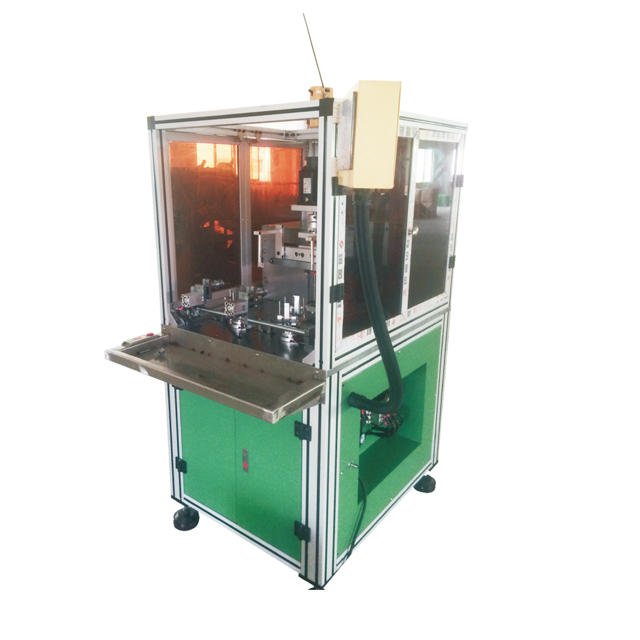
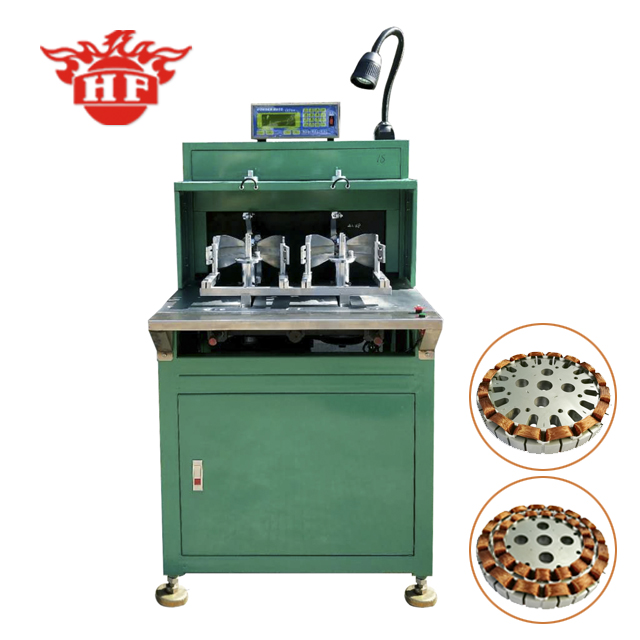
China Top Motor Stator Coil Forming Machine Suppliers & Exporter Serving Kragujevac
Engineered for precision stator end-turn shaping, intermediate forming, and final dimensional calibration for automotive, industrial HVAC, and electric mobility manufacturers in Šumadija and across Central Serbia.
Production Portfolio
Featured Stator Coil Forming & Winding Equipment
High-precision electro-hydraulic and servo-driven shaping architectures deployed across modern European stator workshops. Fully customizable tooling adapted to Kragujevac industrial line standards.
Supplying heavy automated motor machinery across Europe and globally
±0.05 mm
Forming Concentricity
Strict air-gap safety clearance eliminating coil head interference
≤ 9h
Engineering Response Time
Direct factory technical consultation for Kragujevac production lines
100%
Custom Tooling Proven
Every die set is pre-validated on customer stator lamination samples
Engineering Whitepaper
Stator Coil Forming Science: Mechanics, Tolerances & Die Geometry
An authoritative technical reference on cold plastic deformation of copper and aluminium stator windings, ensuring optimal slot fill factors, air-gap preservation, and corona-free dielectric integrity.
In three-phase asynchronous electric motors, permanent magnet synchronous motors (PMSM), and brushless DC (BLDC) units, the stator coil forming process is the defining manufacturing juncture between winding insertion and final impregnation. After magnet wire bundles are inserted into the insulated stator core slots along with slot wedges, the end-turns (winding overhangs) protrude axially in an irregular, flared geometry. Without precise intermediate and final forming, these coil heads exceed outer boundary limits, invade the internal rotor bore, and risk dielectric breakdown through friction, enamel cracking, or excessive mechanical tension.
The Core Engineering Objective: Stator coil forming machines compress, guide, and shape the end-turns axially and radially into a symmetrical, tight geometric envelope. This guarantees zero contact with the end-shield housing, maintains critical rotor bore clearance according to DIN EN 60034-1, minimizes conductor length to reduce \(I^2R\) copper resistive losses, and establishes rigid structural stability before automatic lacing.
Kinematics of Intermediate vs. Final (Second) Coil Shaping
Precision stator production lines typically divide the forming sequence into two specialized phases to protect conductor enamel insulation from excessive localized shear stresses:
1. Intermediate Forming (Pre-Shaping)
Immediately follows coil and wedge insertion. A radial expanding mandrel enters the internal stator bore while an axial die pushes the coil ends outwardly and slightly axially. This clears the central bore passage, ensuring that automated lacing needles and guide fingers can oscillate freely through the stator core without snagging copper wires.
2. End-Turn Binding & Lacing
With end-turns mechanically pre-aligned, the stator is bound with polyester or synthetic cord by single or double-side lacing machines. The cord secures phase-to-phase insulation paper and compacts the loose strands into a dense bundle, mitigating electromagnetic vibrations and acoustic noise under transient motor loads.
3. Final Forming (Second Shaping)
The laced stator undergoes heavy multi-directional calibration. Internal expansion segments prevent bore collapse, outer clamping jaws set the external diameter, and dual axial upper/lower headers compress the coil heads to designated height specifications within tight dimensional tolerances (±0.2 mm).
Material Deformation Mechanics and Die Protection
During final forming in our HF-W120H series, high pressures (ranging from 10 kN to 60 kN depending on core size and wire gauge) are applied against annealed copper or aluminium wire. In poorly engineered forming machinery, excessive friction causes micro-fissures in the polyamide-imide (PAI) or polyester-imide (PEI) enamel overcoat, resulting in insulation failure during surge voltage testing. Our machine tooling utilizes high-grade hardened Cr12MoV cold-work die steel vacuum-quenched to HRC 60-62, with mirror-polished surfaces and customized entrance lead-in radii. This ensures frictionless progressive displacement where individual wires slide against each other without pinching or stripping the insulating coating.
Regional Industrial Application
Empowering Kragujevac's Modern Industrial & E-Mobility Ecosystem
Aligning high-precision Chinese automation equipment with the technical standards, supply chain dynamics, and electric powertrain modernization programs across Kragujevac, Šumadija.
Kragujevac has historically stood as the mechanical engineering and manufacturing capital of Serbia. Historically recognized as the epicenter of automotive production (formerly Zastava Automobili), Kragujevac is undergoing an unprecedented modernization toward electric vehicle (EV) component manufacturing, advanced industrial pumping machinery, automation robotics, and specialized electrical drive systems. With the strategic transition of large-scale industrial complexes (such as the Stellantis production site in Kragujevac producing electric city vehicles) and the surrounding Tier-1 and Tier-2 automotive supplier network, the demand for precision automated motor equipment has intensified dramatically.
Automotive Auxiliaries & Actuators
Kragujevac automotive suppliers fabricate electric power steering (EPS) motors, engine cooling fan assemblies, window lifters, and EV thermal management pumps. These compact BLDC and PMSM stators require ultra-compact coil overhangs to fit inside tight aluminium vehicle housings.
Industrial Pumps & Fluid Handling
From municipal water facilities in Šumadija to high-pressure agricultural irrigation pumps across the Morava valley, Kragujevac motor builders manufacture heavy-duty IEC standard 2-pole and 4-pole induction stators requiring deep, crack-free forming of thick copper wire bundles.
HVAC Ventilation & Domestic Motors
Industrial fan, commercial refrigeration, and ceiling fan stator manufacturers in central Serbia leverage multi-station automated machinery to reduce labor intensity, stabilize daily output, and meet stringent European EcoDesign energy efficiency standards (IE3 and IE4).
Technological Evolution & Regional Growth Trends in Kragujevac
The manufacturing sector in the Šumadija district is characterized by rapid digital integration, strict compliance with European Union technical standards, and an urgent push toward energy decarbonization:
Adoption of High-Efficiency IE3/IE4 Stators: Under EU directives adopted by Serbian standardization bodies (ISS), motor builders must increase electromagnetic efficiency. Achieving IE3 and IE4 requires maximizing slot fill factor (often exceeding 78% net copper volume). Higher slot density makes manual coil inserting and shaping physically impossible without damaging wire. Our automated forming machines execute calibrated multi-point compression that packs dense windings without pinching.
Transition to Servo-Electric Precision: While traditional workshops relied purely on hydraulic systems, modern Kragujevac plant engineers increasingly specify programmable servo-electric or servo-hydraulic hybrid presses. Servo drives allow programmable displacement curves, soft touch contact, and programmable dwell times that prevent springback in high-strength enameled wires.
Supply Chain Nearshoring & Resilience: European manufacturers are shortening their supply loops by establishing supply hubs in Central Serbia. To compete with Western European factories, Kragujevac producers demand capital equipment offering German-level dimensional repeatability at direct-from-manufacturer Chinese pricing, backed by reliable long-distance spare parts provisioning.
Technical Architecture
System Matrix: Electro-Hydraulic vs. Servo Coil Forming Machines
Detailed mechanical, electrical, and operational parameter comparison for process planning engineers and procurement directors in Kragujevac.
Hydraulic allows deep dwell for stress relief; Servo speeds high-volume automotive runs.
Core Control Architecture
Mitsubishi / Omron / Delta PLC + HMI
Siemens S7-1200 / Schneider PLC
Familiar maintenance architecture for local Serbian electrical automation engineers.
Forming Tooling Material
Cr12MoV vacuum heat-treated to HRC 60-62
DC53 or SKD11 cryogenic treated HRC 62-64
Extreme wear resistance against abrasive silicon steel core teeth and copper strands.
Safety & Compliance Standards
Optical light curtains, two-hand start, CE
Interlocked safety cage, Category 4 E-stop
Strict compliance with EU Machinery Directive 2006/42/EC and EN ISO 13849-1.
Why Kragujevac Buyers Rely on Our Factory
Zunqi Intelligent Equipment Co., Ltd. (HONGFANG Automation) operates from Qishi Town, Dongguan — the world's most concentrated precision manufacturing and motor equipment hub. Over 17 years of dedicated engineering and international export trade, we have perfected the balance between high-grade component integration and cost-effective capital investment.
Tooling Customization to Stator PrintsComplete Turnkey Winding LinesCE Certified Electrical SystemsSea Freight Direct to Koper / Bar / Piraeus1-Year Factory Warranty & Lifetime Spares
Frequently Asked Questions for Kragujevac Motor Manufacturers
In-depth technical answers addressing power grid compatibility, customs clearance in Serbia, tooling changeovers, and electrical safety standards.
Are your motor stator coil forming machines fully compatible with the Serbian power grid (400V / 230V, 50Hz)?+
Yes, absolutely. Standard export configurations destined for industrial facilities in Kragujevac, Belgrade, and Niš are customized precisely to the European standardized grid: 3-phase 400V (±10%) at 50 Hz, or single-phase 230V 50 Hz for smaller benchtop auxiliary machines. All control cabinet transformers, frequency inverters, servo drives, and hydraulic pump motor windings are selected and factory-tested under 50 Hz European frequency conditions to eliminate overheating, harmonic distortion, or premature solenoid valve burnout.
How do you handle tooling fabrication for our proprietary stator laminations and slot designs?+
Tooling is 100% custom-machined around your CAD drawing or physical sample stator. Before cutting steel, our tooling engineers review your stator outer diameter (OD), inner diameter (ID), stack height, slot count, slot pitch, wire diameter (AWG/mm), and maximum permissible coil head height. We fabricate the expanding mandrel, external clamps, and axial push dies from vacuum-hardened Cr12MoV cold-work alloy steel. Prior to export packing, we require physical stator cores or winding samples at our Dongguan factory to perform continuous test forming runs, providing you with high-definition video confirmation and coordinate measuring machine (CMM) reports before shipment.
What logistics and freight shipping routes are recommended for delivery to Kragujevac, Serbia?+
Machinery shipments to Kragujevac routinely travel via ocean container freight from Shenzhen / Guangzhou / Hong Kong ports directly to the Port of Bar (Montenegro), the Port of Piraeus (Greece), or the Port of Koper (Slovenia). From these maritime container hubs, cargo moves via bonded road truck directly into the Kragujevac Customs Terminal (Carinarnica Kragujevac). We provide full export documentation required for Serbian customs clearance under preferential trade procedures, including commercial invoices, packing lists with net/gross weights, EUR.1 / Certificate of Origin, and complete fumigation certificates for export-grade plywood crates.
Can the machine prevent wire enamel stripping and inter-turn short circuits during high-force forming?+
Yes. Inter-turn dielectric safety is guaranteed by three mechanical design safeguards: First, all die surfaces that contact magnet wire are mirror-polished (surface roughness Ra ≤ 0.2 μm) and treated with specialized anti-friction micro-coatings. Second, forming dies operate with progressive displacement kinematics, compressing coil bundles from the slot periphery inward rather than crushing them instantaneously. Third, our hydraulic systems integrate proportional pressure-regulating valves, permitting multi-stage pressure ramping (e.g., initial light contact at 1.5 MPa, gradual expansion at 3.5 MPa, final sizing hold at 5.0 MPa). This gradual flow relieves mechanical stress in the copper crystal matrix without stripping enamel insulation.
How fast can an operator change tooling between different motor frame sizes in a flexible workshop?+
Our latest machines are engineered with quick-change modular architecture. For stators of the same frame diameter with varying stack lengths (e.g., changing from a 40 mm stack to an 80 mm stack), changeover takes under 15 minutes by adjusting digital stroke parameters on the HMI touchscreen and altering mechanical spacer collars. For complete frame size changeovers requiring different internal mandrels and outer forming dies, a trained operator can swap the complete die assembly in 30 to 45 minutes using standard hex keys and alignment locating pins, minimizing production downtime in high-mix, low-volume Kragujevac facilities.
Do your forming machines comply with European CE directives and Serbian workplace safety regulations?+
Yes. Every machine is manufactured in strict accordance with the European Machinery Directive 2006/42/EC and Low Voltage Directive 2014/35/EU. Standard safety features include Class-4 safety light curtain barriers covering the entire front loading perimeter, dual-hand concurrent push-button operation requiring simultaneous activation within 0.5 seconds, dual-channel safety relays, physical perimeter guards on all non-working sides, and high-visibility emergency stop controls. Electrical panels feature neatly organized, ferruled wiring harnesses conforming to EN 60204-1 standards.
What remote technical support and replacement parts services are available once the machine is installed in Serbia?+
Every machine is backed by our direct 1-year comprehensive factory warranty. We supply an emergency spare parts package inside the export crate containing replacement proximity switches, seal rings, solenoid coils, heater elements, and tool fixtures. For commissioning and operator training, our bilingual automation engineers provide detailed step-by-step video training sessions and interactive remote technical support via WhatsApp, WeChat, or Microsoft Teams with an average response time of under 9 hours. In the event of PLC software tuning or program updates, our control architectures can be equipped with remote diagnostic Ethernet modules.
Can you supply an entire linked automated stator manufacturing cell rather than standalone forming units?+
Yes, turnkey stator production line engineering is our core expertise. We regularly integrate synchronized production cells comprising: (1) Automatic Stator Slot Insulation Paper Inserting Machine → (2) Automatic Stator Coil Winding Machine → (3) Automatic Coil and Wedge Inserting Machine → (4) Intermediate Stator Coil Forming Machine → (5) Automatic Double-Side Stator Lacing Machine → (6) Final Stator Coil Forming Machine → (7) Rotor Shaft Pressing & Turning Lathes. All machines are matched in cycle time, tooling geometry, and handling heights for smooth transfer via motorized conveyors or robotic pick-and-place grippers.
Ready to Modernize Your Stator Production Line in Kragujevac?
Submit your stator blueprints, lamination dimensions, target cycle times, or wire specifications. Our senior motor automation engineers will analyze your slot geometry and generate a detailed tooling proposal within 9 hours.