Precision Motor Manufacturing & Stator Assembly Line
Field-proven motor winding, slot forming, insulation inserting, and rotor machining equipment custom-tooled for commercial appliance, agricultural, and industrial motor makers in Kingston and surrounding regions.




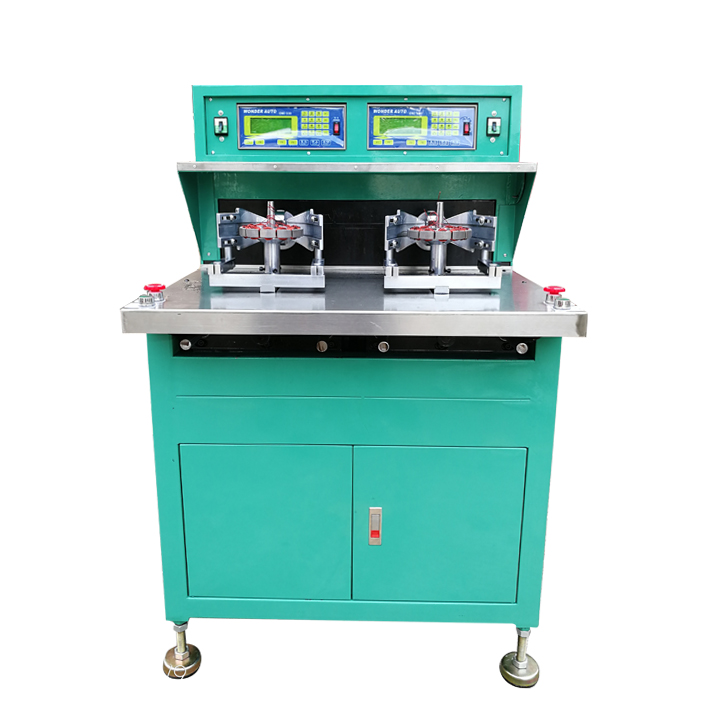



Stator Slot Paper Insertion Engineering: Dielectric Physics, Tooling Kinematics, and Production Automation
In electric motor assembly, slot cell insulation is the critical dielectric barrier standing between electromagnetic efficiency and catastrophic earth leakage failure. The stator slot paper inserting machine (commonly known as a slot cell inserter or stator papering machine) carries out the foundational operation in motor core manufacturing: taking continuous rolled dielectric composite material, accurately feeding and edge-cuffing both margins, cleanly shearing the paper strip, cold-forming it into a precision U-shape or O-shape, and inserting it cleanly into laminated electrical steel slots at cycle times under 0.5 seconds per slot.
For industrial operations in Kingston, Jamaica, where ambient relative humidity frequently hovers above 80% and coastal airborne salinity promotes dielectric breakdown, mechanical tolerances and insulation integrity must surpass baseline factory standards. Motors deployed across Jamaica’s maritime logistics, food refrigeration, water extraction, and manufacturing hubs face steep thermal gradients and moisture absorption risks. Below, our technical engineering team details the mechanical kinematics, tooling tolerances, and operational benefits of modern automated slot paper insertion equipment.
Servo-driven variable indexing reduces complete 24-slot fan stator papering time to under 12 seconds with edge cuffing.
Tungsten-carbide blades and SKD11 forming guides eliminate burrs, paper micro-fractures, and edge roll tears.
Pre-folded cuff margins (2.5mm to 5.0mm) mechanically prevent slot paper migration during high-speed copper coil insertion.
1. Kinematic Mechanics of Automated Stator Paper Insertion
The insertion workflow executed by our HF-D50 and automatic servo stator slot paper inserting series incorporates five precisely synchronized mechanical stages governed by a central PLC and digital servo drive architecture:
Stage A: Continuous Roll Unwinding and Tension Leveling: High-density insulation substrates—such as DMD (Dacron-Mylar-Dacron), NMN (Nomex-Mylar-Nomex), NHN, or pure PET electrical film—are drawn from an adjustable-friction dereeler. A dynamic dancer arm maintains constant web tension, counteracting roll diameter inertia to prevent feed slip or elongation.
Stage B: Edge Cuffing and Pre-Forming: Before the paper enters the cutting chamber, twin mechanical folding rollers crimp and cuff both outer edges. Cuffed ends are critical: they create a structural rim projecting 2.5 mm to 4.5 mm beyond the lamination stack face, shielding the magnet wire from razor-sharp lamination tooth edges during the subsequent coil injection phase.
Stage C: Servo Pitch Feeding and Guillotine Shearing: High-resolution optical encoders and stepper/servo feed grippers measure the exact slot depth with repeatability within ±0.05 mm. An ultra-wear-resistant Cr12MoV/tungsten-carbide cutter executes a perpendicular shear, leaving zero fibrous fuzz or ragged edges that could compromise phase separation.
Stage D: Profile Mandrel Forming: The flat cut paper blank is propelled beneath a slot-matched forming ram. The punch presses the paper blank into a precision-machined carbide forming die, folding it into the exact contour of the stator tooth profile (round bottom, square bottom, semi-closed, or trapezoidal).
Stage E: Radial Injection and Indexing: An eccentric push-rod or servo injector shoots the formed slot liner axially into the stator lamination slot. Simultaneously, a high-torque stepper indexing table or direct-drive rotary mechanism indexes the stator core to the exact next angular coordinate (slot-to-slot or skipped-slot pattern for multi-speed windings).
2. Solving Kingston’s Climatic and Industrial Motor Failures
Why do rewound or domestically assembled motors frequently fail prematurely in Kingston? Field teardowns in Kingston Industrial Estate, Marcus Garvey Drive, and Newport West consistently identify slot-liner pinhole dielectric punch-through as the leading cause of phase-to-ground stator burns. Several unique environmental conditions explain this phenomenon:
Tropical Hydrolysis of Insulation: Standard presspaper or untreated fish paper absorbs ambient atmospheric water vapor when relative humidity exceeds 70%. When operating temperatures reach Class F (155°C) or Class H (180°C), absorbed water causes rapid chemical embrittlement. Automated machines from our Dongguan plant utilize hardened, Teflon-coated feeder guides capable of feeding moisture-resistant composite laminates (DMD100, NMN) without static binding or jamming.
Lamination Stack Tolerancing: Hand-inserted insulation often sits unevenly; a fraction of a millimeter variance allows copper conductors to graze the punched steel core during mechanical coil tamp-down. Our CNC-machined slot formers guarantee uniform projection on both stator ends, providing absolute dielectric clearance against surging harmonics and voltage spikes caused by island grid fluctuations.
Localized Application Scenarios in Kingston & Across the Caribbean
From the industrial corridors of Kingston Harbor to agro-processing plants in St. Catherine, automated stator manufacturing provides Caribbean enterprises with the independence to manufacture, assemble, and repair mission-critical electric machinery locally.
Commercial HVAC & Ceiling Fan Assembly
Jamaica’s extensive tourism, hospitality, and residential sectors demand hundreds of thousands of ventilation and cooling units annually. Utilizing our 2-Station Ceiling Fan Winders and Slot Paper Inserters, local assembly plants can transform imported raw laminations and copper coils into complete, high-efficiency ceiling fan and pedestal blower stators at competitive volume margins.
Municipal Water Extraction & Irrigation Pumps
Pumping stations maintained by the National Water Commission (NWC) and commercial agricultural operators in Clarendon and St. Elizabeth require heavy-duty submersible and centrifugal pump motors. Stator slot inserting equipment ensures multi-slot deep-well pump stators are insulated with zero slot liner skew, withstanding heavy thermal runaways.
Maritime Logistics & Port Infrastructure
Operating around the Port of Kingston—one of the Caribbean’s premier container transshipment hubs—demands reliable electric drives for harbor cranes, winches, conveyors, and refrigerated container (reefer) compressor systems. Our forming and inserting machines allow local motor service hubs to rewind and refurbish heavy-duty marine stators to original OEM dielectric standards.
Strategic Trends Driving Stator Production Modernization in the Caribbean
1. Shift Toward Permanent Magnet & BLDC Motors: With high commercial electricity tariffs across the Caribbean, equipment buyers in Kingston are rapidly phasing out inefficient shaded-pole and split-phase motors in favor of Brushless DC (BLDC) and IE3/IE4 premium efficiency stators. These modern architectures feature concentrated windings and narrow, complex slot profiles that are impossible to insulate manually without tearing. Automated inserting machines with custom tooling accommodate these tight-geometry BLDC stators with complete positional accuracy.
2. Transition from Manual Motor Rewinding to Semi-Automated OEM Assembly: Traditionally, motor repair shops along Spanish Town Road and downtown Kingston relied on manual paper cutting, scissor scoring, and hand insertion. This craft approach creates high variance, variable coil fit, and low daily output. Upgrading to compact, semi-automatic benchtop slot papering machinery elevates daily workshop capacity from 4 stators a day to over 60 stators an hour, allowing regional enterprises to compete as tier-one remanufacturers and localized OEM assemblers.
3. Resilience Against Supply Chain Disruptions: Recent global logistics bottlenecks highlighted the vulnerability of importing finished replacement motors into the Caribbean basin. Forward-looking Jamaican industrial groups are verticalizing production: holding bare lamination stacks, magnet wire spools, and roll insulation, and using flexible Chinese motor machinery to wind, insert, and finish motors on demand for local distribution.
Automated Stator Slot Paper Inserter Technical Matrix
Engineered for high adaptability across diverse stack heights, slot depths, and insulation film chemistries. Review model parameters below to determine the ideal footprint for your production floor.
| Parameter / Specification | HF-D50 Semi-Automatic Inserter | HF-D100 High-Speed Servo Inserter | HF-W20 Combined Wedge & Coil Cell |
|---|---|---|---|
| Applicable Stator O.D. | Φ40 mm – Φ160 mm | Φ30 mm – Φ220 mm | Φ50 mm – Φ180 mm |
| Applicable Stator I.D. | Φ20 mm – Φ110 mm | Φ15 mm – Φ140 mm | Φ25 mm – Φ120 mm |
| Lamination Stack Height | 10 mm – 100 mm | 8 mm – 160 mm | 15 mm – 120 mm |
| Slot Insulation Materials | DMD, NMN, PET Film, Nomex | DMD, Nomex, Kapton, Composite | Pre-formed Creased Wedges, DMD |
| Insulation Thickness Range | 0.14 mm – 0.35 mm | 0.12 mm – 0.40 mm | 0.18 mm – 0.35 mm |
| Cuff Width (Adjustable) | 2.5 mm – 4.0 mm | 2.0 mm – 5.0 mm | Standard Pre-Cut Wedge |
| Cycle Time Per Slot | 0.45 – 0.65 sec/slot | 0.30 – 0.45 sec/slot | Simultaneous Stroke (Complete) |
| Standard Operating Voltage | 220V 1-Phase / 50-60 Hz | 220V / 380V Configurable | 220V / 380V 3-Phase 50-60 Hz |
| System Control Architecture | Omron / Delta PLC + HMI Screen | Mitsubishi / Siemens PLC + Servo | Delta Industrial PLC + AirTAC |
| Tooling Changeover Time | ≤ 20 minutes (Modular Dies) | ≤ 15 minutes (Quick Clamp) | ≤ 30 minutes (Inserter Blade Set) |
Why Kingston Industrialists Partner with Zunqi Intelligent Equipment
Located in the heart of China’s advanced precision manufacturing corridor in Qishi Town, Dongguan, our enterprise combines 17 years of dedicated export engineering with direct factory pricing and unmatched customization.
17+ Years Verified Global Export
Continuous international supplier on Alibaba.com with on-site verified facilities, complete trade credit audit, and clean customs export clearance worldwide.
Tailored Tooling to Stator Samples
We do not sell rigid one-size-fits-all hardware. Send your physical stator laminations or CAD files to our engineering team; we machine and test-prove your tooling dies before dispatch.
Factory Video Trial Acceptance
Before packing, your customized machine performs actual papering or winding runs with your provided parts. You inspect and approve high-definition run videos prior to dispatch.
Rapid Technical Response (≤9h)
Our multilingual engineering desk operates continuously with rapid timezone-adaptive coverage for Jamaican procurement officers, supported by an extensive 1-year warranty and spares backup.
Frequently Asked Questions by Equipment Buyers in Kingston
Direct, transparent answers addressing maritime shipping, power grid compatibility, customs clearance, and long-term operations for Caribbean plant engineers.
Q: How is equipment shipped to Kingston and what is the transit time?
We routinely ship CIF or FOB to the Port of Kingston via premier container ocean carriers (such as COSCO, CMA CGM, and Evergreen). Standard maritime sailing from Shenzhen/Guangzhou ports to Kingston Wharves spans approximately 28 to 35 days. Every machine is sprayed with VCI anti-corrosion grease, vacuum-sealed in moisture-barrier film, bolted to a heavy steel frame, and enclosed in an ISPM-15 compliant export plywood crate.
Q: Can the machines run on Jamaica’s 50Hz / 60Hz power grid?
Yes. Jamaica’s standard commercial electrical supply commonly features 110V/220V single-phase 50Hz, or 380V/415V three-phase 50Hz configurations. During the electrical engineering phase in our Dongguan workshop, we configure your machine’s PLC, servo drives, transformers, and blower cooling fans to precisely match your factory’s operating voltage and frequency, ensuring plug-and-play installation without transformer hunting.
Q: What is the Minimum Order Quantity (MOQ) and sample verification policy?
Our MOQ is strictly 1 set for all automated machinery, including slot paper inserters, coil winders, and shaping presses. Motor shafts and consumable tooling spares are supplied in batch quantities. We strongly encourage Jamaican clients to courier 2–3 sample unvarnished stator cores to our factory; our engineers conduct initial punch verification and record running footage before shipment.
Q: What customs tariff HS code applies for importing into Jamaica?
Automated stator slot paper inserting machines and winding machinery typically classify under Harmonized System (HS) Code 8479.89.99 (Machines having individual functions, not specified elsewhere) or 8479.81.00 (Machinery for treating metal/wire winding). Importers registered under Jamaica’s Modernisation of Industry or productive input incentive schemes can frequently access duty concessions upon customs declaration via ASYCUDA World.
Q: How do we handle maintenance, operator training, and wearing parts in Kingston?
Each unit ships with a dedicated maintenance toolset and high-wear consumable backup kits (cutting blades, push-rod springs, cuffing rollers). We provide comprehensive step-by-step video commissioning tutorials and English operation manuals. Furthermore, our senior automation engineers provide live video diagnostics via WhatsApp or Zoom. Replacement parts are dispatched via DHL/FedEx directly to Norman Manley International Airport in 4–6 business days.
Q: Can one machine handle multiple stator models and stack heights?
Yes. Our slot inserting machines feature quick-adjust vertical lamination stack clamps and digital servo feed settings. To adjust stack height from 20 mm to 60 mm, an operator simply updates the numerical parameter on the touchscreen and turns the manual height adjustment dial. For stators with different internal diameters or slot numbers, modular forming dies and indexing fixtures can be swapped out within 15 to 20 minutes.
Modernize Your Electric Motor Production Today
Request an itemized engineering quote, tool-matching assessment, or production line layout design. Contact our export technical desk; we typically respond within 9 hours with complete machine datasheets.
Send an Inquiry