Proven Winding & Motor Production Machinery for Myanmar
Factory-tested armature and stator winding units, automatic paper slot linters, coil wedge inserters, and rotor turning lathes currently deployed across Southeast Asia's electric motor assembly lines.
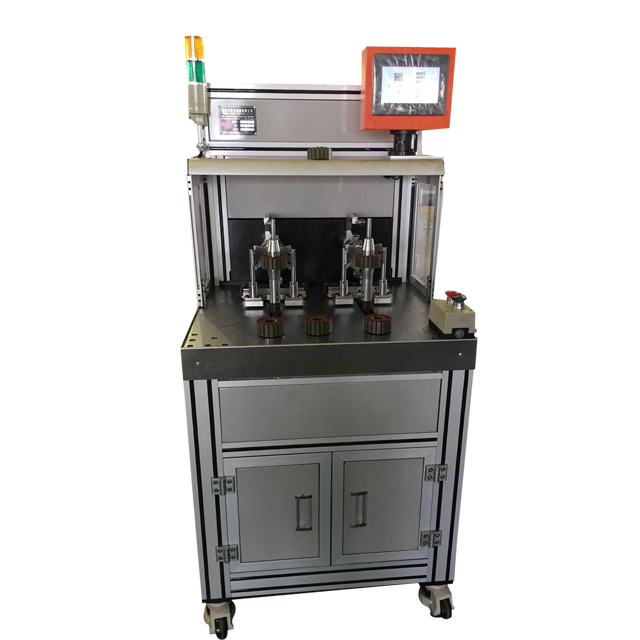
Stator Winding Machine 2 Station Outernal Winding Machine outer winding for Transformer Motor
- High-speed synchronous indexing for transformer & external stators
- Multi-strand copper & aluminum wire handling capacity
- Dual-spindle concurrent winding architecture
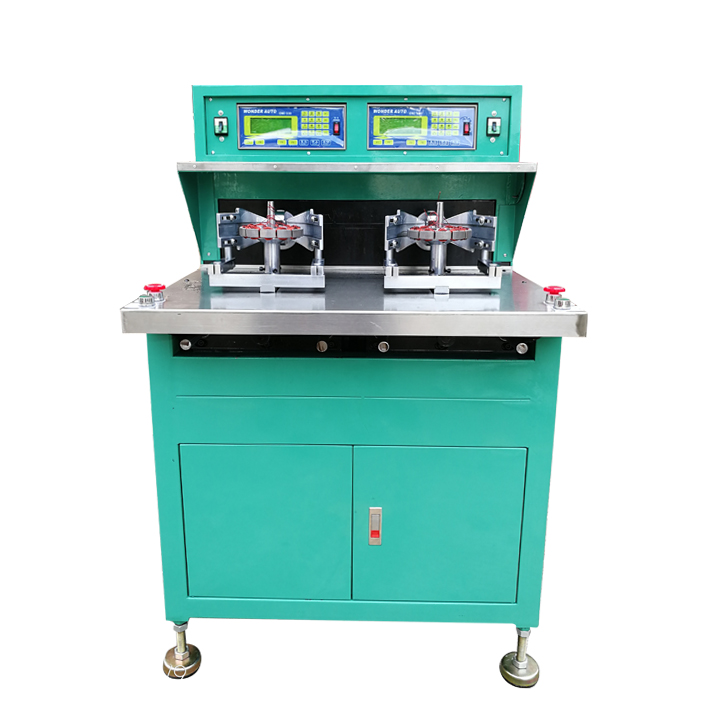
HF New Heavy Duty Certified 2 Controller 2 Station Automatic Ceiling Fan Winding Machine PLC Motor 1 Year Warranty 1 kW 220V
- Engineered specifically for 144mm/153mm fan core laminations
- Dual PLC control panel with individual speed profiling
- Surge-tolerant 220V 1kW heavy-duty drive configuration
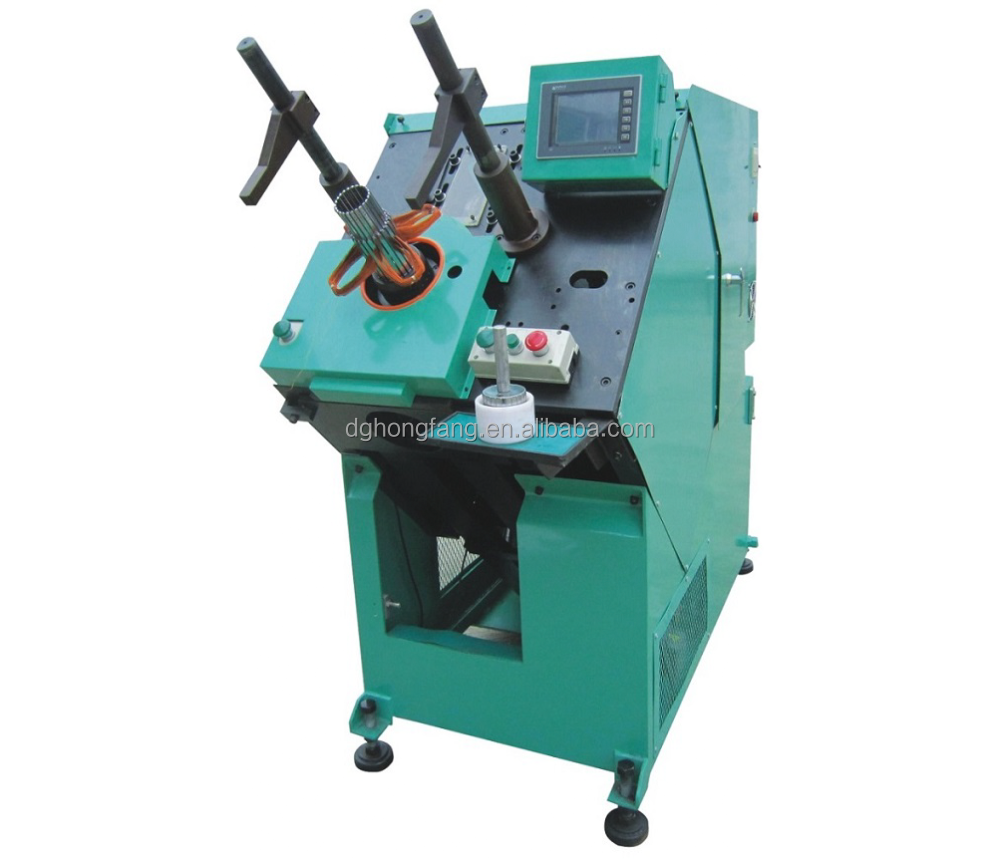
Coil & wedge Paper Inserting Machine
- Pushes wound coils and insulating wedges concurrently
- Drastically cuts manual labor and enamel insulation scuffing
- Adjustable stack height tooling for quick changeover
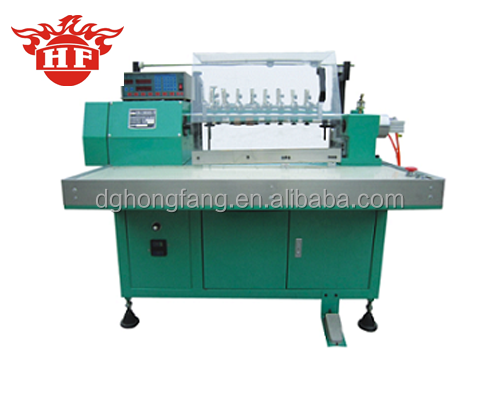
New Fully Automatic Motor Coil Winding Machine High Quality Coil Maker for Manufacturing Plant Use 220V
- Microcomputer tensioning mechanism prevents wire stretch
- High-speed array winding for general induction motor tiers
- Integrated auto-cut and termination clamping cycle
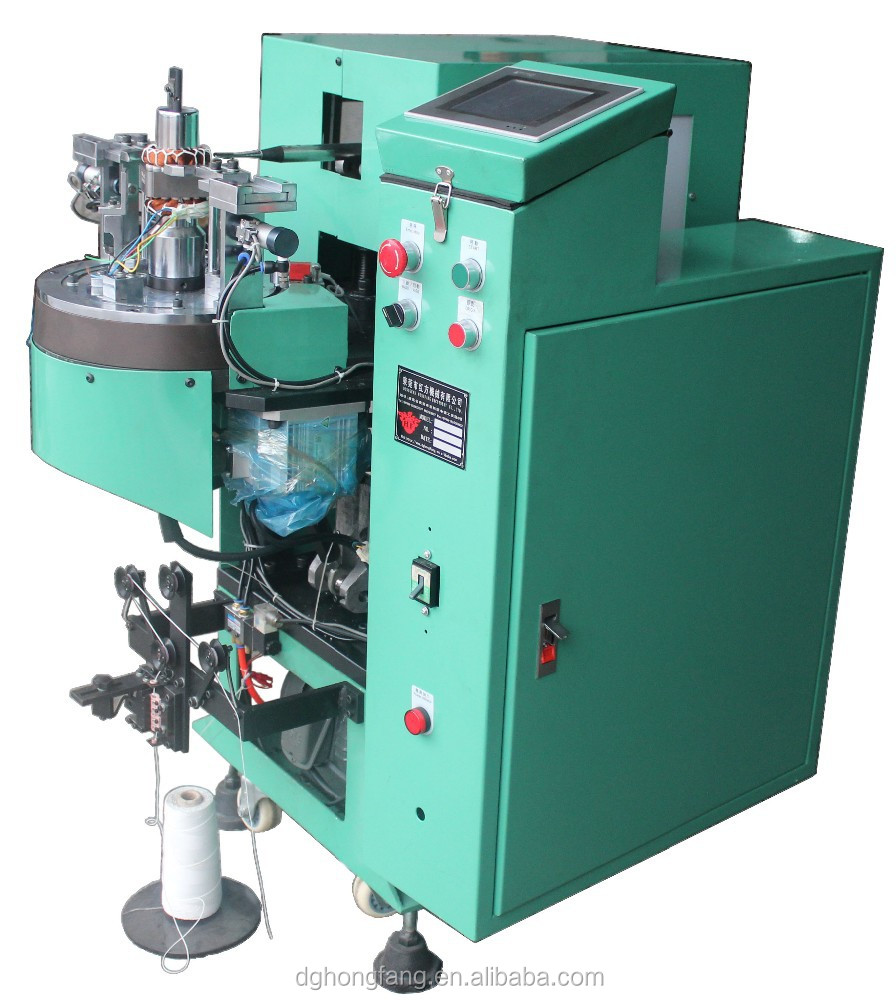
HF Single Side Lacing Machine for Table Fan Motor Stator Coil 1000W 380V/220V
- High-tension needle lacing for vibration suppression
- Configurable stitch spacing and end-turn binding geometry
- Compact bench-mounted design optimized for regional shops
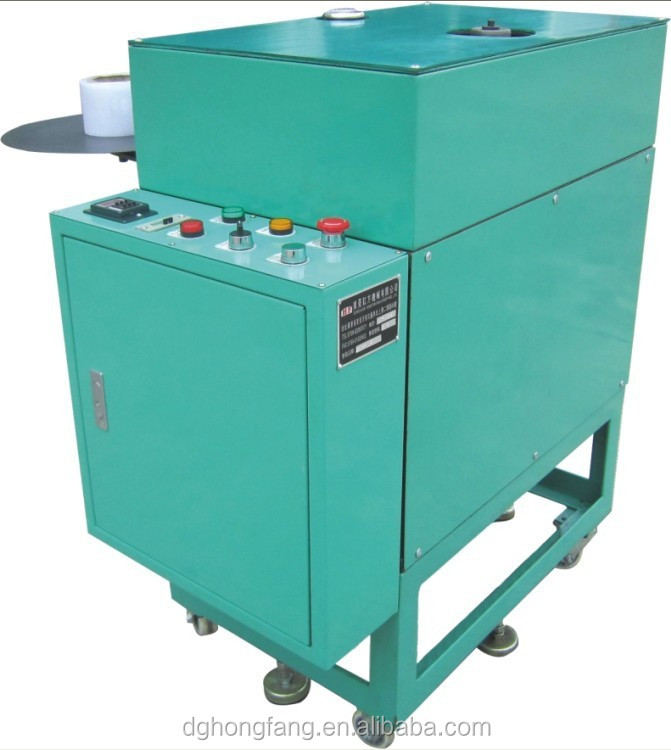
HONGFANG HF-D50 220V 1000W Green Insulation Paper Insertion Machine for Cooler Motor with 1 Year Warranty Paper Cutting Stator
- Automatic paper feeding, creasing, cutting, and inserting
- Zero slot edge scuffing; eliminates earth-fault leakage
- Directly fits air cooler and water pump motor laminations
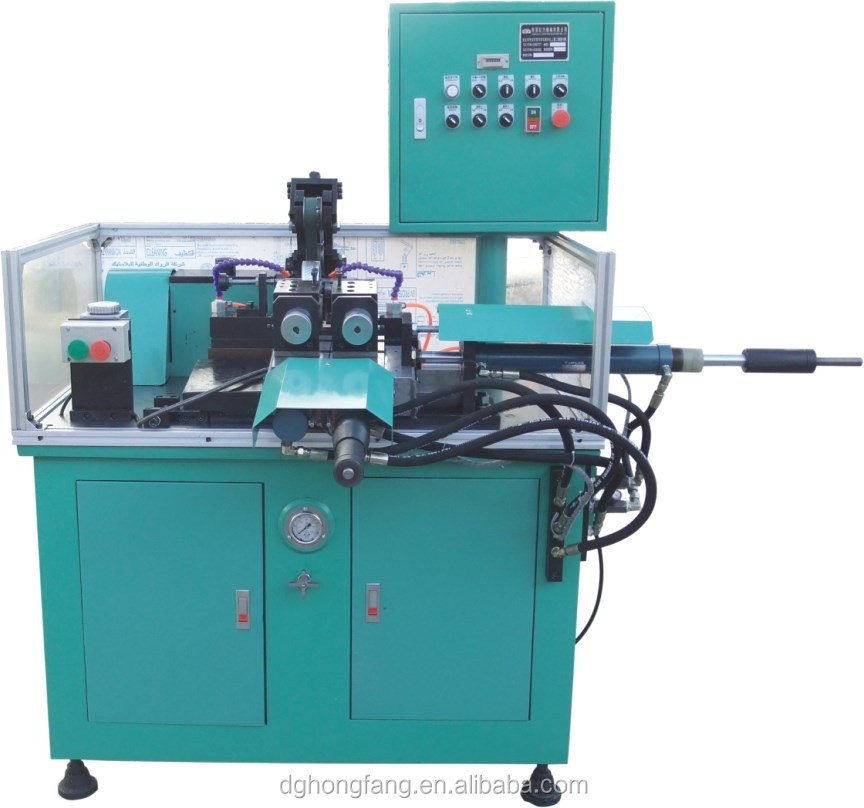
New HF Fan Motor Rotor Turning & Casting Machine with PLC and Pump Core Components Aluminum Surface Cutting
- Fine-turning tool post ensures micron-level air-gap concentricity
- Integrated aluminum surface trimming and coolant recovery
- Dramatically cuts magnetic hum and cogging torque
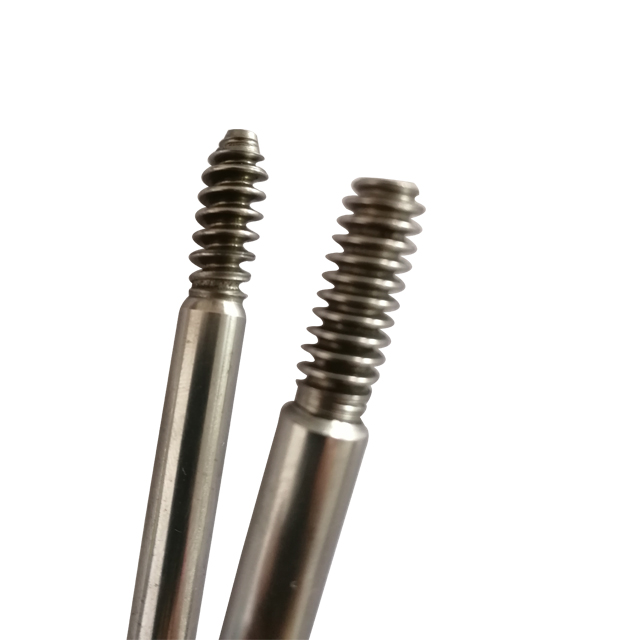
Electric Motor Spares SC45# Low Carbon Steel Iron Fan Motor Shaft Machining Components for Household Use
- High-grade SC45# normalized steel for vibration resistance
- Centerless ground with high-precision bearing seat runout
- Precision press-fit compatible with Zunqi shaft pressing units
Empowering Myanmar's Electromechanical Industrialization: The Engineering Imperative
The manufacturing landscape across Myanmar—anchored within the active industrial clusters of Hlaing Tharyar, Shwe Pyi Thar, South Dagon in Yangon, and the Mandalay Industrial Zone—is experiencing a structural transition. Traditionally dependent on finished electrical motor imports from neighboring territories, Myanmar enterprise leaders are aggressively transitioning toward domestic value addition, motor rewinding industrialization, and localized original equipment manufacturing (OEM). As national infrastructural initiatives expand the reach of the national power grid and cross-border commercial corridors flourish, local demand for consumer ceiling fans, industrial evaporative water coolers, submersible agricultural water pumps, and electric three-wheeler (tuk-tuk) powertrain armatures has skyrocketed.
However, scaling an electric motor winding and assembly facility in Myanmar presents acute engineering and logistical hurdles. Plant managers routinely encounter three system-level bottlenecks: violent voltage instability from the utility grid, elevated tropical humidity and airborne particulates that degrade sensitive electronic sensor arrays, and a critical operational shortage of veteran armature tooling artisans. Achieving a profitable motor manufacturing enterprise requires machinery specifically constructed to neutralize these regional operational friction points. As China's premier manufacturer and exporter of stator and armature winding machinery, Zunqi Intelligent Equipment Co., Ltd. (Dongguan) brings 17 years of empirical motor automation engineering directly to the Myanmar business ecosystem.
Localized Application Scenarios Across Myanmar’s Core Sectors
Off-the-shelf automated winders configured for European or coastal Chinese production lines frequently fail in Southeast Asian environments due to rigid assumptions regarding power factor stability and environmental ambient control. Zunqi machines are customized specifically for the operational workloads of Myanmar's leading industrial sectors:
Household & Industrial Fan Assembly
In tropical climates, ceiling fans and pedestal evaporative cooler units operate continuously. Utilizing our HF-R40-2C dual-station ceiling fan winder and HF-BS20 automatic lacing unit, manufacturers in Yangon output up to 1,200 stators per shift with consistent wire tension, eliminating coil head overhang that causes magnetic interference.
Agricultural Submersible Irrigation Pumps
Across the central dry zone and Ayeyarwady agricultural belt, deep-well pump reliability is paramount. Zunqi heavy-duty stator inserting machines push copper coils and slot insulation wedges simultaneously into high-stack lamination stacks (up to 160mm), ensuring zero insulation tear even under severe seasonal field abuse.
Light EV & E-Bike Traction Armatures
With Myanmar’s transition toward electric mobility in urban and peri-urban centers, our multi-station internal and external rotor winders handle heavy gauge rectangular or round wire for brushless DC (BLDC) wheel-hub motors, achieving fill factors exceeding 78% for maximized battery-to-torque conversion efficiency.
Technical Architecture: Mitigating Regional Grid Instability
The most prevalent failure mechanism for high-precision European or domestic Chinese computerized winding machines in Myanmar is electrical control failure induced by severe transient spikes, brownouts, and rapid generator-to-grid switching. A factory in Mandalay relying on diesel gen-sets during peak grid shedding faces frequent phase imbalances that instantly burn out sensitive servo drive logic boards.
Zunqi engineers have eliminated this systemic failure point by architecting our export machines with Hardened Industrial Solid-State Control Cabinets. Every machine earmarked for Myanmar export incorporates:
- Wide-Band Voltage Tolerant Power Supplies: Engineered to accept single-phase inputs fluctuating between 175V and 265V without triggering servo drive under-voltage dropouts.
- Galvanically Isolated Optical Couplers: Total physical isolation between high-current winding motors and sensitive microcomputer indexing logic prevents back-EMF spikes from corrupting coil turn counter memory.
- Conformal Anti-Fungicidal Coating: Tropical-grade circuit board coating designed to resist short-circuiting triggered by condensation during the high-humidity monsoon season (June to October).
- Open Component Ecosystem: Critical automation components (PLC, inverters, pneumatic actuators) can be cross-specified to globally supported brands such as Delta, Mitsubishi, Omron, Schneider, SMC, or Airtac, guaranteeing that replacement wear parts are readily procurable in local Yangon electrical markets.
Technical Specification & Process Integration Matrix
The table below demonstrates how Zunqi's modular motor manufacturing ecosystem integrates across successive manufacturing phases, illustrating the specific data parameters required from your engineering team to fabricate precision tooling:
| Production Stage | Recommended Zunqi Model | Core Function & Mechanism | Compatible Wire/Core Spec | Engineering Data Required |
|---|---|---|---|---|
| 1. Slot Insulation | HF-D50 Automatic Inserter | Creases, profiles, cuts & inserts green insulation paper | Stack Height: 10–120mm Cycle: 0.5–0.8s/slot |
Stator lamination drawing, slot chamber cross-section, paper grade |
| 2. Precision Winding | HF-R40-2C / Multi-Head Line | Flyer/needle winding with automatic wire clamp & index | Wire Gauge: Φ0.10–1.20mm Slots: 8 to 36 slots |
Turns count, wire diameter, slot opening width, coil pitch pattern |
| 3. Coil & Wedge Insertion | Zunqi Integrated Inserter | Simultaneous push of coil group & slot closure wedge | Stator OD: up to 160mm Filling factor: >75% |
Stator internal bore diameter (ID), stack height, slot opening |
| 4. End-Turn Forming | Stator Intermediate/Final Press | Hydraulic/pneumatic expansion sizing of coil heads | Multi-core expansion head tooling | End-bracket clearance boundary, motor housing internal tolerance |
| 5. End-Lacing | HF-BS20 Servo Lacing Machine | Binds end windings tightly to prevent harmonic vibration | Single or twin-needle cycle Adjustable stitch pitch |
Cord breaking strength spec, cycle time target, knotting pattern |
| 6. Rotor Turning | HF-C60 Fine Lathe Unit | Precision diamond-tipped surface skinning of rotor stack | Concentricity: ±0.005mm Runout: ≤0.01mm |
Rotor stack OD, shaft bearing seat positions, finish Ra value |
Emerging Technological & Market Trends in Myanmar (2025–2030)
Forward-thinking Myanmar industrialists must anticipate several rapid technological shifts transforming the Southeast Asian machinery sector. Capital investments made today must remain profitable for the next decade. Three undeniable trends are shaping modern motor lines:
1. Accelerated Adoption of BLDC (Brushless DC) Technology: As energy conservation standards gain legislative traction in ASEAN, legacy shaded-pole and single-phase capacitor motors are being steadily replaced by high-efficiency BLDC architectures. Winding a BLDC stator requires inner-stator needle winding machinery capable of precision multi-axis trajectory control into narrow slot throats. Zunqi’s HF-LO2-6G Six-Station Internal Winding Machine is engineered with direct-drive servos specifically to handle this complex geometry without damaging magnetic tooth tips.
2. Strategic Substitution of Enamelled Copper with High-Purity Aluminum Wire: Due to continuous copper commodity volatility, Myanmar manufacturers are increasingly producing high-volume consumer fan motors using enamelled aluminum wire. Aluminum possesses a significantly lower tensile yield threshold, meaning conventional winding equipment frequently stretches, necks, or snaps the wire. Zunqi incorporates magnetic hysteresis dynamic tensioners and ultra-smooth ceramic wire guides that maintain tension within ±1.5 grams, enabling flaw-free aluminum winding at maximum production velocities.
3. Border Trade Logistics via Northern Corridors (Ruili/Muse) & Maritime Freight (Yangon Port): Navigating current customs protocols requires agile logistics. Zunqi provides complete dual-channel export documentation. For northern manufacturing zones, overland transit through Yunnan (Ruili to Muse border trade post) enables rapid 7-day equipment delivery. For southern industrial zones, containerized sea freight from Shenzhen/Guangzhou to Yangon Port (MITT or Asia World Terminal) offers the lowest shipping overhead per volumetric ton, supported by complete fumigation certificates, Form E tariff reduction documentation, and CIF/FOB cargo insurance.
Why Myanmar Factory Owners Partner with Zunqi Intelligent Equipment
Established in Qishi Town, Dongguan City—the heart of China's world-leading precision machinery cluster—Zunqi Intelligent Equipment Co., Ltd. operates at the intersection of mechanical craftsmanship and industrial automation. For over 17 years, we have avoided the "one-size-fits-all" trading house mentality. Here is why international buyers trust us:
- Physical Tooling Proven On Your Stator Sample: We do not ship equipment on theoretical calculations. Clients send physical lamination core samples to our Dongguan facility. Our tooling engineers machine custom former dies, program the PLC routines, run full-speed test windings, and dispatch an unedited 4K running video and stator micrometer report for client sign-off prior to crating.
- Ruggedization for Heavy Tropical Duty: Machine beds are cast from high-grade meehanite iron, naturally seasoned to relieve internal stresses, and precision-milled to preserve sub-millimeter axial alignment even after thousands of hours of high-speed vibration.
- Direct Remote Video Engineering & Onsite Setup: Our engineering desk bridges the distance through video commissioning assistance, interactive wiring schematics with dual English/Chinese labeling, and step-by-step parameter setup tutorials that empower Myanmar plant technicians to become completely self-sufficient within 48 hours of unpacking.
- Unbroken Supply of Consumables & Formers: When you expand your product catalog from a 16-slot motor to a 24-slot design, you do not need a new machine. Zunqi fabricates and air-expresses new former sets, inserting blades, and guide plates directly to your facility.
Configure Your Production Line with Zunqi Engineers
Submit your stator outer diameter (OD), inner diameter (ID), stack height, slot cross-section, and wire diameter. Our senior motor automation engineers will model your optimal cycle-time and deliver a customized equipment proposal within 9 hours.
Frequently Asked Questions: Procurement for Myanmar Factories
Transparent answers to operational, financial, electrical, and customs questions commonly raised by Myanmar factory owners and purchasing directors:
Yes. All Zunqi machinery designed for export to Myanmar includes surge-suppressing filter capacitors, input line reactors, and wide-tolerance switching power supplies. Whether your plant is powered by the Yangon Electricity Supply Corporation (YESC) or private industrial generator sets, our electrical architecture dampens frequency flutter and prevents microprocessor resets during generator load steps.
Our MOQ is 1 complete set for all standalone machinery (winding, inserting, lacing, paper insertion, or turning lathes). For standard configurations, manufacturing lead time is 15 to 25 business days. When custom former dies or dedicated stator stack tooling must be machined from your physical samples, lead time is typically 30 business days inclusive of extensive trial run video verifications.
Absolutely. Our dual-tensioner systems allow operators to switch between high-tensile copper wire and ductile aluminum wire simply by toggling tension settings on the calibrated dial and adjusting winding acceleration ramps in the PLC touchscreen menu. This feature protects aluminum wire from elongation that alters coil resistance.
Every machine ships with a complimentary export spare parts kit containing high-frequency wear items: spare winding nozzles, cutting blades, inserting pushers, pneumatic push-fittings, and timing belts. Furthermore, Zunqi maintains permanent CAD records of every custom tooling set fabricated. Replacement parts can be machined and dispatched via DHL/FedEx or border logistics within 48 to 72 hours of inquiry.
We routinely assist Myanmar buyers with international payment channels, including standard Telegraphic Transfer (USD/EUR T/T) and border trade currency clearing channels via RMB cross-border mechanisms (CIPS) where appropriate. For freight, we handle either FOB Chinese seaport terms or complete CIF Yangon shipping with marine insurance coverage and export wooden-crate seaworthy fumigation compliance.
Zunqi human-machine interfaces (HMI) feature graphic-driven, icon-based navigation. Operators do not need to memorize lines of code; parameters such as turn count, indexing speed, and pitch are set using simple numeric touchpads. We supply bilingual video manuals demonstrating wire threading, tension calibration, tool changeover, and mechanical greasing points, allowing local factory personnel to achieve operational autonomy in minimal time.
Strategic Factory Layout & Motor Line Integration Consultation
Transitioning an assembly facility from semi-manual winding to a synchronized automated production line requires meticulous planning of balance-of-plant processes. An automated winder running at 2,500 RPM will quickly bottleneck your line if slot insulation insertion or end-lacing is still performed by hand.
Zunqi provides comprehensive turn-key line balance assessments. Whether you are modernizing a legacy motor repair workshop in Mandalay or establishing a brand-new 5,000-unit/day consumer fan plant in Yangon, our engineering division will tailor a phased equipment roadmap that maximizes your capital expenditure return while minimizing downtime.
