Turnkey Stator & Rotor Assembly Systems for Fan Manufacturers
Direct from our Dongguan automation facility, we supply matched stator production lines customized for Utrecht equipment makers. From slot paper insertion to dual-station precision coil winding and hydraulic shaft pressing, each system integrates industrial PLC controllers and servo drives compatible with European standard 400V/230V 50Hz electrical infrastructures.
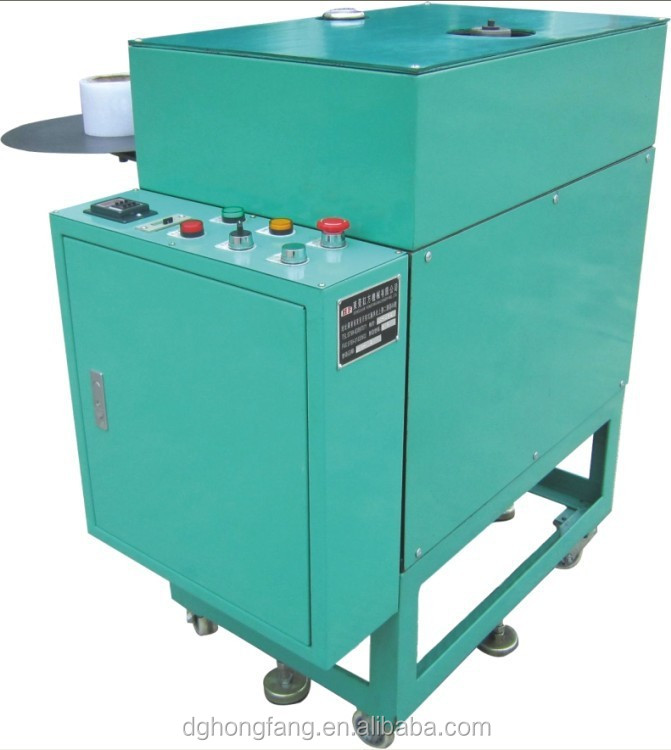
New Slot Paper Inserting Cutting Machine Table Fan Pump Cooler Motor Insulation Paper Gear Components 1 Year 1 kW 380V/220V
- Automated paper feeding, creasing & cutting
- Power rating: 1 kW (380V / 220V dual option)
- Eliminates earth faults in high-density stators
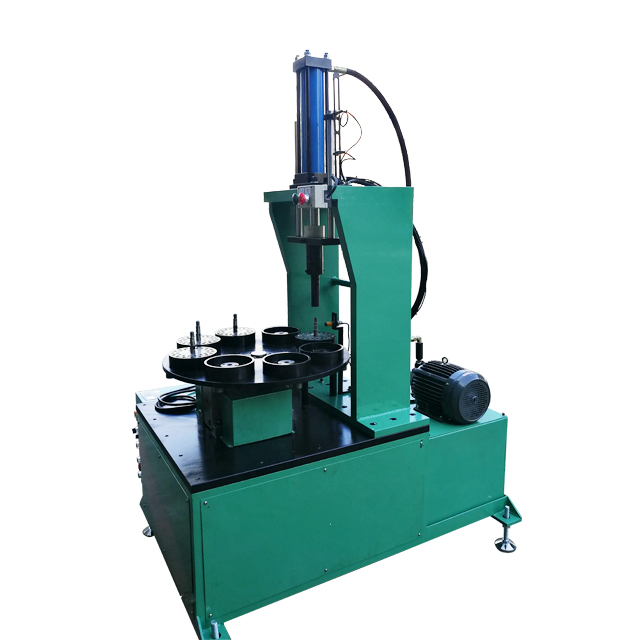
New Hydraulic Pressure Ceiling Fan Motor Stator Shaft Inserting Press Machine Gear-Driven Operation 1 Year Manufacturing Plant
- Gear-driven hydraulic cylinder pressing
- Micro-meter coaxial alignment prevents shaft skew
- 1-Year manufacturing plant warranty
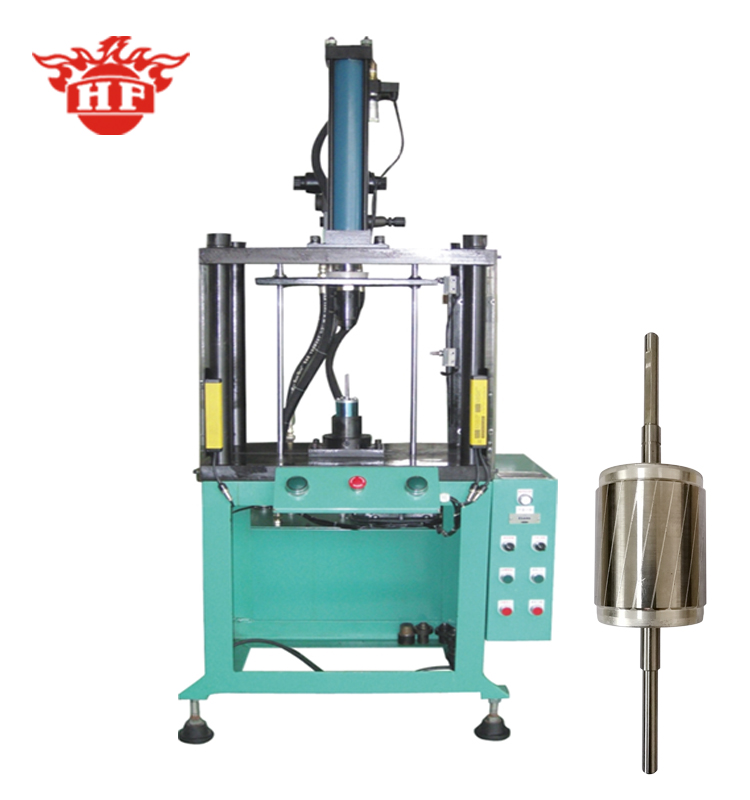
New Rotor and Shaft Inserting Hydraulic Press Machine for Manufacturing Plant 1 Year Warranty HF-W50
- Model HF-W50 with programmable force limits
- Protects bearing journal tolerances & air gap
- Ideal for heavy-duty industrial ceiling fans
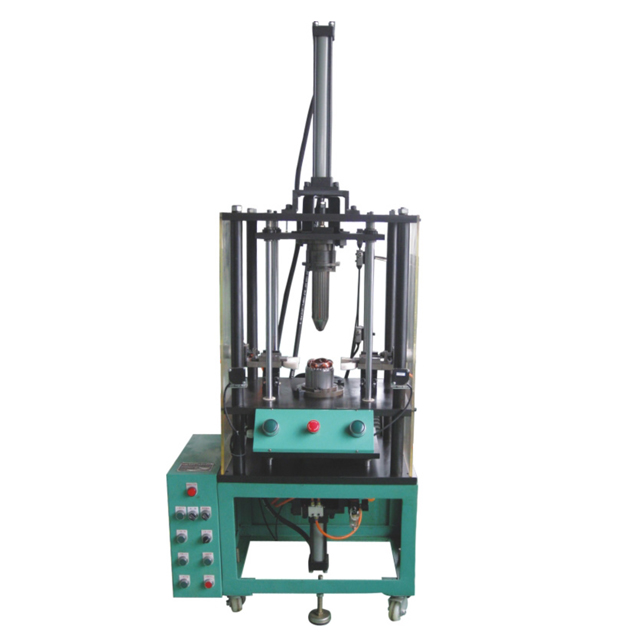
HONGFANG Motor Stator Coil Forming & Shaping Machine for Manufacturing Plant New 1 Year Warranty 1 kW
- Pre-shapes & final-shapes coil overhang height
- High-tensile expansion molds protect insulation
- Compact footprint with 1 kW high-torque motor
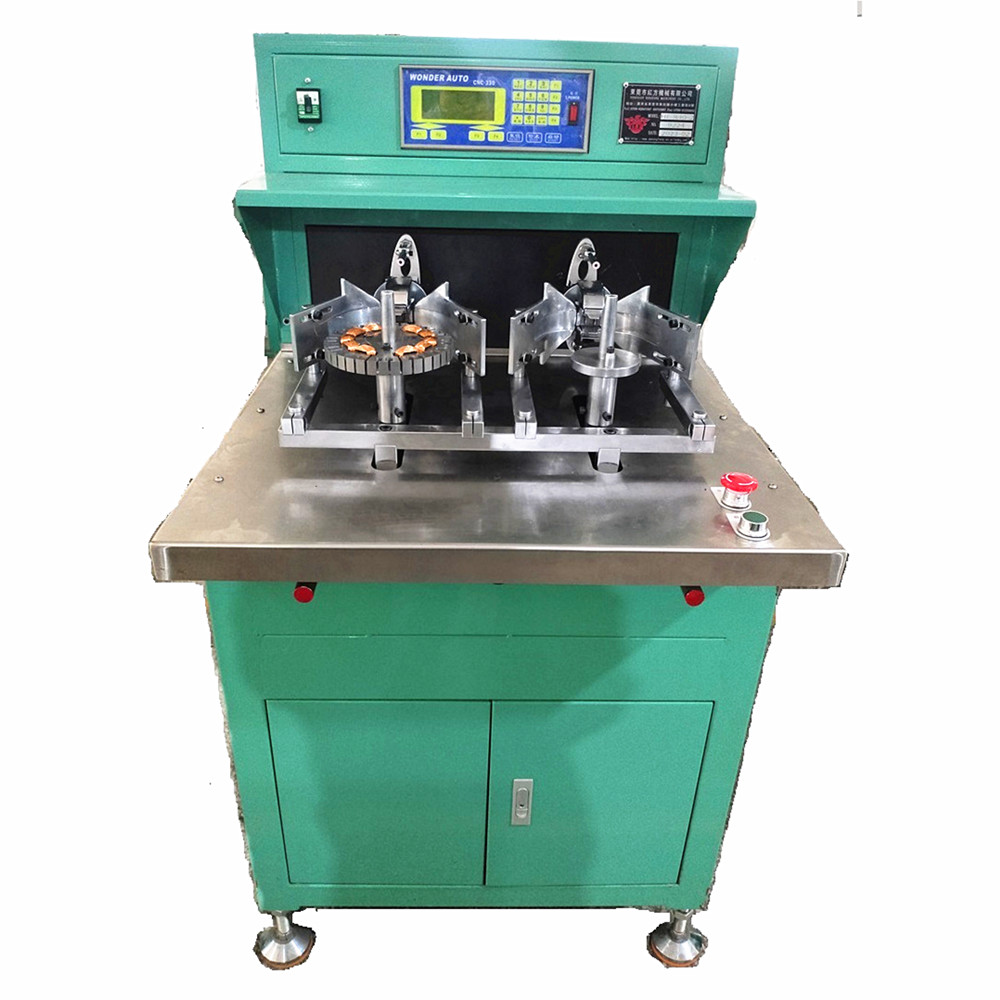
HF-R40-2C New Automatic Ceiling Fan Motor Coil Winding Machine with 1 Year Warranty Two Station for Stator
- Dual-station simultaneous flyer winding
- Specialized tooling for external stator geometries
- Fully programmable turn counter & wire guide
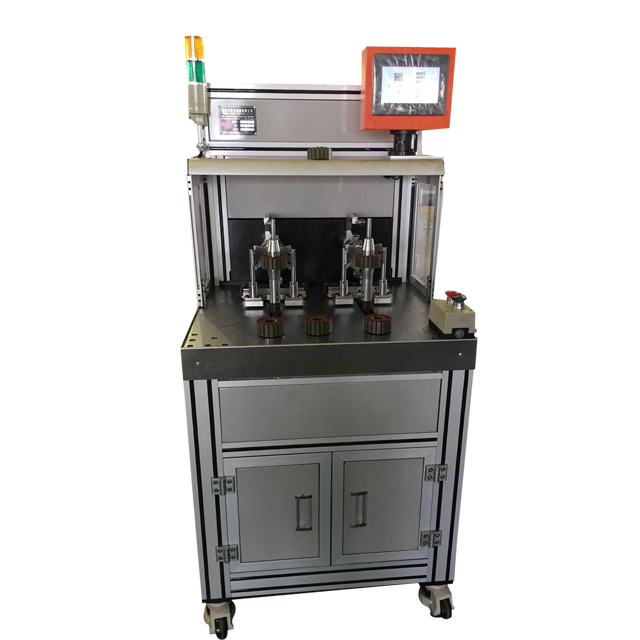
Stator Winding Machine 2 Station Outernal Winding Machine outer winding for Transformer Motor
- Outer stator & toroidal transformer coil winding
- Multi-axis servo tensioning control system
- Stable indexing table for heavy iron cores
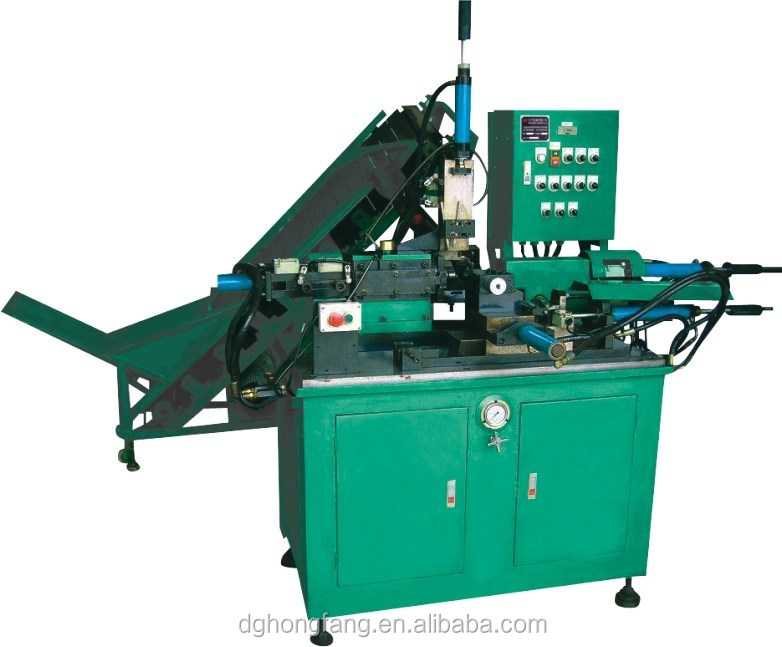
Automatic Rotor Fine Turning & Surface Cutting Machine HF-C60 with PLC Motor Pump-1 Year Warranty
- Precision OD skim cutting preserves magnetic flux
- Integrated coolant circulation & scrap filtration
- Siemens/Delta programmable automation
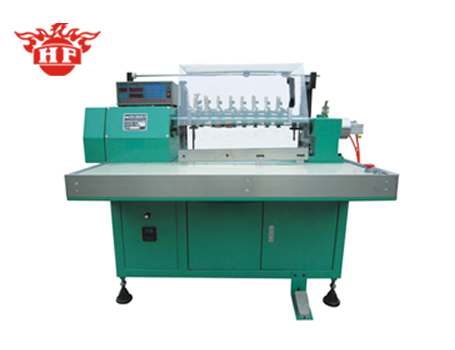
New Good Quality Fully Automatic Fan Motor Coil Winding Machine for Manufacturing Plant Use with Copper and Aluminum Wire
- Dual-material compatibility (Copper & Aluminium wire)
- Automatic lead wire hooking, cut & clamp station
- High-speed flyer head up to 2500 RPM
Engineering Aerodynamic & Electromechanical Stators for the Dutch Market
In response to the European Union's Ecodesign Directive (ErP 2009/125/EC) and the Netherlands' national climate targets for smart building retrofits, industrial ceiling fan motors must attain IE4 (Super Premium) and IE5 (Ultra Premium) operational efficiencies. Achieving this requires precision automation at the magnetic core winding stage.
Slot Fill Factor Maximization (≥78%)
Conventional manual or semi-automated fan winding produces loose wire layering with slot fill ratios under 65%, creating excessive heat dissipation and I²R copper losses. Our dual-axis CNC flyer winders employ closed-loop magnetic tensioners that lay enameled copper wire (0.10–1.20 mm) in uniform orthogonal rows, lifting the active copper slot fill ratio to 78–82% while preventing strand scuffing.
Reduced Overhang & Air-Gap Homogeneity
Stator end-turn overhang represents useless electrical resistance that adds deadweight without generating magnetic torque. Zunqi's intermediate and final hydraulic 3D forming molds press end windings to tight axial envelopes within ±0.15 mm tolerances. This leaves optimal spatial clearance for outer-rotor die-cast aluminum frames and permanent magnet arrays.
Harmonic Suppression & Acoustic Damping
In high-specification commercial environments across the Randstad conurbation (including educational campuses, retail galleries, and health facilities in Utrecht), electromagnetic acoustic hum is unacceptable. By guaranteeing strictly identical turn counts per coil group and concentric lamination alignments (≤0.015 mm runout), our winding technology cancels cogging torque and eliminates PWM switching noise.
| Stator Process Stage | Legacy Manual / Bench Method | Zunqi Automated Automation Cell | Engineering Gain / Tolerance Metric | Utrecht / EU Compliance Impact |
|---|---|---|---|---|
| 1. Slot Lining | Pre-cut manual tucking | CNC Automatic Paper Feeder & Inserter | 0.5–1.0s / slot, 100% edge creasing | IEC 60034 Class F/H thermal breakdown safety |
| 2. External Coil Winding | Single-spindle manual traverse | HF-R40-2C Dual-Station Servo Flyer | Up to 2500 RPM, ±0 turns accuracy | High copper density; >92% electrical efficiency |
| 3. Coil End Forming | Manual mallet or bench press | Hydraulic 3D Core Forming Die | Overhang axial profile ≤ 12.5 mm | Zero rotor casing interference; low air drag |
| 4. Lacing & Binding | Hand stitching cord | HF-BS20 Servo Double-Sided Lacing | Uniform cord tension (15–25 N), 0.8s cycle | ISO 10816-1 industrial vibration longevity |
| 5. Rotor Skim Turning | Standard manual engine lathe | HF-C60 Dedicated CNC Rotor Lathe | Concentricity ≤ 0.018 mm; Ra ≤ 0.8 μm | Ultra-tight uniform air gap (0.25–0.35 mm) |
Empowering Utrecht's Circular & Smart Ventilation Ecosystem
Utrecht is a vital logistics, life-sciences, and clean-tech innovation corridor within the Dutch Randstad. With the province's aggressive push toward energy-neutral commercial infrastructures and BREEAM-NL Outstanding certifications, local mechanical contractors and HVAC OEMs face strict directives to produce high-volume, low-speed (HVLS) and low-noise residential ceiling fans that consume up to 60% less grid energy.
Our automation cells directly support motor engineering teams in Utrecht, Amersfoort, and Nieuwegein who are transitioning from AC induction shaded-pole topologies to permanent-magnet brushless direct-current (BLDC/EC) external rotor architectures.
Dutch Circular Manufacturing (CE & NEN Standards)
Machines exported to the Netherlands incorporate Schneider or Siemens low-voltage control cabinets, CE conformity certificates, English HMI documentation, and dual Emergency-Stop interlocks conforming to NEN-EN-ISO 12100 machine safety standards.
17 Years of Motor Automation Innovation from Dongguan to Europe
Operating from our modern manufacturing base in Qishi Town, Dongguan, Zunqi Intelligent Equipment Co., Ltd. combines heavy-duty mechanical rigidity with high-precision digital control. We solve the core dilemma for European motor producers: high-end automation reliability at accessible capital expenditure.
Tailor-Made Tooling to Your Stator Sample
We do not deliver off-the-shelf compromises. Send your stator CAD drawings (DWG/STEP) or a physical core from Utrecht. Our engineers CNC-machine customized winding flyer heads, slot shoes, and inserting fingers tested on your exact laminations prior to freight crating.
Complete Synchronized Motor Line Matching
Avoid finger-pointing between multiple machine vendors. We build the full production loop: slot insulation → coil winding → coil/wedge inserting → intermediate forming → dual-side lacing → final sizing → rotor OD turning → shaft press fitting.
Global Component Architecture
Maintainability is critical for Dutch plant managers. Our machines can be configured with Siemens, Mitsubishi, Omron, Delta, or Schneider PLCs and servo drives, combined with SMC or Airtac pneumatic valves easily procured locally in Europe.
Factory Acceptance Testing (FAT) via 4K Video
Before any crate departs our workshop, we conduct continuous trial runs using your designated copper wire and stator laminations. You receive high-definition running videos, dimension verification reports, and cycle-time data for formal sign-off.
Rapid Technical Response (≤ 9 Hours)
With an engineering export team accustomed to European time zones, we respond to technical inquiries, replacement wear-part requests, and PLC logic adjustments within 9 hours, backed by a comprehensive 1-year factory warranty.
Fumigation-Free Heavy Ocean / Rail Crating
All machines are coated with VCI anti-corrosion barrier oil, vacuum heat-sealed in moisture-proof foil, and bolted to solid steel-reinforced plywood skids ready for door-to-door transit via Port of Rotterdam or direct China-Europe freight trains to Utrecht.
Frequently Asked Questions by Dutch & European Buyers
Key technical, compliance, and logistics questions answered by our chief motor automation engineers.
What is the minimum order quantity (MOQ) and lead time for shipments to Utrecht?
Our minimum order quantity is exactly 1 complete machine set. Whether you need a standalone HF-R40-2C ceiling fan winder or an integrated eight-machine stator and rotor production line, we accommodate both pilot R&D batches and mass manufacturing facilities.
Standard lead times for custom-tooled machines range from 25 to 35 business days. Shipping from Shenzhen/Guangzhou ports to the Port of Rotterdam takes approximately 28 to 32 days by container vessel, or 18 to 22 days via direct rail freight to the Netherlands.
Can the machines accommodate both 230V Single-Phase and 400V 50Hz Dutch grid standards?
Yes. All machines built for the Dutch market are fully customized during electrical cabinet assembly to your exact factory specifications: Three-Phase 400V ±10% at 50Hz or Single-Phase 230V at 50Hz. Control circuits operate on isolated 24V DC for operator safety. We provide full circuit schematics labeled with standard IEC nomenclature.
How do you handle tooling fabrication for non-standard ceiling fan stators?
Tooling is custom-designed based on your stator geometry. To begin engineering, our technical office requires:
1. Stator outer diameter (OD) and inner diameter (ID);
2. Lamination stack height and slot count (e.g., 16, 24, 32, or 36 slots);
3. Slot opening width and cross-sectional profile;
4. Wire gauge (copper or aluminum diameter in mm) and turns per coil group.
We welcome physical sample delivery to our Dongguan facility, allowing us to perform live test windings and send you finished stator samples prior to crate shipment.
Can your winding machines handle both Copper and Aluminum magnet wire?
Yes. Enameled aluminum wire has different tensile elongation limits and surface friction coefficients than copper. Our automatic winding heads feature programmable multi-stage electromagnetic tension brakes and micro-polished ceramic wire guides that prevent surface stretching, micro-cracking, or insulation peeling on aluminum wires ranging from 0.18 mm to 1.20 mm.
What after-sales support, installation, and spare parts supply do you provide in the EU?
Each unit ships with a 1-year comprehensive factory warranty and a complete consumable spare parts kit (including winding needles, cutter blades, inserting fingers, and push rods). We provide English-language operating manuals, PLC backup software, and high-definition video commissioning tutorials. Our senior engineers are available for live remote video setups or on-site commissioning visits for multi-machine turnkey installations across the Netherlands.
Equip Your Motor Facility with Precision Stator Automation
Submit your stator drawings or target production requirements to our engineering team. We deliver custom tooling proposals, cycle-time simulations, and factory-direct pricing within 9 hours.
