Shaft Spares

Good Quality Electric Iron Motor Shaft for Household Table Fan Cooler Pump Motors
Anti-Wear Alloy
Pump / Cooler
High Concentricity
Precision-engineered automated coil winding, wedge insertion, wire forming, and rotor finishing solutions compliant with CE industrial machinery directives and calibrated for Japanese manufacturing tolerances.

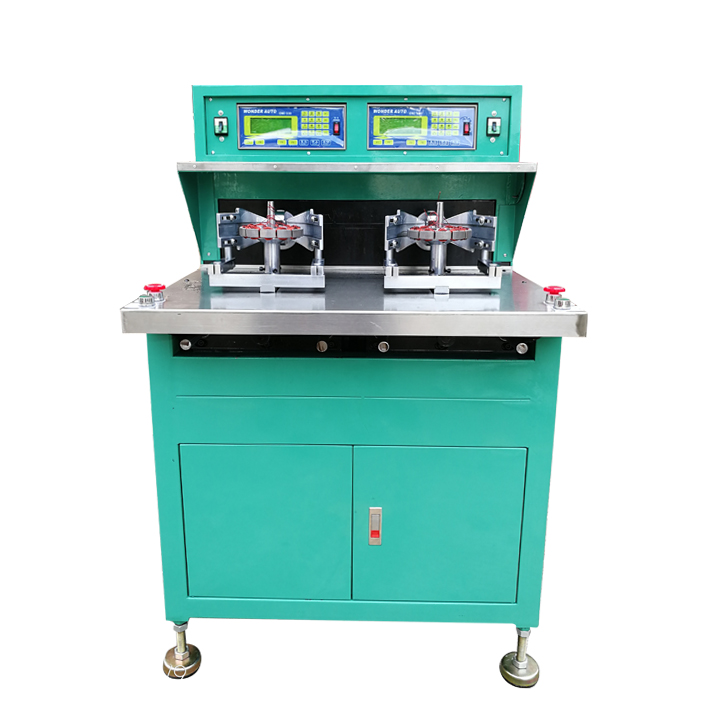





In the manufacture of high-efficiency rotating electrical machines—specifically permanent magnet synchronous motors (PMSM), brushless DC motors (BLDC), and induction motors conforming to IEC/JIS premium efficiency classifications—the stator coil winding phase constitutes the primary determinant of copper fill factor ($K_u$), electromagnetic balance, and operational thermal dissipation. Achieving high slot fill factors exceeding 75% in distributed or concentrated winding typologies demands precise servo-synchronized flyer trajectory control, dynamic wire tension management, and non-destructive wire deceleration.
Zunqi's CE-certified winding machinery incorporates closed-loop active electronic tensioners calibrated to maintain copper wire tension within ±0.5 cN tolerances. This precision prevents microscopic necking and dielectric breakdown of polyimide or polyesterimide enamels during high-velocity flyer rotation (up to 3,000 RPM). By eliminating mechanical micro-scratches on 0.1 mm to 1.2 mm magnet wires, our platforms ensure that winding assemblies intended for demanding sub-zero applications in Hokkaido withstand partial discharge voltages exceeding 2,500V AC without dielectric degradation.
A critical bottleneck in electrical stator lamination assembly is the combined coil and slot wedge insertion cycle. Conventional sequential processing methods risk damaging slot cell insulation liners (Nomex, DMD, or PET films) when dragging multi-strand copper wire bundles across abrasive electrical sheet punching burrs. Zunqi's automated inserting equipment executes a simultaneous push-pull mechanical cycle: precision-ground tungsten carbide tooling pushes the pre-wound coil groups and creased insulation wedges into the core slots in a single stroke.
This single-stroke inserting architecture preserves the mechanical crease integrity of the slot insulation cuff, preventing creeping discharges between the magnet wire and the stator tooth edges. Simultaneously, the automatic wedge feeder cuts and forms insulating paper from continuous rolls with a length tolerance of ±0.1 mm, ensuring complete enclosure of the active slot section and mitigating high-frequency harmonics or surge-induced short-circuits caused by modern variable frequency drives (VFDs).
Hokkaido's unique sub-arctic climate, extensive agricultural automation, clean-energy wind corridors, and industrial infrastructure impose extreme thermodynamic demands on electric motor stator manufacturing.
Sapporo's stringent decarbonization policies require high-efficiency CO2 and R32 heat pumps capable of operating down to -25°C ambient temperatures. Stators wound on our machinery deliver superior slot fill factors, reducing resistance losses ($I^2R$) and optimizing low-temperature inverter starting torque for residential and commercial district heating systems.
Subterranean municipal drainage, road snow-melting infrastructure, and agricultural deep-well pumps in Ishikari and Sorachi plains demand IP68-rated motors capable of withstanding moisture and freeze-thaw cycles. Our tightly laced, double-sided stator end-turns prevent mechanical coil shifting under continuous hydraulic pressure pulses.
Hokkaido's coastal wind farms (such as Ishikari Bay offshore wind projects) require high-reliability yaw, pitch, and hydraulic pump auxiliary drive motors. Our CE-certified heavy-duty winding platforms accommodate heavy enamelled copper wire diameters up to 1.2 mm with high mechanical lacing rigidity to counteract intense marine vibration.
Sapporo's surrounding food processing, brewing, and dairy plants require stainless-cased washdown servo drives. The precise coil forming and compact end-turn shaping achieved by our HONGFANG hydraulic units allow motor fabricators to fit stators into tightly sealed IP69K stainless steel housings without radial clearance violations.
With Hokkaido expanding automated refrigerated warehousing facilities, low-voltage battery-powered AGV traction motors require high torque density in restricted envelopes. Multi-station outer and internal stator winders enable concentrated winding typologies with minimal copper overhang and exceptional efficiency.
Severe winter conditions across Sapporo demand ruggedized electric starters and hydrostatic motor assemblies for snow removal machinery. Normalized SC45# motor shafts paired with precision-turned balanced rotors prevent bearing galling and shaft shearing during sudden frozen-load blockages.
Hokkaido is rapidly emerging as a central hub for Japan’s National Green Transformation (GX) strategy, leveraging the prefecture's immense offshore wind, geothermal, and biomass resources. This economic pivot has accelerated demand for high-efficiency electric motors compliant with Japanese Top Runner standards and international IE4 (Super Premium) and IE5 (Ultra Premium) benchmarks. Industrial motor manufacturers in Sapporo, Ebetsu, and Tomakomai are modernizing legacy manufacturing lines to phase out manual labor-intensive winding methods.
Concurrently, Japan’s acute demographic labor contraction has made automated production continuity paramount. Modern Japanese production managers seek "lights-out" or single-operator cellular production modules where slot insulation paper insertion, CNC flyer winding, automated wedge and coil transferring, hydraulic forming, and dual-sided lacing occur in continuous synchrony. Zunqi's equipment platforms are specifically configured to interface with industrial fieldbuses (CC-Link IE, EtherCAT, and Modbus TCP) prevalent in Japanese control cabinets, allowing direct telemetry integration with factory-wide SCADA systems.
Evaluate machine capabilities, wire range adaptability, cycle rates, and electrical controller options to determine the optimal cell configuration for your Sapporo facility.
| Equipment Model / Series | Primary Production Role | Stator Wire Range / Stack Height | Core Controller Architecture | Cycle Speed / Productivity | Compliance / Certification |
|---|---|---|---|---|---|
| HF-LO2-6G Series | Multi-station inner stator winding | 0.12 – 0.90 mm | 10 – 80 mm stack | Mitsubishi / Omron PLC + Touch HMI | Up to 2,800 RPM indexing flyer | CE Certified / JIS Compliant |
| HF-R40-2C Dual Station | Ceiling & table fan coil winding | 0.10 – 0.55 mm | 8 – 45 mm stack | Dual dedicated microcomputer CNC | Simultaneous 2-station high-speed run | CE Certified / 220V 50Hz |
| Coil & Wedge Inserter | Simultaneous wire & wedge inserting | Stator ID ø30 – ø160 mm | ≤ 160 mm stack | Panasonic / Delta Servo Driven Ram | ≤ 25 sec per complete stator core | CE Marked / Safety Interlocks |
| HONGFANG Coil Former | Intermediate & final end-turn shaping | Stator OD ≤ 220 mm | Overhang ≤ 65 mm | Hydraulic / Pneumatic Dual System | ≤ 12 sec per forming cycle | CE Machinery Directive |
| HF-BS20 Double Lacing | Simultaneous dual-side end lacing | Slot count 8 – 36 slots | Height ≤ 120 mm | Full Servo Axis Control (Pitch/Feed) | 0.5 – 1.0 sec per slot tie pitch | CE / ISO 13849-1 Safe Torque Off |
| HF-C60 Rotor Turning | Rotor surface fine turning & cutting | Rotor OD ø20 – ø90 mm | Shaft ≤ 300 mm | Integrated CNC Toolpost & Coolant | Concentricity within ±0.005 mm | CE Certified Industrial Enclosure |

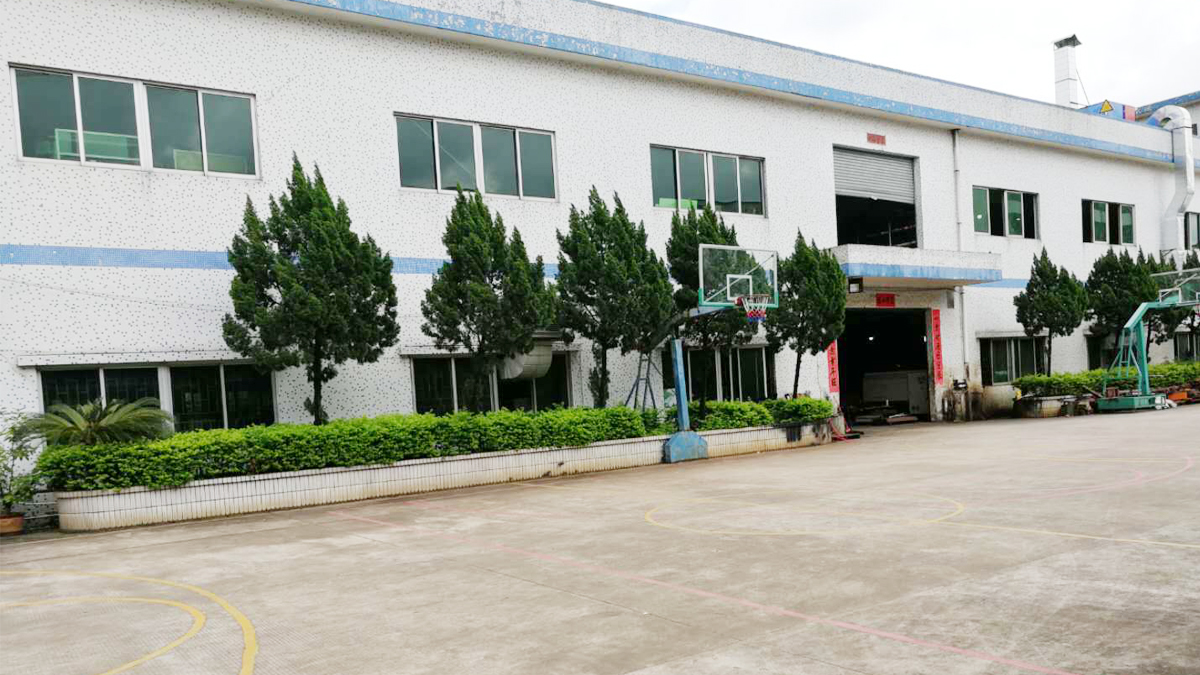
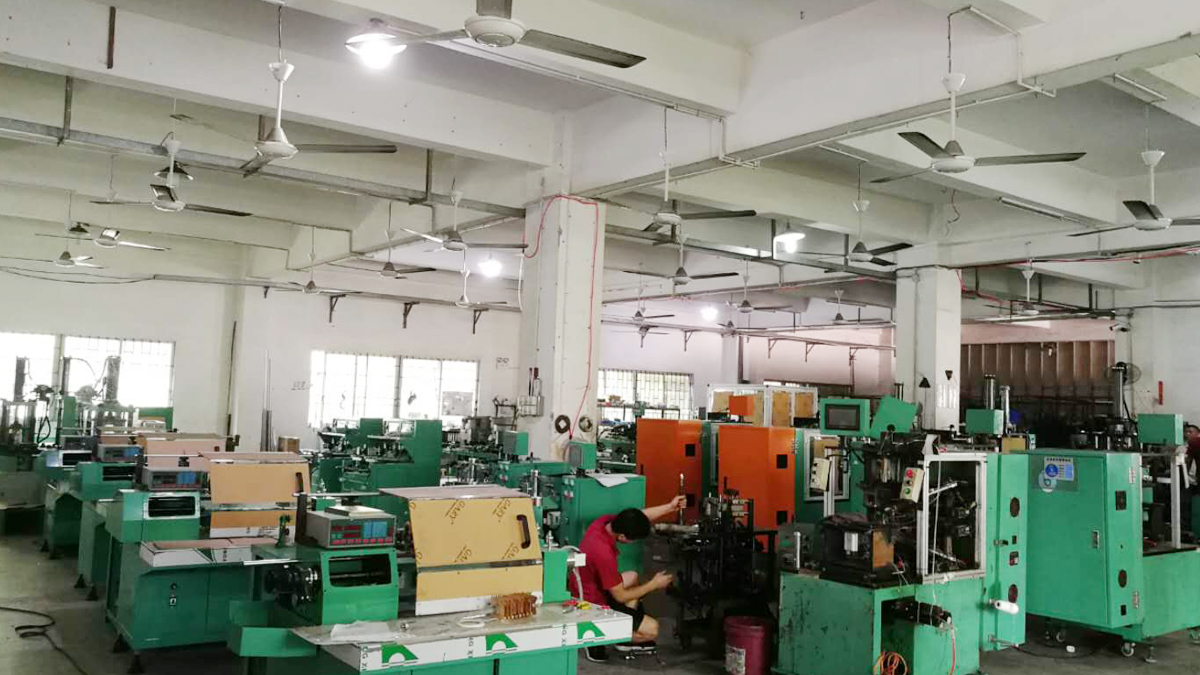
Operating from Qishi Town, Dongguan—the epicenter of precision industrial machinery manufacturing—Zunqi Intelligent Equipment Co., Ltd. has delivered turnkey motor manufacturing machinery to over 40 countries. Our specialized team of 51–100 machinists, electrical automation engineers, and tooling specialists build equipment that bridges high-volume durability with microscopic precision.
Critical considerations regarding electrical grid standards, sub-zero pneumatic reliability, customs clearance into Hokkaido, and custom stator tooling.
Consult directly with our motor automation engineering team in Dongguan. Send your stator stack height, laminations, slot dimensions, and wire gauges to receive an engineering proposal and detailed cycle time calculation within 9 hours.
