High-Yield Stator Insulation & Assembly Systems
Direct-from-factory production equipment precision-matched to IEC standard frames, custom lamination profiles, and high-frequency production lines in Fortaleza's burgeoning electro-mechanical hubs.
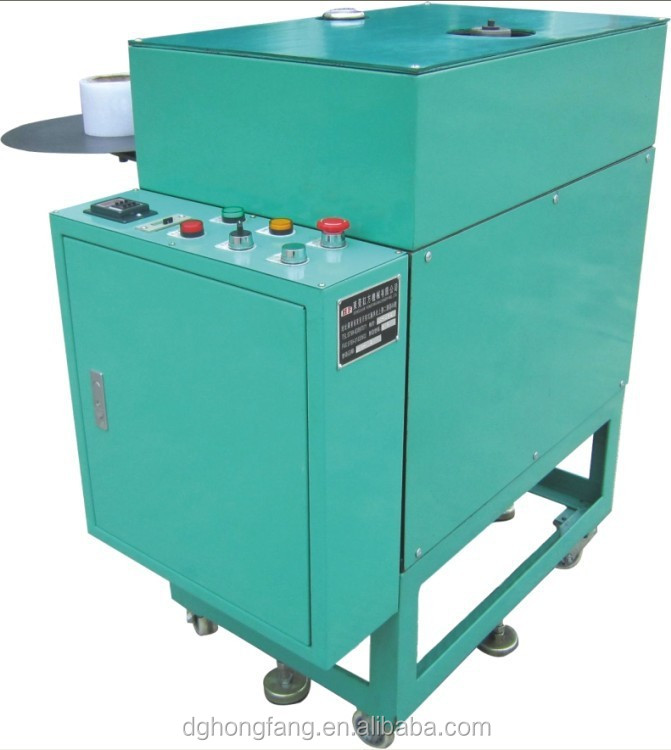
Automatic Stator Slot Insulation Paper Inserting & Cutting Machine
- Power: 1 kW | 220V/380V Configurable
- Automated cuffing, edge-folding & insertion
- Designed for fan, cooler & industrial pumps
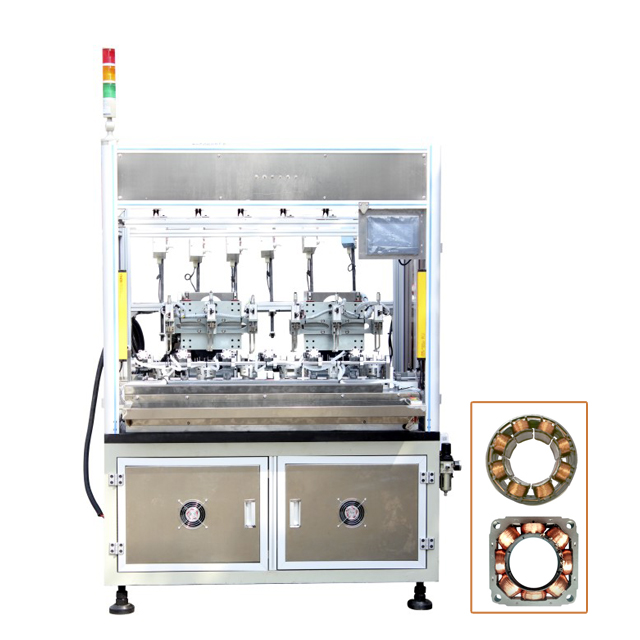
HF-LO2-6G Six Stations Internal Stator Winding Machine
- Multi-station high efficiency PLC control
- Inner stator coil winding with auto-indexing
- Industrial 1-Year Comprehensive Warranty
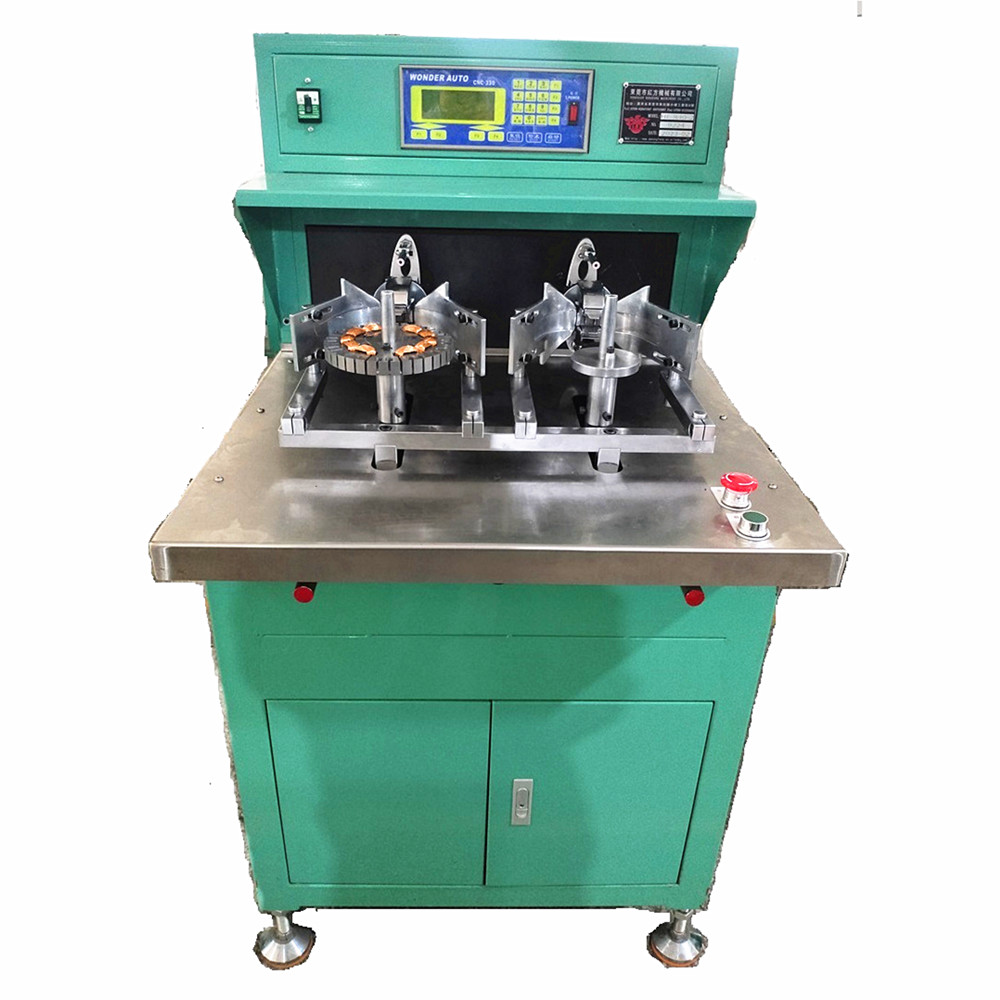
HF-R40-2C Two-Station Ceiling Fan Stator Winding Machine
- Dual-workstation synchronous winding
- Specialized for domestic/industrial fan stators
- High-speed precision wire arraying tooling
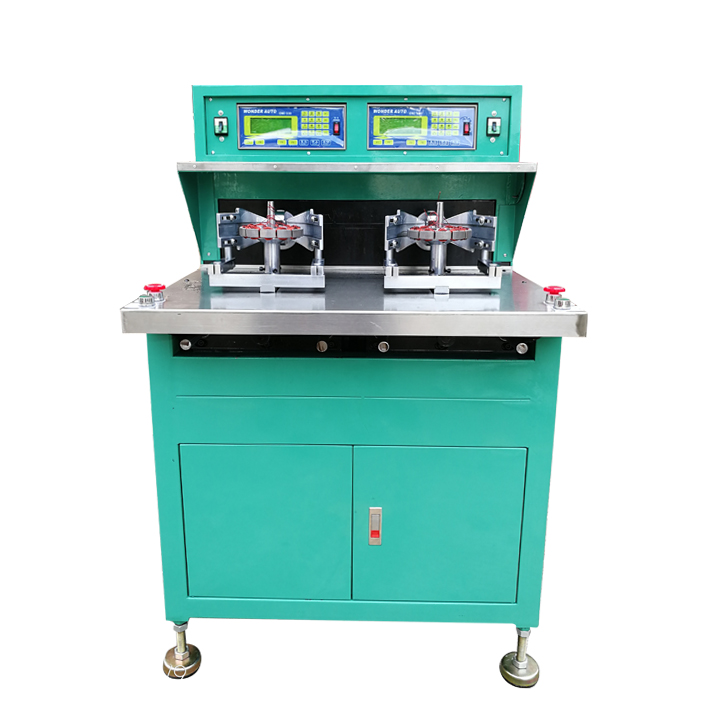
Heavy Duty Dual-Controller 2-Station Automatic Winding Line
- Dual digital micro-stepper controllers
- Rating: 1 kW | 220V single-phase compatible
- Heavy rigid cast-iron vibration dampening frame
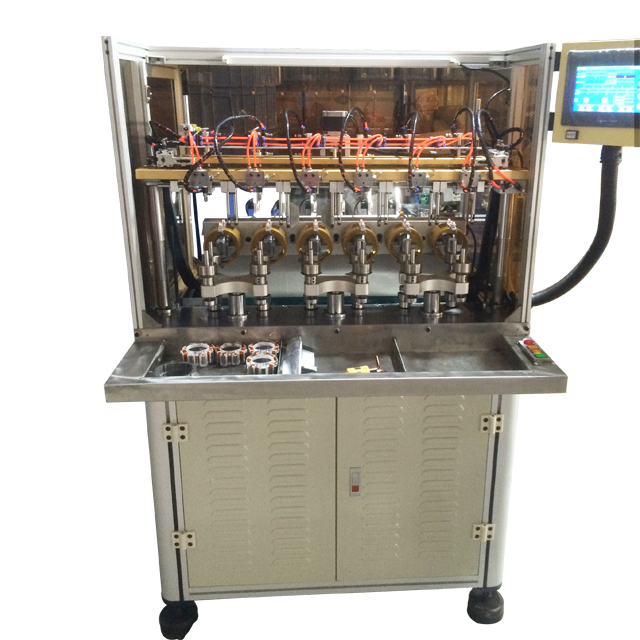
Six-Station Outer Stator Precision Coil Winding Machine
- High-speed planetary indexing gear system
- Core components from premier international suppliers
- Continuous cycle for high-volume automated lines
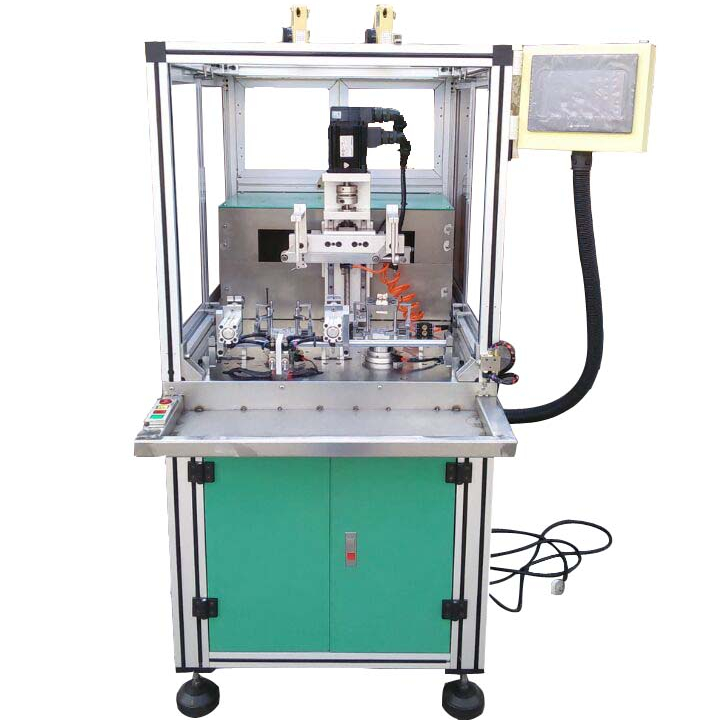
Two-Station Transformer & Outer Stator Coil Winder
- Multi-purpose winder for coils and transformers
- Synchronous dual spools with constant tension
- Digital display with programmable winding recipes
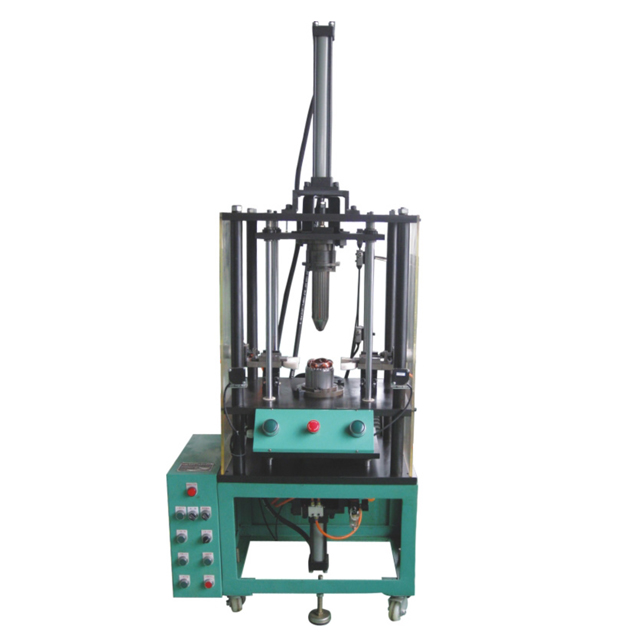
HONGFANG Stator Coil Forming & Intermediate Shaping Press
- Hydraulic/pneumatic end-turn geometric profiling
- Preserves wire enamel without micro-fracturing
- Standard tooling customizable for IEC/NEMA stators
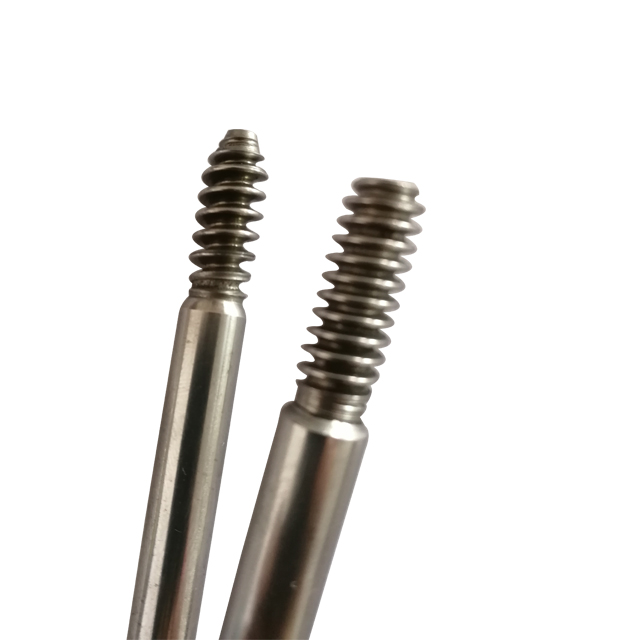
SC45 Carbon Steel Motor Rotor Shafts for Pumps & Coolers
- High-tensile forged SC45# & ductile steel grade
- Micro-ground bearing journals & keyways
- Surface passivation for coastal humidity endurance
Technical Architecture: The Role of Automated Stator Paper Insertion in High-Efficiency Electric Motors
In modern industrial electric motor production—spanning single-phase capacitor-start units to high-torque polyphase traction and water pump motors—the integrity of the ground-wall insulation is the primary determinant of long-term dielectric survivability. Manual or semi-manual insertion of slot liners introduces significant failure modes: inconsistent cuff folds, micro-tears along the dielectric substrate, asymmetric protrusion from the stack faces, and physical contamination from worker handling.
Our Automatic Stator Paper Inserting Machine systems eliminate human-induced variability through a tightly synchronized, servo-driven mechanical cycle. The machinery accepts raw insulation tape—including DMD (Dacron-Mylar-Dacron), NMN (Nomex-Mylar-Nomex), pure polyester film (PET), or high-density aramid papers—and executes four critical operations in a single coordinated stroke: precision feeding, bidirectional edge cuffing, profile forming, and linear pneumatic/servo insertion into the lamination stack.
1. Dual-Edge Cuffing and Tensioning Mechanics
The slot cell insulation must extend past the axial ends of the electrical steel stack to prevent direct contact between the copper magnet wire and the sharp lamination teeth. Our equipment integrates a hardened tool-steel cuffing mechanism that folds both axial edges of the insulation strip simultaneously. The cuff width (typically adjustable between 2.5 mm and 5.0 mm) provides high mechanical rigidity, ensuring that during the subsequent high-velocity coil inserting and wedging operations, the slot liner does not pull into the lamination slot under friction.
2. Stepper-Servo Coordinate Indexing
For stator stacks ranging from 8 slots to 48 slots or more, rotational indexing must be free of angular backlash. Utilizing high-torque digital stepper systems or absolute Mitsubishi/Panasonic servo drives, the indexer achieves an angular repeatability within ±0.05°. The machine supports programmable variable-slot insertion routines, allowing manufacturers to skip specific slots for odd winding configurations or dual-voltage winding patterns with simple software parameter changes on the human-machine interface (HMI).
| Machine Attribute | Standard Household Line (Fans/Pumps) | Industrial IEC Frame Line | Heavy High-Torque / Submersible Line |
|---|---|---|---|
| Stator Lamination O.D. | Φ40 mm – Φ120 mm | Φ80 mm – Φ220 mm | Up to Φ300 mm |
| Stack Core Length | 10 mm – 100 mm | 20 mm – 250 mm | 30 mm – 400 mm |
| Insulation Thickness Range | 0.125 mm – 0.25 mm | 0.18 mm – 0.35 mm | 0.25 mm – 0.50 mm (Composite) |
| Cycle Speed (Per Slot) | 0.35 – 0.45 seconds | 0.45 – 0.60 seconds | 0.60 – 0.85 seconds |
| Supported Slot Profiles | Semi-closed, parallel teeth | Semi-closed, pear-shaped, round bottom | Open, deep-slot, asymmetric |
Localized Applications in Fortaleza & Greater Ceará
How automatic stator slot insulation machinery empowers manufacturing hubs throughout the Metropolitan Region of Fortaleza, the Pecém Industrial Complex, and Northeast Brazil.
Agricultural & Deep-Well Water Pumps
The semi-arid interior of Ceará and surrounding northeastern states relies extensively on multi-stage centrifugal and deep-well submersible electric pumps. Submersible motors require Class F or Class H insulation materials (like Nomex or NMN) that endure prolonged thermal elevation and dielectric stress in humid submersion. Our machines provide burr-free, uniform slot cell insertion that stops phase-to-ground flashover under surging agricultural grid conditions.
HVAC, Air Movement & Table/Ceiling Fans
Fortaleza maintains a steady year-round tropical climate, driving massive regional consumption of domestic table fans, industrial ventilation turbines, and air coolers manufactured in Maracanaú and Eusébio industrial parks. High-volume fan motor manufacturing demands cycle times under 0.4s per slot. Our high-speed insulation inserting equipment seamlessly handles single-phase shaded pole and permanent split capacitor (PSC) stators without jamming.
Renewable Energy & Marine Auxiliary Drives
The Port of Pecém green hydrogen corridor and offshore/onshore wind generation supply chains in Ceará require specialized auxiliary electric motors. Coastal exposure causes accelerated dielectric breakdown if paper liners possess micro-fissures from manual folding. Automated creasing preserves mechanical tear resistance, ensuring long-term insulation resistance in salty, high-humidity coastal atmospheres.
End-to-End Stator Assembly Synchronization
Our slot insulation equipment anchors the stator line, functioning seamlessly with downstream winding, inserting, shaping, and lacing machinery.
Slot Insulation Inserting
Insulation paper is fed from coiled reels, precision cuffed on both outer boundaries, sliced to stack depth, shaped into U-cells, and inserted into stator slots via automated indexing.
Coil Winding & Transfer
Enamelled copper or aluminum magnet wire is wound onto tooling heads with continuous tension control, ready for drop-in insertion without tangling or enamel micro-cracking.
Wedge & Coil Insertion
Pre-wound coil groups and top closure wedges are drawn into the insulated stator slots in a single mechanical stroke, ensuring maximum slot fill factors without damaging slot liners.
Intermediate & Final Forming
End windings undergo internal expanding, external pressing, and height limiting. Automated single- or double-side servo lacing locks the coil heads for vibration-proof operation.
Strategic Trends in Fortaleza's Electrical Manufacturing Sector
The industrial landscape in the state of Ceará is experiencing structural transformation, propelled by the development of the Pecém Industrial and Port Complex (CIPP) and the consolidation of an advanced green hydrogen and renewable energy cluster. Local small-to-medium motor rewind facilities and original equipment manufacturers (OEMs) in Caucaia, Maracanaú, and Fortaleza are upgrading from labor-intensive manual assembly to semi-automatic and fully automated cells.
Transition to IEC Efficiency Standards (IE2 / IE3)
Under Brazilian industrial energy efficiency regulations aligned with Procel Edifica and national electric energy conservation laws, electric motors must fulfill strict energy consumption benchmarks. Increasing efficiency from IE1 to IE3 requires higher slot fill factors—often crowding 75% to 82% of the available slot area with magnet wire. In tight slots, manually placed insulation often collapses or shifts during coil insertion, resulting in immediate ground shorts. Automated paper inserting guarantees symmetrical slot lining, maximizing available cross-sectional slot area for copper fill.
Mitigation of Import Costs via Domestic Motor Sub-Assembly
Brazilian import tariffs (II - Imposto sobre Importação) and circulation taxes (ICMS) incentivize domestic assembly over finished electric motor imports. By purchasing specialized motor assembly machinery such as our Automatic Stator Paper Inserting Machine, manufacturers in Ceará capitalize on the Ex-Tarifário regime (which can reduce import duties on capital goods to 0% when there is no equivalent domestic machine production), enabling superior return on investment (ROI) within 8 to 14 months of commissioning.
Procurement & Engineering FAQ for Fortaleza Buyers
Comprehensive answers regarding electrical standards, mechanical compliance, Brazilian customs, and localized tooling support.
Can the machine be configured for Fortaleza's 220V/380V 60Hz industrial power grid?
Yes. While standard machines in some global markets operate on 50Hz, all our export machinery shipped to Brazil is specifically engineered and wired for 220V single-phase or 220V/380V three-phase 60Hz electrical distribution. Drives, induction motors, and digital controllers are factory-tuned to eliminate harmonic distortion or overheating on 60Hz frequencies.
Does your machinery comply with Brazilian safety standard NR-12?
Our equipment is built with industrial safety architecture including dual-channel safety relays, physical emergency stop circuits, pneumatic residual pressure relief valves, and transparent polycarbonate mechanical interlocks. For buyers requiring formal Brazilian NR-12 certification, we provide complete electrical schematics, component safety declarations, and engineering dossiers to facilitate domestic engineer sign-off (ART).
What is the typical shipping lead time and customs port for Fortaleza?
Ocean freight dispatches directly from Shenzhen or Guangzhou ports to either the Port of Pecém (BRPEC) or the Port of Mucuripe (BRFOR) in Fortaleza. Average sea transit time is between 32 and 45 days. We provide complete fumigation certificates, ISPM-15 compliant solid wood or multi-layer plywood crating, and precise NCM (Mercosul Common Nomenclature) codes to streamline customs clearance via Siscomex.
Can a single machine handle multiple stator stack heights and slot numbers?
Yes. Stack height adjustments are accommodated via mechanical vernier scales or servo-driven linear feeds within minutes. For changes in stator bore diameter or slot profiles, our modular tooling design allows quick replacement of the pushing blades, cuffing dies, and stator positioning mandrel, allowing you to run diverse motor series on a single capital asset.
How do you provide post-sales technical support and training in Northeast Brazil?
Every machine order includes complete high-definition commissioning videos, detailed English/Portuguese operation manuals, and pre-shipment trial run videos using your actual sample laminations. Our technical engineering desk provides remote video assistance typically within 9 hours, backed by standard modular electrical parts (Siemens, Delta, Schneider, Airtac) that can be sourced locally in Brazilian markets if immediate replacements are ever required.
What is the minimum order quantity and spare parts availability?
The MOQ for our automatic stator paper inserting and coil winding machines is 1 set. Every machine ships with a comprehensive initial maintenance pack containing spare cuffing blades, feeding rollers, push rods, limit sensors, and pneumatic heating elements to guarantee non-stop production during your initial operating year.
Enterprise Manufacturing Strengths & Supplier Profile
Based in Qishi Town, Dongguan City—the core of South China's electromechanical engineering cluster—we offer 17 years of specialized manufacturing experience delivering industrial motor assembly solutions across 40+ countries.
Alibaba Onsite Verified
Our workshop, production machinery, and commercial operations have been rigorously inspected and certified on-site by international third-party assessment agencies.
Physical Stator Trial Runs
We do not ship on theoretical drawings alone. Customers provide physical stator samples or CAD profiles, and every machine undergoes full FAT test runs recorded on video before dispatch.
Global Tier-1 Components
Our automation cabinets feature premium components from Siemens, Mitsubishi, Panasonic, Delta, Inovance, Omron, and Airtac pneumatic valves for uncompromising reliability.
Single-Source Line Integration
From initial slot paper creasing to multi-station winding, coil inserting, intermediate forming, and rotor fine turning, we supply harmonized, perfectly timed production cells.
Modernize Your Motor Production Line in Fortaleza Today
Send your stator lamination drawings (OD, ID, stack height, slot shape) and target daily output to our senior engineering desk. We will provide a tailored machine layout and formal quotation within 9 hours.
Inquire Now