
Engineered Machinery Portfolio
High-Efficiency Stator & Rotor Production Solutions
Built under strict ISO-compliant tolerances, each automated unit is configured to custom slot geometries, copper/aluminium wire matrices, and European electrical safety directives (CE standard compatibility).

HF-W120H HONGFANG Electric Motor Stator Coil Final Forming Second Shaping Machine for Manufacturing Plant New 1 Year Gear

HF Single Side Lacing Machine for Table Fan Motor Stator Coil 1000W 380V/220V
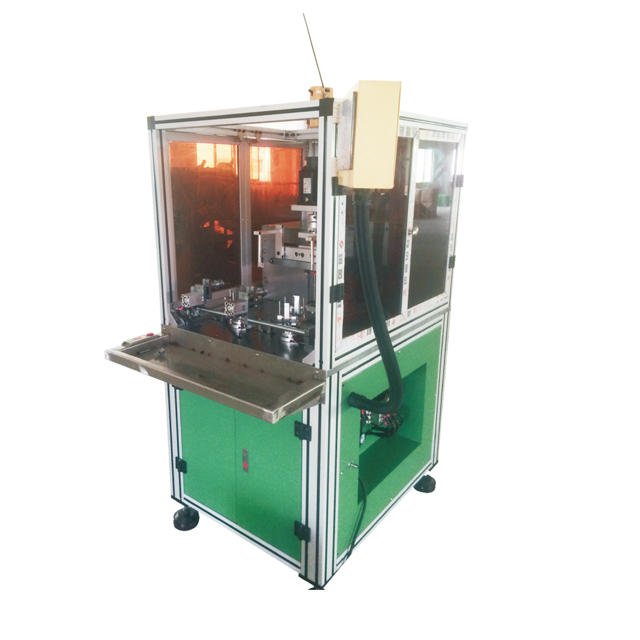
4 Stations Internal Stator Winding Machine

New HF Fan Motor Rotor Turning & Casting Machine with PLC and Pump Core Components Aluminum Surface Cutting
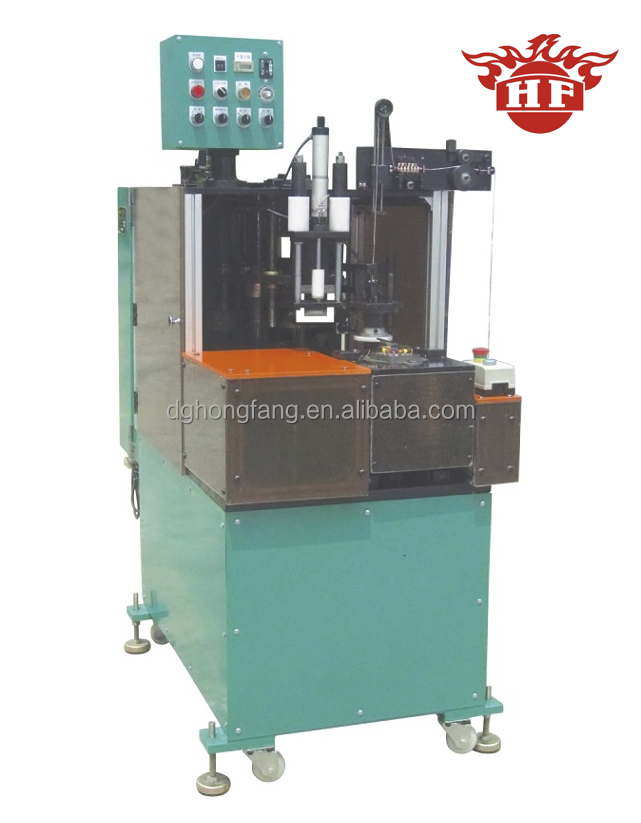
HF-BS20 Servo Type Automatic Coil Double Side Lacing Machine for Fan Motor 1000W 220V

Automatic Rotor Fine Turning & Surface Cutting Machine HF-C60 with PLC Motor Pump-1 Year Warranty

Electric Motor Spares SC45# Low Carbon Steel Iron Fan Motor Shaft Machining Components for Household Use
Targeted Regional Integration
Localized Applications for Kraków's Manufacturing Ecosystem
From industrial automation hubs in Nowa Huta to sub-assembly facilities across the Kraków Technology Park, our automatic stator coil winding machinery meets the exacting demands of regional OEM production lines.
HVAC & Industrial Fan Systems
Kraków’s ventilation and commercial climate control suppliers require high slot fill factors and low mechanical vibration. Our multi-station flyers and automated coil-inserting configurations process 2-pole and 4-pole stators with uniform tension, minimizing magnetic hum and acoustic emissions in line with EU Ecodesign requirements.
Automotive Tier-2 Sub-Assemblies
Southern Poland’s automotive corridor demands continuous repeatability. Our servo-driven internal stator winders provide closed-loop winding tension control, allowing brushless DC (BLDC) and auxiliary drive motors to maintain rigid electrical symmetry and zero insulation abrasion across tens of thousands of continuous operational cycles.
Water Pumping & Hydronic Drives
Domestic and commercial water pump motor fabricators throughout the Vistula basin utilize our integrated lines for precision slot insulation, winding, and simultaneous coil-wedge inserting. The result is total resistance to phase-to-phase micro-discharges and enhanced tolerance against heavy thermal fluctuations.
Engineering Whitepaper & Strategic Outlook
Advancing Stator Manufacturing in Poland: Transitioning to IE4/IE5 Standards
Across the manufacturing zones of Małopolska and the broader Polish industrial landscape, electromechanical fabricators face dual pressure: escalating unit labor rates and stringent European Commission mandates on minimum motor efficiency classes. The phase-out of legacy, manually intensive winding methods is no longer merely a cost-reduction initiative—it is an engineering imperative driven by the requirements of IE3 (Premium Efficiency) and IE4 (Super Premium Efficiency) electrical machine designations.
The Mechanical Physics of Precision Stator Winding
Achieving superior copper slot fill factor (often exceeding 78% in advanced induction and synchronous reluctance topologies) necessitates exceptional kinetic stability during the winding and inserting cycles. Traditional winding mechanisms often expose magnet wire to micro-abrasions in the polyimide/polyamide-imide enamel coating, precipitating partial discharges and early breakdown under PWM variable frequency drive (VFD) switching stresses.
Our automatic stator coil winding machinery employs programmable multi-axis CNC servo systems capable of synchronizing needle displacement, nozzle rotation, and dynamic wire brake tensioners down to ±0.05 N·m. By smoothing the wire feed path and pairing the winding cycle with dedicated multi-head coil forming machines, end-turn overhang is strictly curtailed. This physical reduction in overhang diminishes redundant copper mass, directly lowering $I^2R$ resistive losses and optimizing overall air-gap magnetic flux density.
| Process Parameter | Manual / Semi-Mechanical Bench | Zunqi Automatic CNC Stator Platform | Engineering Advantage |
|---|---|---|---|
| Copper Slot Fill Rate | 50% – 62% Maximum | 70% – 82% Uniform Density | Higher magnetic flux, IE4 standard enablement |
| Wire Tension Deviation | ±15% to ±25% (Operator-dependent) | ±1.5% Closed-Loop Dynamic Servo | Prevents insulation necking and shorted turns |
| Cycle Time (36-Slot Stator) | 180 – 300 Seconds | 32 – 55 Seconds (Fully automated) | Multiplies hourly throughput by 400%+ |
| End-Turn Overhang Variance | ±4.5 mm | ≤0.8 mm post 3D intermediate forming | Saves copper, prevents stator housing interference |
Key Electromechanical Trends in Kraków's Industrial Sector
Modern production facilities across Lesser Poland are rapidly transitioning toward lean, high-mix automated cells. Three critical engineering trends define the current procurement criteria for local manufacturing directors:
1. Tooling Modularity for High-Mix Production: Given the demand for specialized pump, elevator, and ventilation motors, machinery cannot remain locked to a single lamination profile. Our tooling systems feature rapid quick-disconnect assemblies, allowing changeover between divergent stack heights and slot numbers in under 35 minutes.
2. Aluminum to Copper Dual-Winding Capability: Balancing global copper spot-price fluctuations, Polish motor makers frequently alternate between copper and high-ductility enamelled aluminum wire. Our winding heads integrate non-scoring ceramic pulleys and programmable decelerations that prevent stretching aluminum wire beyond its yield point.
3. Comprehensive Traceability: Integrated PLCs (with available Siemens, Mitsubishi, and Delta architectures) output exact cycle parameters, turn counts, and instantaneous tension profiles via standard Industrial Ethernet (Modbus TCP/Profinet), making them fully compatible with modern factory MES networks.
Direct Factory Advantage
Why Kraków Engineering Teams Partner with Zunqi
Operating from our primary manufacturing base in Dongguan, China, we combine 17+ years of dedicated export engineering with full component transparency, factory acceptance test (FAT) verification, and direct technical collaboration.
Tooling Customized to Drawing
Every winder, inserting guide, and shaping die is custom-machined from treated tool steels according to your stator lamination drawings and sample physical cores.
End-to-End Production Cells
From automatic slot paper insertion to coil winding, wedge insertion, 3D coil forming, and dual-side lacing, we build balanced lines with synchronized cycle times.
Standard Global Components
Control cabinets feature components maintenance teams already stock: Siemens, Schneider, Mitsubishi, Omron, SMC pneumatic logic, and Airtac solenoid arrays.
Transparent Video FAT & Support
Before dispatch, we run your sample stator cores on the finished line, providing complete dimensional inspection data and operational video records for sign-off.
Procurement Due Diligence
Frequently Asked Questions by Technical Buyers in Poland
Clear, direct answers regarding equipment integration, power grids, logistics, and long-term service agreements.
Are your machines directly compatible with the Polish electrical grid (400V / 230V, 50Hz)? +
Yes. All electrical systems destined for Poland and the wider European Union are engineered for 3-phase 400V or single-phase 230V at 50Hz. Transformers, servo drives, and switchgear are pre-calibrated, CE marked, and wired with standard European industrial color coding and emergency stop safety loops.
Can one automatic stator winding machine handle multiple stator models and stack heights? +
Yes. Stator stack heights are adjusted directly via touchscreen parameter inputs on our servo-driven indexers. For variations in internal/external diameters or slot configurations, modular tooling sets (winding nozzles, clamp fixtures, forming dies) can be swapped out within 20 to 35 minutes using precision alignment dowels.
How do you handle Factory Acceptance Testing (FAT) for overseas customers in Kraków? +
Prior to shipping, customers send physical stator lamination samples and magnet wire specifications to our factory. We complete comprehensive trial runs, checking turns per coil, winding tension, phase resistance, and surge voltage resistance. We provide full HD video footage of the cycle, high-resolution microscopic wire inspections, and dimension reports for engineering sign-off.
What are the lead times and shipping routes to Poland (Gdańsk / Gdynia / Rail)? +
Standard machine builds require 30 to 45 business days depending on tooling complexity. Shipments to Kraków typically proceed via ocean freight to the port of Gdańsk (approx. 28–34 days transit) or via the China-Europe Railway Express direct to Małaszewice/Warsaw (approx. 14–18 days transit) followed by road transport directly to your facility in Lesser Poland.
What warranty, wearing parts, and after-sales service support do you supply? +
All equipment includes a comprehensive 1-year warranty covering electrical and mechanical components. Every machine ships with a complimentary wearing parts package (winding needles, wire guide nozzles, cutting blades, pneumatic seals). We provide remote video support, PLC diagnostics, and can arrange technical field commissioning when deploying complete automated stator lines.
Request a Technical Consultation & Stator Line Quote
Send our senior engineering team your stator lamination drawings (OD, ID, stack height, slot dimensions), wire specifications, and target hourly throughput. We provide a customized machine selection and layout analysis within 9 hours.
