Precision Motor Stator & Rotor Production Portfolio
Custom-engineered automated winding, wedge insertion, shaping, and precision turning solutions built to international CE & UKCA standards for Scottish and global motor manufacturing plants.
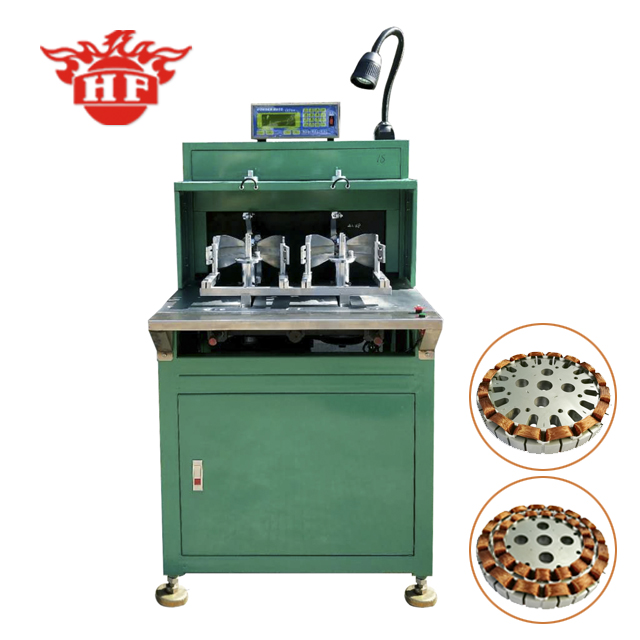





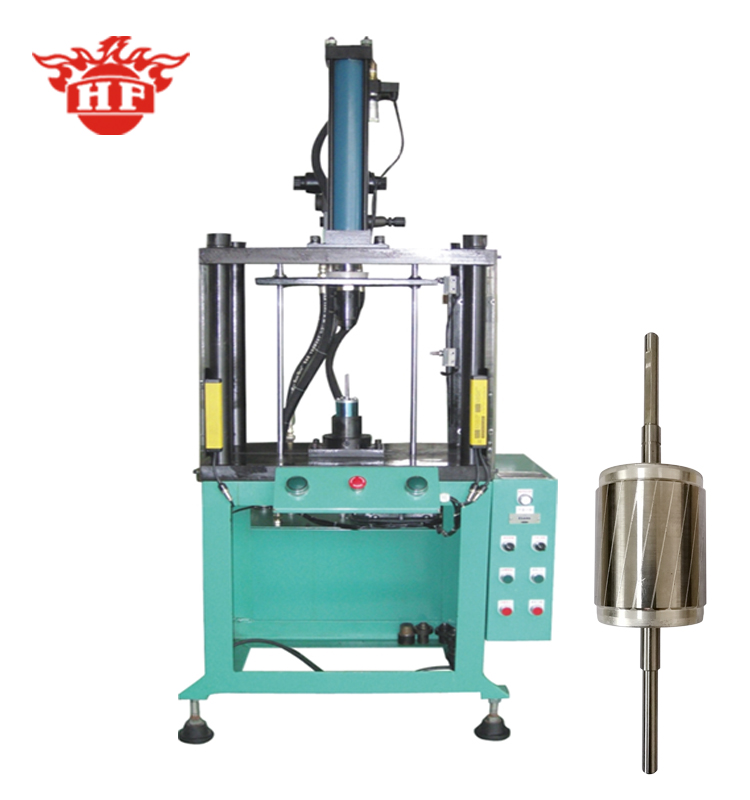

Technical Engineering Analysis: Kinematics of Automatic Stator Coil & Wedge Insertion
In modern electric machine manufacturing, electromagnetic efficiency and volumetric torque density are tightly governed by the stator slot fill factor (copper fill ratio) and slot liner integrity. For original equipment manufacturers (OEMs) and precision rewind specialists in Glasgow, the transition from manual or semi-automated coil lacing to servo-driven dual-action stator coil and wedge insertion represents the most pivotal quality leap on the factory floor.
Traditional manual insertion is not only labour-intensive but suffers from unavoidable human variance: enameled magnet wire experiences localized tensile stretching, insulation varnish micro-fissures develop under inconsistent tool pressure, and slot wedges risk misplacement or uneven retention. Our automated stator coil inserters utilize a synchronized, mechanical-servo stroke where pre-formed copper or aluminum coils and precision-cut slot closure wedges (insulation paper or composite wedges) are guided simultaneously into the stator core slots.
Synchronized Wedge Feeding, Creasing, and Shearing
A fundamental failure mode in high-vibration motors—such as those operating in Clyde maritime vessels or Scottish offshore wind nacelles—is wedge migration under thermal cycling. Our inserters incorporate an independent servo wedge-feed magazine. The insulation material (Nomex®, DMD, Mylar®, or vulcanized fiber) is drawn continuously from coil rolls, creased along defined score lines to conform accurately to the stator tooth profile, sheared to the exact stack depth plus calculated overhang, and propelled into the stator bore guide channels in precise synchronicity with the advancing coil pusher.
Zero-Damage Tooling Geometry
Guide blades are mirror-honed (≤ Ra 0.2 µm) to eradicate friction galling, micro-abrasions, and pinhole breakdown during high-speed insertion passes.
Programmable Servo Thrust
Multi-axis Siemens/Mitsubishi servo drives ensure dynamic acceleration and torque-limited insertion, automatically halting stroke if slot misalignment is sensed.
Rapid Tooling Changeover
Modular wedge guides and push fingers can be exchanged in under 35 minutes, allowing Scottish plants to handle diverse frame sizes with minimal downtime.
Localized Application Scenarios Across the Greater Glasgow Industrial Corridor
The manufacturing ecosystem of Glasgow, extending through Lanarkshire, Renfrewshire, Clydebank, and the broader Scottish Central Belt, is defined by engineering heritage paired with aggressive green modernization. Our automatic coil and wedge inserting equipment directly supports the demanding specifications of regional tier-1 and tier-2 electro-mechanical manufacturers.
1. River Clyde Marine Engineering & Naval Propulsion Systems
Clyde marine facilities and naval dockyards demand heavy-duty auxiliary propulsion motors, bow thrusters, bilge pumping assemblies, and winch drives capable of withstanding extreme saline and vibration environments. Our automatic inserting machines accommodate high slot depth-to-width ratios, thick laminated electrical steel packs, and heavy-gauge rectangular or multi-strand round wire windings, ensuring zero phase-to-phase shorts and tight slot compaction essential for Lloyd's Register and DNV maritime approvals.
2. Scottish Offshore Wind & Renewable Hydro Turbines
As Scotland targets Net Zero carbon emissions by 2045, Glasgow operates as an engineering hub for offshore wind maintenance, pitch-control servo manufacturing, yaw drive motor assembly, and micro-hydro generation equipment. In these applications, reliability under continuous cyclic load is paramount. Automated wedge insertion eliminates partial discharge (PD) voids within stator slots, dramatically extending the mean time between failures (MTBF) for high-stress renewable drive trains.
3. Industrial HVAC, Commercial Pumping & Cleanroom Ventilation
From district heating networks across Lanarkshire to commercial refrigeration and wastewater management stations across Strathclyde, premium efficiency induction motors (IE3 and IE4 Super Premium Efficiency) are now mandatory under UK eco-design legislation. Achieving IE4 efficiency requires elevated slot fill factors (>75%), which can only be achieved mechanically with automated coil inserting tools that prevent conductor wedging and lamination deformation.
4. Rail Traction & Decarbonised Public Transit Drives
ScotRail electrification initiatives and regional battery-electric train projects demand auxiliary motors and traction systems with high power-to-weight ratios. The integration of high-dielectric Nomex slot liners with precision automatic coil positioning guarantees consistent air-gap clearance, reducing magnetic hum and electromagnetic excitation frequencies.
Technical Specifications: Automatic Inserter Configuration Matrix
Review our core automatic stator coil and wedge insertion platform specifications. All units are configured to British electrical standard specifications (400V, 50Hz, 3-Phase or 230V Single-Phase) prior to factory acceptance testing (FAT).
| Technical Parameter | Standard Series (IE2/IE3) | High-Slot-Fill Series (IE4/IE5) | Heavy-Frame Industrial Series |
|---|---|---|---|
| Stator Lamination OD | Φ40 mm – Φ160 mm | Φ60 mm – Φ220 mm | Φ120 mm – Φ350 mm |
| Stator Bore ID | Φ20 mm – Φ110 mm | Φ30 mm – Φ140 mm | Φ60 mm – Φ220 mm |
| Max Stack Depth (Core Height) | 10 mm – 160 mm | 15 mm – 220 mm | 30 mm – 350 mm |
| Wire Diameter Handling | 0.12 mm – 0.90 mm | 0.20 mm – 1.25 mm (Multi-strand) | 0.35 mm – 1.60 mm (Round / Flat) |
| Cycle Time Per Stator | 12 – 22 sec (depending on slots) | 16 – 28 sec (high fill) | 25 – 45 sec (large frame) |
| Compatible Wedge Media | DMD, NMN, Polyester film, Nomex® | Nomex®, Kapton®, Composite Paper | Epoxy Glass cloth, Nomex®, DMD |
| Pusher Actuation System | Precision Cam-Linkage / Servo | Full Multi-Axis AC Servo | Electro-Hydraulic Servo Hybrid |
| Control Interface | 7" Touch HMI + PLC | 10" Colour Touch HMI + Remote Diagnostics | Industrial PC / Siemens S7-1500 |
| Rated Power & Air Supply | 3.5 kW / 0.5-0.7 MPa | 5.5 kW / 0.6-0.8 MPa | 7.5-11 kW / 0.6-0.8 MPa |
Strategic Industrial Trends Shaping Motor Automation in Scotland
The manufacturing sector across Scotland is undergoing unprecedented structural restructuring driven by high energy tariffs, supply chain near-shoring, and rigorous carbon accounting. Scottish motor manufacturers, maintenance workshops, and engineering repair facilities in Glasgow must navigate several transformative trends:
1. The Shift to High-Efficiency IE4 and Permanent Magnet (PMSM) Stators
With UK climate mandates driving stringent efficiency classes across pump, compressor, and HVAC installations, traditional loose-tolerance manual windings cannot achieve the magnetic densities required for IE4 and synchronous reluctance (SynRM) motors. Automated inserters allow Scottish plants to maintain consistent slot copper densities exceeding 78%, minimizing I²R stator copper losses and helping customers achieve lower total cost of ownership (TCO).
2. Mitigating Skilled Engineering Labour Shortages
The demographic reality of the Scottish Central Belt is that seasoned manual winding winders and electro-mechanical fitters are retiring faster than apprentices are entering the trade. Automated coil inserting machines resolve this critical bottleneck: a single machine operator can produce the daily stator output previously requiring four to six skilled manual fitters, while eliminating repetitive strain injuries (RSI) associated with manual mallet-and-punch inserting methods.
3. Integration with Industry 4.0 & Factory Supervisory Networks
Modern fabrication centers in Glasgow increasingly operate under automated MES (Manufacturing Execution Systems). Our inserters feature native Ethernet/IP, Profinet, and Modbus-TCP connectivity, feeding operational cycle telemetry, insertion force histograms, tool wear monitoring, and parts-count traceability directly into Scottish plant ERP environments.
Our Verified Factory Strengths & Production Integrity
Sourcing industrial automation equipment from overseas requires uncompromised transparency, verified manufacturing lineage, and robust technical support. As a direct manufacturer and global supplier with 17+ years of export trade on Alibaba.com, we offer unmatched advantages for Glasgow manufacturing firms:
Onsite-Checked & Certified Facility
Our Dongguan production facility has been thoroughly verified on-site by independent third-party assessors. 51-100 skilled engineers and fitters operate under strict ISO manufacturing protocols.
Rapid Technical Response (≤ 9h)
Our technical desk provides structured engineering responses within 9 hours, ensuring that technical clarifications and tooling schematics align seamlessly with UK GMT/BST business hours.
Tailored Tooling to Customer Samples
We do not sell generic off-the-shelf tooling. Every guide magazine, blade profile, and pusher shoe is precision CNC-machined from our customer’s physical stator sample or engineering drawings.
Standardized Tier-One Component Architecture
To ensure Scottish maintenance engineers can service machines easily over decades of operation, we standardize exclusively on globally supported industrial components. Buyers can configure controls to their internal facility standards:
Complete Stator Production Line Synchronisation
The automatic coil and wedge inserter serves as the central anchor of a comprehensive motor production workflow. We engineer matched machinery to ensure zero cycle bottlenecks:
01. Slot Insulation Inserting
High-speed machines crease, cut, and insert insulation paper into every core slot with exact edge cuffed cuffs.
02. Automated Coil Winding
Multi-spindle flyer or flyer-arm winders wind multi-turn coil groups with uniform tension onto tooling magazines.
03. Coil & Wedge Insertion
Simultaneous single-stroke transfer of coil groups and slot closure wedges into the stator bore.
04. Intermediate End-Turn Forming
Hydraulic or servo expanding mandrels pre-shape coil heads away from the rotor bore line.
05. Dual-Side Automatic Lacing
Servo needles cord-bind both end windings tightly to withstand dynamic magnetic torque pulses.
06. Final Sizing & Rotor Finishing
Final coil head dimensional calibration followed by precision rotor OD turning and shaft press-fitting.
Frequently Asked Questions: Purchasing for the Glasgow & UK Market
Key technical, electrical, and customs guidance for procurement directors and lead production engineers across Scotland.
Does your equipment conform to UKCA and CE machinery safety regulations?
Are machine electrical panels compatible with the UK 400V 50Hz 3-Phase power grid?
What is your minimum order quantity (MOQ) and sample validation process?
How are machines packaged for maritime shipping to Scotland?
What after-sales technical support and warranty coverage do you provide in the UK?
Can the machine handle both copper and aluminum magnet wires?
Can you supply tooling sets for future motor frame size changes?
Consult With Our Motor Automation Engineering Team
Are you planning to upgrade an existing manual rewinding line or commissioning a high-volume stator manufacturing line in Glasgow or across Scotland? Speak directly with our technical team today to review your stator slot drawings and receive a custom tooling proposal.
