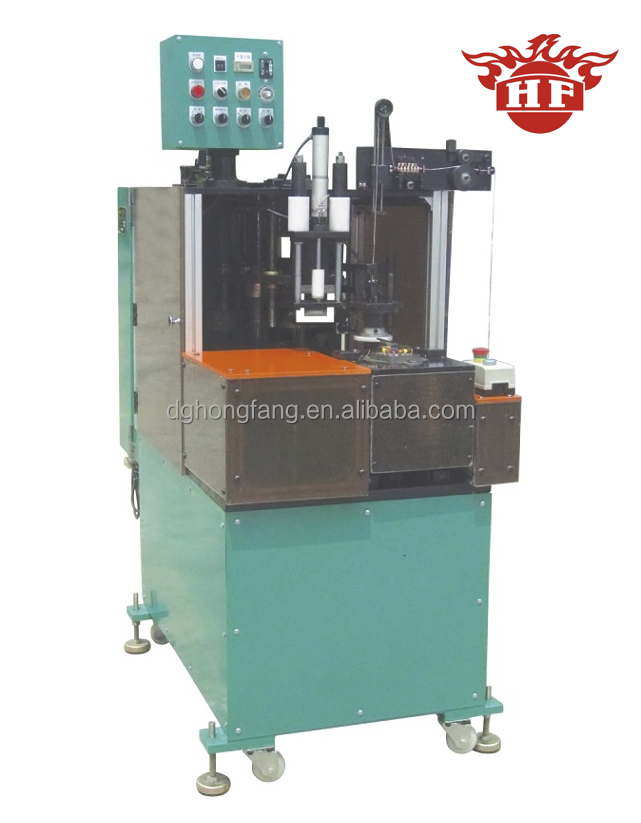
Stator Winding Machine 2 Station Outernal Winding for Transformer Motor
- Dual-station simultaneous winding
- External stator & transformer cores
- Programmable flyer rotation
Explore precision-machined, CE-certified coil winding, slot insulation, and shaft press systems configured for demanding continuous production environments in León, Silao, and the greater Guanajuato corridor.
A rigorous examination of magnetic circuit integrity, slot fill factor optimization, and high-speed armature flyer winding technology designed for Tier-1 automotive and industrial electromechanical operations.
In modern electromagnetic machine manufacturing, the electric rotor remains the mechanical core of rotational torque transfer and energy conversion. Whether winding conventional skewed-slot DC universal armatures, brushless permanent magnet DC (BLDC) inner rotors, or external rotor hub drives, mechanical stress, thermal management, and dynamic unbalance originate right at the winding phase. As factories in León and the surrounding state of Guanajuato transition from legacy assembling setups to high-efficiency, automated lean cells, the technical imperative has moved from mere cycle count to slot-fill density optimization, precise commutator hook indexing, and micro-tension regulation.
Traditional manual and semi-automatic winding procedures regularly introduce minute variances in wire tension, resulting in wire crossover, asymmetrical slot expansion, variable phase resistance, and ultimately eccentric rotational torque ripples. By deploying computer-numerically controlled (CNC) flyer winding heads operating under closed-loop electronic servo tensioning, manufacturers achieve a copper slot fill factor exceeding 75% without compromising the polyurethane or polyamide-imide insulation enamel layer. Maintaining tension tolerance within ±1.5 grams-force across acceleration, steady state (up to 3,000 RPM spindle velocity), and deceleration phases eliminates stretching that alters wire cross-sectional resistance.
| Winding Topology | Typical Rotor/Armature Application | Wire Diameter Spectrum | Slot Fill Factor Capability | Tension Control Mechanism | Flyer Winding Velocity |
|---|---|---|---|---|---|
| Dual-Flyer Armature Winding | Automotive wiper, window lift, power tool armatures | 0.12 mm – 0.85 mm | 65% – 78% | Closed-loop magnetic/servo tensioner | 2,500 – 3,500 RPM |
| Multi-Tooth Needle Winding | BLDC inner rotors, drone/EV steer-by-wire motors | 0.20 mm – 1.30 mm | 70% – 82% | Direct multi-axis electronic feed control | 800 – 1,600 strokes/min |
| External Stator/Rotor Winding | Ceiling fans, ventilation blowers, hub-drive motors | 0.10 mm – 1.20 mm | 60% – 74% | Mechanical friction with hysteresis assist | 1,200 – 2,200 RPM |
| Heavy-Wire Direct Spindle | Submersible agricultural pumps, high-torque reducers | 0.45 mm – 1.60 mm | 58% – 70% | Pneumatic progressive drag brake | 600 – 1,400 RPM |
Beyond copper placement, automated rotor manufacturing lines mandate downstream integration with commutator fusing (hot staking), wedge insertion, slot trickle impregnation, and high-precision diamond rotor OD fine turning. When an armature leaves the winding spindle, thermal curing can introduce microscopic geometric deviations. As shown in our HF-C60 series rotor fine-turning systems, taking fine cuts on the outer lamination diameter ensures concentricity to the center shaft journal within ±0.005 mm, directly protecting the crucial motor air gap from asymmetric magnetic pull (AMP), high-frequency acoustic whine, and bearing fatigue.
Positioned at the geographical heart of Mexico’s automotive and heavy manufacturing corridor, León is undergoing an aggressive technological shift from traditional mechanical assembly to electrified power systems.
The Bajío industrial belt (León, Silao, Irapuato, Celaya) houses global supply chains for radiator fans, windshield wiper motors, electronic power steering (EPS), and HVAC damper actuators. Our multi-station automatic armature winders and shaft inserters deliver the Cpk ≥ 1.67 process capabilities demanded by ISO/IATF 16949 audit benchmarks.
Serving the heavy agricultural irrigation requirements across Guanajuato and neighboring Jalisco, pump manufacturers in León require heavy-duty stator winding and rotor turning lines capable of handling thermal Class H wire, deep stack heights, and low carbon steel SC45# motor shafts under variable grid loads.
As León’s world-renowned tannery and footwear manufacturing infrastructure upgrades to Industry 4.0 automation, demand has surged for domestic motor rewinding, replacement servo motors, and direct-drive sewing machine actuators built with automated internal stator and flyer rotor technology.
Analyzing key industrial indicators, supply chain realignment, and energy transition imperatives impacting equipment procurement across Central Mexico.
1. Nearshoring and Supply Chain Regionalization: The ongoing relocation of manufacturing operations closer to North American consumers has transformed León and the broader Bajío region into a critical nearshoring epicenter. Plant managers and Tier-2 component producers no longer rely on fully assembled imported motors from Asia. Instead, they are establishing localized coil winding, shaft insertion, and dynamic testing lines within León’s industrial parks (such as Parque Industrial Las Colinas, Stiva León, and neighboring Puerto Interior). This transition significantly compresses lead times, avoids maritime logistics disruptions, and satisfies USMCA (T-MEC) local value content rules.
2. Transition from Induction to Permanent Magnet Synchronous & BLDC Motors: Driven by energy-efficiency mandates across Mexican commercial infrastructure (NOM-014-ENER and NOM-016-ENER), industrial motor fabricators are transitioning away from high-loss shaded-pole designs toward high-pole-count BLDC and permanent magnet synchronous motors (PMSM). This requires winding machines capable of complex slot indexing, concentrated fractional-slot tooth winding, and clean wire routing without crossover shorts.
3. Dual-Metal Flexibility (Enamelled Copper & Aluminium Wire): With the fluctuating price of refined copper cathodes on global commodity exchanges, León motor makers are increasingly qualifying enamelled aluminium wire for consumer fan, ventilation, and fractional horsepower applications. Because aluminium possesses a lower tensile yield point and higher elongation sensitivity, winding machinery must feature ultra-smooth ceramic guides, pneumatic tension smoothing, and customized inserting blades that eliminate scrap from elongation thinning.

Direct manufacturer capabilities engineered to give your production facility an uncompromising competitive edge in cycle time, tooling life, and automation payback.
Every coil former, inserting tooth plate, and shaft guide is CNC-machined strictly to your lamination drawings or physical rotor/stator samples, eliminating guesswork during plant commissioning.
We standardize control cabinets on internationally supported industrial hardware including Siemens, Mitsubishi, Omron, and Delta. Your local technicians in León will easily access and maintain ladder logic.
Prior to crating, your custom machine runs production tests with your physical cores and wire. Complete high-definition video acceptance records are submitted before final sign-off and dispatch.
Machinery is sealed in vacuum-barrier VCI anti-corrosion film, bolted securely to solid skid bases, and enclosed in fumigation-free solid plywood crating engineered for Pacific ocean transit to Manzanillo or Laredo overland.
Clear, direct answers regarding electrical specifications, customs clearance in Mexico, tooling lead times, and post-installation service support.
Yes. While our domestic baseline configuration in China is 220V/380V at 50Hz, all machine lines exported to León, Querétaro, and Guanajuato are customized during electrical cabinet assembly for 220V single-phase, 220V three-phase, or 440V 60Hz three-phase supply, matching Comisión Federal de Electricidad (CFE) plant hookups without requiring external third-party step-up transformers.
We supply complete commercial dossiers including customized Commercial Invoices with correct HS Codes (typically 8479.81 for winding machinery and 8466 for tooling), Packing Lists with exact crate dimensions and gross weights, Bill of Lading (B/L), Certificate of Origin, and CE conformity certificates. We frequently coordinate shipments arriving through the Port of Manzanillo or via customs brokers handling bonded transfers to interior fiscal zones in Guanajuato Puerto Interior (GTOPI).
Yes. Our machines are built with modular mechanical changeover tooling. Within a defined envelope (e.g., stator OD 40 mm – 160 mm, stack height 10 mm – 80 mm), you only need to swap the coil former, clamp fingers, and indexing chuck, which typically takes between 15 to 35 minutes. All winding parameters (turn counts, wire pitch, flyer acceleration, slowdown, and indexing angles) are stored as preset recipes in the multi-language HMI touchscreen.
Every equipment order includes an emergency wear-parts kit (spare guide needles, tension felts, cutter blades, springs, and pneumatic cylinders). We provide comprehensive bilingual operating manuals and instructional commissioning videos recorded directly with your machine processing your specific stator. For ongoing operational support, our engineering team connects via live video within our ≤ 9-hour average response time window, bridging time zones smoothly.
Standard standalone machines (such as 2-station winders, wedge inserters, or shaft presses) require 25 to 35 working days for manufacturing, custom tooling fabrication, and pre-shipment trial runs. Full automatic synchronized production lines require 45 to 60 days. Ocean freight from Shenzhen or Guangzhou ports to the Port of Manzanillo typically takes 18 to 22 transit days, followed by 2 to 3 days overland trucking to León.
Send our senior engineering team your motor core drawings (OD, ID, stack height, slot count, wire gauge, and turn schedule). We will analyze your mechanical parameters and provide a turnkey technical proposal within 9 hours.
Send an Inquiry