Direct-From-Factory Motor Manufacturing Machinery
Industrial-grade coil winders, servo slot and wedge insertion units, and dynamic rotor finishing platforms configured to European grid standards (400V 50Hz) and customized to exact stator lamination geometries.







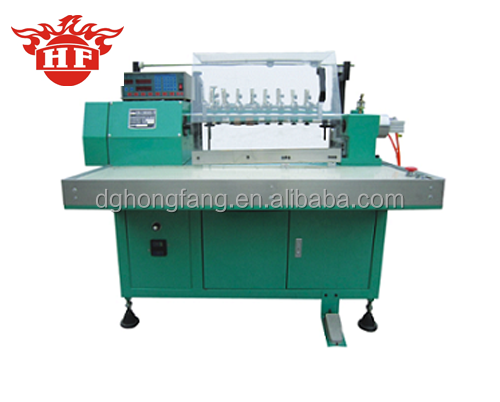
Technical White Paper: The Role of Automated Coil and Wedge Insertion in Nordic Industrial Electrification
As the industrial capital of Finland, the Pirkanmaa region—anchored by Tampere—is at the global forefront of mechanical engineering, heavy mobile machinery electrification, pulp and paper automated processing, and harsh-environment marine systems. Electric motors manufactured or specified across Tampere must survive brutal cyclic thermal shocks, intense vibration profiles, high inverter switching frequencies (PWM drive dV/dt stress), and the stringent efficiency directives mandated by the European Union (EU Ecodesign Regulation 2019/1781 for IE3, IE4 Super Premium, and IE5 Ultra-Premium machines).
In standard low-voltage and medium-voltage stator manufacturing, coil insertion is traditionally the most vulnerable operational bottleneck. Manual or poorly regulated mechanical inserting introduces enamel wire scraping, non-uniform copper distribution, compromised insulation liners, and irregular slot space factors. An Automatic Servo System Stator Coil and Wedge Inserting Machine resolves these vulnerabilities by executing the transfer of wound wire groups and pre-formed slot wedges simultaneously through coordinated, multi-axis servo actuators.
Whether processing compact 2-pole auxiliary motors for commercial HVAC pumps or high-pole-count stators engineered for underground mining equipment, the automated inserting process preserves phase-to-phase and phase-to-ground dielectric integrity, dramatically lowering rejection rates during end-of-line high-potential (Hi-Pot) and surge testing.
Industrial Implementations Across Tampere & Pirkanmaa
Engineered to support Tier-1 suppliers, contract motor winders, and equipment OEMs operating within Finland's advanced mechanical ecosystems.
Off-Highway Mobile Electrification
Tampere leads Europe in smart mobile working machines, automated container handling carriers, and battery-electric drill rigs. Our inserting machinery supports compact, high-torque permanent magnet synchronous motors (PMSM) and robust asynchronous traction motors demanding ultra-dense copper fill factors capable of withstanding heavy off-road cyclic G-forces.
Submersible Pumping & Clean Technology
Finland's extensive lake systems, wastewater treatment hubs, and bio-refineries demand sealed submersible motors where slot liner integrity is non-negotiable. Our servo inserting systems push thick DMD, Nomex, or polyester film wedges smoothly into narrow slot openings without creasing, eliminating water ingress pathways and early phase ground faults.
Pulp, Paper & Heavy Process Drives
Continuous-duty process machinery requires IE4 and IE5 induction stators configured for 24/7 reliability. With precision-ground tooling designed down to 0.02 mm clearances, our insertion units accommodate deep-slot, high-stack-height industrial stators, delivering perfectly aligned end-windings that simplify downstream intermediate and final forming operations.
Nordic Manufacturing Trends Driving Motor Line Automation
Manufacturing facilities in Tampere, Nokia, Ylöjärvi, and broader Finland face unique structural conditions: premium skilled labor costs, rigorous occupational health and safety requirements, and aggressive corporate carbon neutrality targets. These realities drive three major transformations on the shop floor:
| Evaluation Parameter | Manual Insertion & Tooling | Semi-Automated Air-Hydraulic | Zunqi Automatic Multi-Servo System |
|---|---|---|---|
| Cycle Time (36-Slot Stator) | 12 – 25 Minutes / Unit | 60 – 90 Seconds / Unit | 18 – 35 Seconds / Unit |
| Slot Fill Rate Capability | 60% – 68% Max | 68% – 72% | Up to 82% (IE4 / IE5 Ready) |
| Wire Insulation Damage Risk | High (Operator fatigue / friction) | Medium (Inconsistent blade speed) | Near Zero (Regulated push velocity) |
| Wedge Cut & Crease Repeatability | Manual Variation ±1.5 mm | Mechanical Stop ±0.8 mm | Servo Feeder ±0.1 mm |
| Tooling Changeover Time | N/A (Freehand tools) | 60 – 90 Minutes | 15 – 30 Minutes (Modular Kit) |
| Power Consumption Efficiency | Continuous manual overhead | Continuous hydraulic pump load | Energy on-demand servo drives |
1. Shift Toward High-Mix, Low-to-Medium Batch Flexibility: Nordic producers rarely run single motor configurations for millions of units. Instead, custom motor shops produce varying stack heights (from 25 mm up to 250 mm) and mixed core laminations. Our inserting machines utilize modular blade magazines and quick-release push plates, allowing operators to change stator tooling sets within 20 to 30 minutes.
2. Tightened Tolerances for Variable Speed Drive (VFD) Operation: When motors are powered by modern fast-switching IGBT or SiC inverters, voltage reflections can double transient terminal voltages. Scratched magnet wire caused by aggressive manual stuffing will quickly break down under corona discharge. Automated servo insertion provides absolute linear guidance, isolating phase conductors and ensuring slot wedges fully seal slot openings without micro-fissures.
3. Dual Capability: Enamelled Copper and Aluminum Magnet Wire: Fluctuating raw material prices have prompted multiple European manufacturers to optimize lightweight auxiliary motors using aluminum wire. Our winding and inserting equipment handles both soft copper and higher-elasticity aluminum conductors, utilizing ceramic-coated wire guides and polished inserting fingers to eliminate necking or surface cracking.
Why Engineering Teams Choose Zunqi Equipment
Over 17 years of specialized manufacturing experience delivering precision stator lines, rotor turning platforms, and specialized production machinery worldwide.
Custom CNC Tooling
Tooling and inserting blades are CNC-machined and vacuum heat-treated to 58–62 HRC strictly based on your stator punch CAD drawings or physical core samples.
Tier-1 Control Architecture
Electrical cabinets are configurable with Siemens, Mitsubishi, Omron, Schneider, or Delta PLCs and touchscreens to match your plant's existing maintenance standard.
Verified Pre-Shipment Trial
We do not ship until your actual stator laminations and magnet wire are tested on our floor. You receive complete high-definition process videos and dimensional reports.
Complete Turnkey Synergy
From slot paper inserting to coil winding, inserting, intermediate forming, double-sided lacing, and rotor fine turning—our entire line shares synchronized takt times.
Standard 8-Step Manufacturing & Quality Verification Process
Every automatic coil inserting machine supplied to European clients undergoes a documented engineering sequence designed to ensure plug-and-play installation upon arrival at the Port of Helsinki or direct overland freight to Tampere:
Step 1: Stator Geometry Review & Slot Fill Analysis: Our engineering team evaluates your lamination CAD files (DWG/DXF), wire diameter, slot dimensions, wedge profile, and coil turns. We verify tooth-tip clearance and insertion clearance angles.
Step 2: Precision Tooling & Blade Fabrication: Push blades, guide fingers, and wedge pushers are wire-EDM cut from specialized tool steel, followed by precision grinding and hard-chrome surface treatment to eliminate friction.
Step 3: Structural Frame Assembly: Heavy-gauge welded steel frames are stress-relieved to prevent vibration harmonics, providing a rigid chassis for multi-axis servo positioning.
Step 4: Electrical & Safety Compliance Wiring: Control cabinets are assembled according to EN 60204-1 safety standards, incorporating dual safety-circuit relays, optical light curtains, and clear terminal wire ferrule coding.
Step 5: Multi-Axis Servo Integration: High-precision servo motors are tuned for dynamic acceleration, controlled insertion deceleration, and micro-positioning wedge feed synchronization.
Step 6: Customer Sample Verification & Dry Run: We run trial runs with customer-supplied stator cores, measuring wedge protrusion consistency, wire integrity, and insertion force curves.
Step 7: Video Acceptance Sign-Off: HD running videos, dimensional check sheets, and high-pot dielectric test results are delivered to the client's procurement engineers for formal dispatch sign-off.
Step 8: Export Packaging & Ocean Freight Protection: The machine is thoroughly coated in VCI anti-rust oil, wrapped in multi-layer moisture-barrier film, bolted to a heavy steel-reinforced base, and encased in a fumigation-free plywood crate.
Frequently Asked Questions by Tampere Engineering Buyers
Direct answers concerning machine electrical configurations, tooling lead times, Nordic climate operation, and after-sales support.
Accelerate Your Stator Line Efficiency Today
Connect directly with our senior tooling engineers. Submit your stator core dimensions, output targets, and technical requirements to receive a detailed mechanical specification and price proposal within 9 hours.
