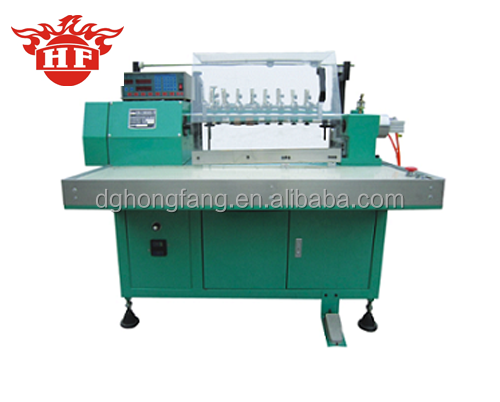
Precision coil winders, slot wedge inserters, multi-directional forming units, and CNC rotor finish lathes built for industrial motor manufacturing plants.
Future Procurement Trends in AC Motor Winding Equipment
How international motor manufacturers evaluate total lifecycle investment, automation flexibility, and vendor reliability from 2025 through 2030.
The international procurement of AC motor manufacturing machinery is undergoing a paradigm shift driven by stringent global energy standards (such as IEC 60034-30-1 IE3, IE4, and IE5 efficiency mandates) and the rapid decentralization of industrial assembly plants. Tier-1 and Tier-2 motor builders are no longer evaluating machine tool purchases simply on purchase price. Instead, procurement strategies emphasize Total Cost of Ownership (TCO), quick tooling interchangeability across divergent stator lamination stacks, and embedded diagnostic interfaces capable of preventing scrap on multi-strand copper and aluminum magnet wires.
Tooling Modularity & Rapid Changeovers
Modern purchase contracts demand tool changeover times under 20 minutes. Forward-thinking factories procure winding and inserting machines equipped with quick-clamping fixtures, pre-calibrated flyer heads, and software-stored recipe sets to alternate smoothly between domestic fan stators and deep-stack industrial pumps.
Dual Copper-Aluminum Operational Flexibility
Raw material volatility has prompted motor manufacturers to engineer dual-wire production lines. Procurement specialists mandate winder systems with low-friction ceramic rollers and closed-loop electronic tensioning capable of winding delicate aluminum wire without stretching or micro-cracking the insulation enamel.
Open Architecture PLC Sourcing
Procurement teams increasingly reject proprietary, locked-down machine controllers. Factories prefer automated winding systems driven by globally accessible hardware architectures (such as Siemens, Mitsubishi, Delta, or Omron) to guarantee that local replacement parts and maintenance technicians are available across export destinations.
Strategic Buyer Insight: Industrial motor manufacturing plants report that incorporating pre-shipment trial winding runs—using the buyer's exact physical stator stampings and magnet wire grade—reduces post-installation commissioning downtime by up to 65%. Verifying tooling geometry before export crating is essential when qualifying an overseas equipment partner.
Engineering Excellence & Evolution
Technological Frontiers in AC Stator Winding & Assembly
Analyzing key advancements in magnetic slot fill ratios, closed-loop servo tension regulation, and synchronized forming mechanics.
The efficiency curve of an AC induction or permanent-magnet motor is dictated primarily by the slot copper fill factor and the geometric symmetry of the coil end-windings. Low slot fill leads to poor magnetic flux density, increased ohmic heat losses ($I^2R$), and reduced motor efficiency. Conversely, excessive manual forcing of coils into narrow stator slots risks stripping the insulation enamel, precipitating inter-turn short circuits. Next-generation winding and coil-inserting machines address these challenges with multi-axis coordinated kinematic controls.
Stator Machine Step
Legacy Mechanical System
Advanced CNC & Servo Technology
Tangible Engineering Impact
1. Slot Liner Inserting
Mechanical ratchet feed with fixed-stroke blade pushers
Stepper-driven paper feed with programmable crease & cuff sizing
Zero paper tearing; accommodates varying stack heights down to 0.15mm tolerance
2. Stator Coil Winding
Open-loop cam mechanical flyers with friction plate brakes
Multi-axis servo flyer sync with real-time closed-loop magnetic tensioners
Standard manual lathe turning with center-clamp runout issues
Automated CNC fine-turning lathe with pneumatic chuck and dynamic balancing sync
Guarantees exact stator-to-rotor air-gap uniformity; suppresses motor hum & magnetic noise
Beyond raw coil placement, the interaction between wire elongation and slot wedge insertion has become a vital engineering focus. When winding high-pole fan stators or submerged pump motors, multi-strand winding heads must preserve uniform strand lengths. Unequal strand tension causes looser conductors to bulge into the stator bore, where they risk being struck by the rotor lamination during assembly. Advanced equipment mitigates this through synchronized multi-strand wire tension arrays and high-hardness tungsten steel wire guide blades (HRC ≥ 62), ensuring complete containment within the slot cell before wedge closure.
Enterprise Pedigree
Engineered to Your Stator Geometry in Dongguan
Based in Qishi Town, Dongguan City—within the core of South China's electrical machinery manufacturing hub—Zunqi Intelligent Equipment Co., Ltd. (operating the Hongfang machinery line) brings over 17 years of specialized manufacturing and global export experience in stator and rotor automation.
Rather than supplying generic, off-the-shelf machinery, our mechanical and electrical engineering departments design tooling around your 2D and 3D stator lamination drawings. Every winding mold, inserting blade set, intermediate expander, and final forming die is CNC-machined from wear-resistant Cr12MoV vacuum-quenched alloy steel to deliver clean repeatability across hundreds of thousands of production cycles.
Onsite-Verified Factory: Verified facilities, comprehensive credit profiles, and proven multi-year export transaction history.
Pre-Shipment Video Acceptance: We run trial runs with your provided stator laminations and magnet wire, recording performance verification videos before dispatch.
Rapid Engineering Support: Dedicated bilingual sales and technical support team guaranteeing responses within 9 hours.
Modular Voltage SystemsMachines configured for worldwide industrial power supplies, including 220V single-phase and 380V/415V three-phase 50/60Hz grids.
Comprehensive Warranty1-Year core components warranty backed by full spare tooling availability and remote video commissioning support.
Technical FAQ
Frequently Asked Questions by Stator Engineering Teams
Direct technical answers addressing machine customization, wire handling, power compatibility, and commissioning protocols.
What technical data is required to design and quote custom stator tooling?
To build dedicated winding heads, inserting blade arrays, and forming dies, our engineering department requires:
1. Stator lamination drawing or physical sample showing Inner Diameter (ID), Outer Diameter (OD), and slot opening geometry.
2. Lamination stack height range (minimum to maximum).
3. Magnet wire specifications (copper or aluminum, diameter range, insulation thermal class).
4. Coil turns per slot, number of poles, and winding connection diagrams.
5. Preferred slot liner and wedge insulation paper materials (e.g., DMD, Nomex, Polyester film) and thickness.
How do your coil winding machines prevent enamel scuffing on delicate magnet wire?
Our flyer and multi-head coil winders use mirror-polished ultra-hard ceramic eyelets and precision roller guides along the entire wire travel path. Flyer rotation is driven by programmable AC servo drives paired with electronic magnetic damping tensioners. This system maintains steady wire tension during high-speed acceleration and deceleration, preventing tension spikes that stretch conductor diameter or compromise thin polyurethane/polyesterimide enamel layers.
Can a single machine handle both enamelled copper and enamelled aluminum wire?
Yes. Many of our fan motor and household appliance stator winders are configured for both copper and aluminum wire production. Because aluminum wire exhibits lower tensile strength and higher elongation under tension, the machine controller stores separate tension and winding speed recipes. Switching materials is straightforward: the operator selects the corresponding recipe from the touchscreen and adjusts the ceramic tension settings to eliminate wire necking.
What is the standard cycle time for the automatic coil and wedge inserting machine?
Depending on stator stack height, slot count, and wire volume, our automatic coil and wedge inserting machines complete a full transfer stroke in approximately 15 to 30 seconds per stator. The machine indexes, cuts the insulation wedge paper from roll stock, creases it into shape, and pushes both the copper coils and the slot wedges into the stator slots simultaneously, delivering substantial speed and consistency improvements over manual insertion.
Can the factory accommodate non-standard electrical voltages?
Yes. While standard configurations use single-phase 220V 50/60Hz or three-phase 380V 50Hz supplies, we regularly build machines tailored to local facility requirements, including 110V single-phase, 208V/240V, and 415V/480V industrial three-phase systems. Please confirm your site's voltage, frequency, and compressed air availability during initial technical review.
What installation, commissioning, and warranty support do you provide overseas?
Each machine includes a 1-year comprehensive warranty covering PLC, motor, gearing, and structural components. Before dispatch, we provide full running test videos operating on your actual stator samples. For installation, we provide detailed step-by-step video manuals, electrical schematics, and live video commissioning assistance with our senior automation engineers. For turnkey production line installations, on-site commissioning technicians can be arranged upon request.
Modernize Your Motor Stator Production Line Today
Send your stator drawings, stack heights, and daily output requirements to our engineering team. We will review your specifications and provide a matched equipment recommendation and line layout within 9 hours.