
Core Stator Insulation & Assembly Machinery
Discover our specialized stator production and finishing solutions. Engineered in Dongguan with premium tooling, dynamic indexing, and full servo synchronization for electric motors worldwide.






17+
Years Global Exporting
≤ 9h
Technical Response Time
100%
Drawing-Customized Tooling
1 Set
Flexible Minimum Order
Engineering Insight & Whitepaper
Stator Slot Paper Insertion: Mechanics, Die Design & Failure Prevention
A comprehensive examination of why automated slot insulation represents the critical barrier between motor electrical longevity and dielectric breakdown.
In modern induction, BLDC, and permanent magnet synchronous motor (PMSM) manufacturing, the slot insulation process—commonly known as cell paper inserting—serves as the foundational dielectric barrier between the electrical ground (the laminated silicon steel stator core) and the live phase windings. As electric motors move toward higher power densities, stringent class H thermal ratings, and steep voltage transients driven by pulse-width modulation (PWM) variable frequency drives (VFD), any mechanical flaw in the slot lining inevitably leads to high-potential (Hi-Pot) insulation failure, inter-turn partial discharge, or dead short-circuits to earth.
Achieving defect-free slot paper insertion at rates of 0.3 to 0.8 seconds per slot demands extreme kinematic precision. A high-tier automatic stator slot paper inserting machine executes five continuous, tightly synchronized mechanical phases:
1. Controlled Paper Feed & Tensioning
Insulation material (such as Nomex®, DMD, NMN, or PET film) is unreeled with constant mechanical damping. Stepper or servo feed rollers meter the precise liner length based on core stack height plus cuff allowance.
2. Dual-Edge Edge Creasing & Cuffing
Before entering the slot die, the paper edges undergo dual pre-folding to create reinforced cuffs. Cuffs prevent the razor-sharp outer lamination teeth from cutting the liner during subsequent coil pushing and lacing.
3. Profile Forming & Tool Die Shaping
The cut paper is rammed through tungsten-carbide forming guides matching the slot shape (round-bottom, flat-bottom, semi-closed, or skewed trapezoid), imparting the exact U-shape or O-shape memory.
4. Push Injection & Insertion Stroke
A hardened push blade propels the formed paper into the stator slot. Blade alignment must maintain concentricity within ±0.02 mm to eliminate paper crinkling, slot mouth wedging, or uneven cuff projection.
5. High-Resolution Rotary Indexing
High-torque servo drives or cam-driven indexing tables rotate the core to the next designated slot. The indexing system supports odd-slot skipping, variable-pitch winding profiles, and multi-speed core layouts.
Full In-Die Quality Control
Integrated photo-optical or fiber sensors verify slot occupancy, check for edge foldover, and halt cycling instantly if paper misfeeds occur, guarding costly stator cores against scrap.
Procurement Specification Matrix
Comparison: Mechanical Cam vs. Multi-Axis Servo Insertion Machines
Understand the trade-offs in initial capital expenditure, operational flexibility, tooling changeover speed, and dielectric reliability before issuing your RFP.
| Evaluation Parameter | Traditional Mechanical Cam System | High-Precision Full Servo System | Zunqi Hybrid Optimization Platform |
|---|---|---|---|
| Cycle Speed per Slot | 0.45 – 0.70 seconds | 0.25 – 0.38 seconds | 0.30 – 0.40 seconds (Stabilized) |
| Stack Height Changeover | Mechanical linkage swap (2–4 hours) | Touchscreen parameter set (< 5 mins) | One-touch HMI adjustment (< 8 mins) |
| Slot Shape Adaptability | Dedicated fixed tooling only | Parametric motion paths for multiple shapes | Quick-release modular guide dies |
| Insulation Thickness Range | 0.15 mm – 0.25 mm (Narrow tolerance) | 0.12 mm – 0.45 mm (Versatile) | 0.14 mm – 0.35 mm (Nomex/DMD/PET) |
| Cuff Length Uniformity | ±0.8 mm (Spring back variance) | ±0.2 mm (Closed-loop feed) | ±0.25 mm (Tension-compensated) |
| Maintenance & Wear Profile | High oil bath, cam follower groove wear | Low mechanical wear, electronic tuning | Heavy-duty linear rails & sealed servo |
Industry Foresight
Future Procurement Trends in Stator Insulation Machinery
Key technological shifts reshaping equipment sourcing for global electric motor assembly lines over the next 5 to 10 years.
1. 800V High-Voltage EV & Inverter Demands
Automotive traction motors and high-tier industrial drives running on 800V architectures face severe dV/dt stress. Modern machinery procurement prioritizes ultra-clean die slicing that leaves zero microscopic burrs or fiber tears where corona discharge initiates.
2. Digital Twin & IIoT Predictive Maintenance
Plant managers require smart factories. Procurement tenders increasingly specify OPC-UA and MQTT communication protocols, allowing slot inserting machines to report blade stroke cycles, feed roller slip, and die wear parameters directly to factory MES platforms.
3. Zero-Scrap Agile Tooling Concepts
With high costs in composite insulation rolls (Nomex/Kapton), manufacturers demand near-zero strip scrap during setup. Fast-lock modular tool cassettes allow core stack height transitions in under 10 minutes without exchanging the entire punch mechanism.

Why Partner With Us
Dongguan Precision Engineering, Worldwide Reliability
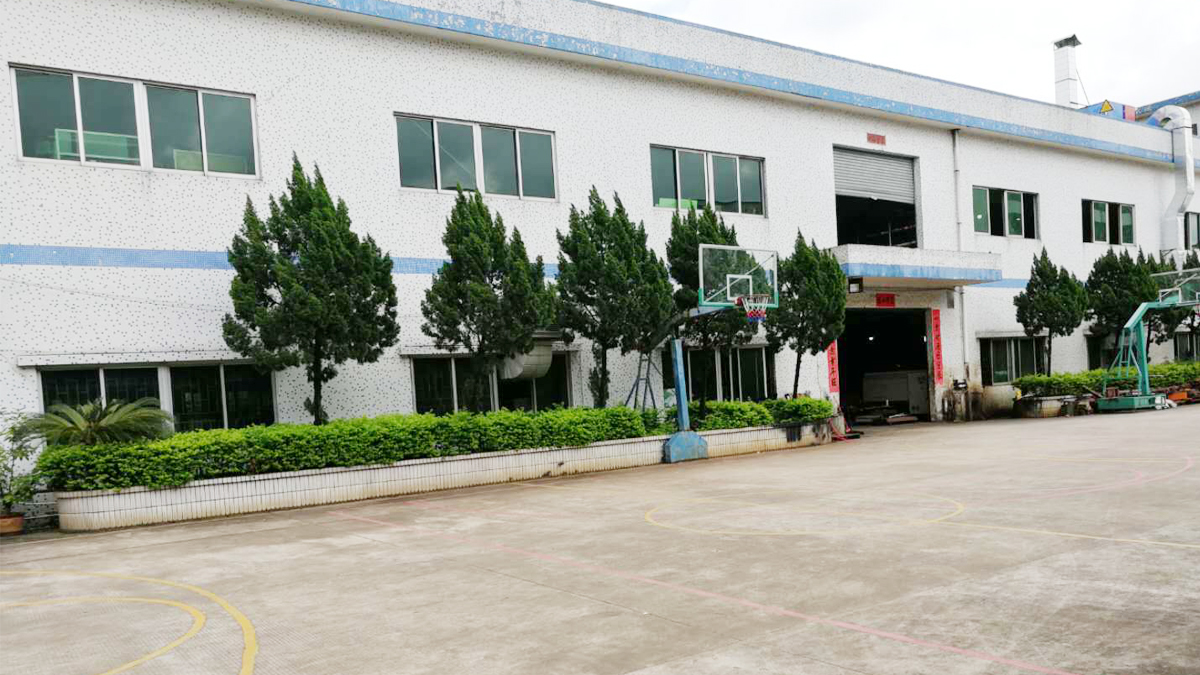
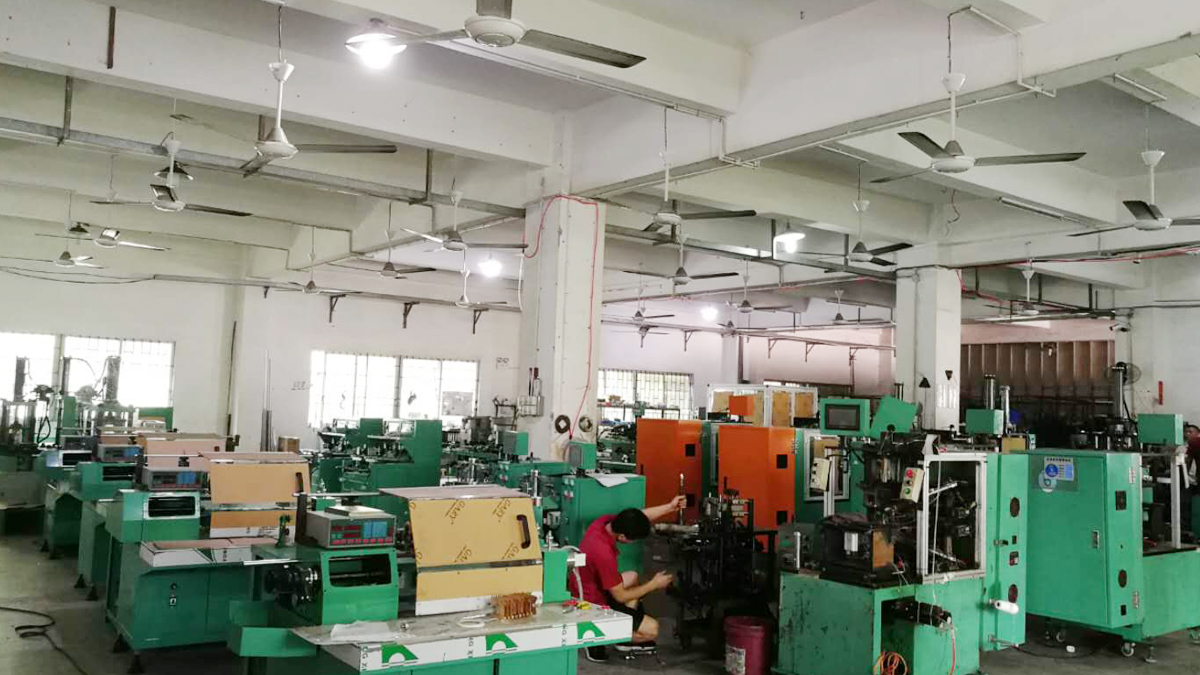
Located in Qishi Town, Dongguan—the epicenter of high-end industrial machinery manufacturing in South China—Zunqi Intelligent Equipment Co., Ltd. has specialized in stator and rotor automation machinery for over 17 years. We combine factory-direct pricing with rigorous European-grade performance tolerances.
- 100% Customized to Your Stator Geometry: Slot dies, wedge pushers, and insertion blades are crafted directly from your CAD drawings or physical core samples.
- Turnkey Line Synchronization: We engineer matched lines—slot insulation, coil winding, combined coil/wedge insertion, intermediate forming, and double-side lacing—ensuring balanced cycle times.
- Global Control Brands: Standard systems utilize Siemens, Mitsubishi, Panasonic, Delta, Inovance, SMC, or Airtac components for effortless worldwide maintenance.
- Pre-Shipment Trial Verification: We mandate processing your actual stator sample in our workshop, providing complete high-definition acceptance videos before crate sealing.
Direct Answers
Frequently Asked Questions by Global Buyers
Clear, practical technical answers addressing tooling design, material compatibility, after-sales service, and export verification.
What parameters must I provide to obtain an accurate machine and tooling quote?
To size the feeding rollers, punch dies, and indexing fixtures correctly, we require: (1) Stator 2D/3D drawing showing Outer Diameter (OD), Inner Bore Diameter (ID), and slot dimensions; (2) Core stack height range (min/max mm); (3) Number of slots and whether slots are parallel, semi-closed, or skewed; (4) Insulation material type (Nomex, DMD, PET, NMN) and thickness; (5) Target cycle time per unit; and (6) Local operating voltage and frequency (e.g., 220V/380V/415V, 50/60Hz).
Can one machine process multiple stator stack heights and slot numbers?
Yes. Stator cores possessing the same lamination profile (identical ID and slot cross-section) but varying stack heights can be processed on the exact same tooling. The stack height adjustment is handled parametrically on the touchscreen within minutes. If your motors feature different slot profiles or bore diameters, tooling changeover takes approximately 15 to 25 minutes using our modular die sets.
What is your typical production lead time and trial run procedure?
Standard stand-alone paper inserting and coil winding machines require 25 to 35 working days. Complete automated lines require 45 to 60 days. Prior to dispatch, we request physical stator samples from the client. Our technicians run dry-cycle testing, endurance runs, and produce sample parts to verify cuff uniformity, fold symmetry, and slot retention before final video sign-off.
How does Zunqi handle overseas commissioning, operator training, and warranty?
All equipment includes a comprehensive 12-month factory warranty covering mechanical assemblies and electronic components. We deliver plug-and-play wiring with English HMI interfaces. Installation is supported via dedicated video guidance, comprehensive schematics, and interactive remote support. For full production lines, factory dispatch of commissioning engineers is available upon request.
What anti-rust and crating standards are utilized for ocean and air shipping?
Precision guideways, tooling dies, and bare ground surfaces receive heavy VCI anti-rust coating, followed by multi-layer vacuum moisture wrapping and desiccant packs. Machines are bolted securely to solid steel base frames within custom-engineered, ISPM 15-compliant fumigation-free export plywood cases designed to withstand rough container voyages.
