Core Automation Equipment & Machined Components
Industrial-grade stator winding, wedge inserting, paper folding machines, and precision motor shafts designed for fans, pumps, compressors, and household appliance motors.

- Material: Hardened SC45# Steel
- Precision centerless grinding
- Household fans & water pumps
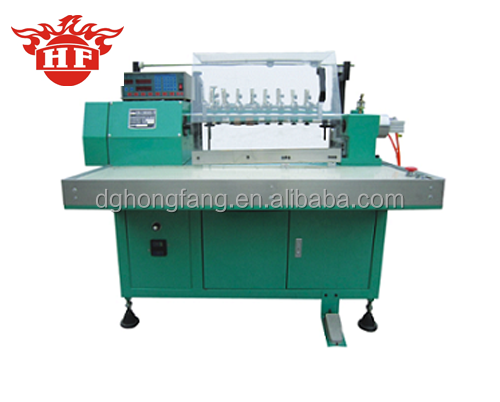
- Speed: Up to 3,000 RPM
- Simultaneous 8-station winding
- PLC & touch screen control

- Rotary multi-station indexing
- Precision wire tension array
- Includes 1-year factory warranty

- Dual flyer continuous winding
- Automatic commutator hooking
- Table & exhaust fan assembly

- External pole winding tooling
- Programmable stepping drive
- Optimized for BLDC stators

- Single-stroke coil & wedge entry
- Adjustable pusher velocity profile
- Zero enamel scratch guarantee

- Auto edge folding & cutting
- Speed: 0.5 - 1.2 sec/slot
- DMD, Nomex & PET films

- High runout concentricity (<0.005mm)
- Anti-corrosion surface coating
- Direct OEM factory supply
Engineering Whitepaper: Dynamics of Automated Coil & Wedge Insertion
In modern industrial electric motor manufacturing—ranging from compact domestic fan motors to multi-kilowatt HVAC pumps and high-torque compressor units—the stator coil inserting stage is universally acknowledged as the most physically challenging and quality-critical process in the entire production chain. The automated stator coil inserter simultaneously transfers pre-wound enamel magnet wire groups (copper or aluminum) and pre-cut slot insulation wedges into the semi-closed slots of laminated electrical silicon steel stator cores.
Achieving high slot-fill ratios (>75% to 82%) while preventing enamel peeling, wire crossovers, or insulation film displacement requires an exquisite combination of multi-axis servo mechanics, hardened metallurgy tooling, and algorithmic motion profiling. Chinese manufacturers have emerged as global leaders in this sector, combining high-speed CNC precision with robust production flexibility that accommodates diverse stack heights, variable bore diameters, and asymmetrical slot geometries.
Technical Principle: The automatic stator coil and wedge inserter uses a dual-motion mechanical linkage. While the stator core is securely clamped against the precision tooling fingers, a central pusher blade ascends vertically to elevate the coil loops into the slots. Concurrently, wedge feed tracks guide, cut, fold, and push the dielectric wedges directly behind the wire bundles, effectively sealing the slot opening in a unified stroke lasting less than 3 seconds per cycle.
Core Kinematic Mechanics: Servo vs. Hydraulic vs. Mechanical Drive
Historical inserting equipment relied upon hydraulic rams or eccentric mechanical cams. While mechanically robust, hydraulic systems are notoriously sensitive to ambient oil temperature shifts, leading to inconsistent pusher speeds that can stretch or shear fine magnet wire (0.10 mm to 0.40 mm) during high-velocity strokes. Modern automatic stator coil inserters engineered by leading Dongguan machinery plants utilize independent dual-servo architectures:
Programmable Velocity Profiling
Servo-driven inserters modulate pushing speed across three distinct phases: slow entry to align the coil eyes, accelerated mid-stroke traversing the stack height, and controlled deceleration at the top stroke to prevent lamination tooth flare.
Dynamic Force Limitation
Closed-loop torque monitoring instantly aborts insertion if mechanical resistance exceeds calibrated safety margins (typically ±5%), preventing catastrophic guide blade breakage caused by jammed slot wedges or twisted coil turns.
Independent Wedge Indexing
Equipped with a secondary dedicated servo motor that feeds wedge insulating paper from reel coils, accurately metering lengths to ±0.1 mm precision, ensuring zero protrusion beyond the electrical steel core ends.
Tooling Metallurgy & Friction Reduction Dynamics
The operational lifespan and quality output of any stator coil inserting machine depend almost entirely on its tooling assembly: the insertion blades, wedge guide magazines, central pusher, and stripper plate. Because magnet wire is subjected to extreme compressive and shear forces when passing through narrow slot openings, the guide blades must exhibit both extreme surface hardness and flexural toughness.
Leading Chinese exporters engineer tooling using vacuum-hardened High-Speed Tool Steels (AISI D2, SKD11, or powder metallurgy ASP-23/DC53) with core hardness ratings between HRC 60–64. Blade surfaces undergo multi-stage diamond polishing to attain mirror finishes (Ra ≤ 0.05 μm) and are frequently treated with Physical Vapor Deposition (PVD) titanium aluminum nitride (TiAlN) or Diamond-Like Carbon (DLC) thin-film coatings. This reduces the mechanical friction coefficient below 0.15, eliminating micro-abrasions on polyimide or polyurethane wire enamels and dramatically lowering high-potential (Hi-Pot) surge failure rates during stator dielectric testing.
| Performance Dimension | Legacy Hydraulic / Cam Inserters | Modern China Servo-Driven Inserters | High-End European Automation |
|---|---|---|---|
| Pusher Motion Control | Fixed speed; jerky acceleration curve | Multi-phase programmable servo curve | Multi-axis electronic camming |
| Maximum Slot Fill Ratio | ≤ 65% (Risk of wire shearing) | Up to 80% - 82% (Optimized tooling) | Up to 82% - 85% |
| Cycle Time (Insertion Only) | 5.0 – 8.0 seconds / cycle | 1.8 – 3.2 seconds / cycle | 1.5 – 2.5 seconds / cycle |
| Tooling Changeover Time | 45 – 90 minutes (Manual shim alignment) | 15 – 25 minutes (Modular quick-release) | 10 – 20 minutes (Auto-docking) |
| Total Cost of Ownership (TCO) | High maintenance; frequent seal leaks | Very Low; standardized global spares | Extremely High; proprietary components |
| Applicable Wire Types | Standard copper magnet wire | Copper, Aluminum & Enamelled Clad | Primarily Copper wire |
Future Sourcing & Technological Trends in Motor Stator Automation
As international energy efficiency directives tighten (such as IEC 60034-30-1 IE3, IE4, and Super Premium IE5 efficiency standards), electric motor manufacturers across Europe, North America, India, and Southeast Asia are forced to re-evaluate their production machinery. Stator coil inserting equipment is no longer judged solely by its unit output per hour, but by its capability to process thinner lamination steels, denser wire packs, and non-traditional motor architectures.
1. Transition from Induction to BLDC & PMSM
Brushless DC and Permanent Magnet Synchronous Motors (PMSM) are replacing shaded-pole and PSC fan motors due to 40%+ energy savings. Sourcing teams are shifting capital from traditional single-purpose distributed winders to high-pole inner and outer stator inserting machines capable of handling segmented stator cores.
2. Hairpin I-Pin vs. Concentric Inserting Coexistence
While automotive traction drives adopt rectangular copper hairpins, industrial fans, water pumps, compressor units, and general-purpose drives continue to rely on round-wire distributed stators due to lower capital expenditure. Advanced inserters now incorporate adaptive wedge feed systems capable of processing both paper and rigid Nomex/PET composites.
3. Dual Copper & Aluminum Wire Processing
Volatile copper commodity pricing has driven cost-sensitive ceiling fan, pedestal fan, and domestic water pump manufacturers to adopt enamelled aluminum wire. Because aluminum has a lower tensile strength and higher elongation risk, modern inserters utilize ultra-low friction guide blades and dampened pusher curves to avoid wire necking.
Industry 4.0 Telemetry & Quality Integration
Forward-thinking motor factories are moving away from islanded machinery toward integrated smart assembly cells. Contemporary Chinese automatic coil inserters now feature Industrial Ethernet (Profinet, EtherCAT, Modbus TCP) interfaces that broadcast machine telemetry to shop-floor Manufacturing Execution Systems (MES). Key parameters logged per machine stroke include:
- Peak Insertion Load (kN): Deviations indicate slot burrs, core skew misalignments, or bent guide fingers.
- Wedge Length Verification: Optical photoelectric sensors detect micro-discrepancies before the wedge is inserted into the stator slot.
- Blade Cycle Counter: Predictive maintenance alerts schedule preventative tooling polishing before enamel abrasion occurs.
Manufacturer Profile & Competitive Engineering Advantages
Headquartered in Qishi Town, Dongguan City, Guangdong Province—the epicenter of South China's electrical machinery manufacturing corridor—Zunqi Intelligent Equipment Co., Ltd. specializes in the R&D, precision tooling fabrication, and international export of fully automated motor manufacturing lines.
For more than 17 years, our engineering team has solved challenging stator and rotor manufacturing bottlenecks for clients across Europe, the Middle East, Southeast Asia, South America, and Africa. Rather than merely supplying standalone machines, we deliver turnkey stator production cells calibrated specifically to our customers' proprietary motor drawings.
Bespoke Tooling to Your Blueprint
Every stator core has unique tooth profiles and slot openings. Our engineering department machines insertion fingers, pushers, and wedge guides to your exact CAD drawings or physical stator samples, guaranteeing flawless fitment.
Open Electrical Architecture
We build our control cabinets around internationally available industrial components: Siemens, Mitsubishi, Panasonic, Omron, Schneider, and Delta. This ensures your local maintenance electricians can troubleshoot and source replacement parts with ease.
100% FAT Video Verification
Prior to export crating, each machine undergoes an extensive Factory Acceptance Test using your supplied laminations and wire. A comprehensive high-definition video of the trial run and full dimensional inspection report are submitted for sign-off.
Integrated Turnkey Stator & Rotor Machine Line
Purchasing mismatched equipment from multiple vendors frequently leads to mechanical bottlenecks, uncoordinated cycle times, and finger-pointing during warranty disputes. Zunqi Intelligent Equipment eliminates integration friction by engineering the complete stator manufacturing sequence under a unified technical standard:
Insulation Inserting
Automatic slot paper folding and insertion machines (HF-D50 series) insulating every slot in under 15 seconds.
CNC Coil Winding
Multi-spindle (2, 6, or 8 stations) automatic coil winding machines with precision wire tension control.
Coil & Wedge Inserting
Combined servo stator coil and wedge inserters transferring coils and wedges into stator slots simultaneously.
Middle Forming
Hydraulic coil end-turn expanding and shaping machines clearing the stator bore for subsequent lacing.
Double-Side Lacing
Servo double-side stator coil lacing machines binding both coil heads securely with diamond or continuous stitching.
Final Forming
Precision calibration forming presses ensuring coil outer diameter and height adhere strictly to motor frame housing tolerances.
Rotor Fine Turning
High-precision rotor surface cutting and turning lathes (HF-C60) preserving air gap uniformity and eliminating electrical noise.
Shaft Press Assembly
Hydraulic and servo-pneumatic rotor shaft pressing machines ensuring precise interference fit without shaft deflection.
Technical Procurement FAQ: Stator Coil Inserters & Assembly Equipment
Drawing from 17+ years of export engineering experience, our application specialists have compiled answers to the most crucial technical and logistical questions asked by foreign motor factory procurement teams.
Ready to Modernize Your Motor Stator Production Line?
Submit your stator blueprints, stack height range, and target production volume. Our senior mechanical automation engineers will evaluate your slot fill dynamics and deliver a complete turnkey line proposal within 9 hours.
